
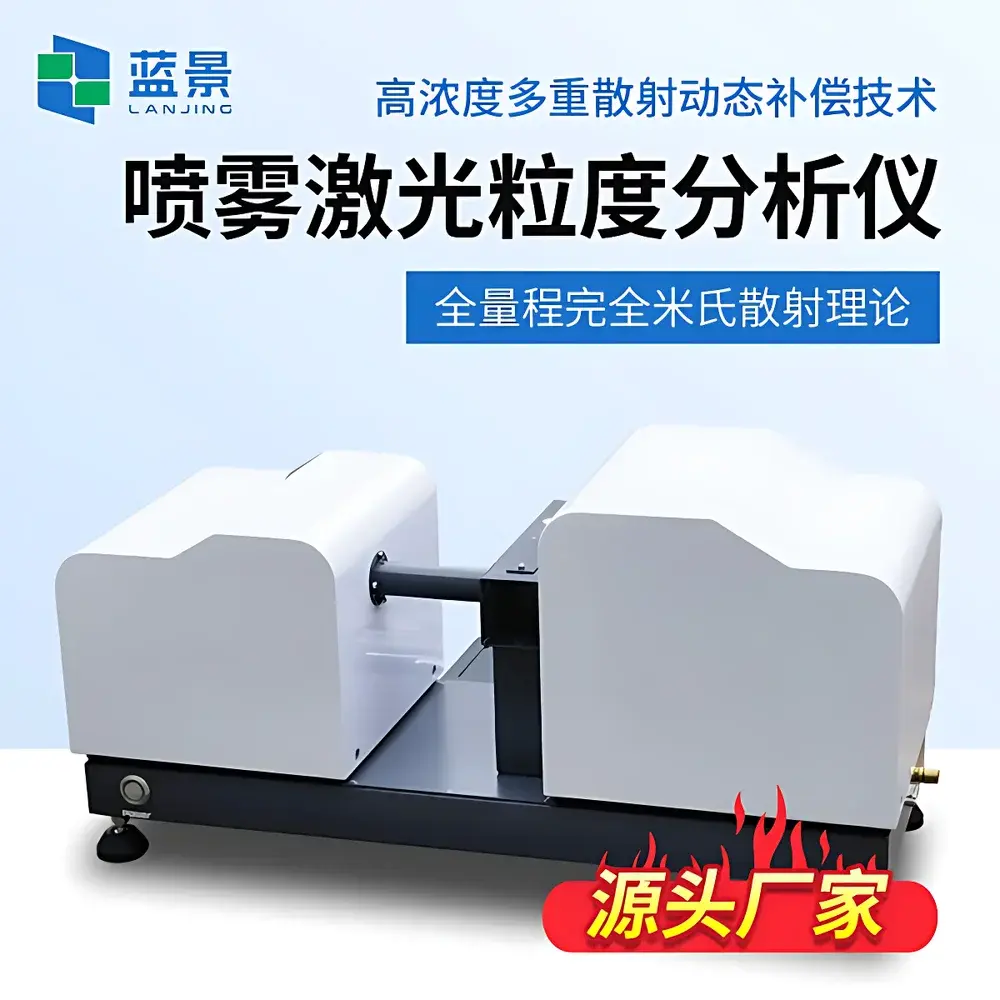
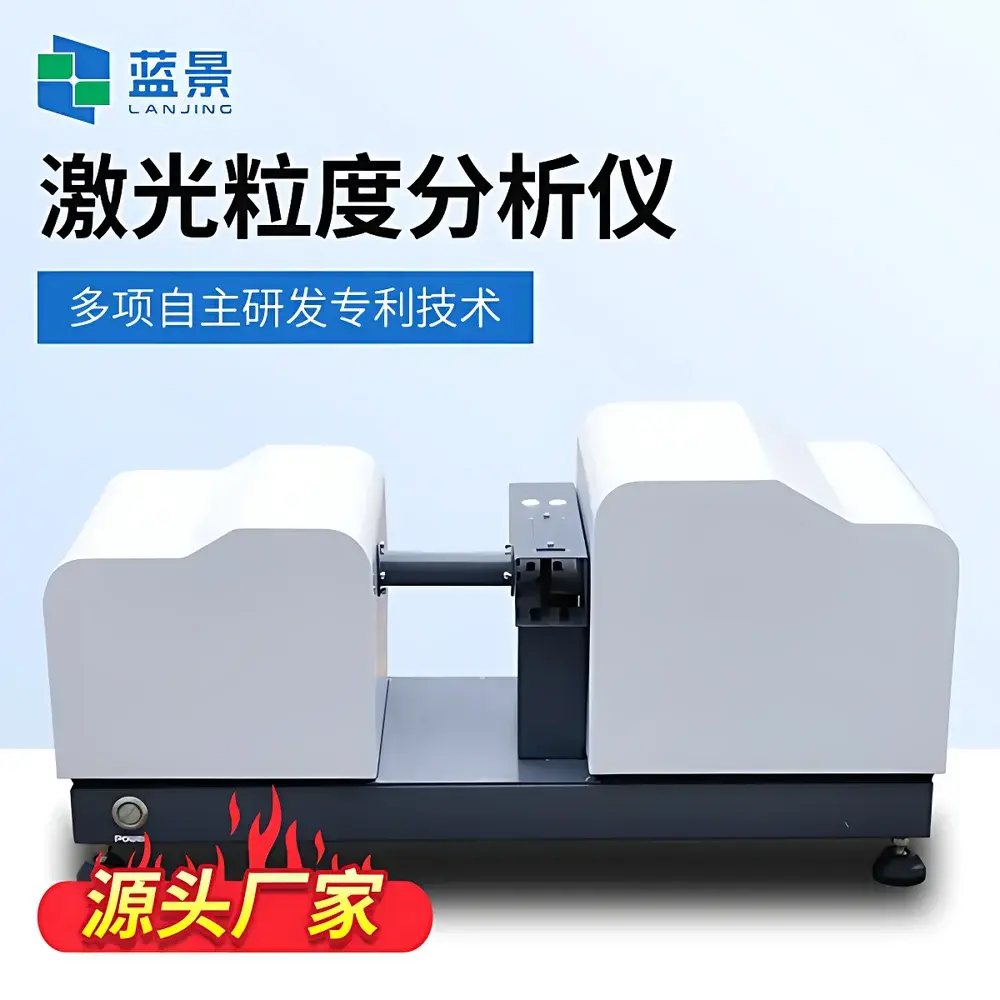
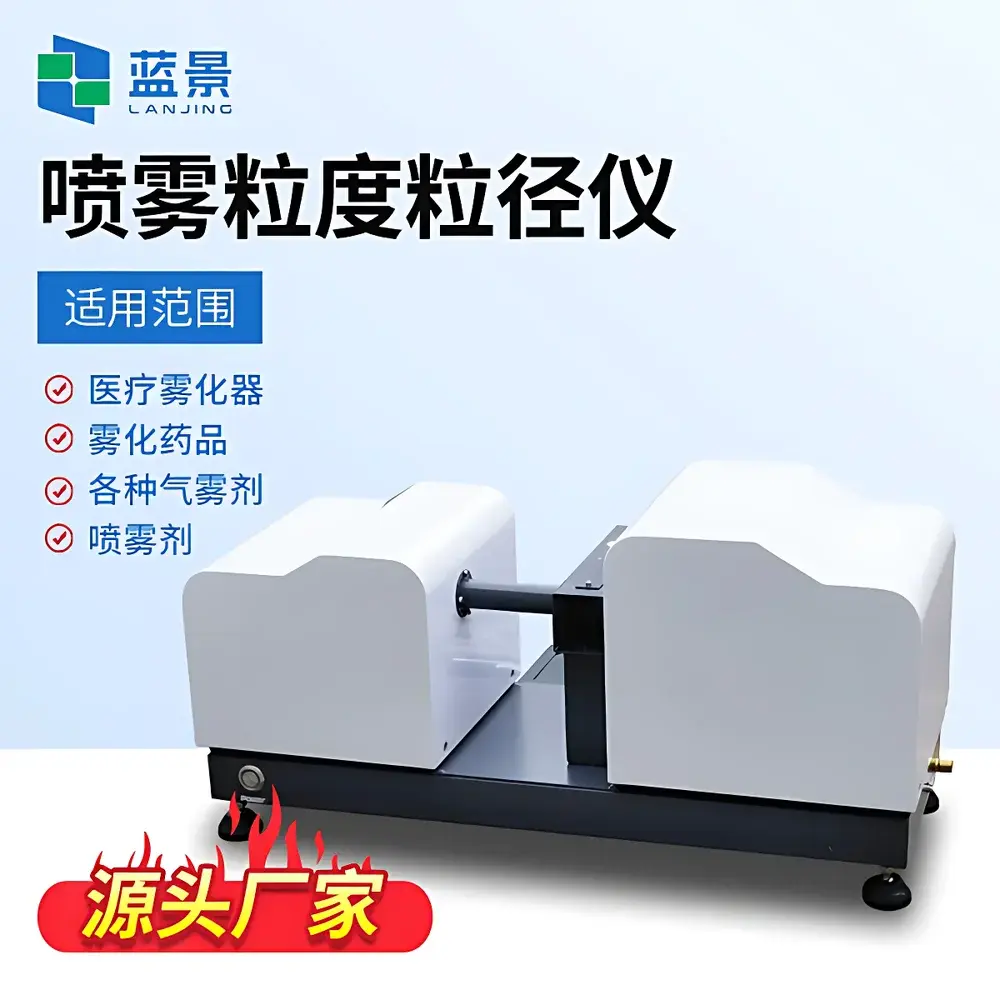
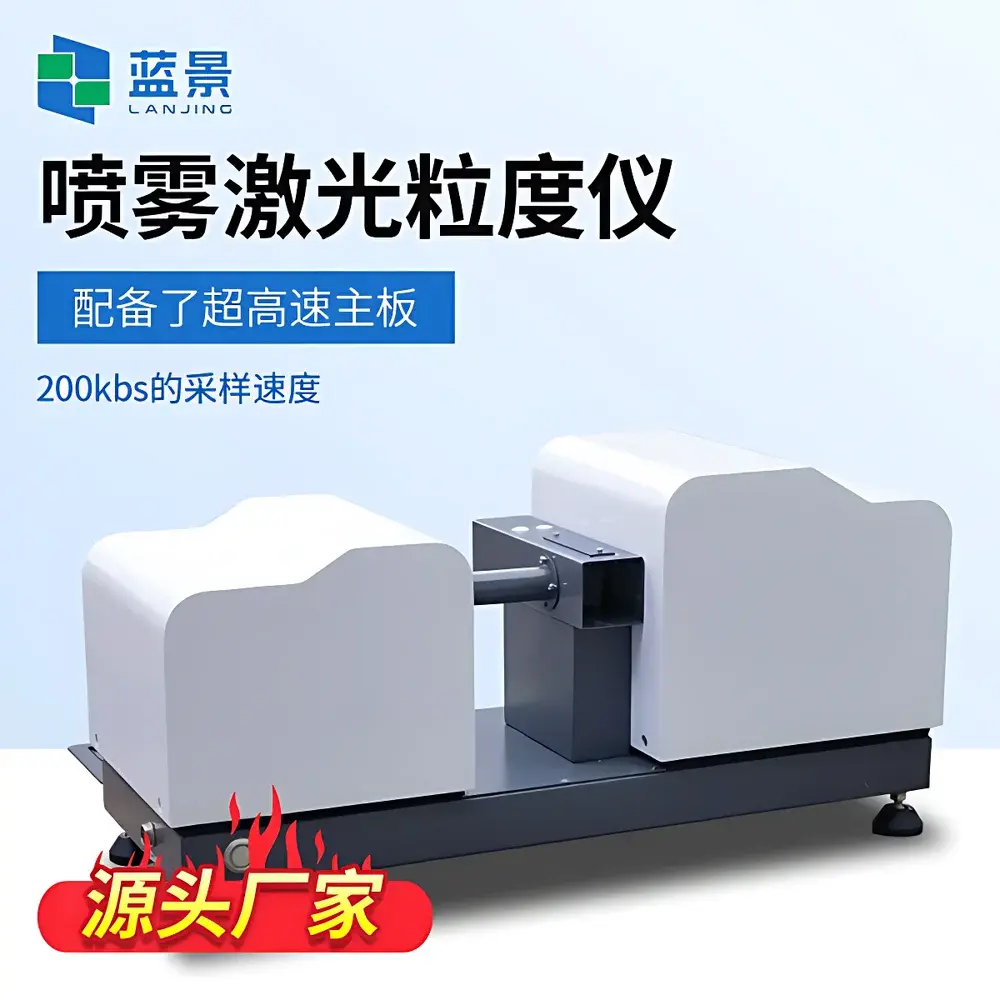
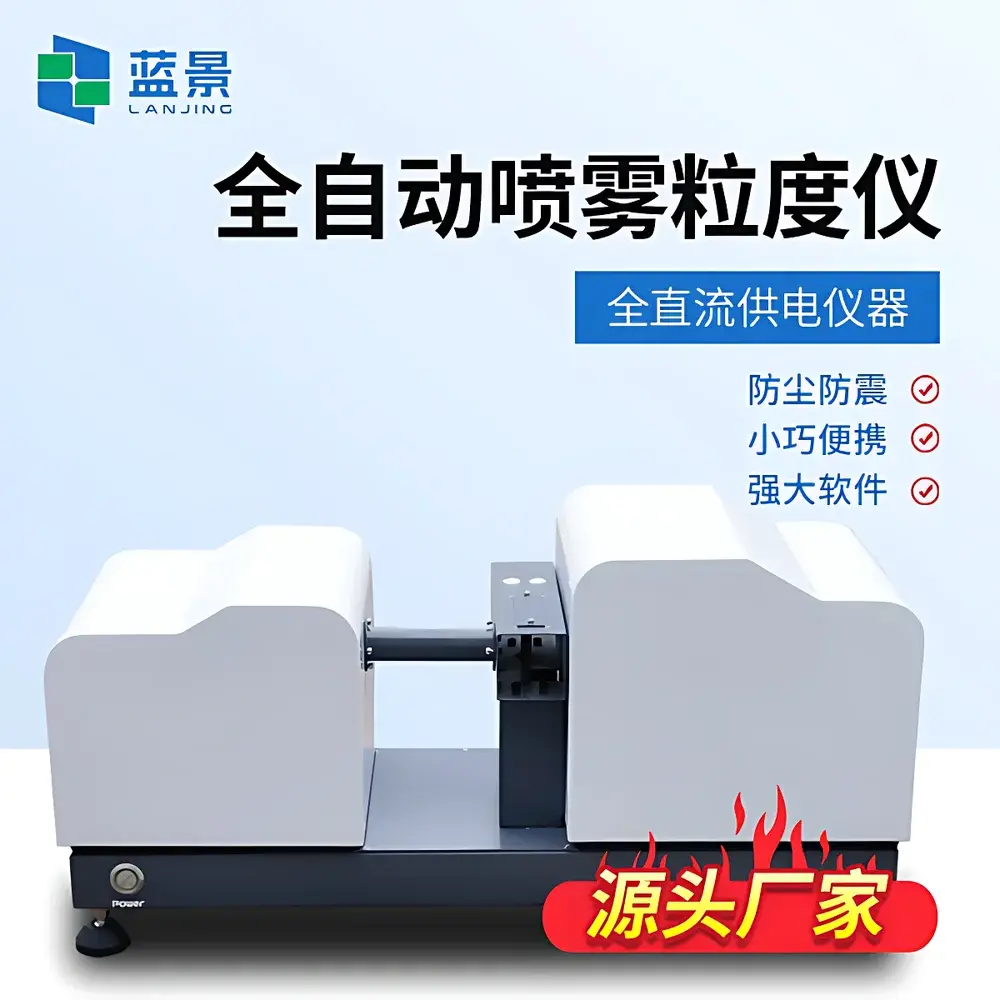
Lanjing LJ-JL360P Automated Spray Laser Diffraction Particle Size Analyzer
| Brand | Lanjing |
|---|---|
| Origin | Shandong, China |
| Manufacturer Type | Direct Manufacturer |
| Instrument Type | Laboratory Laser Particle Size Analyzer |
| Measurement Range | 0.1 µm – 360 µm |
| Repeatability | Better than ±0.5% (NIST-traceable latex standard) |
| Optical Principle | Laser Diffraction with Full Mie Scattering Theory |
| Lens Aperture | Ø110 mm Fourier Transform Coated Lens |
| Laser Source | Imported High-Power Fiber-Coupled Semiconductor Laser, 635 nm |
| Detector Array | Uniform Cross-Distributed & Area-Compensated Multi-Axis Photodiode Array |
| Obscuration Range | 3% – 90% |
| Data Acquisition | 16-bit ADC, 200 kps Sampling Rate |
| Power Supply | External DC Adapter (No Internal AC Mains) |
Overview
The Lanjing LJ-JL360P Automated Spray Laser Diffraction Particle Size Analyzer is an engineered solution for non-contact, real-time characterization of airborne droplets generated by medical nebulizers, pressurized metered-dose inhalers (pMDIs), nasal sprays, topical aerosols, and dry powder inhaler (DPI) actuations. It operates on the physical principle of laser diffraction—where a collimated 635 nm semiconductor laser beam interacts with dispersed droplets, producing a far-field angular scattering pattern that is captured by a multi-element photodiode array. This raw intensity distribution is inverted using full Mie scattering theory—including dynamic multiple-scattering correction—to compute volumetric particle size distribution (PSD) across the entire 0.1 µm to 360 µm range without blind zones. The instrument’s monolithic optical architecture integrates a Ø110 mm Fourier-transform coated lens and proprietary lens protection mechanism, ensuring long-term alignment stability and resistance to environmental particulate contamination. Its all-DC power architecture eliminates internal AC mains coupling, reducing electromagnetic interference and enhancing signal integrity during high-speed acquisition.
Key Features
- All-DC power design: External adapter supplies regulated DC voltage; no 220 V AC enters the optical or signal-processing modules—minimizing electrical noise and improving measurement robustness in shared lab environments.
- Vibration-damped optical bench: Precision-machined aluminum chassis with passive damping isolates the laser path and detector array, maintaining optical alignment under routine handling and transport.
- Portable form factor: Compact footprint (W × D × H ≈ 380 × 320 × 180 mm) and integrated carry handle enable deployment in QC labs, production cleanrooms, or field validation sites without recalibration.
- High-fidelity data acquisition: 16-bit analog-to-digital converter with 200,000 samples per second captures transient spray events with sub-100 ms temporal resolution—sufficient to resolve individual actuation pulses from pMDIs or jet nebulizers.
- Full Mie inversion engine: Implements rigorous electromagnetic scattering modeling, including refractive index input (user-definable for aqueous, ethanol-based, or propellant-laden formulations) and dynamic concentration compensation for obscuration levels between 3% and 90%.
Sample Compatibility & Compliance
The LJ-JL360P is validated for use with pharmaceutical aerosol products compliant with United States Pharmacopeia (USP) <781> Aerosols, European Pharmacopoeia (Ph. Eur.) 2.9.18, and Chinese Pharmacopoeia (ChP) General Chapter 0982. It supports testing of liquid-phase sprays (e.g., albuterol sulfate solutions), suspension-based pMDIs (e.g., beclomethasone dipropionate), and breath-actuated DPIs when coupled with appropriate inhalation simulators (e.g., Andersen Cascade Impactor or Next Generation Impactor adapters). All measurements are traceable to NIST-certified polystyrene latex standards (PSL), with repeatability verified at ±0.5% relative standard deviation (RSD) across ≥10 consecutive runs. The system meets ISO 13320:2020 requirements for laser diffraction particle sizing and supports GLP-compliant audit trails when used with optional secure software licensing.
Software & Data Management
The proprietary SpraySight™ analysis suite provides real-time visualization of droplet transit events, cumulative PSD curves (D10, D50, D90), span, and relative width indices. Raw scatter data is stored in HDF5 format with embedded metadata (timestamp, operator ID, method name, environmental conditions). Batch processing mode enables automated reporting per USP/Ph. Eur. templates, including pass/fail flagging against specified D50 and fine particle fraction (FPF < 5 µm) thresholds. Audit log functionality records all parameter changes, calibration events, and user actions—supporting FDA 21 CFR Part 11 compliance when deployed with electronic signature modules and role-based access control.
Applications
- Pharmaceutical development: Optimization of formulation viscosity, surfactant content, and propellant blends to achieve target aerodynamic particle size distribution (APSD).
- QC release testing: Routine verification of batch-to-batch consistency for inhaled corticosteroids, bronchodilators, and antimicrobial sprays.
- Device engineering: Evaluation of nozzle geometry, actuation force, and valve dynamics on droplet generation efficiency and spatial dispersion profile.
- Regulatory submission support: Generation of GMP-aligned datasets for ANDA, NDA, or MAA filings requiring APSD characterization per ICH Q5A(R2) and Q5C guidelines.
- Academic research: Fundamental studies on atomization physics, evaporation kinetics, and coalescence behavior in confined spray plumes.
FAQ
What sample volume or spray duration is required for a valid measurement?
A minimum of three consecutive actuations (or ≥0.5 s continuous spray) is recommended to ensure statistical representativeness; the system automatically discards initial transients and integrates only steady-state signal segments.
Can the LJ-JL360P measure opaque or highly concentrated sprays?
Yes—the dynamic multiple-scattering compensation algorithm allows accurate sizing up to 90% obscuration, provided droplet concentration remains within the instrument’s validated linear response range.
Is refractive index input mandatory for accurate results?
For quantitative accuracy—especially below 5 µm—user-defined complex refractive index (real and imaginary components) is required; default water values are provided but must be adjusted for ethanol/water mixtures or drug suspensions.
Does the system comply with 21 CFR Part 11 for electronic records?
Yes, when configured with password-protected user roles, electronic signatures, and immutable audit logs—fully documented in the Software Validation Package (SVP) supplied with each unit.
How often does the optical system require recalibration?
Under normal operating conditions and proper handling, annual verification using NIST-traceable PSL standards is sufficient; the built-in self-diagnostic routine checks laser power stability and detector baseline drift before each session.



