
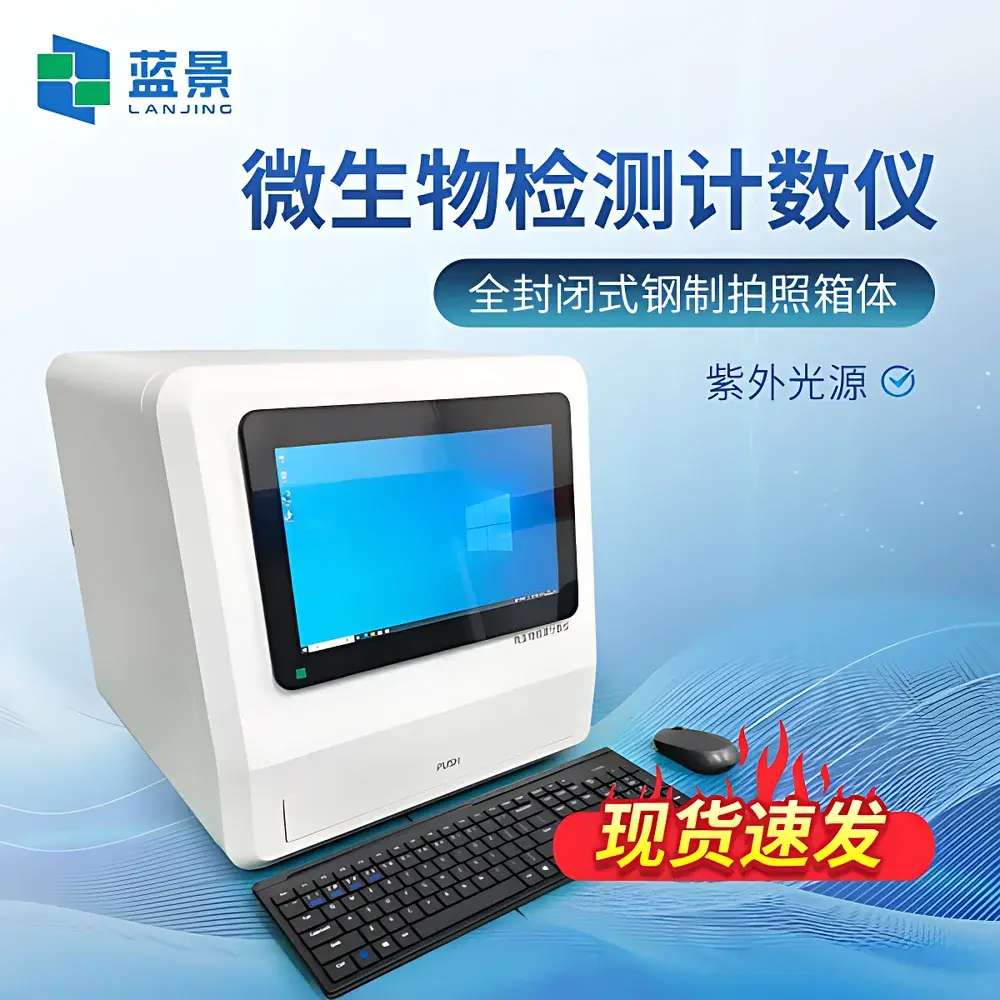
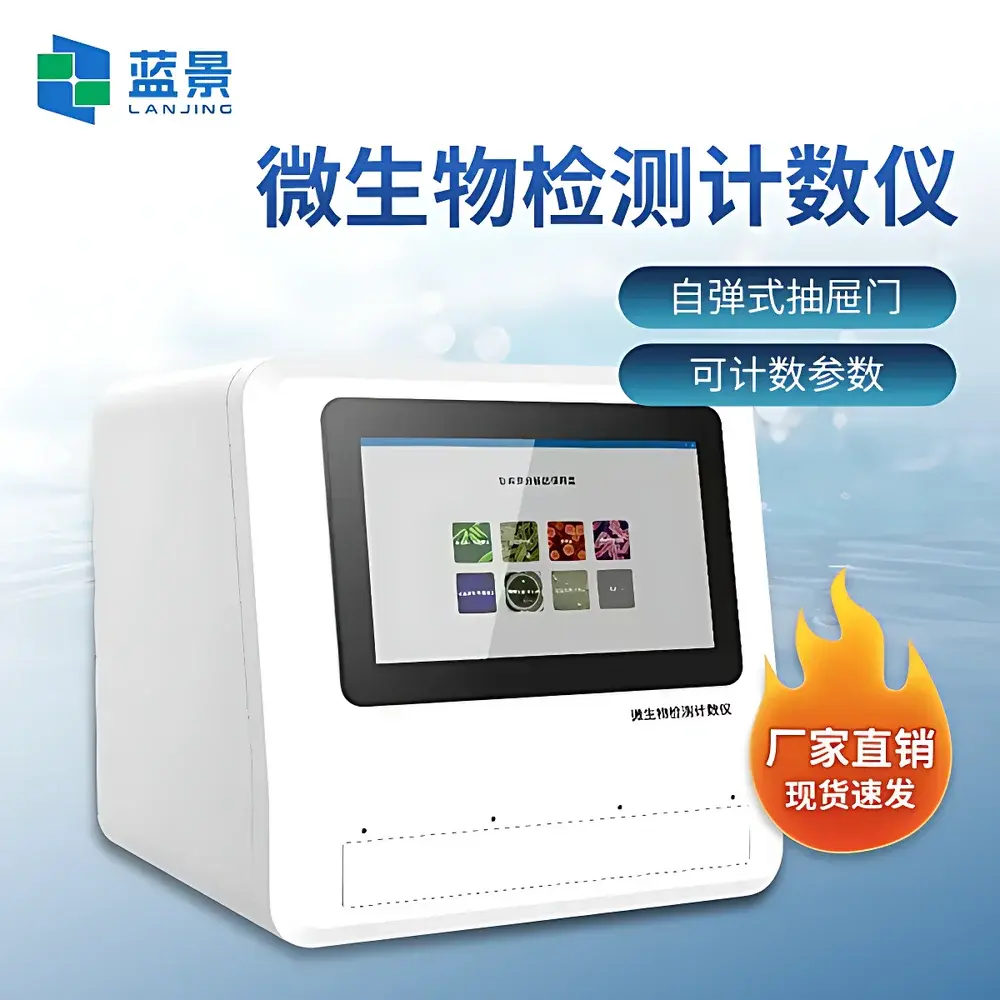
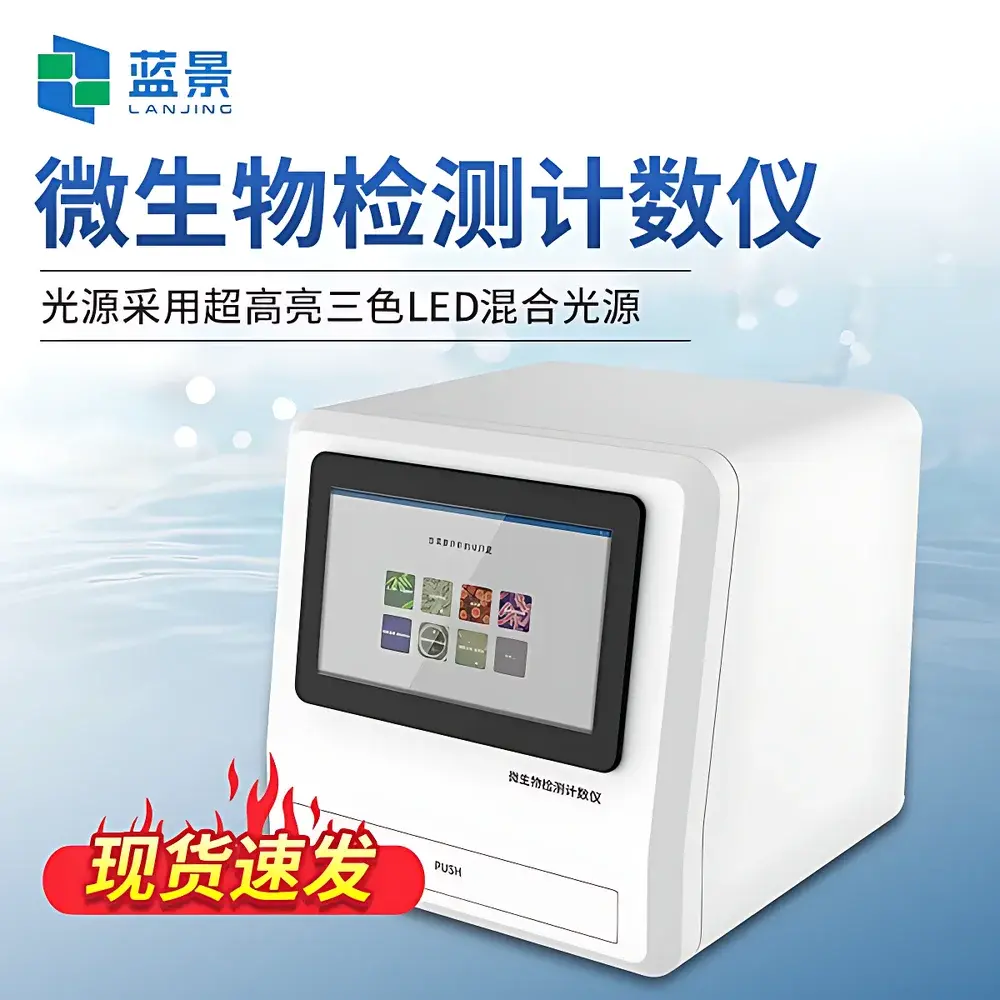
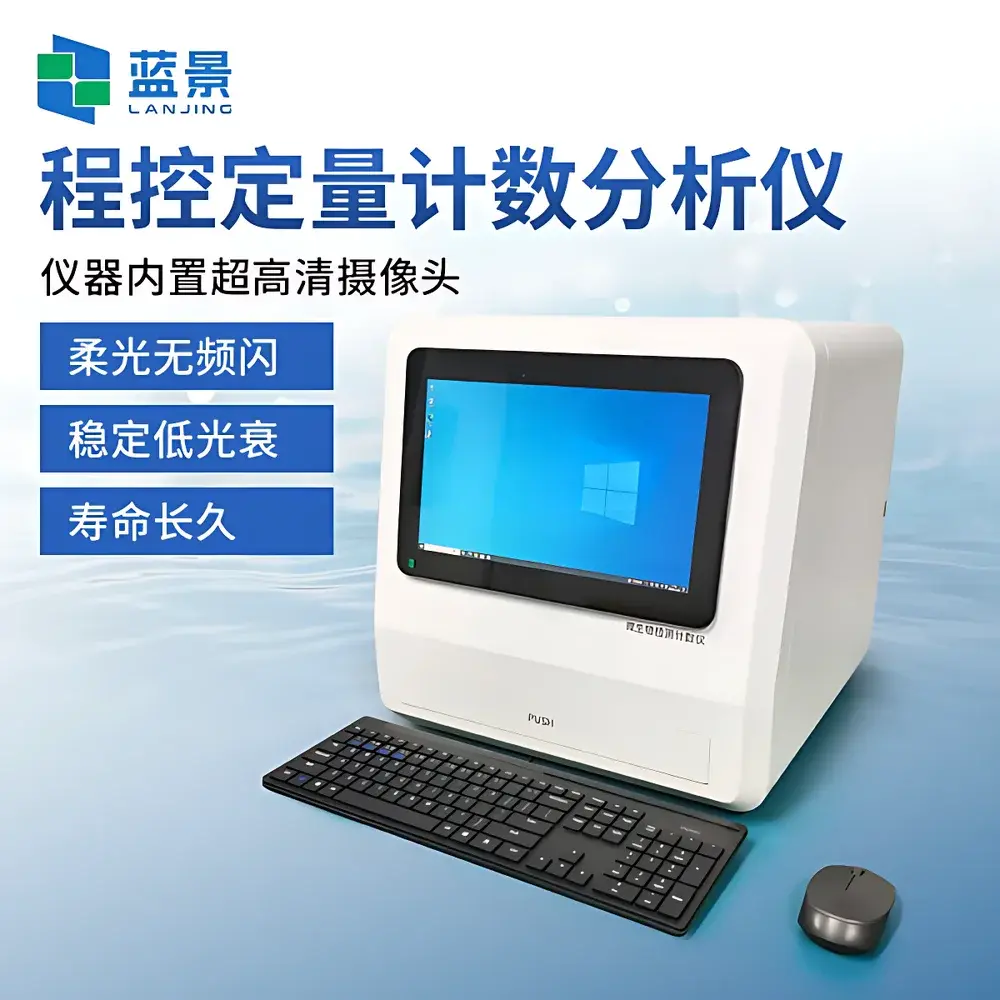
Lanjing LJ-MDC Microbial Detection and Colony Counter
| Brand | Lanjing |
|---|---|
| Model | LJ-MDC |
| Origin | Shandong, China |
| Manufacturer Type | Direct Manufacturer |
| Category | Domestic Instrument |
| Price | USD 13,600 (FOB) |
| Application | Enzyme-Substrate Method (Colilert®, Enterolert®, etc.) & Traditional Plate/Filtration Counting |
| Detection Targets | Total Coliforms, Fecal Coliforms, Escherichia coli, Enterococci, Pseudomonas aeruginosa, Total Viable Count (TVC) |
| Sample Formats | 51-well/97-well Quanti-Tray®, 84-well TVC tray, 90 mm Petri dishes, 45 mm membrane filters |
| Illumination | 8-channel tunable visible LED array (white + warm white), dual 365 nm narrow-band UV-LEDs |
| Imaging | 6.3 MP Sony Exmor back-illuminated CMOS sensor, 1/1.8″ format, 12-bit dynamic range, USB 3.0 interface |
| Enclosure | Fully sealed steel imaging chamber with matte black non-reflective interior |
| Data Management | Audit-trail-enabled software compliant with GLP/GMP principles, 21 CFR Part 11–ready configuration options |
| Operating System | Windows 10 Pro |
| Hardware | 13.3″ capacitive touchscreen all-in-one unit, Intel Core i7 CPU, 8 GB RAM, 512 GB SSD |
Overview
The Lanjing LJ-MDC Microbial Detection and Colony Counter is an integrated digital imaging platform engineered for regulatory-compliant enumeration of indicator and pathogenic microorganisms in water, environmental, and food safety laboratories. It combines quantitative enzyme-substrate assay interpretation (per ASTM D6503, ISO 9308-1, and Standard Methods 9223B) with automated colony counting for traditional plate and membrane filtration methods. The instrument operates on the principle of high-resolution digital image capture followed by algorithmic pattern recognition—leveraging fluorescence excitation at 365 nm for E. coli and coliform detection, and chromogenic contrast analysis for total viable count (TVC) under visible illumination. Its architecture supports dual workflows: (1) MPN-based quantification via multi-well tray analysis (51-, 84-, and 97-well formats), and (2) direct colony enumeration on agar plates or membrane filters. Designed for routine compliance testing in municipal water utilities, environmental monitoring agencies, and contract laboratories, the LJ-MDC delivers traceable, repeatable, and operator-independent results without manual subjective interpretation.
Key Features
- Multi-spectral illumination system: 8 independently controllable visible-light LED channels (4 white + 4 warm-white, 144 total imported low-voltage chips) plus dual 365 nm narrow-band UV-LEDs—each channel adjustable in intensity via software and storable within method protocols.
- Sealed steel imaging chamber with matte black non-reflective interior, eliminating stray light interference and ensuring consistent illumination geometry across all sample types.
- 6.3 MP Sony Exmor back-illuminated CMOS sensor (1/1.8″ format) with 12-bit analog-to-digital conversion and dual-layer noise reduction—optimized for low-light fluorescence capture and high-contrast colony delineation.
- All-in-one industrial design: 13.3″ capacitive touchscreen running Windows 10 Pro, Intel Core i7 processor, 8 GB RAM, and 512 GB SSD—eliminating external PC dependencies and minimizing benchtop footprint.
- Self-ejecting drawer-style sample compartment with precision alignment guides for standardized positioning of Quanti-Trays®, Petri dishes, and membrane filters.
- USB 3.0 isolated data port with dust-resistant housing—enabling secure, high-throughput image transfer and firmware updates without network exposure.
Sample Compatibility & Compliance
The LJ-MDC accommodates standardized sample carriers used in accredited microbiological testing, including IDEXX Quanti-Tray® (51-well and 97-well), proprietary 84-well trays for TVC enzyme-substrate assays, 90 mm Petri dishes (ISO 4833-1), and 45 mm membrane filters (ISO 7704). Its optical and analytical configuration aligns with internationally recognized methodologies: ASTM D6503 (coliforms/E. coli in water), ISO 9308-1 (E. coli and coliforms in water), ISO 7899-2 (enterococci), ISO 16266 (P. aeruginosa), and ISO 4833-1 (aerobic colony count). The system’s closed imaging environment and hardware-level illumination stability support reproducible results across operators and shifts—meeting foundational requirements for GLP and GMP environments. While not pre-certified to 21 CFR Part 11, its audit-trail architecture, role-based access control, and electronic signature readiness enable laboratory-specific validation per FDA and EU Annex 11 expectations.
Software & Data Management
The embedded LJ-MDC Analysis Suite provides method-driven workflow management with four-tiered user roles (Operator, Reviewer, Administrator, System Manager), enforcing separation of duties and data integrity. All image acquisition, thresholding, and counting parameters are saved per method—including illumination profiles, focus settings, and colony size filters. Raw images and processed counts are stored with metadata: sample ID, inoculum volume, dilution factor, incubation temperature/duration, analyst ID, and timestamp. Query functionality supports date-range filtering (year/month/day) and keyword search across sample names or project codes. Export options include PDF reports conforming to ISO/IEC 17025 documentation standards and Excel-compatible CSV files for LIMS integration. Full audit trail logs—capturing login events, parameter modifications, report generation, and result approvals—are exportable as encrypted CSV and support retrospective review during internal audits or regulatory inspections.
Applications
The LJ-MDC serves as a primary enumeration tool in drinking water quality assurance (total coliform rule compliance), wastewater effluent monitoring (NPDES permit reporting), recreational water safety programs (EPA Method 1604), and environmental site assessment (groundwater and surface water screening). It is routinely deployed in certified laboratories performing EPA-approved enzyme-substrate tests, as well as ISO 17025-accredited facilities requiring objective, documented colony counts for TVC in bottled water, beverages, and pharmaceutical process water. Its dual-mode capability also supports research applications involving comparative viability assays, disinfection efficacy studies, and method validation against membrane filtration or pour-plate reference techniques.
FAQ
Does the LJ-MDC comply with EPA or ISO standard methods?
Yes—the instrument supports execution and documentation of EPA Method 1603 (E. coli in water), ASTM D6503, ISO 9308-1, ISO 4833-1, and other consensus-based protocols through validated imaging and counting logic.
Can the system be integrated into a LIMS environment?
Yes—count data, metadata, and audit logs are exportable in CSV and PDF formats; custom API integration is available upon request for enterprise LIMS deployments.
Is fluorescence detection limited to E. coli?
No—the 365 nm excitation source enables detection of any fluorogenic substrate that emits in the visible range (e.g., Enterolert® for enterococci, Pseudalert® for P. aeruginosa), provided appropriate filter sets are applied.
What is the maximum throughput per day?
Under standard operation (2–3 min/sample), the system processes up to 120 samples daily, assuming batched loading of trays and plates with minimal manual intervention.
Does the software support multi-user remote access?
No—local operation only; remote desktop access is disabled by default to preserve data integrity and audit trail fidelity per GLP/GMP guidelines.
Related Products







