
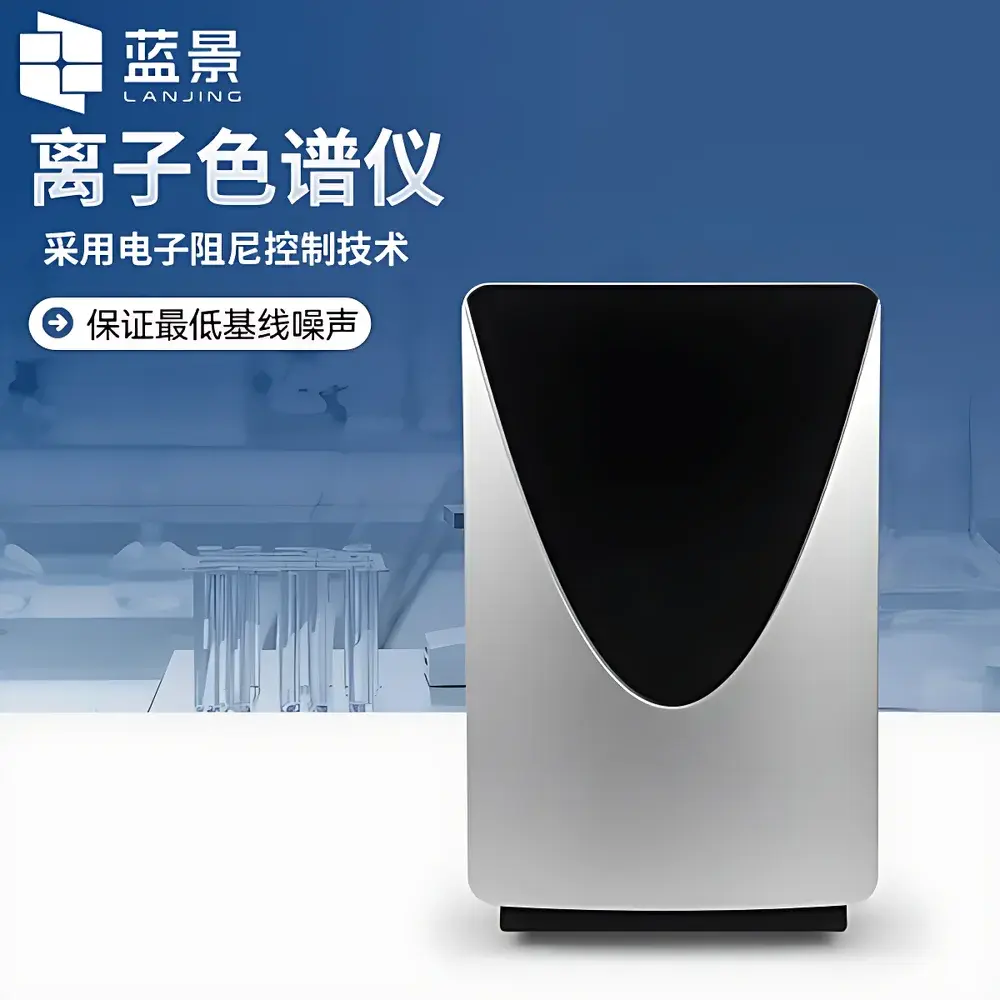
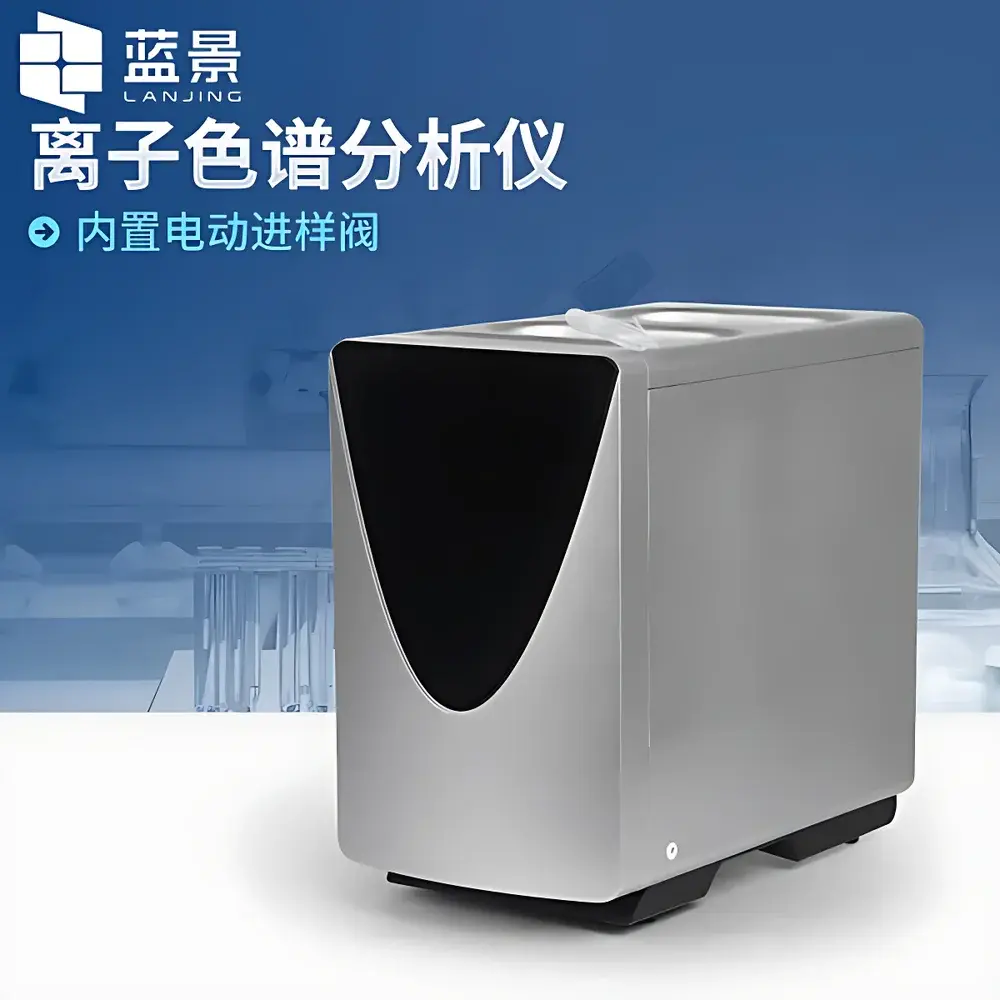
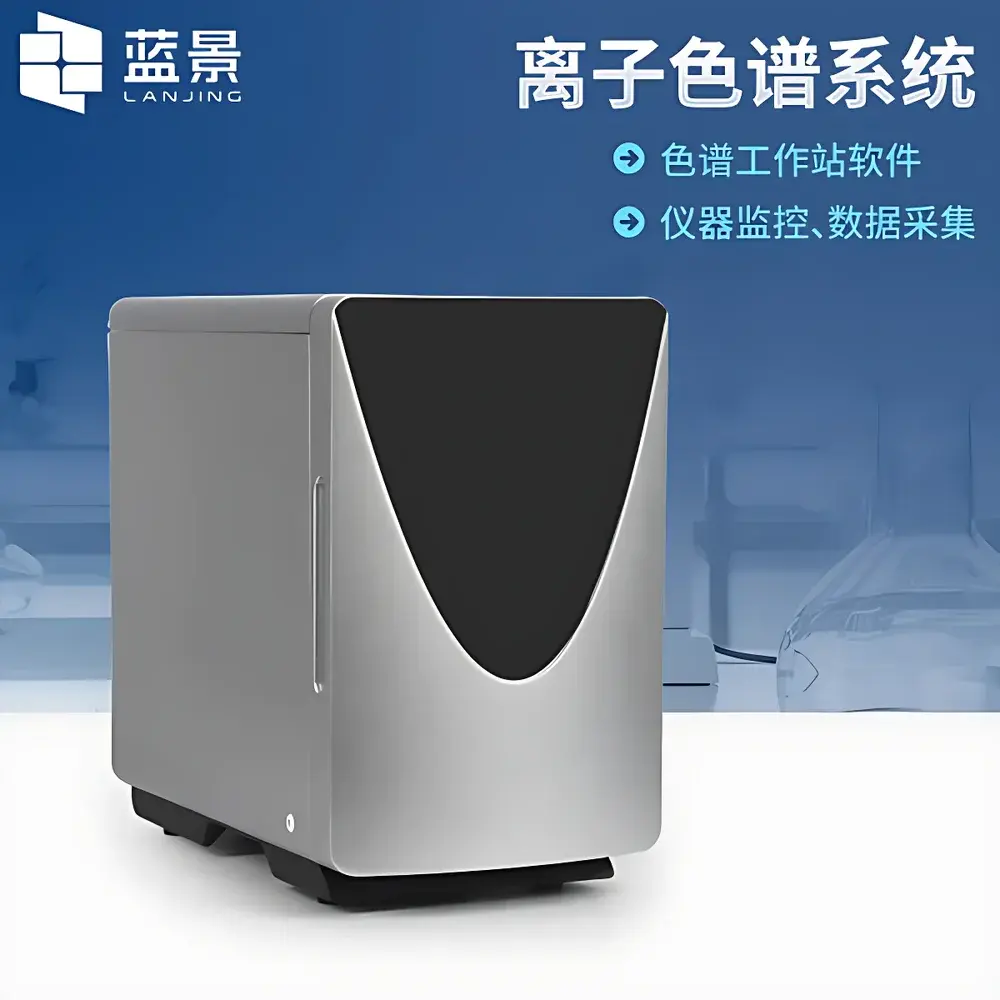
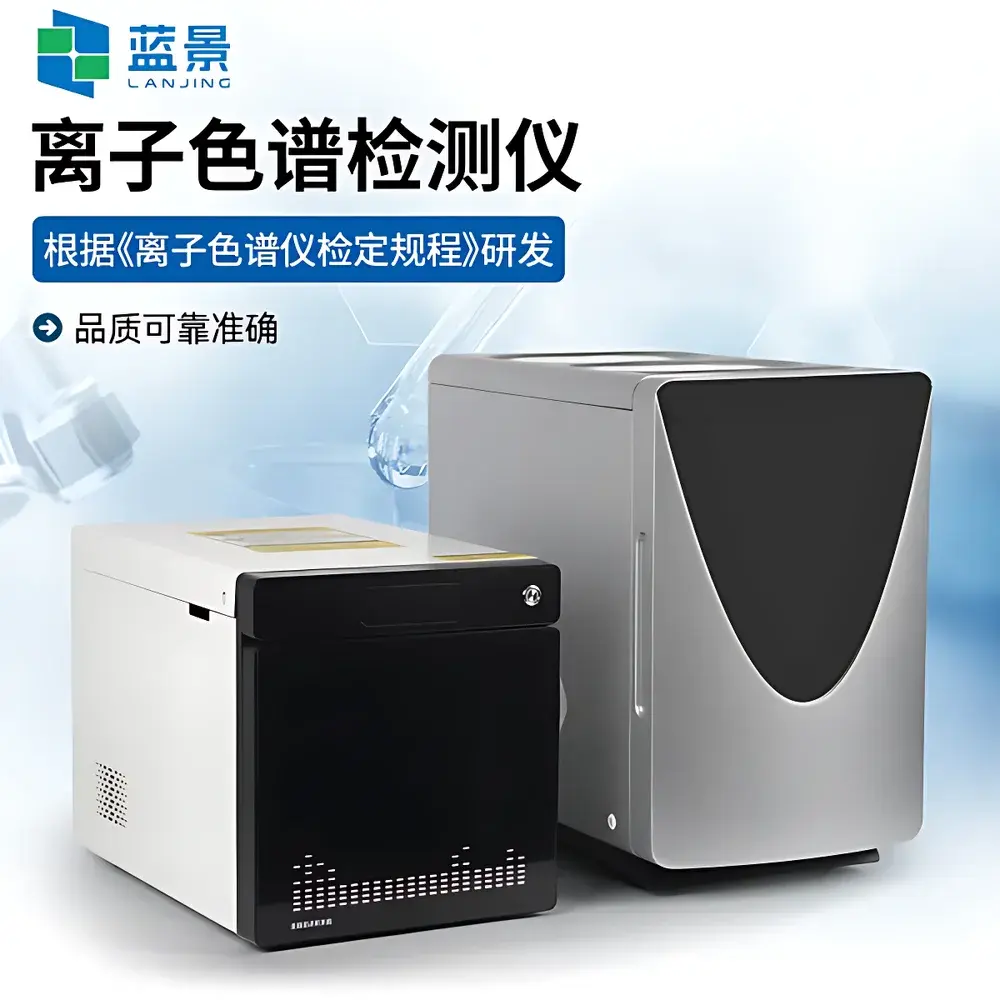
Lanjing LJ-TLS52 Ion Chromatograph
| Brand | Lanjing |
|---|---|
| Origin | Shandong, China |
| Manufacturer Type | Direct Manufacturer |
| Instrument Type | Laboratory Benchtop Ion Chromatograph |
| Application Scope | Universal (Anions, Cations, Organic Acids, Sugars) |
| Pump Pressure Rating | 0–42 MPa |
| Flow Rate Range | 0.001–9.999 mL/min |
| Column Oven Operating Temperature | Ambient +5 °C to 60 °C |
| Detection Principle | Suppressed Conductivity Detection |
| Compliance | JJG 823–2014, HJ 84–2016, HJ 800–2016, GB 5009.33–2016, GB/T 5750.5–2023, USP <645>, ASTM D4327, ISO 14911 |
Overview
The Lanjing LJ-TLS52 Ion Chromatograph is a fully integrated, high-stability benchtop system engineered for precise, reproducible quantification of inorganic anions and cations, low-molecular-weight organic acids, and carbohydrates in environmental, food, pharmaceutical, and industrial water matrices. It operates on the principle of suppressed conductivity detection following ion-exchange chromatography—where analytes are separated on high-capacity PEEK-compatible ion-exchange columns, eluted with chemically generated or manually prepared eluents, and detected via a thermostatically controlled digital conductivity cell. The system’s all-PEEK fluidic path—from pump head to detector cell—ensures chemical inertness across pH 0–14 and full compatibility with organic modifiers (0–100% acetonitrile/methanol), eliminating metal-induced adsorption or degradation artifacts. Designed to meet JJG 823–2014 verification requirements, it delivers certified performance metrics including ≤0.05% retention time repeatability for Cl⁻, ≤0.0001 µS baseline noise (Cl⁻), and sub-part-per-trillion-level detection sensitivity (e.g., Cl⁻: ≤0.0001 µg/mL).
Key Features
- High-pressure dual-plunger PEEK pump with electronic damping control: achieves flow stability <0.10% RSD and pulse suppression down to <0.005 mL/min RMS; supports gradient elution up to 42 MPa.
- Integrated online degassing: independent channels for eluent and sample streams; compatible with 0–100% organic solvents without membrane replacement.
- Automated 108-position autosampler with triple fault detection (empty vial, needle collision, clog sensing); cross-contamination <0.001% CV; wash-in-place needle cleaning using dual-path solvent rinse.
- Thermally uniform column oven: radiant heating architecture achieves ±0.1 °C temperature accuracy and ≤0.1 °C/h drift; stabilizes within 20 min post-power-on.
- Electrolytic, self-regenerating micro-membrane suppressor: platinum-porous electrode design; dry-tolerant membrane resists irreversible dehydration; operational at 2–6 MPa with zero leakage; eliminates external regenerant acid reservoirs.
- Digital thermostatic conductivity detector: 0.8 µL cell volume; temperature stability ±0.01 °C; range 0–50,000 µS/cm; resolution 0.0020 µS/cm; max pressure ≥10 MPa.
- Optional electrolytic eluent generator: enables water-only operation; programmable concentration gradients; eliminates manual eluent preparation variability and improves retention time reproducibility.
Sample Compatibility & Compliance
The LJ-TLS52 supports direct injection of aqueous samples—including drinking water, wastewater, air filter extracts, precipitation, food digests, and pharmaceutical excipients—without derivatization. Its modular column selection includes high-capacity anion-exchange (e.g., AS23, AS26) and cation-exchange (CS12A, CS16) phases compliant with HJ 84–2016 (anions in water/air), HJ 800–2016/HJ 812–2016 (cations in water/air), GB 5009.33–2016 (nitrite/nitrate in food), and GB/T 5750.5–2023 (inorganic anions in drinking water). Method validation aligns with ISO 14911 (determination of anions/cations in water), ASTM D4327 (anion analysis in environmental waters), and USP <645> (conductivity testing of purified water and WFI). All hardware and software modules are architected to support GLP-compliant audit trails, electronic signatures, and 21 CFR Part 11–ready data integrity controls.
Software & Data Management
The proprietary IC workstation is built on a relational SQL database engine, ensuring ACID-compliant data storage, automatic versioned backups, and tamper-evident audit logs. It provides real-time instrument monitoring, sequence-based batch acquisition, peak integration with customizable baselines and shoulder detection, multi-point calibration (linear, quadratic, weighted), and ISO/IEC 17025–aligned uncertainty propagation reporting. Data export complies with ASTM E1927 (chromatographic data exchange format) and supports LIMS integration via ODBC and HL7 interfaces. Multi-instrument control allows synchronized operation of up to four LJ-TLS52 units with shared method templates, centralized event logging, and cross-system comparative analysis (e.g., overlay chromatograms, relative retention indexing). Raw data files are stored in vendor-neutral .cdf format with embedded metadata (instrument ID, operator, method parameters, environmental conditions).
Applications
The LJ-TLS52 is routinely deployed in accredited environmental labs for EPA Method 300.0–compliant analysis of F⁻, Cl⁻, NO₂⁻, NO₃⁻, SO₄²⁻, PO₄³⁻, Br⁻, and ClO₃⁻ in surface water and wastewater; in food safety labs for GB 5009.33–2016 nitrate/nitrite quantitation in cured meats and dairy; in pharmaceutical QC for residual chloride/bromide in APIs per ICH Q2(R2); and in power generation facilities for trace anion monitoring in boiler feedwater (ASTM D4582). Its cationic capability supports HJ 1005–2018 (Na⁺, NH₄⁺, K⁺, Mg²⁺, Ca²⁺ in ambient air particulates) and HJ 1076–2019 (methylamines in stack emissions). The system also enables non-standard applications such as organic acid profiling in fermentation broths (HJ 1004–2018) and bromate screening in bread flour (GB/T 20188–2006).
FAQ
What regulatory standards does the LJ-TLS52 comply with for environmental testing?
It meets HJ 84–2016, HJ 800–2016, HJ 688–2019, and HJ 549–2016 for air/water anion and cation analysis, and is verified per JJG 823–2014.
Can the system operate without manual eluent preparation?
Yes—the optional electrolytic eluent generator enables water-only operation and programmable gradient elution, eliminating weighing and volumetric errors.
Is the software 21 CFR Part 11 compliant?
The workstation supports electronic signatures, role-based access control, immutable audit trails, and automated backup—fully configurable for FDA-regulated environments.
What is the maximum operating pressure for the suppressor?
The auto-regenerating membrane suppressor is rated for continuous operation at 2 MPa and burst-tested to 6 MPa with no leakage.
Does the autosampler support custom vial formats?
Standard configuration uses 5 mL vials; custom racks for 2 mL, 10 mL, or 15 mL vials are available upon request.




