
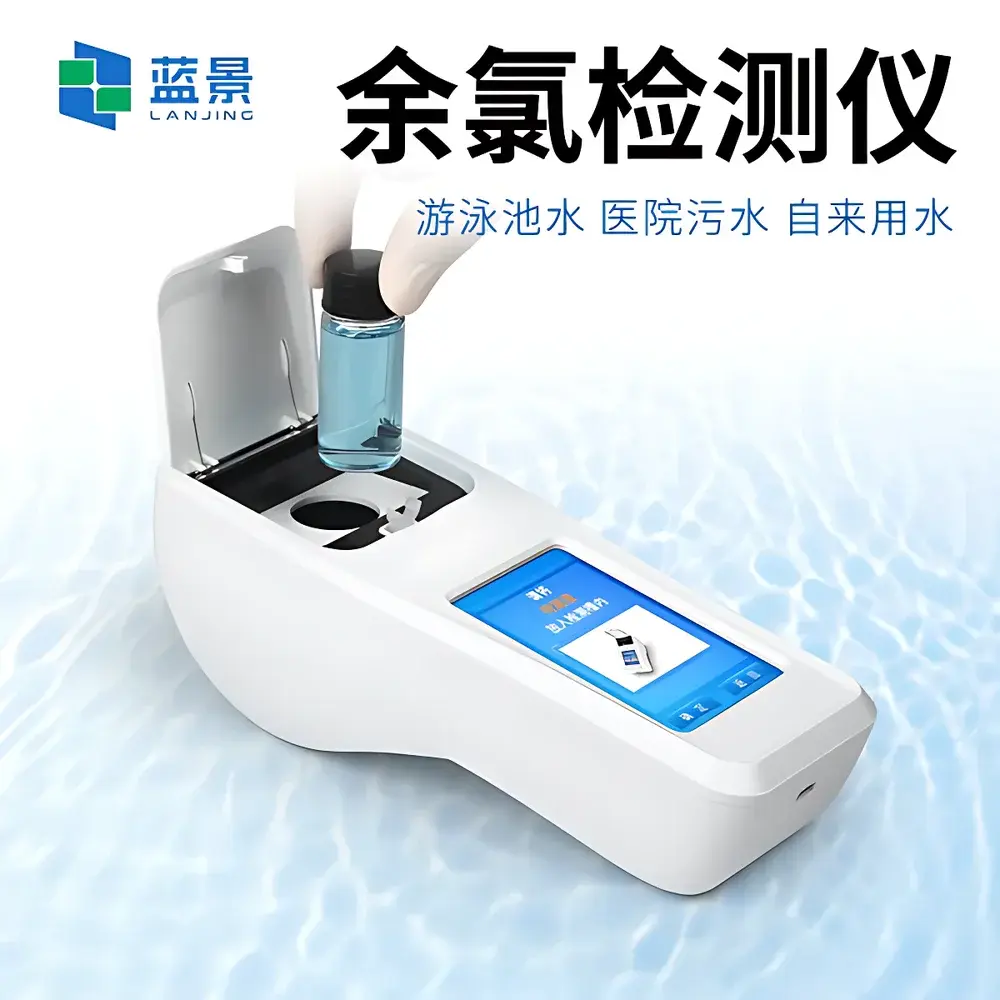
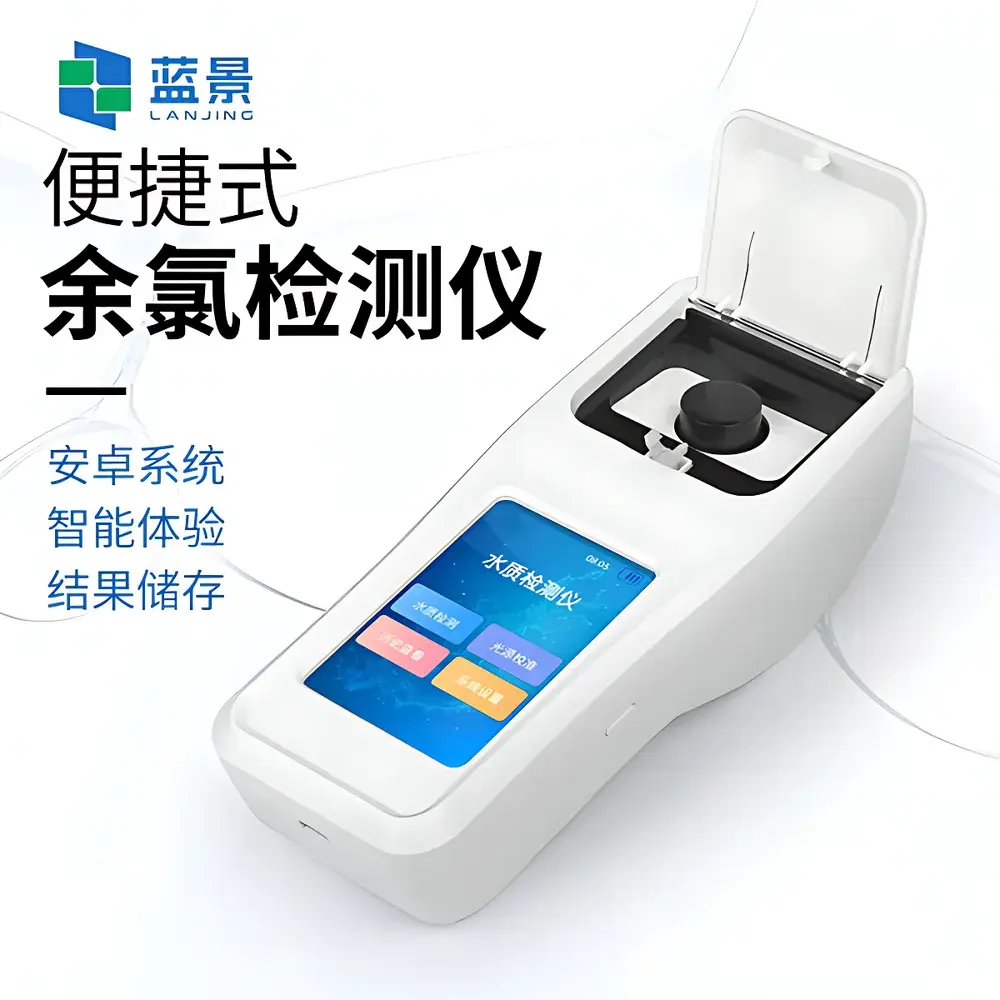
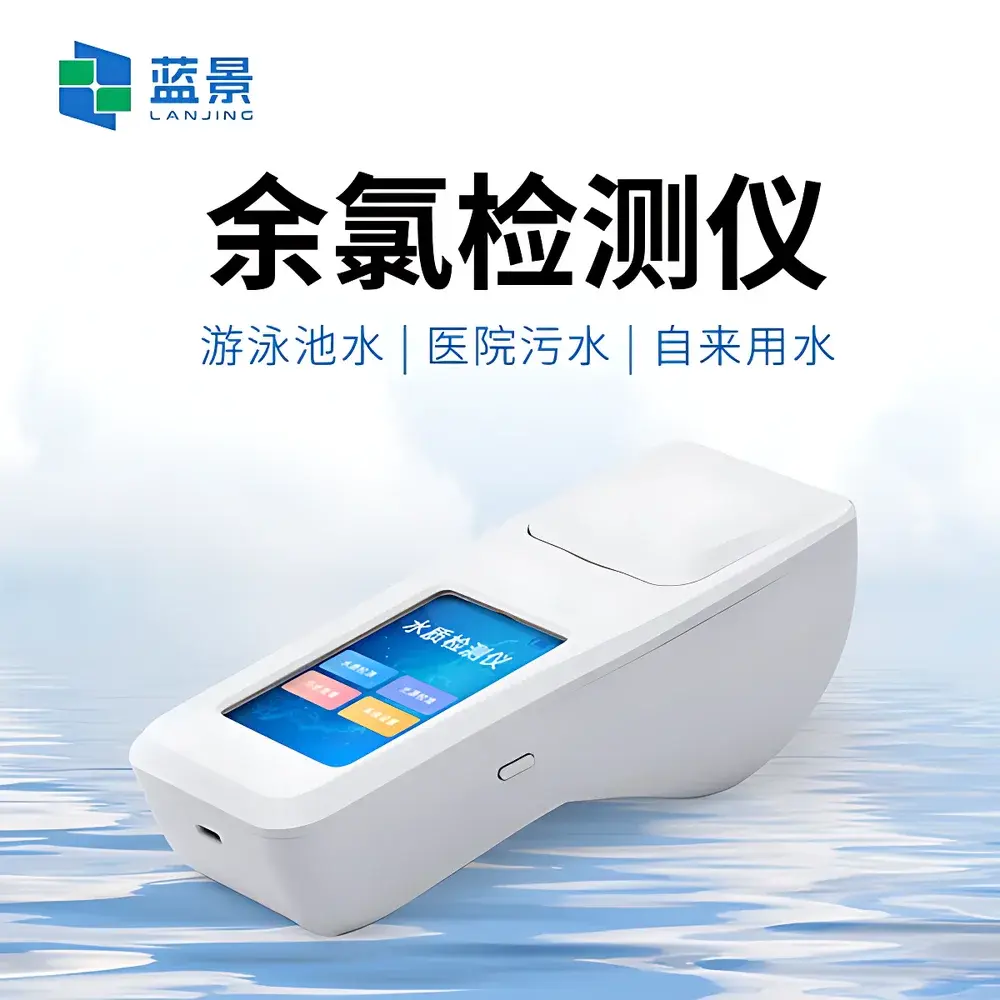
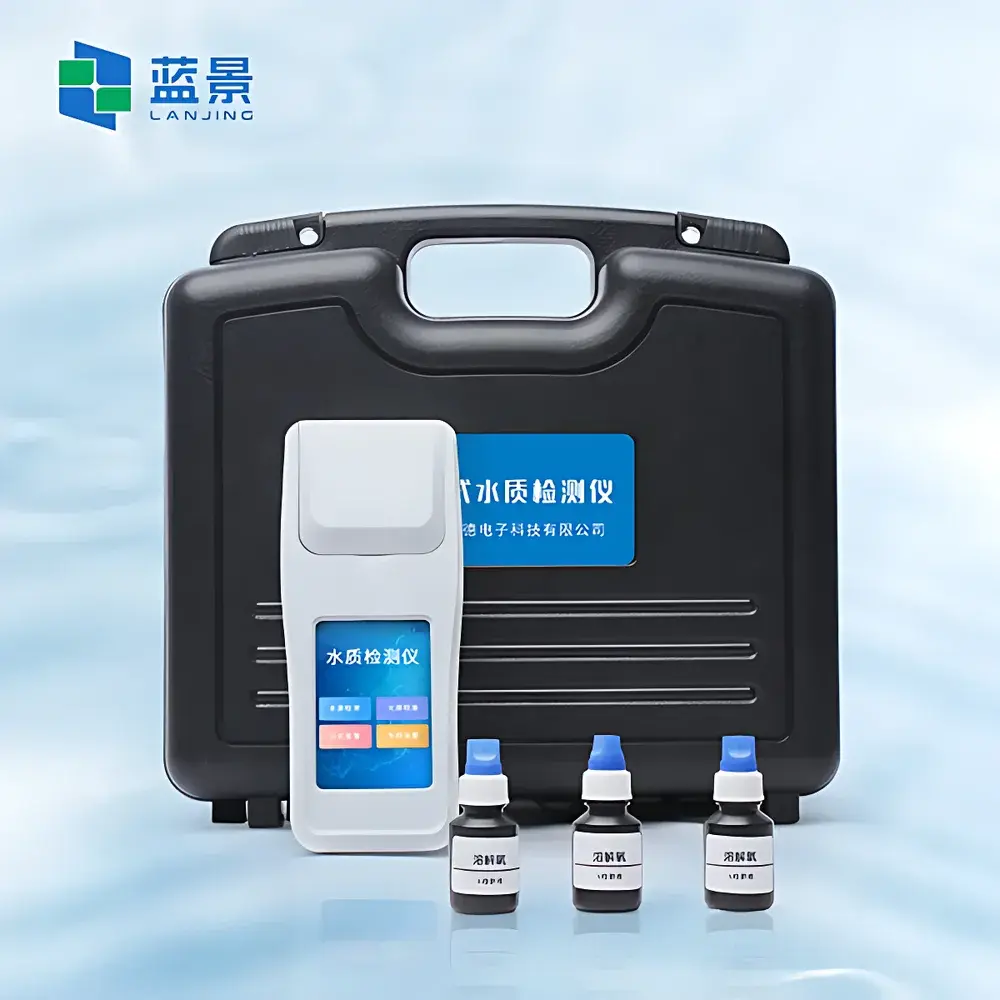
Lanjing LJ-YL01 Portable Residual Chlorine and Chlorine Dioxide Analyzer
| Brand | Lanjing |
|---|---|
| Origin | Shandong, China |
| Manufacturer Type | Direct Manufacturer |
| Product Category | Domestic |
| Model | LJ-YL01 |
| Instrument Type | Portable |
| Measured Parameters | Free Chlorine, Total Chlorine, Chlorine Dioxide |
| Measurement Ranges | 0.04–3 mg/L and 0.2–15 mg/L |
| Repeatability | <0.5% |
| Measurement Principle | Photometric Colorimetry (LED-based) |
| Wavelength Selection | Automatic |
| Display | 3.5-inch TFT Color Touchscreen |
| Operating System | Android-based Embedded OS |
| Data Storage Capacity | >80,000 records |
| Connectivity | USB Type-C, Wi-Fi, Bluetooth, Mobile Hotspot |
| Power Supply | 5 V DC / Internal 5600 mAh Rechargeable Li-ion Battery |
| Continuous Operation Time | Up to 8 hours |
| Dimensions | 180 × 80 × 70 mm |
| Weight | 700 g |
| Environmental Operating Range | 0–50 °C, 0–90% RH (non-condensing) |
| Optical Source | Imported Cold LED Light Source (Lifetime ≥100,000 h) |
| Compliance Reference | HJ 586–2010 |
Overview
The Lanjing LJ-YL01 Portable Residual Chlorine and Chlorine Dioxide Analyzer is a field-deployable photometric instrument engineered for rapid, on-site quantification of free chlorine, total chlorine, and chlorine dioxide in aqueous matrices. It operates on the principle of standardized colorimetric reaction—where specific reagents generate chromophores proportional to analyte concentration—and measures absorbance via high-stability cold LED light sources at optimized wavelengths. Unlike conventional benchtop spectrophotometers, the LJ-YL01 integrates automated wavelength selection, real-time signal processing, and embedded calibration algorithms to minimize operator dependency while maintaining metrological traceability to HJ 586–2010, the Chinese national standard for residual chlorine determination in water. Its compact form factor, low-power architecture, and dual-range detection capability (0.04–3 mg/L for low-level disinfectant monitoring and 0.2–15 mg/L for process control in chlorination systems) make it suitable for routine surveillance across distributed water infrastructure without compromising analytical rigor.
Key Features
- Android-based embedded operating system with intuitive touchscreen interface—no external PC or software installation required.
- Automated optical path alignment and self-diagnostic routines ensure consistent photometric performance across environmental gradients.
- Imported cold LED light source with spectral stability and ≥100,000-hour operational lifetime eliminates lamp replacement cycles and drift-related recalibration.
- Dual-range measurement capability enables precise quantification across regulatory thresholds (e.g., WHO drinking water guidelines ≤0.5 mg/L free chlorine) and industrial dosing applications (e.g., cooling tower biocide control).
- Integrated rechargeable 5600 mAh Li-ion battery supports up to 8 hours of continuous operation under mixed display and wireless transmission loads.
- Multi-mode connectivity—including Wi-Fi, Bluetooth, and mobile hotspot—enables direct synchronization with cloud-based water quality management platforms for time-series analysis and compliance reporting.
- Ruggedized housing (IP65-rated ingress protection) and thermal compensation algorithms maintain accuracy across ambient temperatures from 0 to 50 °C and relative humidity up to 90% non-condensing.
Sample Compatibility & Compliance
The LJ-YL01 is validated for use with raw water, treated potable water, wastewater effluent, swimming pool recirculation streams, aquaculture systems, and industrial process water. Sample preparation follows standardized reagent protocols compliant with HJ 586–2010, ensuring comparability with laboratory reference methods. While not certified to ISO/IEC 17025, its repeatability (<0.5%) and stability (<0.5%) meet internal QA/QC benchmarks for field instrumentation used in GLP-aligned monitoring programs. The device supports audit-ready data logging—including timestamp, GPS coordinates (when paired with mobile device), operator ID, and calibration history—to facilitate traceability in regulated environments such as municipal water utilities subject to local health department oversight.
Software & Data Management
Data acquisition, storage, and export are managed through the onboard Android OS with native support for CSV and PDF report generation. All measurements are time-stamped and stored locally (>80,000 records). Wireless modules allow encrypted upload to Lanjing’s secure cloud platform (accessible via web dashboard or mobile app), where users can configure alert thresholds, generate trend charts, and export reports compliant with internal documentation standards. Firmware updates are delivered over-the-air (OTA), and the system maintains full backward compatibility with historical calibration files and method configurations. No proprietary desktop software is required; all functions operate autonomously on-device.
Applications
- Real-time verification of disinfectant residual at water treatment plant exit points and distribution system nodes.
- Compliance monitoring for swimming pool operators under national public health regulations.
- Process control in food & beverage facilities where chlorine-based sanitizers must be verified pre-rinse and post-sanitization.
- Field validation of point-of-use (POU) and point-of-entry (POE) disinfection systems in remote or off-grid communities.
- Academic and governmental research projects requiring spatially resolved chlorine decay profiling in surface water bodies.
- Emergency response deployment during contamination events, enabling rapid triage of affected water sources.
FAQ
What regulatory standards does the LJ-YL01 comply with?
It adheres to methodology requirements specified in HJ 586–2010 and supports data integrity practices aligned with GLP principles, though it is not independently accredited to ISO/IEC 17025.
Can the instrument measure both free chlorine and chlorine dioxide simultaneously?
No—it performs sequential measurements using dedicated reagent kits; users select the target analyte prior to analysis.
Is calibration traceable to NIST or other national metrology institutes?
Calibration is performed using manufacturer-certified standard solutions; traceability to primary standards requires user-established linkage per local metrological practice.
Does the device support multi-language interfaces beyond English and Simplified Chinese?
Only English and Simplified Chinese are currently supported in firmware v2.3.1.
How often must the optical system be cleaned or serviced?
The sealed optical chamber requires no routine maintenance; periodic cleaning of the sample cell with deionized water is recommended after each use.
Related Products







