
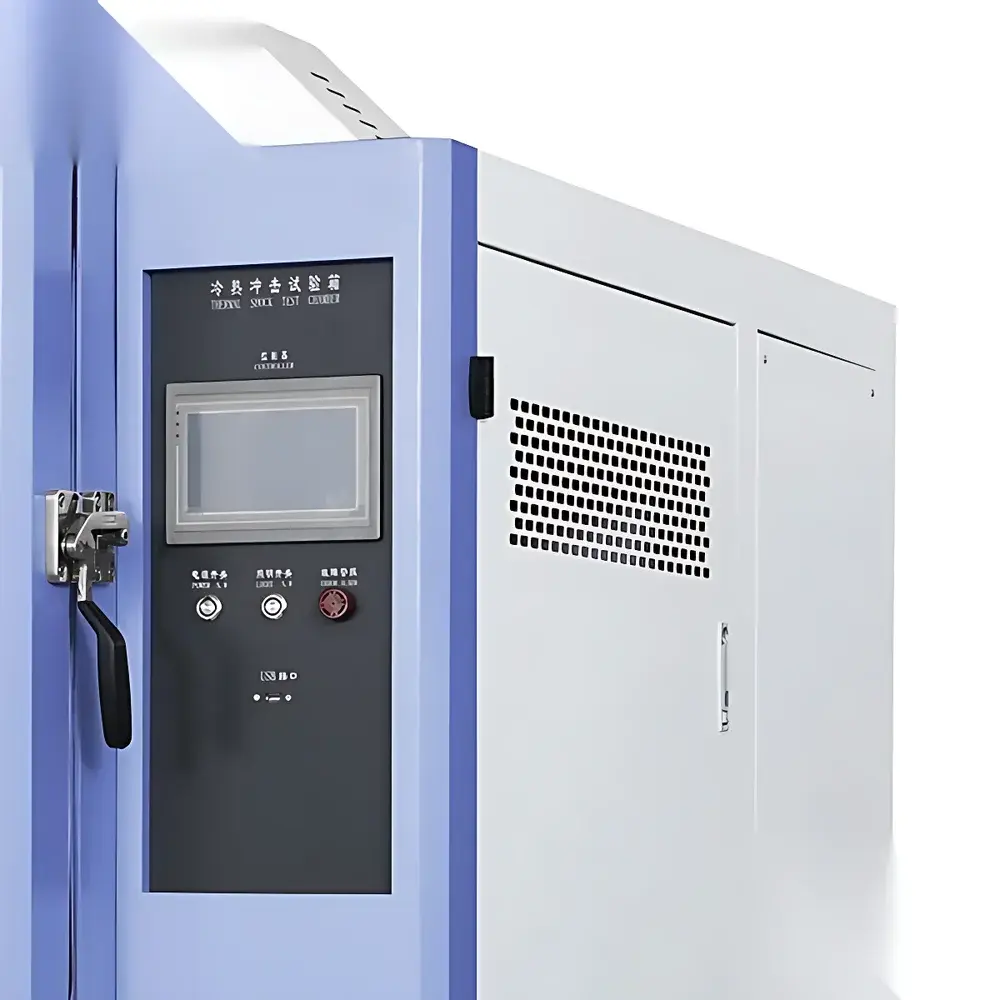
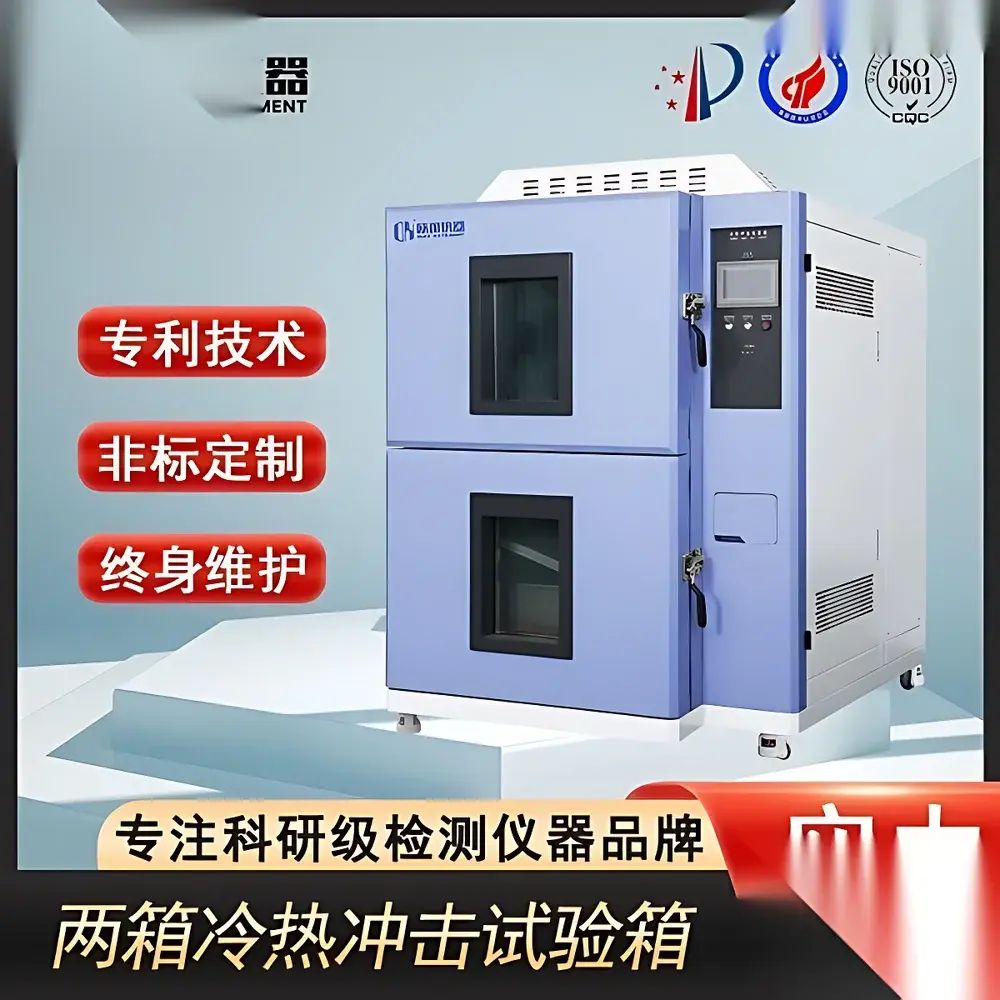
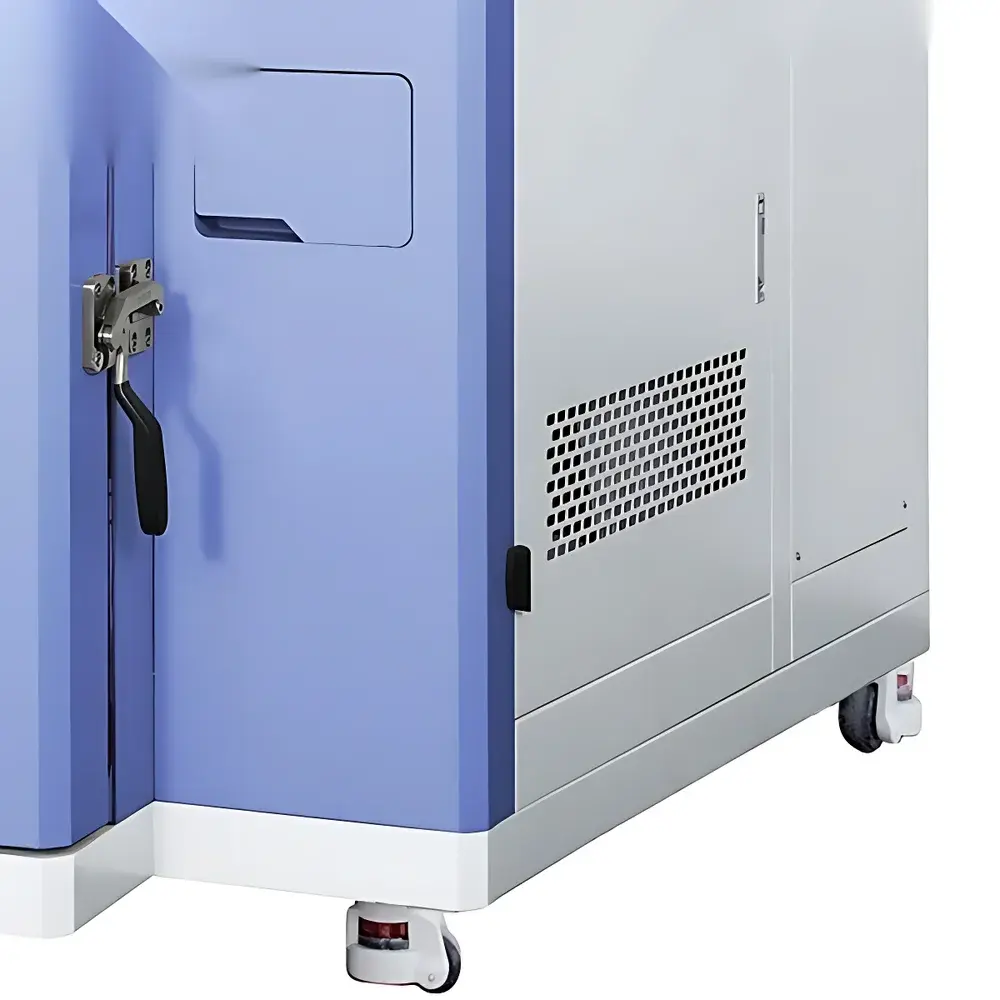
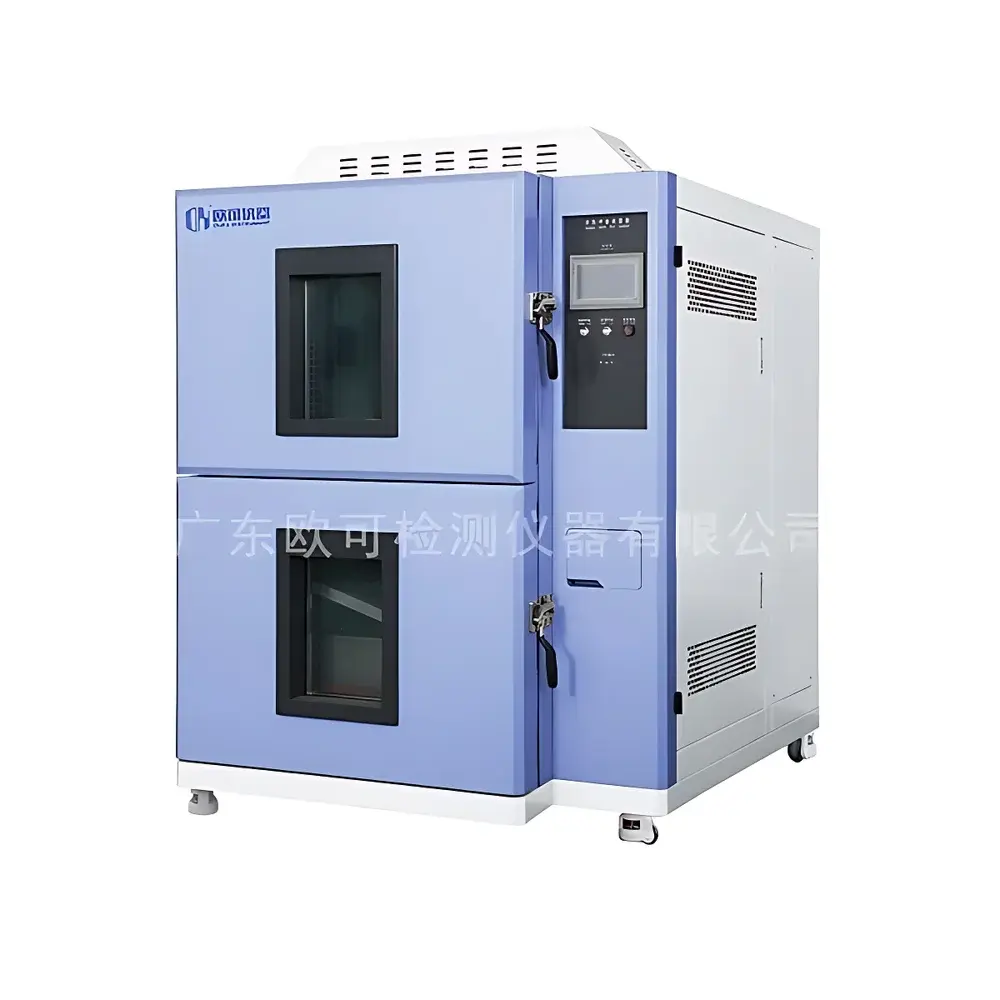
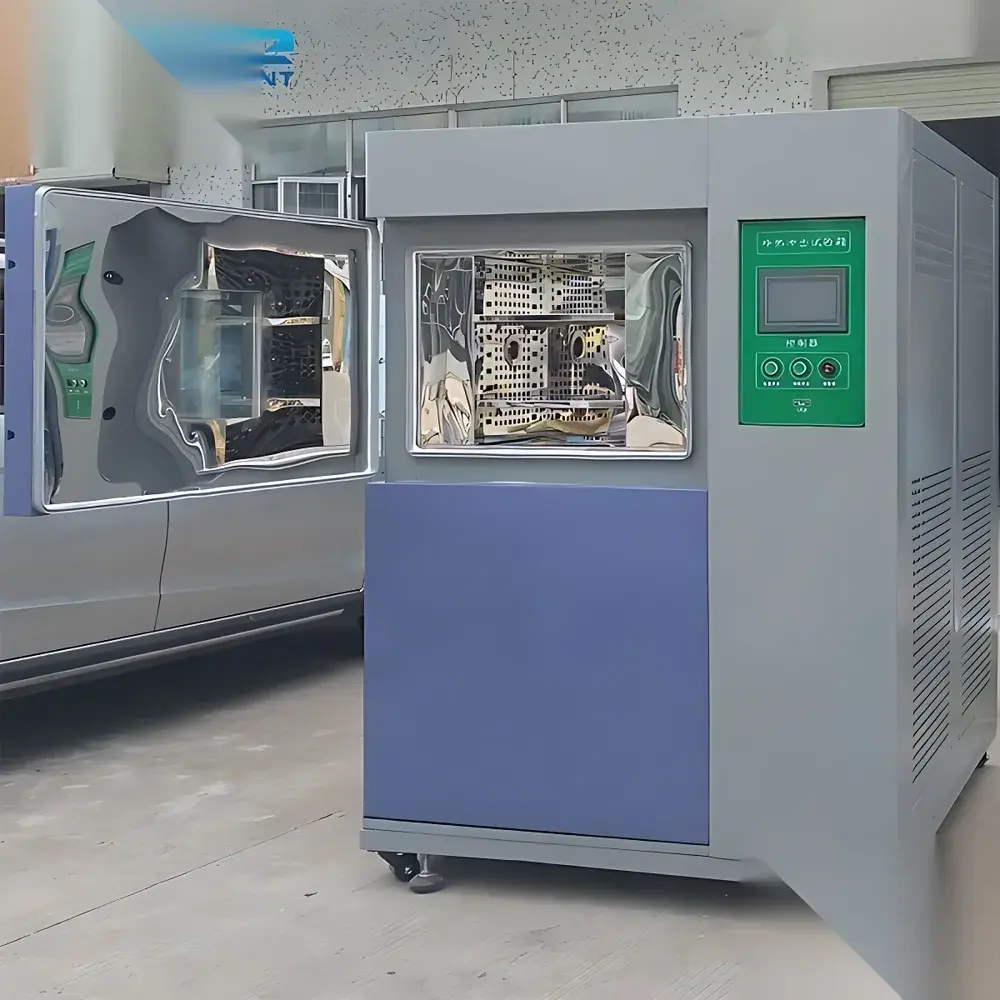
Large-Scale Thermal Shock Test Chamber
| Brand | Other Brands |
|---|---|
| Origin | Imported |
| Manufacturer Type | General Distributor |
| Price | USD 11,200 (approx. ¥80,000) |
Overview
The Large-Scale Thermal Shock Test Chamber is an industrial-grade environmental test system engineered for rapid, repeatable transitions between extreme high and low temperature zones—typically −70 °C to +180 °C—to evaluate material integrity, solder joint reliability, packaging durability, and component performance under severe thermal cycling stress. Based on the two-zone (hot/cold) or three-zone (hot/cold/transfer) forced-air thermal shock architecture, it employs independent refrigeration and heating circuits with high-velocity air circulation to achieve temperature transition rates exceeding 15 °C/s (typical), minimizing dwell time and maximizing thermal gradient exposure. Designed for compliance with IEC 60068-2-14, MIL-STD-810H Method 503.5, and JESD22-A104D, this chamber supports qualification testing in aerospace, automotive electronics, semiconductor packaging, and high-reliability PCB manufacturing environments where thermal fatigue failure modes must be rigorously characterized.
Key Features
- Robust dual-compartment or triple-compartment configuration with independent PID-controlled hot and cold zones
- High-efficiency cascade refrigeration system using environmentally compliant R404A/R23 refrigerant blends
- Stainless steel 304 inner chamber with insulated double-wall construction and silicone door gasket for thermal integrity
- Programmable controller with touch-screen HMI supporting up to 999 segments, 99 cycles, and user-defined ramp/soak profiles
- Real-time data logging with timestamped temperature traces (hot zone, cold zone, test chamber air, and sample surface via optional thermocouple inputs)
- Integrated safety interlocks: over-temperature cut-off (dual-stage), compressor high-pressure switch, phase failure protection, and door-open alarm
- Grounding terminal compliant with IEC 61000-6-3 EMC requirements and Class I electrical safety per IEC 61010-1
Sample Compatibility & Compliance
The chamber accommodates large-format test specimens—including automotive ECUs, server backplanes, battery modules, and medical device enclosures—up to 1,500 mm × 1,200 mm × 1,000 mm (W×D×H). Internal airflow design ensures uniform temperature distribution (±2 °C at 100 mm from chamber walls per IEC 60068-3-5). It excludes explosive, flammable, or highly corrosive materials per NFPA 318 and OSHA 1910.120 guidelines. All operational procedures align with GLP documentation standards; audit trails for parameter changes, alarm events, and power interruptions are retained for ≥30 days. The system supports FDA 21 CFR Part 11–compliant electronic signatures when integrated with validated LIMS or MES platforms.
Software & Data Management
The embedded controller firmware provides local data storage (SD card slot), USB export of CSV-formatted temperature logs, and Ethernet-based remote monitoring via Modbus TCP or optional OPC UA gateway. Optional PC-based software enables automated report generation (PDF/Excel), statistical process control (SPC) charting (X̄-R, Cpk), and deviation analysis against specification limits (e.g., USP , AEC-Q200). Firmware updates maintain traceability to version-controlled release notes and include checksum verification. Calibration certificates (NIST-traceable RTD sensors) and preventive maintenance logs can be archived alongside test records for regulatory submissions.
Applications
- Qualification of lead-free solder joints per IPC-J-STD-020 and JEDEC JESD22-A104D
- Thermal cycling validation of EV battery housings under ISO 16750-4 and GB/T 31467.3
- Reliability screening of MEMS sensors, optical modules, and RF front-end components
- Accelerated aging studies for polymer seals, adhesives, and conformal coatings
- Pre-conditioning of calibration standards prior to metrological verification
FAQ
Why must the refrigeration unit not be cycled within three minutes?
Frequent short-cycle operation risks liquid refrigerant slugging, oil migration imbalance, and premature wear of the compressor’s mechanical components—reducing mean time between failures (MTBF) and voiding warranty coverage.
What is the recommended maintenance interval for the condenser coils?
Monthly vacuum cleaning or compressed-air purging is required; accumulation of particulate matter increases condensing pressure, triggering high-pressure cutouts and reducing cooling capacity by up to 25% over six months.
Can the chamber operate continuously for extended durations (e.g., 1,000-hour tests)?
Yes—provided ambient room temperature remains ≤30 °C and relative humidity stays below 80% RH; continuous operation mandates quarterly inspection of refrigerant charge levels and electrical contact resistance in main power terminals.
Is door opening permitted during low-temperature operation?
No. Opening the door below −40 °C induces rapid frost formation on evaporator fins and sensor surfaces, impairing temperature control stability and risking ice-induced mechanical damage to airflow baffles.
How is grounding verified for electrostatic discharge (ESD) safety?
A dedicated 4-mm² copper grounding conductor must connect the chamber chassis to a certified earth electrode (≤4 Ω resistance per IEEE Std 1100); periodic verification using a ground bond tester is required per ANSI/ESD S20.20.



