
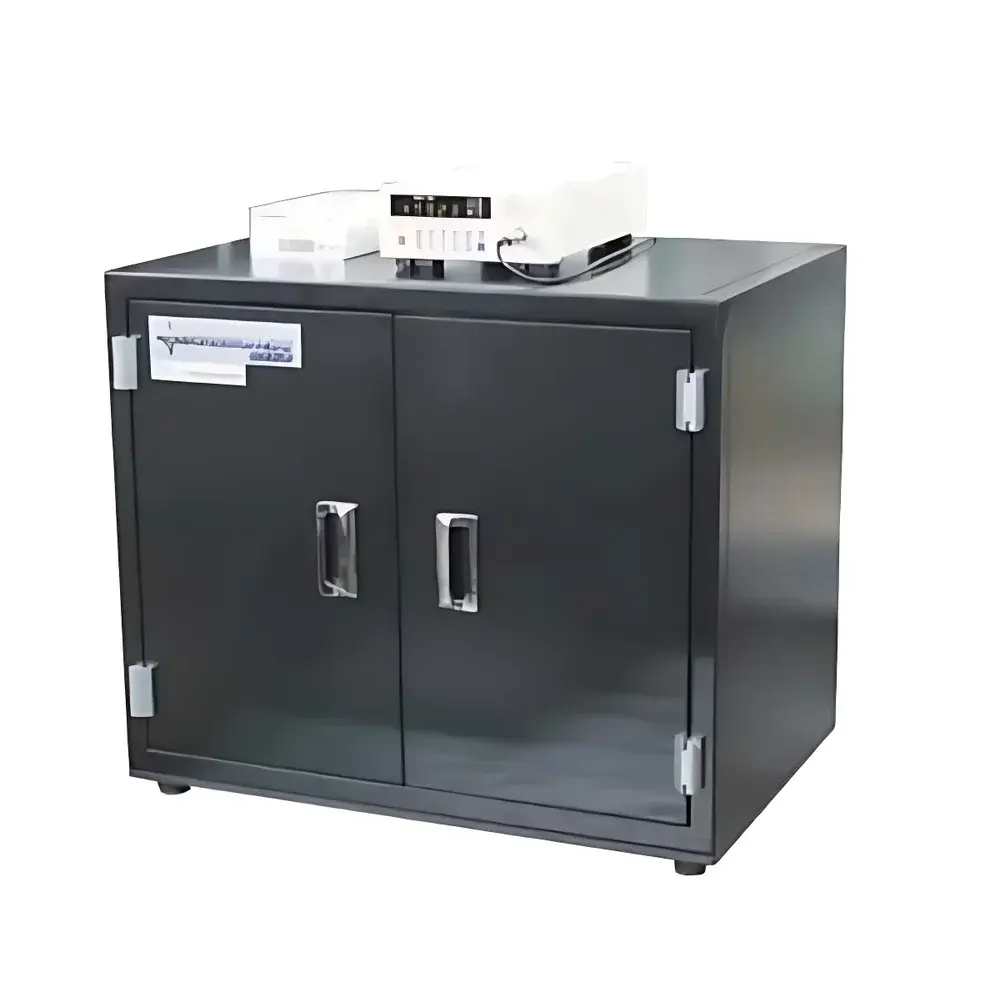
Laser Beam Induced Current (LBIC) Mapping System LBC-2 for Photocurrent Uniformity Analysis of Solar Cells
| Origin | Japan |
|---|---|
| Manufacturer Type | Authorized Distributor |
| Origin Category | Imported |
| Model | LBC-2 |
| Instrument Type | Benchtop |
| Integration | Fully Integrated |
| Laser Power | 10 mW |
| Laser Wavelength (Standard) | 532 nm |
| Spatial Resolution | 10 µm |
| Scan Area | 50 mm × 50 mm |
| Current Measurement Range | 10 fA – 20 mA |
| XY Stage Travel | ±25 mm (0.01 mm minimum step) |
| Laser Stability | ±5% / h |
| Laser Class | Class 2 (IEC 60825-1) |
| Operating System | Windows 7 (32-bit) |
| Dimensions (W×D×H) | 750 mm × 270 mm × 650 mm (excl. electrometer, stage controller, and PC) |
Overview
The LBC-2 Laser Beam Induced Current (LBIC) Mapping System is a precision benchtop instrument engineered for quantitative spatial characterization of photocurrent generation in photovoltaic (PV) devices. It operates on the fundamental principle of localized carrier excitation via focused monochromatic laser irradiation, followed by measurement of the resulting short-circuit current (Isc) under zero-bias conditions. This non-contact, non-destructive method enables high-resolution mapping of charge collection efficiency, defect distribution, and interfacial recombination behavior across device surfaces. Unlike conventional bulk electrical testing, LBIC provides direct correlation between optical excitation position and local photocurrent response—critical for diagnosing inhomogeneities arising from fabrication processes such as spin-coating, thermal evaporation, or chemical vapor deposition. The system is optimized for research-grade evaluation of emerging thin-film technologies—including perovskite solar cells (PSCs), silicon photodiodes (SiPDs), CCD/CMOS image sensors, and transparent conductive oxide (TCO)-based optoelectronic layers—where lateral uniformity directly impacts power conversion efficiency and long-term operational stability.
Key Features
- Fully integrated optical-mechanical-electrical architecture with synchronized laser scanning, XY-stage positioning, and femtoampere-level current acquisition
- Standard 532 nm green diode-pumped solid-state (DPSS) laser (1 mW output, Class 2 compliant), with optional wavelength selection across 375–904 nm via SMA-coupled interchangeable laser modules
- High-precision motorized XY translation stage (±25 mm range, 0.01 mm step resolution) enabling programmable raster scans over 50 mm × 50 mm sample areas
- 10 µm spatial resolution achieved through diffraction-limited beam focusing and sub-micron stage repeatability
- Dedicated electrometer with 10 fA–20 mA dynamic range and <0.1% linearity error, calibrated traceable to NIST standards
- Integrated manual shutter and software-controlled automatic shutter mechanism for precise exposure timing and laser safety compliance
- Onboard Si photodiode reference detector for real-time laser power monitoring and quantum efficiency (QE) normalization
Sample Compatibility & Compliance
The LBC-2 accommodates rigid and flexible substrates up to 50 mm × 50 mm in footprint and ≤5 mm in thickness, including glass, silicon wafers, ITO/PEDOT:PSS-coated PET, and encapsulated perovskite devices. Sample mounting is facilitated by vacuum chucks and adjustable clamping fixtures compatible with standard laboratory handling protocols. All optical and electrical components conform to IEC 60825-1:2014 (laser safety), ISO/IEC 17025:2017 (testing laboratory competence), and ASTM E2848-22 (standard test method for LBIC mapping of PV materials). Data acquisition and reporting support GLP/GMP-aligned audit trails, including timestamped metadata, operator ID logging, and instrument calibration status verification—enabling regulatory readiness for R&D documentation under FDA 21 CFR Part 11 and EU Annex 11 requirements.
Software & Data Management
The proprietary LBC-2 Control & Analysis Suite (Windows 7 32-bit) provides full instrument orchestration, scan parameter definition (step size, dwell time, laser power, polarity), and real-time current waveform visualization. Post-acquisition processing includes pixel-wise uniformity quantification using two standardized metrics: (1) relative non-uniformity = (Imax − Imin) / (Imax + Imin) and (2) mean effective photocurrent = ΣIeff / Neff. Export formats include CSV, TIFF (16-bit grayscale intensity maps), and HDF5 for interoperability with MATLAB, Python (NumPy/SciPy), and OriginLab. Raw data files embed EXIF-style metadata (wavelength, power, stage coordinates, ambient temperature/humidity) to ensure full experimental reproducibility and FAIR (Findable, Accessible, Interoperable, Reusable) data principles.
Applications
- Perovskite solar cell optimization: identification of edge-to-center performance gradients induced by spin-coating solvent evaporation dynamics
- Defect localization in CIGS and CdTe thin-film absorbers through photocurrent dropout mapping
- Interconnect integrity assessment in monolithic perovskite/silicon tandem cells
- Uniformity validation of anti-reflective coatings, passivation layers, and transparent electrodes (e.g., AZO, FTO)
- QE profiling of CMOS/CCD pixel arrays for astronomical and biomedical imaging sensor qualification
- Accelerated aging studies correlating local photocurrent decay with environmental stressors (UV, humidity, thermal cycling)
FAQ
What laser wavelengths are supported beyond the standard 532 nm configuration?
The LBC-2 accepts 14 optional laser modules (375, 406, 445, 473, 488, 635, 650, 670, 785, 808, 830, 850, 904, and 980 nm) via SMA-905 fiber coupling—enabling spectral responsivity mapping across UV–NIR ranges.
Is the system compatible with glovebox integration for air-sensitive perovskite measurements?
Yes—the compact footprint and modular design allow seamless installation inside nitrogen-purged gloveboxes (O2/H2O < 0.1 ppm); optional feedthrough-compatible stage controllers and fiber-optic laser delivery eliminate internal electronics.
How is laser power stability maintained during extended mapping sessions?
An integrated Si photodiode continuously monitors incident beam intensity; software applies real-time gain correction to current data, compensating for drift within ±5% per hour as specified.
Can the LBC-2 perform time-resolved LBIC or transient photocurrent analysis?
No—the standard configuration supports steady-state Isc mapping only; time-resolved variants require external pulsed laser sources and nanosecond-capable digitizers (available as custom OEM integration).
Related Products





