
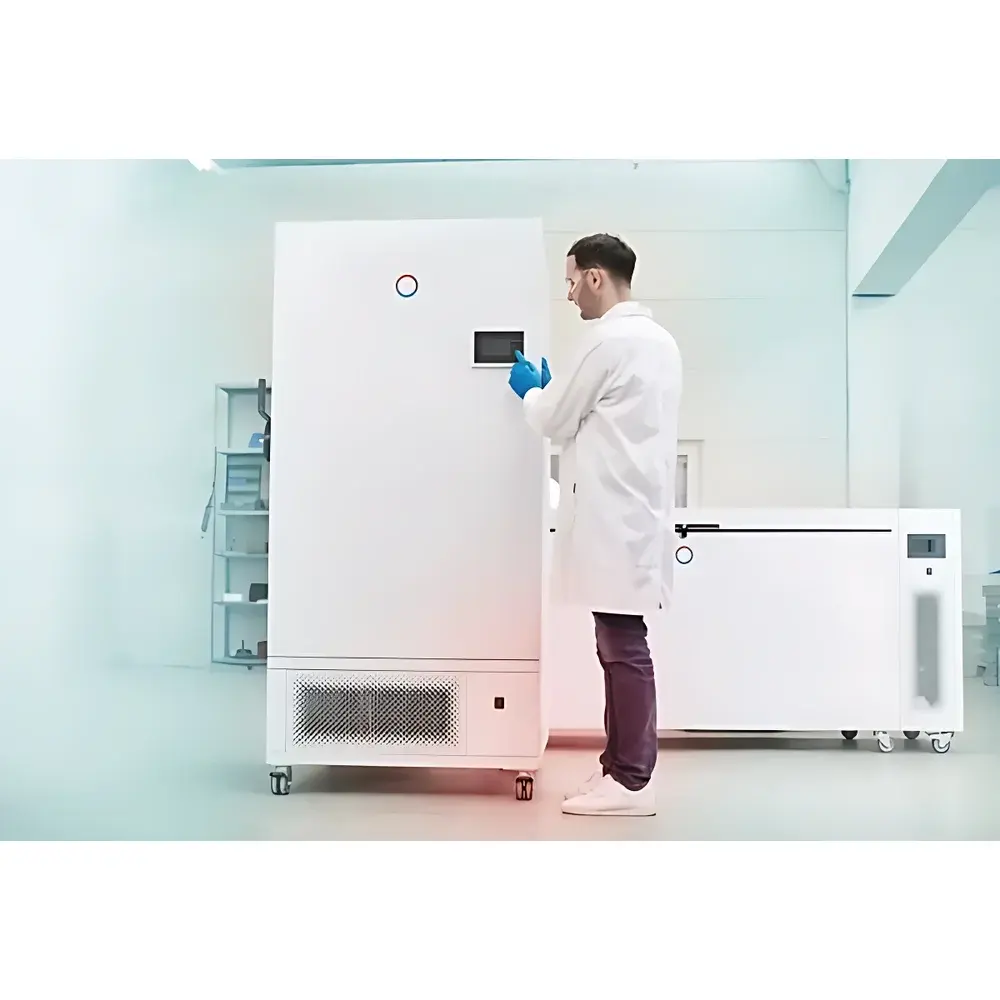
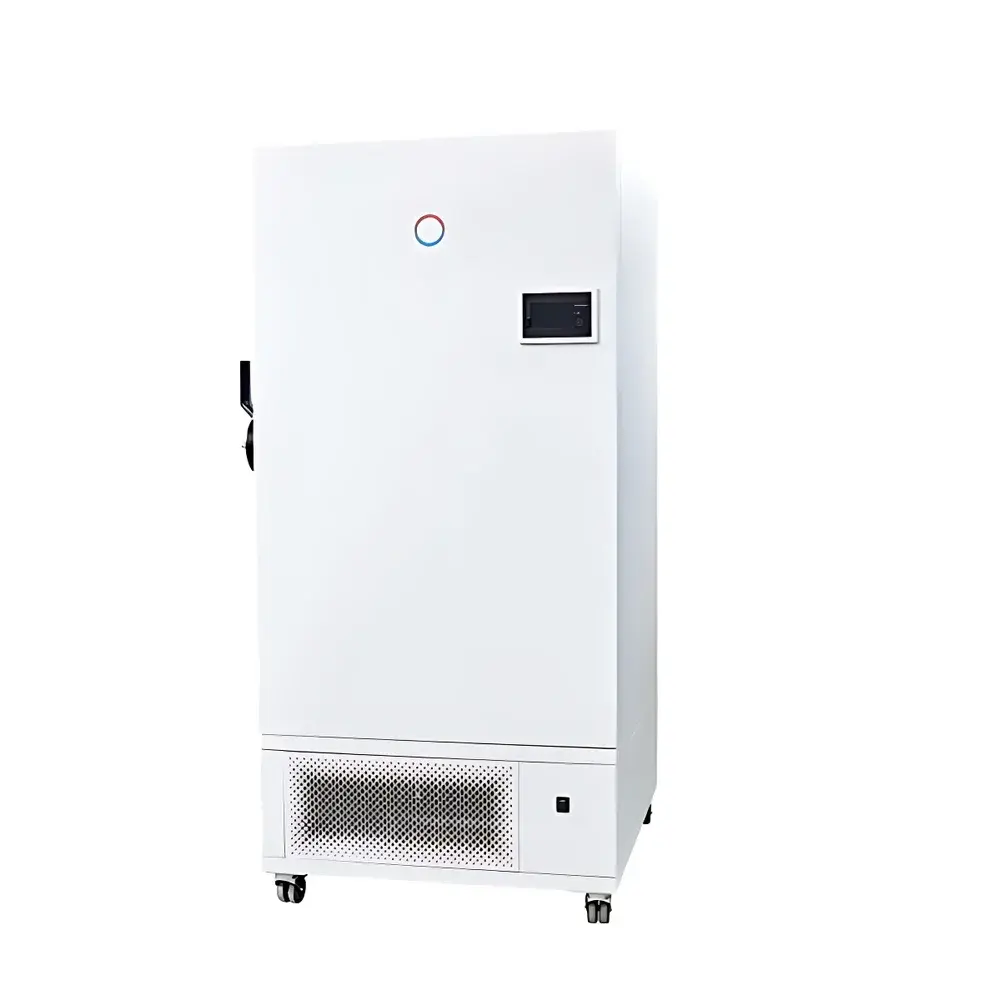
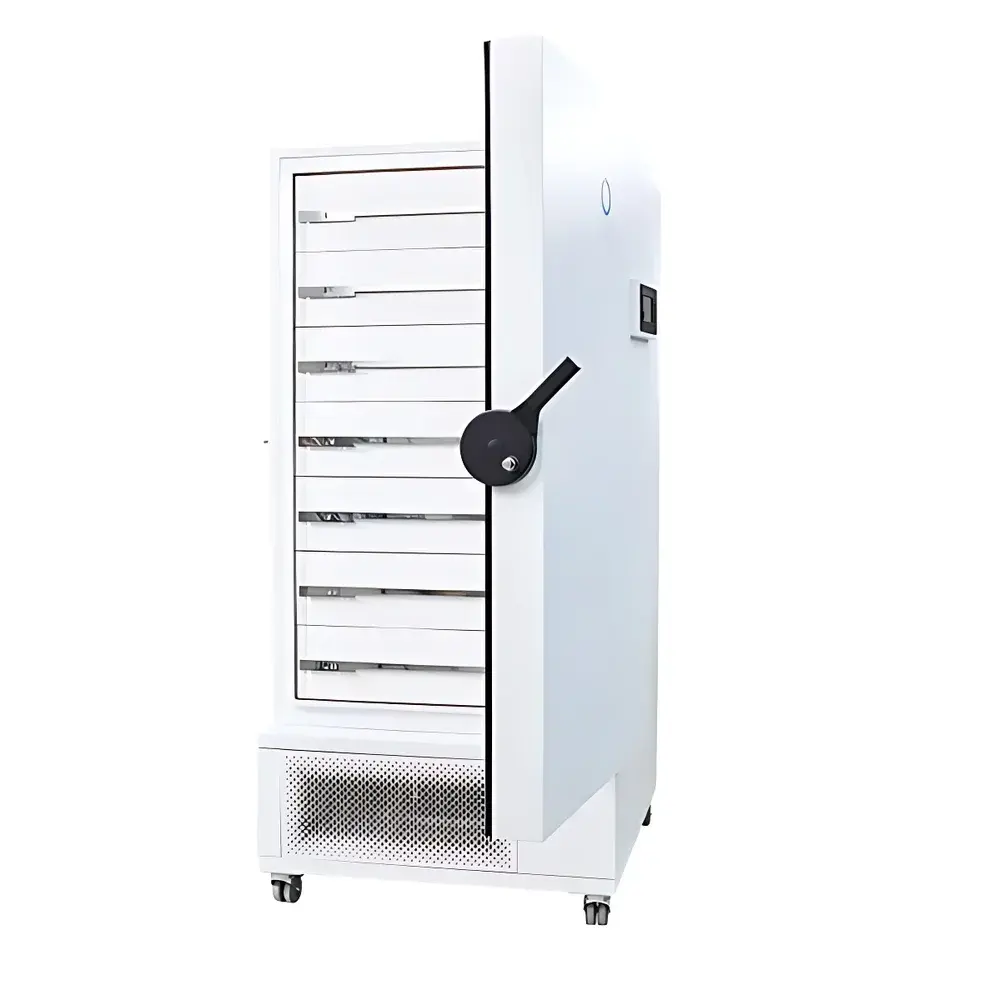
LAUDA Versafreeze VF 70085 Ultra-Low Temperature Upright Freezer
| Brand | LAUDA |
|---|---|
| Origin | Germany |
| Model | VF 70085 |
| Instrument Type | Upright |
| Effective Volume | 731 L |
| Internal Dimensions (W×D×H) | 738 × 750 × 1320 mm |
| External Dimensions (W×D×H) | 980 × 1165 × 1965 mm |
| Power Supply | 230 V / 50 Hz |
| Rated Energy Consumption | 15.5 kWh/d at −86 °C |
| Operating Temperature Range | −86 to −50 °C |
| Ambient Temperature Range | 15 to 28 °C |
| Cooling Time (20 °C → −86 °C) | 7 h |
| Defrost Time (−86 °C → 0 °C) | 25 h |
| Refrigerants | R-290 (0.145 kg, GWP = 3), R-170 (0.090 kg, GWP = 6) |
| Net Weight | 387 kg |
Overview
The LAUDA Versafreeze VF 70085 is a high-performance upright ultra-low temperature (ULT) freezer engineered for mission-critical long-term storage of biological samples—including primary cells, stem cell lines, cryopreserved tissues, mRNA constructs, and reference standards—in academic research laboratories, biobanks, clinical diagnostics facilities, and pharmaceutical development environments. Operating reliably within a stable temperature range of −86 °C to −50 °C, the VF 70085 employs a dual-stage refrigeration cycle utilizing natural hydrocarbon refrigerants (R-290 and R-170), delivering exceptional thermodynamic efficiency while complying with global environmental directives including the EU F-Gas Regulation and Kigali Amendment frameworks. Its core thermal architecture integrates vacuum-insulated panels (VIPs) across all six surfaces—combined with optimized polyurethane foam filling—to achieve industry-leading insulation performance (U-value 60% compared to air-cooled equivalents, enabling installation in temperature-sensitive or space-constrained laboratory environments without compromising HVAC load or acoustic comfort.
Key Features
- Eight-layer thermal insulation system combining VIPs and high-density polyurethane foam for minimized thermal bridging and maximized storage efficiency
- Water-cooled condenser with optional external chiller integration—reducing indoor heat dissipation, operational noise (<48 dB[A]), and energy demand during peak ambient conditions
- Seven independently sealed internal compartments with insulated access doors—preventing cross-compartment temperature fluctuation during routine sample retrieval
- Stainless steel interior (AISI 304) with seamless welds and rounded corners for enhanced cleanability and corrosion resistance under repeated freeze-thaw cycles
- Intuitive 7-inch capacitive touchscreen interface with multilingual support, real-time temperature visualization, and programmable alarm thresholds (high/low, deviation, door-open duration)
- Integrated backup battery sustaining display functionality, audible/visual alarms, and data logging for up to 72 hours during mains power failure
- Dual communication interfaces: isolated RS-485 for legacy BMS integration and industrial-grade Ethernet supporting IIoT protocols (MQTT, Modbus TCP) for centralized monitoring and audit-ready data export
- Two standardized 13 mm pass-through ports fitted with thermal break collars—compatible with Pt100 probes, fiber-optic sensors, or custom monitoring hardware
Sample Compatibility & Compliance
The VF 70085 supports diverse biospecimen formats—including cryovials (0.5–5.0 mL), 2D barcoded storage boxes, microtiter plates (96-/384-well), deep-well plates, and tissue cassettes—via configurable drawer kits and modular stainless steel shelving systems. All internal configurations maintain uniform temperature distribution (±1.2 °C at −86 °C per IEC 61000-4-2 testing) across the full working volume. The freezer complies with ISO 13485:2016 (medical device QMS), EN 61000-6-3 (EMC emissions), and EN 61000-6-2 (immunity). Its data logger meets ALCOA+ principles for electronic records and supports 21 CFR Part 11-compliant user authentication, role-based access control, and immutable audit trails when deployed with validated software platforms. Optional IQ/OQ documentation packages are available for GLP/GMP-regulated installations.
Software & Data Management
Embedded firmware includes a certified data logger storing ≥12 months of timestamped temperature readings (1-minute intervals), alarm events, door-open durations, and system status logs. Data export is supported via USB mass storage or secure SFTP over Ethernet. Remote monitoring is enabled through LAUDA’s cloud-connected LabManager platform—providing real-time alerts via email/SMS, historical trend analysis, predictive maintenance notifications, and automated report generation (PDF/CSV). All communication channels employ TLS 1.2 encryption; user accounts enforce password complexity, session timeout, and multi-factor authentication where integrated with institutional identity providers (LDAP/SAML).
Applications
- Long-term archival storage of human and animal-derived biospecimens in biorepositories accredited to ISBER Best Practices
- Cold chain continuity for mRNA vaccine intermediates and viral vector therapeutics requiring uninterrupted −80 °C stability
- Reference material preservation for metrology labs performing ISO/IEC 17025-compliant calibration of secondary standards
- Quality control sample retention in pharmaceutical manufacturing (ICH Q5C stability studies)
- Field-deployable backup freezing for mobile clinical trials operating under limited infrastructure conditions
FAQ
What is the minimum ambient temperature required for continuous operation at −86 °C?
The VF 70085 is rated for stable operation within an ambient range of 15–28 °C. Below 15 °C, compressor oil viscosity increases may affect startup reliability; above 28 °C, cooling capacity degrades progressively.
Can the unit be operated without the water-cooling system?
No—the VF 70085 is exclusively water-cooled. Air-cooled variants are not offered in the Versafreeze VF series due to thermal management constraints at −86 °C.
Is the built-in data logger compliant with FDA 21 CFR Part 11?
The logger itself satisfies technical requirements (audit trail, electronic signatures, data integrity); formal Part 11 compliance requires validation of the complete system—including network configuration, user training, and procedural controls—as defined in your organization’s SOPs.
How does the magnetic door seal prevent frost accumulation?
The gasket incorporates a dual-lip magnetic closure with integrated vapor barrier layers, maintaining consistent contact pressure across the entire perimeter—even after repeated thermal cycling—to eliminate moisture infiltration and ice bridging.
What is the maximum allowable door-open time before temperature excursion exceeds ±3 °C?
At −86 °C, average recovery time after a 30-second door opening is ≤4 minutes; sustained openings >90 seconds trigger immediate visual/audible alerts and log an event.



