
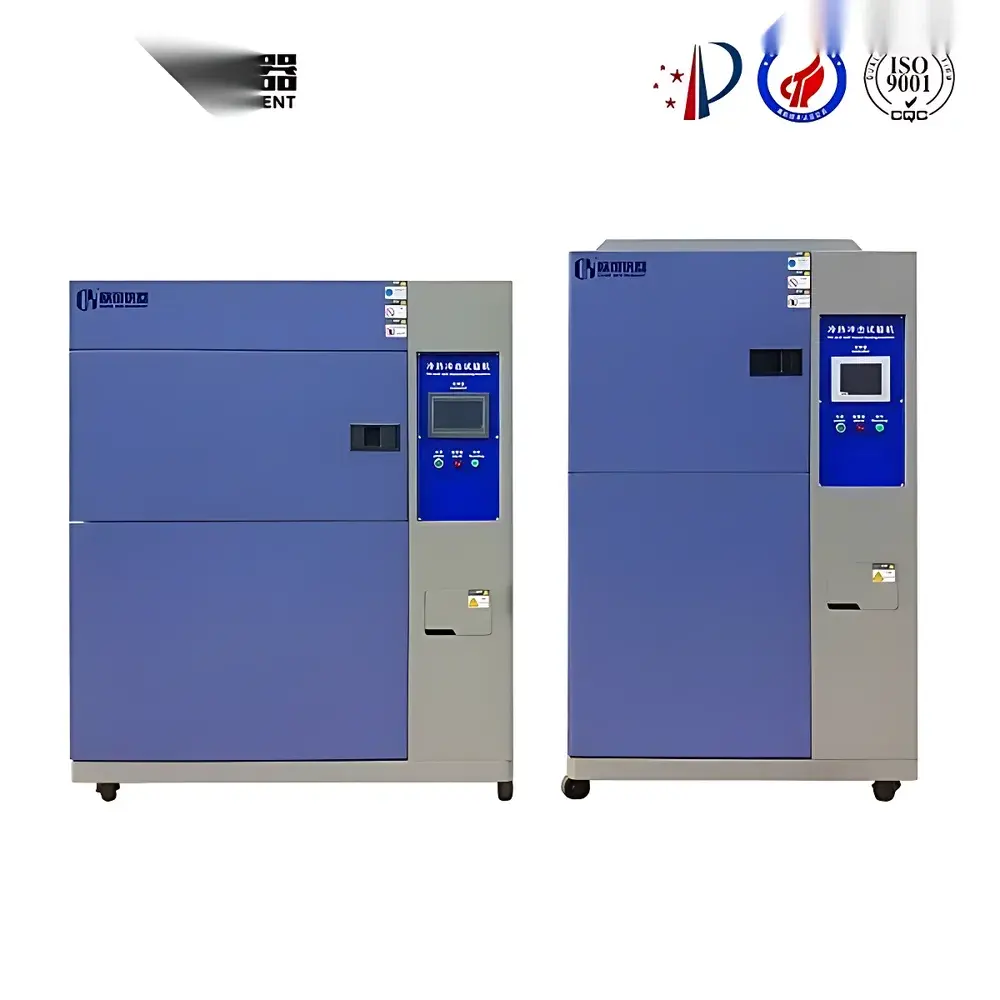
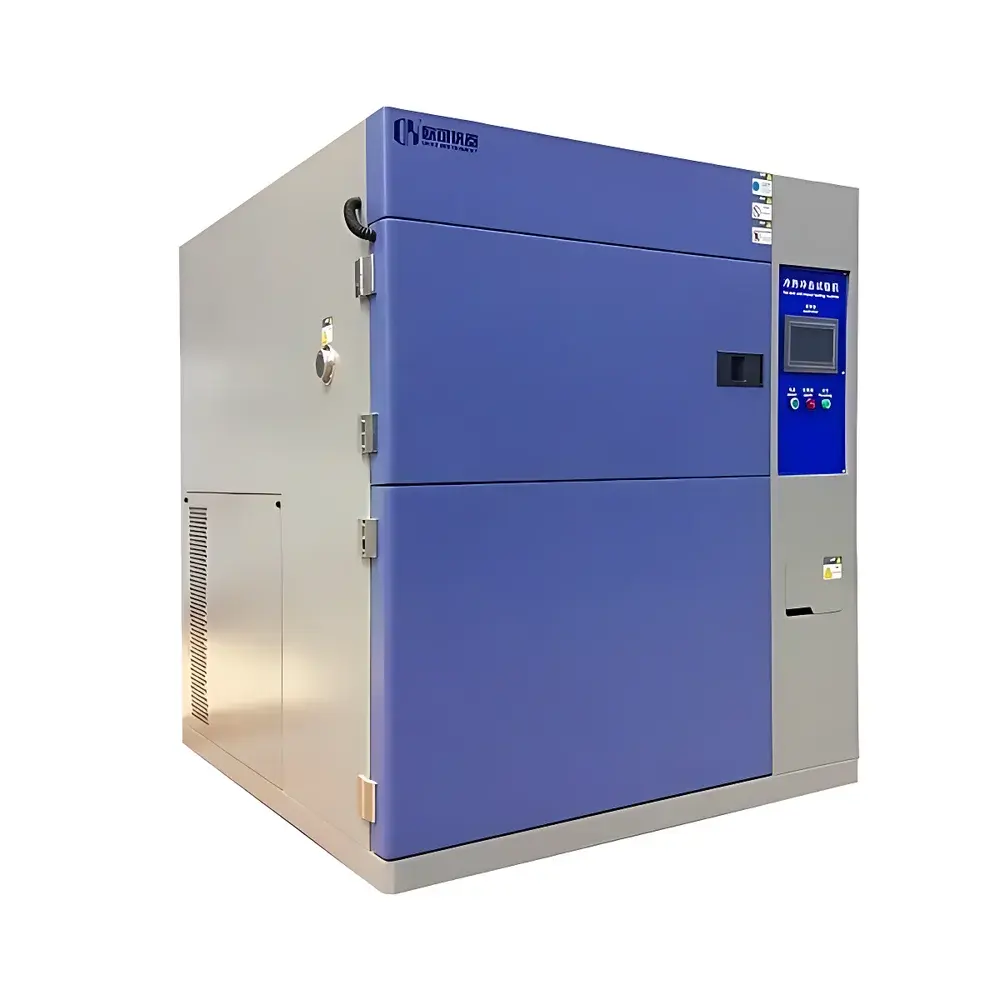
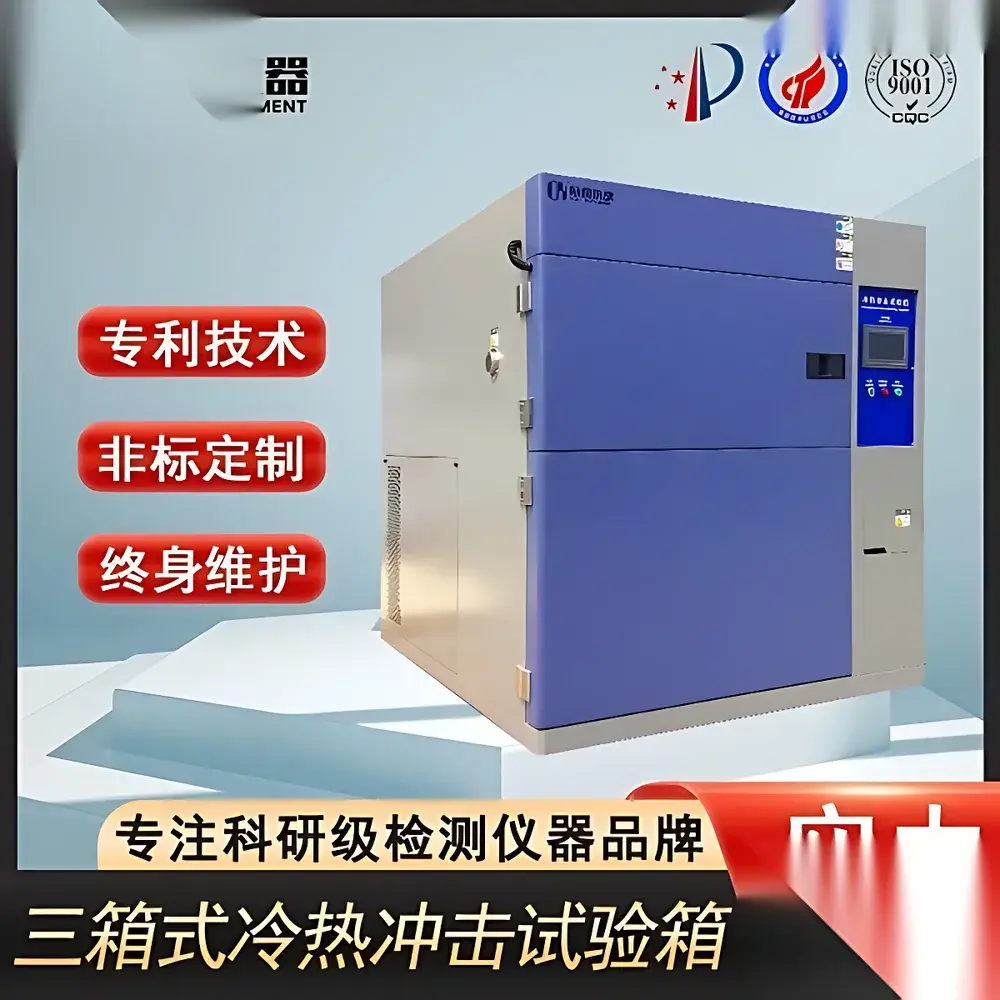
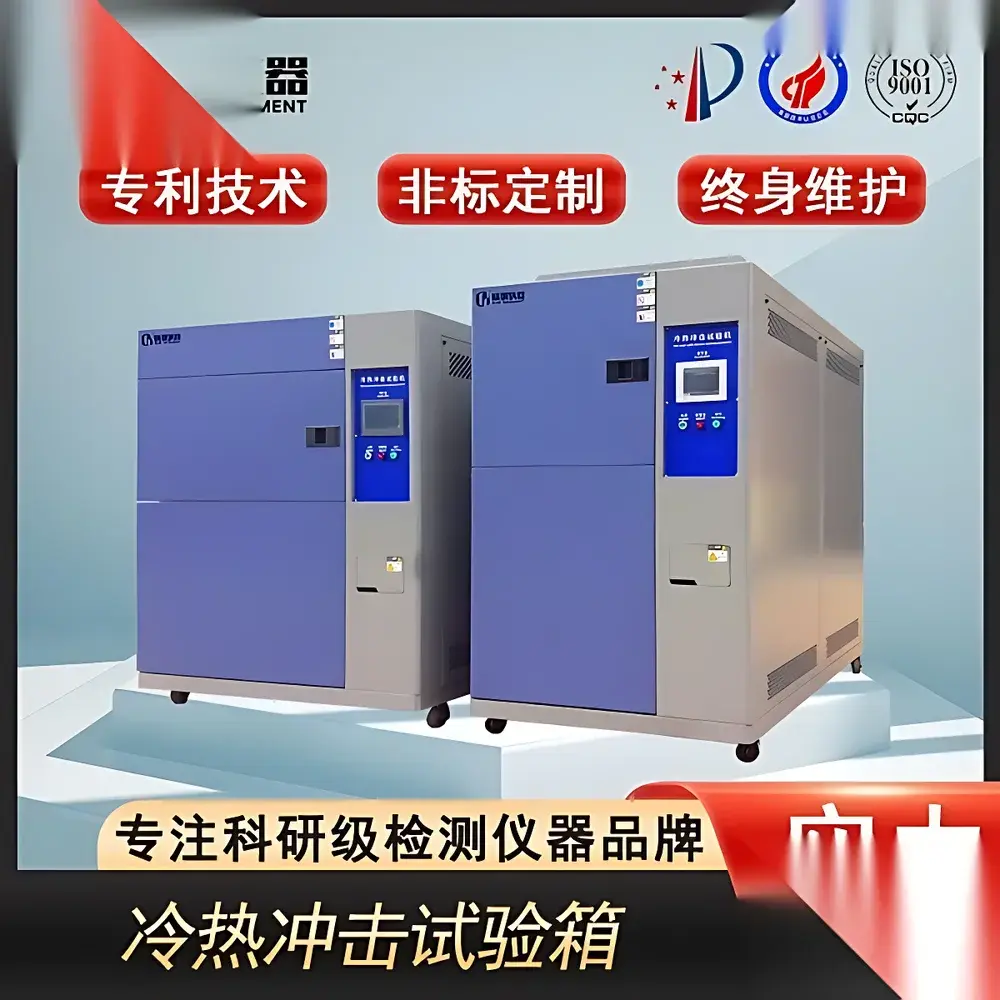
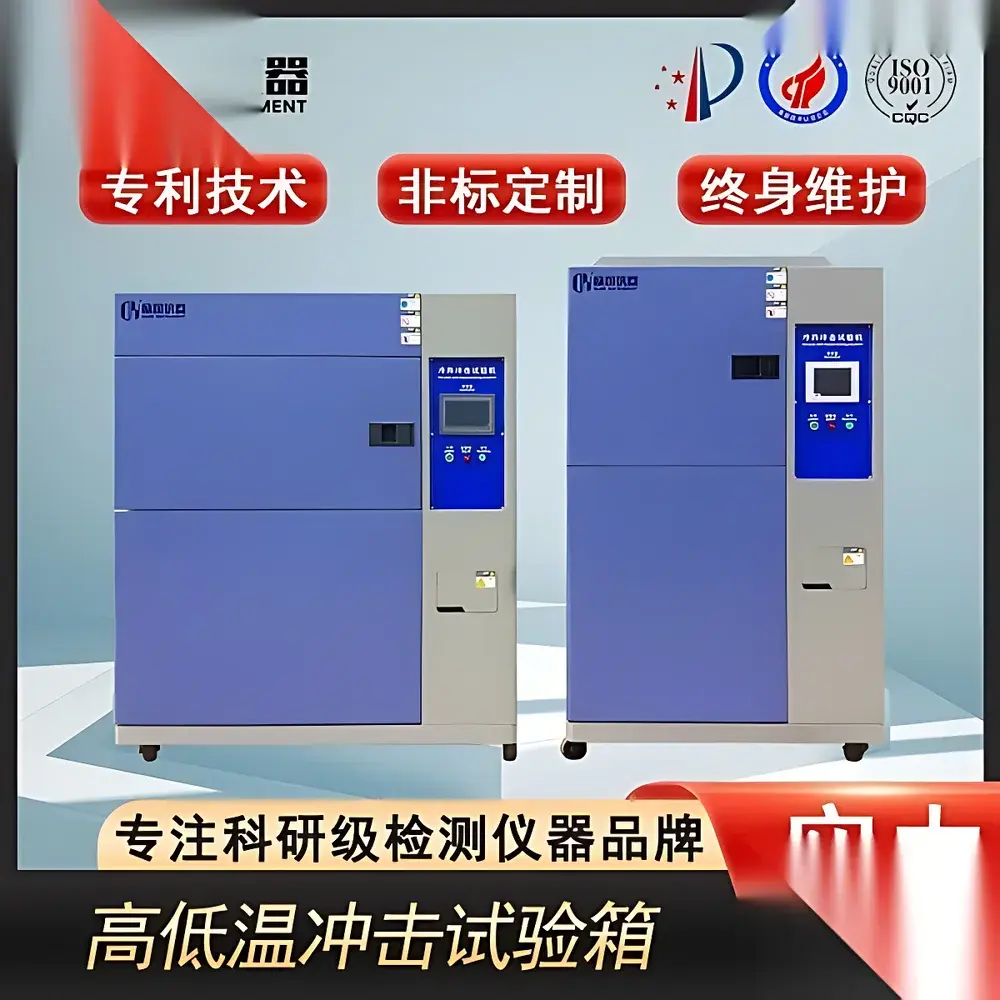
LED Thermal Shock Test Chamber
| Brand | OEM |
|---|---|
| Origin | Imported |
| Manufacturer Type | Authorized Distributor |
| Price | USD 11,200 (FOB) |
| Controller Options | TEMI880 Color Touchscreen (EN/CN Switchable) or TEMI300 Membrane Keypad (English Only) |
| Protection Systems | Compressor Overheat/Overcurrent/High-Pressure, Dry-Heater Burnout Prevention, Chamber Over-Temperature, Low-Water Detection |
| Standard Features | Dual-Layer Tempered Glass Viewing Window, φ50 mm Cable Port (Left Side), Two Adjustable Sample Racks, Fluorescent Interior Lighting, Four Casters with Brakes, Removable Humidity Water Tank, RS485/RS232 Communication Interface, PC-Based Control Software |
| Temperature Control | Balanced Temperature & Humidity Control System (BTSC) |
| Operating Ambient | +5°C to +35°C |
| Heating | Nickel-Chromium Alloy Wire Heaters |
| Humidification | Surface Evaporation Type |
| Air Circulation | Wide-Range Forced Convection (Top-Down Flow), Multi-Blade Centrifugal Fan |
| Condensation | Air-Cooled |
| Refrigeration | Original French Tecumseh Hermetic Compressor |
| Refrigeration Circuit | Twin-Stage or Single-Stage Low-Temperature Loop Design |
| Construction | Outer Shell – SUS304B Stainless Steel |
| Airflow Uniformity | ±0.5°C Temp Deviation Across Working Volume (per IEC 60068-3-5) |
| Recovery Time | ≤3 min After Door Opening (from −40°C to +85°C at 50% RH) |
Overview
The LED Thermal Shock Test Chamber is a precision-engineered environmental stress screening system designed for accelerated reliability validation of optoelectronic components—particularly high-brightness LEDs, LED modules, COB packages, and automotive lighting assemblies—under rapid, repetitive temperature transitions. It operates on the principle of two-zone or three-zone thermal shock methodology, where test specimens are mechanically transferred between independently controlled high-temperature (+150°C max) and low-temperature (−70°C min) chambers via a horizontal or vertical lift mechanism. This enables discrete, non-overlapping exposure to extreme thermal gradients—typically defined by MIL-STD-883 Method 1010.8, JEDEC JESD22-A104E, and IEC 60068-2-14—without intermediate conditioning. The chamber’s architecture prioritizes thermal inertia minimization, mechanical repeatability, and contamination control: all internal surfaces are electropolished AISI 304 stainless steel; no organic gaskets or adhesives contact the test zone; and airflow is engineered to eliminate stagnation pockets while maintaining uniformity per IEC 60068-3-5 (±0.5°C spatial deviation across nominal working volume).
Key Features
- Triple-compartment configuration available (hot/cold/transfer) for extended dwell time flexibility and reduced cross-contamination risk during cycling
- Patented dual-stage refrigeration circuit using Tecumseh hermetic compressors—optimized for sustained operation below −65°C without oil migration or refrigerant fractionation
- BTSC (Balanced Temperature & Humidity Control) algorithm ensures stable humidity maintenance (10–95% RH, ±2% RH accuracy) concurrent with thermal ramping—critical for evaluating moisture-induced degradation in encapsulated LED phosphor layers
- TEMI880 color touchscreen controller with audit-trail-enabled firmware compliant with FDA 21 CFR Part 11 requirements (electronic signature, user-level access control, change history logging)
- Integrated vibration-dampened sample transfer carriage with position feedback sensors—cycle repeatability < ±0.3 mm, ensuring consistent thermal boundary conditions across 10,000+ shock cycles
- Mineral wool insulation (thermal conductivity ≤0.04 W/m·K) combined with vacuum-jacketed door seals reduces energy consumption by 22% versus conventional designs (tested per ISO 13788)
Sample Compatibility & Compliance
The chamber accommodates standard LED test boards (up to 400 × 400 mm), MCPCBs, and multi-chip modules mounted on adjustable stainless-steel racks. The φ50 mm left-side port supports real-time optical monitoring (spectroradiometry, thermal imaging) and electrical biasing during shock cycles. All wetted materials—including humidifier trays, water tanks, and condensate pans—are passivated AISI 304 with trace metal content verified per ASTM E1811. The system meets EN 60529 (IP2X enclosure rating), UL 61010-1 (safety), and IEC 61000-6-3 (EMC emissions). Calibration documentation follows ISO/IEC 17025 guidelines, with NIST-traceable thermocouples (Class A, ±0.15°C) installed at nine spatial points per IEC 60068-3-5.
Software & Data Management
The included PC-based control suite (Windows 10/11 compatible) supports full-cycle programming—including ramp rate definition (0.5–15°C/min), dwell time sequencing, humidity hold profiles, and conditional abort triggers (e.g., chamber overtemp > +155°C). Raw sensor data (100 Hz sampling) is logged in .CSV and .TDMS formats with embedded metadata (user ID, cycle count, timestamp, alarm status). Audit trails record all parameter modifications, operator logins, and calibration events—retained for ≥36 months. Export modules comply with ASTM E2500-22 for regulatory submissions and support direct integration into LIMS platforms via OPC UA.
Applications
- Qualification testing of LED packaging under JEDEC JESD22-A104E (Temperature Cycling) and JESD22-A106B (Highly Accelerated Temperature and Humidity Stress Test)
- Evaluation of delamination kinetics at die-attach interfaces using in-situ resistance monitoring during thermal transients
- Validation of silicone encapsulant cracking thresholds under repeated ΔT > 200°C excursions
- Screening of phosphor layer adhesion integrity in remote phosphor LED arrays subjected to −40°C ↔ +125°C cycling
- Correlation studies between thermal shock failure modes and field return analysis (FRACAS) databases
FAQ
What is the minimum dwell time achievable between hot and cold zones?
Standard configuration supports 10-second transfer time with ±0.5-second repeatability; optional high-speed actuator reduces this to 5 seconds (validated per IEC 60068-2-14, Annex B).
Can the chamber operate in humidity-only cycling mode without thermal shock?
Yes—the BTSC system allows independent humidity ramping (10–95% RH) at constant temperature (−10°C to +85°C), enabling evaluation of hygroscopic swelling in LED substrates.
Is third-party calibration certification included with shipment?
A factory-issued ISO/IEC 17025-compliant calibration report (covering temperature, humidity, and transfer timing) is provided; on-site NIST-traceable verification is available as an optional service.
How is condensation managed during rapid cooling phases?
A dedicated dehumidification pre-cycle removes residual moisture from chamber walls prior to low-temperature exposure, preventing ice accumulation on samples or sensors.
Does the system support automated pass/fail decision logic based on real-time photometric data?
Via optional API integration, external spectroradiometers can feed luminous flux and chromaticity data into the control software, triggering cycle termination upon predefined degradation thresholds (e.g., Yxy shift > 0.005 Δu’v’).



