
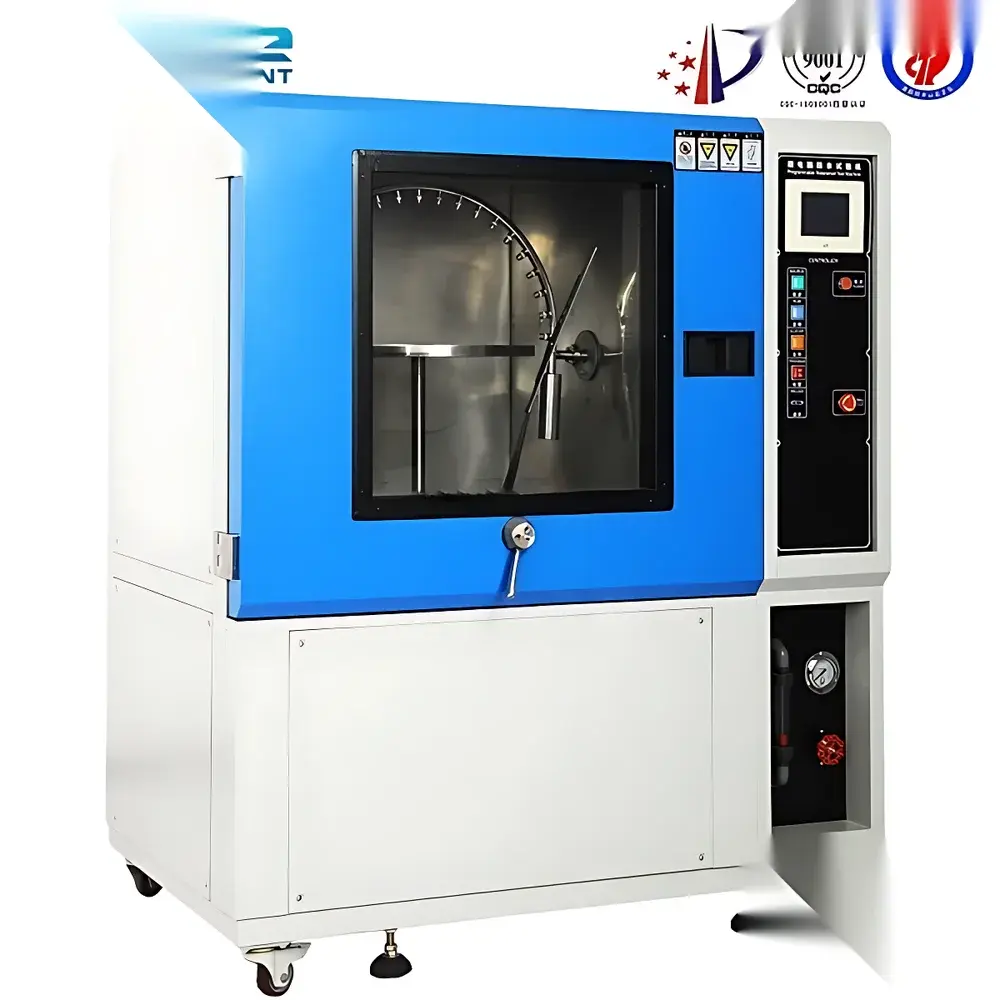
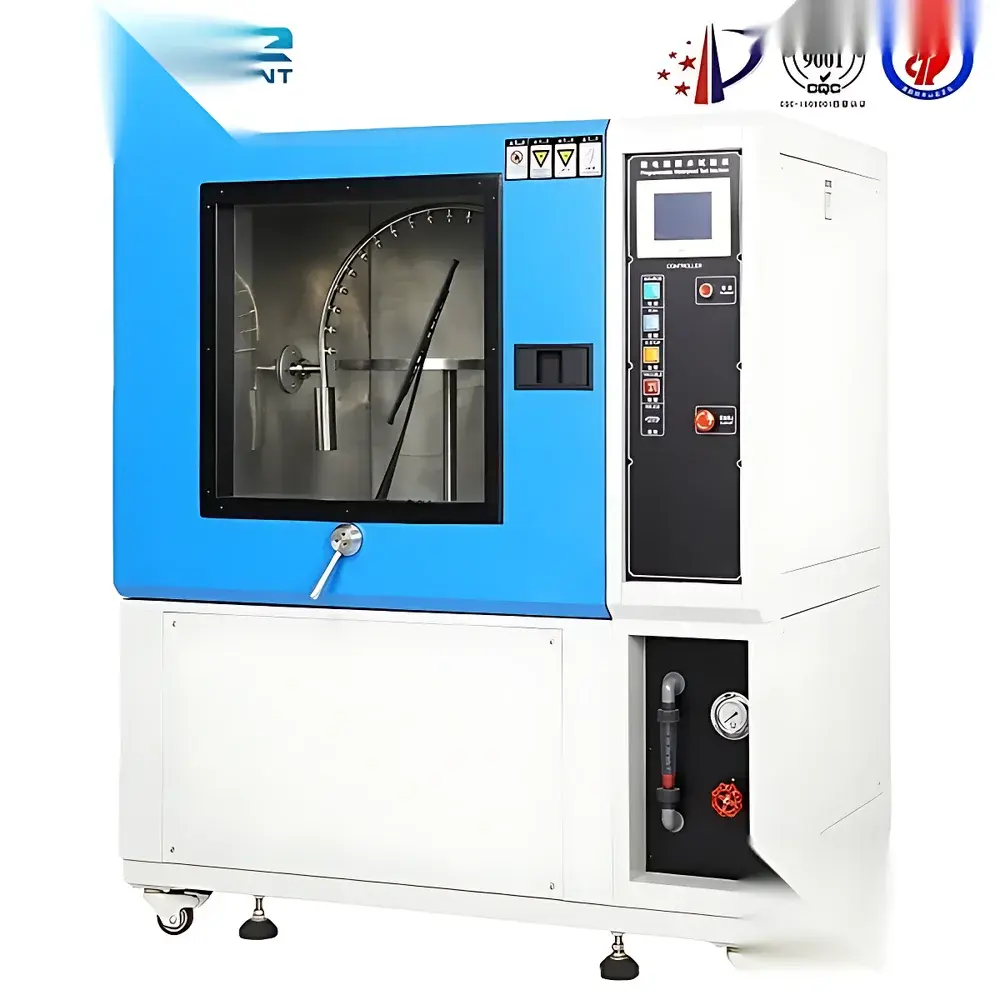
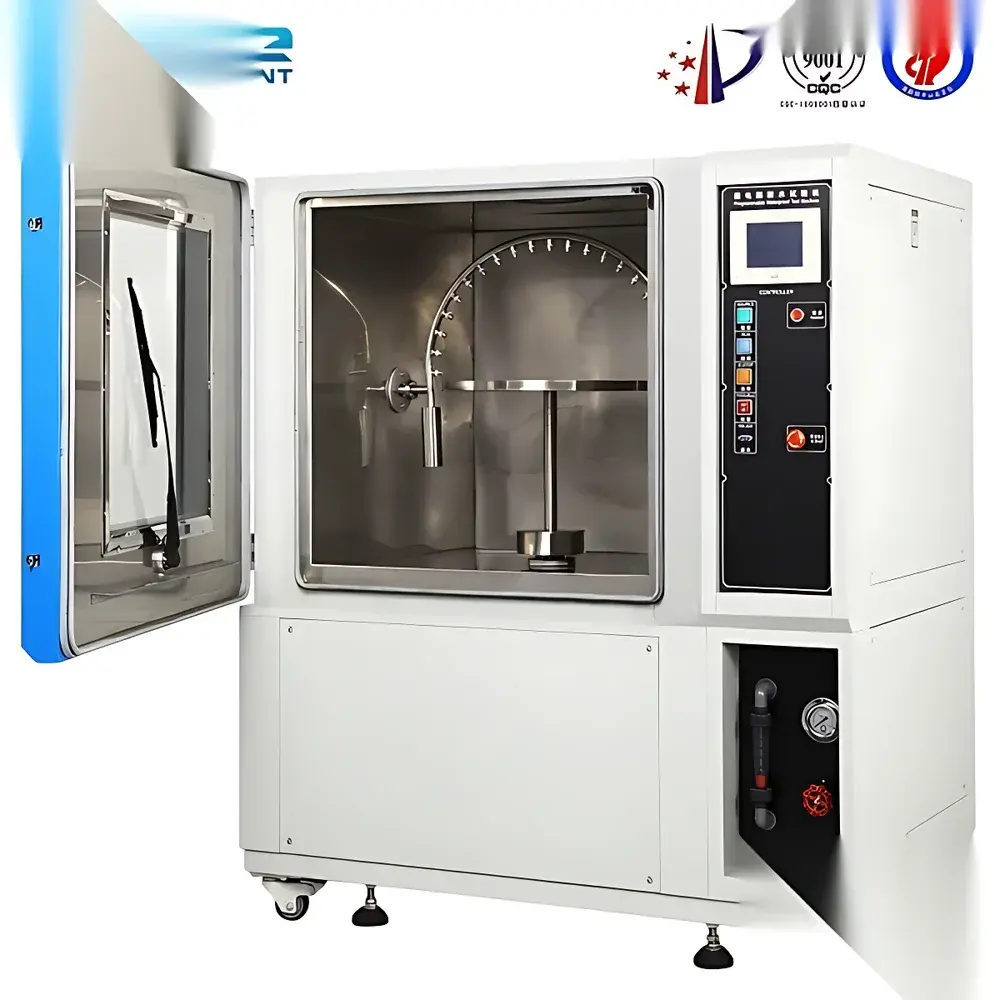
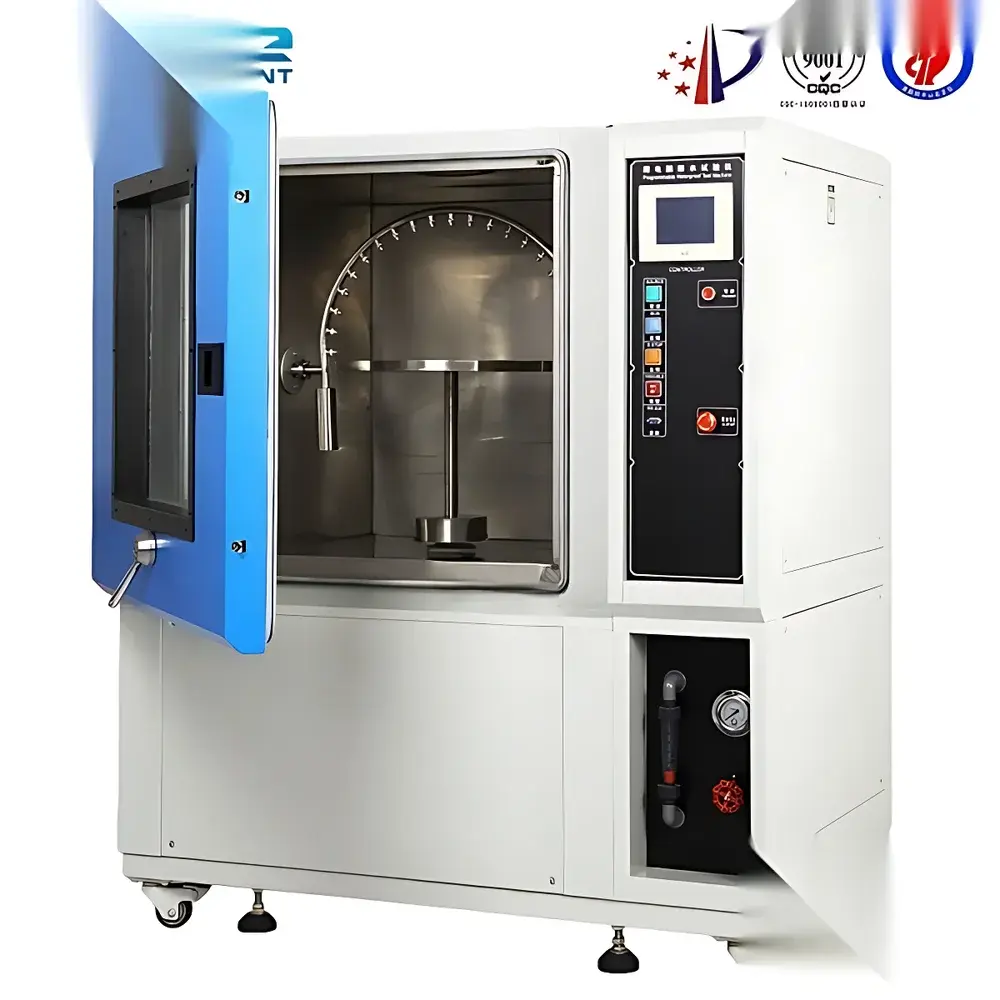
LED Waterproof Test Chamber
| Brand | OEM |
|---|---|
| Origin | Imported |
| Manufacturer Type | Authorized Distributor |
| Price | USD 3,500 (FOB) |
Overview
The LED Waterproof Test Chamber is an engineered environmental test system designed to evaluate the ingress protection (IP) rating—specifically IPX1 through IPX9K—of lighting assemblies, automotive lamps, electronic enclosures, and outdoor signaling devices. It operates on standardized rain simulation principles defined in IEC 60529, ISO 20653, and GB/T 4208, employing controlled water flow, pressure, temperature, impact angle, and exposure duration to replicate real-world exposure conditions during transportation, installation, and operational service life. Unlike generic climate chambers, this unit integrates precision fluid dynamics control with programmable mechanical actuation to deliver repeatable, traceable, and auditable test cycles compliant with international certification requirements for electrical safety and product durability.
Key Features
- Stainless steel inner chamber constructed from SUS304 grade material, ensuring long-term corrosion resistance and compliance with ISO 9001 cleanroom-compatible fabrication standards.
- Thermal insulation composed of rigid polyurethane foam (≥30 mm thickness) combined with glass fiber layers, minimizing thermal bridging and maintaining stable ambient conditions during heated spray operations.
- Rotating test platform fabricated from PVC-hardboard with chemical resistance to chlorine, sodium hypochlorite, and deionized water; compatible with fixtures up to 50 kg load capacity.
- Full stainless steel or copper-wetted components—including nozzles, manifolds, piping, and reservoir—to prevent scaling, electrolytic corrosion, and particulate shedding that could compromise nozzle integrity or test repeatability.
- Dual-control options: a basic programmable logic controller (PLC) for fixed-cycle testing, or an advanced full-color touchscreen HMI developed in-house, supporting multi-step profile programming, real-time parameter logging, and password-protected user access levels.
- Adjustable high-precision spray nozzles with ±30° mechanical tilt mechanism and non-divergent laminar water column output, calibrated per ISO 20653 Annex B requirements.
- Automated water-level elevation system enabling dynamic immersion-simulated tests (e.g., IPX7/IPX8), integrated with level sensors and fail-safe overflow cutoffs.
- High-pressure centrifugal pump (rated 0–10 bar adjustable) coupled with inline heating elements for IPX9K-compliant hot-water jet testing (80–100°C, 8–10 MPa, 14–16 L/min).
- Multi-stage water filtration system including sediment pre-filter (5 µm), activated carbon module, and optional UV sterilization—ensuring nozzle orifice integrity over extended operational cycles.
- Large-area tempered safety glass viewing door with anti-fog coating and integrated LED interior lighting, facilitating visual inspection without interrupting test continuity.
Sample Compatibility & Compliance
The chamber accommodates samples up to 1,200 mm × 1,200 mm × 1,200 mm (W×D×H), with custom configurations available upon engineering review. It supports static and dynamic mounting modes for headlamps, LED modules, junction boxes, and industrial control panels. All test protocols align with the following regulatory frameworks: IEC 60529 (IP Code), ISO 20653 (road vehicles), GB/T 4208 (Chinese national standard), GJB 150.8A (military equipment), and EN 60529. The system is designed to support GLP-compliant validation documentation, including IQ/OQ/PQ templates, calibration traceability to NIST-certified pressure and flow standards, and audit-ready data logs required under FDA 21 CFR Part 11 for medical-grade lighting qualification.
Software & Data Management
The proprietary touchscreen interface records all critical parameters—including water pressure (±0.1 bar), flow rate (±0.2 L/min), nozzle temperature (±0.5°C), cycle time, and actuator position—at 1 Hz resolution. Data exports in CSV and PDF formats with embedded digital signatures. Optional Ethernet/RS485 connectivity enables integration into centralized lab information management systems (LIMS) and SCADA networks. Firmware supports firmware versioning, encrypted backup, and role-based user permissions (operator, engineer, QA auditor). Audit trails capture timestamped events for every parameter change, start/stop command, and alarm condition—fully satisfying ISO/IEC 17025 Clause 7.7 and ICH Q7 Annex 11 requirements.
Applications
- Validation of IPX3/IPX4 splash resistance for automotive daytime running lights (DRLs) and adaptive front-lighting systems (AFS).
- Verification of IPX5/IPX6 jet resistance for marine navigation signal lamps and offshore photovoltaic inverters.
- Qualification of IPX7/IPX8 submersion tolerance for battery enclosures used in electric two-wheelers and energy storage systems.
- Testing of IPX9K high-temperature, high-pressure resistance for food-grade LED luminaires and pharmaceutical cleanroom lighting.
- Reliability screening of PCB-level moisture barriers and conformal coatings prior to field deployment.
FAQ
What IP ratings can this chamber validate?
It supports full validation from IPX1 (vertical drip) to IPX9K (high-pressure, high-temperature water jets), including intermediate levels defined in IEC 60529 and ISO 20653.
Is calibration documentation included with shipment?
Yes—each unit ships with a factory calibration certificate traceable to national metrology institutes, covering pressure transducers, flow meters, and temperature sensors.
Can the chamber be integrated into an existing automated test line?
Yes—standard Modbus TCP and optional Profibus DP interfaces are supported for PLC-level synchronization and remote start/stop commands.
Does the system meet FDA or EU MDR requirements for medical device lighting?
The hardware architecture and software audit trail functionality comply with FDA 21 CFR Part 11 and EU MDR Annex I General Safety and Performance Requirements (GSPR) for environmental validation equipment.
What maintenance intervals are recommended for the filtration system?
Pre-filters require replacement every 200 operational hours; activated carbon modules every 1,000 hours; UV lamps every 8,000 hours—maintenance schedules are logged automatically within the HMI.



