
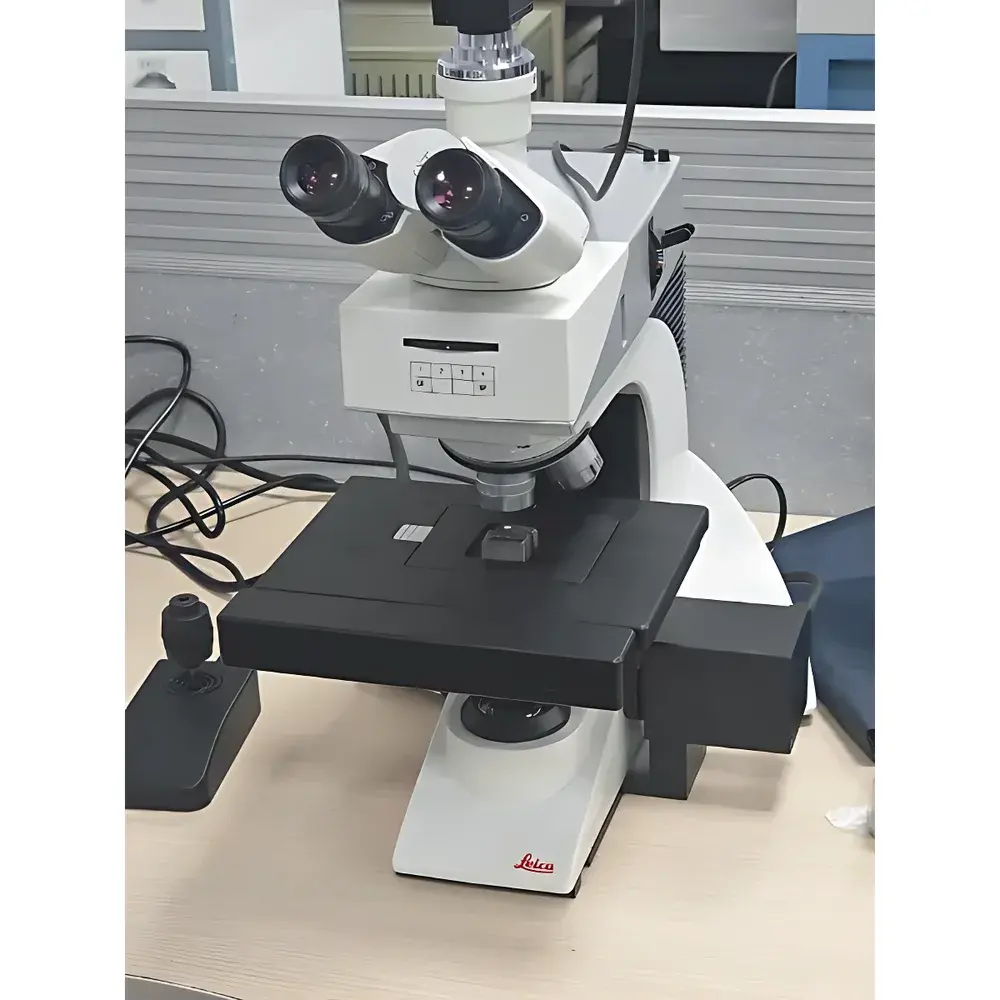
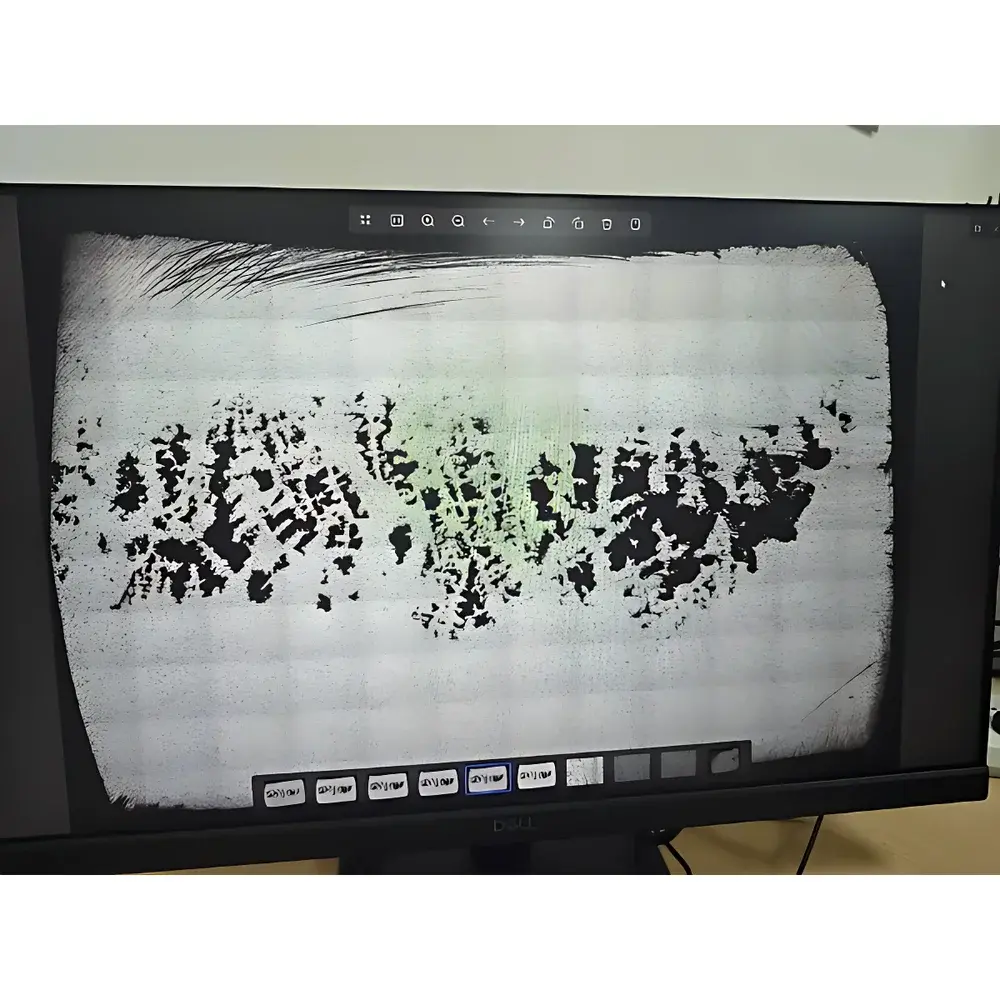
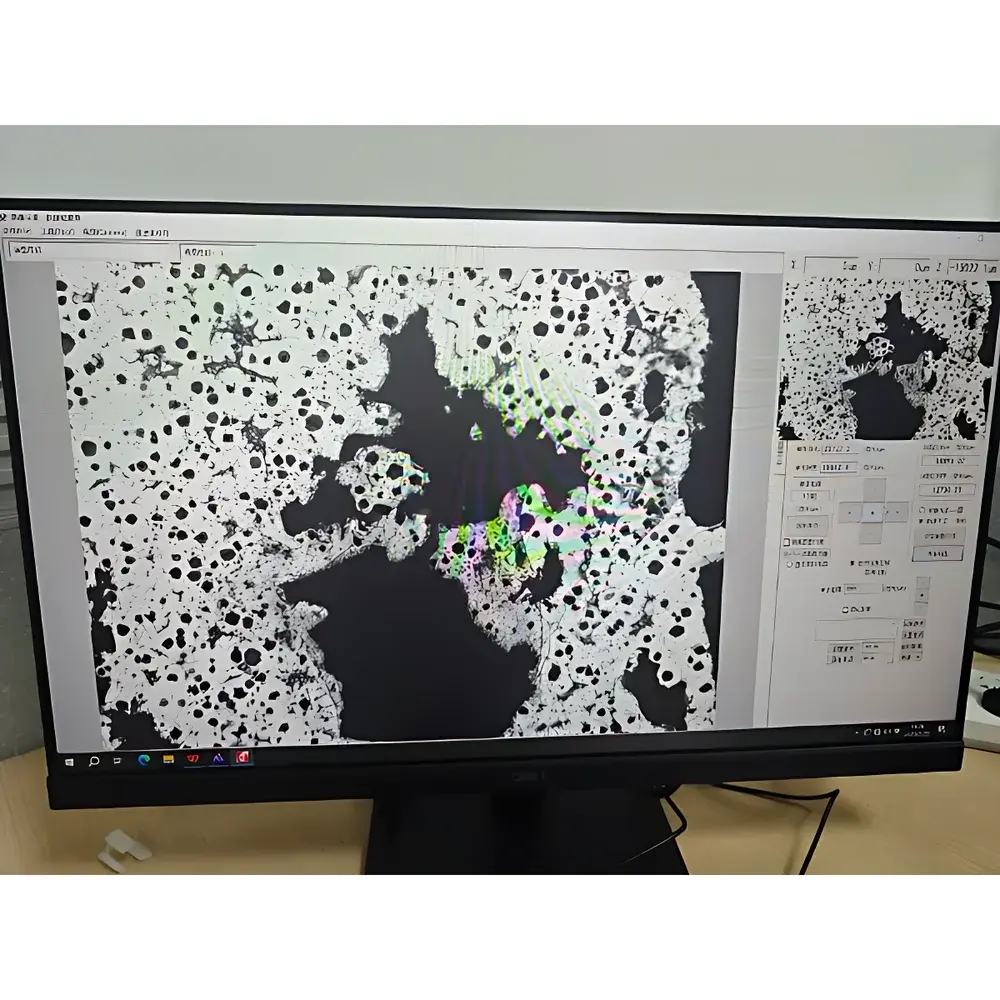
LEI-TECH LK-KXLFX Automated Porosity Analysis System
| Brand | LEI-TECH |
|---|---|
| Origin | Tianjin, China |
| Manufacturer Type | Original Equipment Manufacturer (OEM) |
| Product Origin | Domestic (China) |
| Model | LK-KXLFX |
| Price Range | USD 21,000 – 42,000 |
Overview
The LEI-TECH LK-KXLFX Automated Porosity Analysis System is a high-precision microscopic image analysis platform engineered for quantitative pore structure characterization in industrial materials testing and quality control laboratories. Built upon a modular optical architecture integrating stereo microscopy, motorized precision stage control, and algorithm-driven image analytics, the system implements standardized morphometric analysis of void spaces—primarily in cast metals, sintered components, composite laminates, and polymer-based engineering parts. Its core measurement principle relies on high-contrast brightfield/darkfield imaging combined with sub-pixel edge detection and region-growing segmentation to isolate pores from matrix material. The system complies with internationally recognized automotive and metallurgical standards—including VW 50093 (porosity classification for aluminum die-cast parts), VW 50097 (multi-field porosity reporting), and ASTM E505 (standard test method for determining porosity in aluminum die castings using metallographic techniques). Designed for reproducible, operator-independent evaluation, it eliminates manual thresholding bias through adaptive grayscale normalization and noise-resilient contour tracing.
Key Features
- Automated mosaic stitching via programmable XYZ motorized stage (70 mm × 70 mm travel range, ±5 µm repeatability, 0.625 µm step resolution at 16× microstepping)
- Dual-mode image acquisition: real-time online stitching during stage scanning or offline batch stitching from pre-captured image sets
- Comprehensive particle/pore morphometry: equivalent circular diameter, Feret diameter (max/min), aspect ratio, circularity, convexity, solidity, perimeter, area, and shape factor metrics
- Standard-compliant reporting engine supporting VW 50093 (single-location grading), VW 50097 (multi-field statistical summary), and ASTM E505 (porosity percentage, largest pore size, total analyzed area)
- Multi-format export: native report generation in editable Word (.docx), tabular Excel (.xlsx), and archival PDF formats with embedded metadata and audit trail timestamps
- Integrated polarized light module for birefringent phase discrimination in composite or ceramic samples
- Calibration traceability: supports NIST-traceable stage calibration routines and pixel-to-micron scaling via certified stage micrometers
Sample Compatibility & Compliance
The LK-KXLFX accommodates flat, polished, or etched cross-sections up to 100 mm × 100 mm in footprint and ≤5 kg in mass. It is routinely deployed for porosity assessment in aluminum and magnesium die-castings, powder metallurgy compacts, thermal spray coatings, and additive-manufactured (AM) metal parts per ISO/ASTM 52900. All analytical workflows adhere to GLP-aligned data integrity requirements: software enforces user authentication, version-controlled method templates, immutable raw image storage, and electronic signature-capable report finalization. Audit logs record all parameter changes, image processing steps, and export events—supporting FDA 21 CFR Part 11 readiness when configured with Windows 10 Enterprise domain authentication and encrypted local storage.
Software & Data Management
The proprietary LEI-TECH ImageAnalyzer v4.x software provides a deterministic, non-destructive workflow environment. Image acquisition is synchronized with stage motion via RS-232 (115,200 baud) communication to the dedicated controller box, enabling precise coordinate mapping and gap-free tiling. Region-of-interest (ROI) selection tools include freehand polygon, ellipse, rectangle, and regular geometric primitives—each ROI triggers independent pore segmentation and statistical summarization. Geometric measurement functions support calibrated linear, angular, radius, and distance annotations with customizable units (µm/mm/inch), font size, and overlay color. All measurement data are stored in structured SQLite databases with field-level metadata (operator ID, timestamp, magnification, illumination mode, calibration ID), facilitating SQL-based querying and integration into LIMS environments.
Applications
- Automotive component qualification: porosity grading of engine blocks, transmission housings, and suspension arms per VW 50093 pass/fail thresholds
- Quality assurance in powder metallurgy: quantification of interparticle voids and closed porosity volume fraction in sintered gears and bushings
- AM process validation: post-build pore distribution mapping in Ti-6Al-4V or Inconel 718 laser powder bed fusion parts
- Failure analysis labs: correlation of pore clustering, morphology, and location with fatigue crack initiation sites
- Research in lightweight alloys: comparative porosity evolution studies under varying heat treatment or pressure infiltration conditions
FAQ
Does the system support automated focus stacking?
No—the LK-KXLFX does not include Z-axis motorization or focus-stacking functionality. It assumes use with optically flat, polished samples imaged at fixed focal plane.
Can custom analysis protocols be saved and reused?
Yes—users may define and store method profiles including segmentation thresholds, measurement parameters, ROI presets, and report templates for rapid recall across batches.
Is third-party microscope integration possible?
The software accepts standard TIFF/JPEG inputs and supports external camera feeds via DirectShow; however, full stage synchronization requires LEI-TECH’s OEM controller hardware.
What is the minimum resolvable pore size?
At 5.6× objective magnification with a 5 MP camera, theoretical resolution is ~3.2 µm/pixel; practical detection limit is ≥10 µm diameter for statistically reliable circularity and area calculation.
How is calibration verified during routine operation?
A built-in calibration wizard guides users through stage movement verification using a certified stage micrometer, generating a per-session calibration certificate logged with each analysis dataset.






