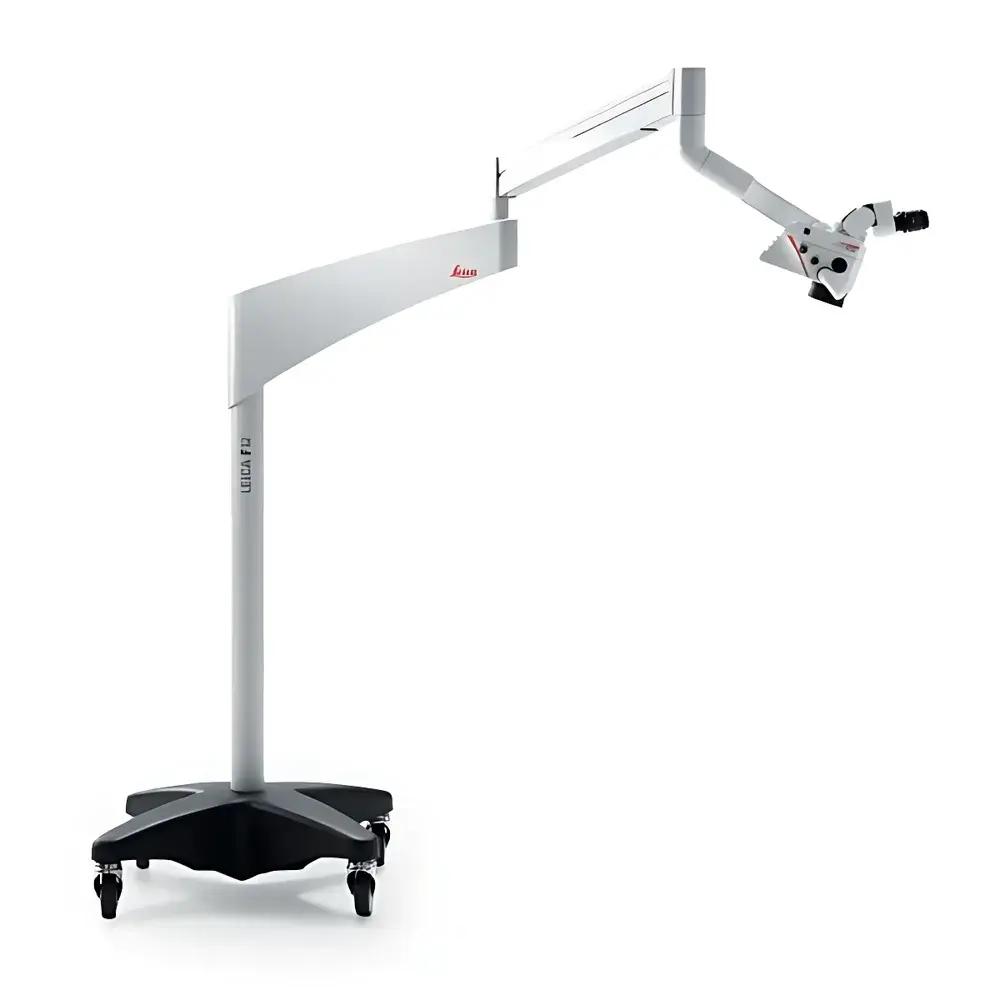
Leica M320 O 4K ENT Surgical Microscope
| Brand | Leica |
|---|---|
| Origin | Germany |
| Model | M320 O |
| Application Scope | Otolaryngology (ENT), Pediatric and Adult Microsurgery |
| Illumination | Dual-path LED with High CRI (>95) |
| Optical Resolution | Up to 4K UHD (3840 × 2160) Video Output |
| Zoom | 5-step Continuous Zoom |
| Depth of Field | Optimized for Deep, Narrow Cavities (e.g., External Auditory Canal, Nasal Vestibule, Larynx) |
| Ergonomic Design | Adjustable Binocular Tube, Counterbalanced Arm, Integrated Footswitch Control |
| Compliance | CE Marked (Class IIa Medical Device), ISO 13485 Certified Manufacturing, IEC 60601-1 & IEC 60601-2-57 Compliant |
Overview
The Leica M320 O is a purpose-engineered surgical microscope designed specifically for otolaryngology (ENT) procedures, combining high-fidelity optical performance with clinical ergonomics and digital integration. Built upon Leica’s legacy in precision optics, the M320 O employs a coaxial dual-LED illumination system that delivers uniform, shadow-free lighting across deep, anatomically constrained cavities—such as the external auditory canal, nasal passages, and laryngeal inlet—without thermal load or phototoxicity. Its optical path integrates apochromatic correction and high numerical aperture objectives to preserve contrast, resolution, and true-color fidelity (CRI >95), enabling reliable tissue differentiation during micro-instrumentation. The system supports both binocular direct viewing and real-time 4K UHD video acquisition, facilitating intraoperative documentation, teleconsultation, and structured training workflows. As a Class IIa medical device certified to IEC 60601-2-57 and manufactured under ISO 13485 quality management systems, the M320 O meets stringent regulatory requirements for clinical deployment in EU, UK, and other CE-harmonized markets.
Key Features
- Optimized ENT-specific optical design with extended depth of field and enhanced peripheral sharpness for visualization in narrow anatomical corridors
- Dual-path LED illumination delivering consistent luminance (≥120,000 lx at 200 mm working distance) and minimal spectral drift over time
- 5-step continuous zoom mechanism (typically 6.3×–40× magnification range) enabling rapid adaptation between survey and micro-detail viewing without mechanical repositioning
- Ergonomic counterbalanced suspension arm with motor-assisted height and tilt adjustment, reducing musculoskeletal strain during prolonged procedures
- Integrated 4K UHD camera module with HDMI 2.0 and 3G-SDI outputs; compatible with DICOM-compliant PACS archiving and HL7 interface-ready hospital IT infrastructures
- Footswitch-controlled focus, zoom, and image capture functions to maintain sterile field integrity and procedural continuity
Sample Compatibility & Compliance
The M320 O is validated for use across pediatric and adult ENT applications including myringotomy with tympanostomy tube insertion, foreign body removal, endoscopic-assisted microsurgery, stapedectomy preparation, and laryngeal microdissection. It accommodates standard ENT instrument sets (e.g., Rosen-type specula, micro-instruments up to 0.3 mm tip diameter) and integrates seamlessly with operating room booms, suction units, and CO₂ laser delivery systems. Regulatory compliance includes CE marking per MDR 2017/745, adherence to IEC 60601-1 (general safety) and IEC 60601-2-57 (particular requirements for medical microscopes), and conformity with EN ISO 14971 for risk management. Device labeling and intended use statements are subject to national regulatory approval; clinical indications may vary by jurisdiction per local health authority guidance.
Software & Data Management
The M320 O operates with Leica’s proprietary LAS X Light Edition software platform, supporting DICOM SR (Structured Reporting) for annotation, measurement (linear, angular, area), and timestamped image/video metadata embedding. All captured media include audit-trail logs compliant with ISO/IEC 27001-aligned data governance frameworks. Integration with hospital EMR/EHR systems is achieved via HL7 v2.x messaging or FHIR-based APIs where configured. Video recordings adhere to H.264/H.265 encoding standards and support AES-256 encryption for secure storage on network-attached storage (NAS) or cloud-hosted PACS environments. Software updates follow a controlled release cycle aligned with IEC 62304 Class B medical device software lifecycle requirements.
Applications
- Diagnostic otoscopy and tympanic membrane assessment with dynamic 4K imaging for patient education and consent documentation
- Microsurgical intervention in chronic otitis media, cholesteatoma excision, and ossicular chain reconstruction
- Nasal endoscopy support for septoplasty planning and turbinate reduction verification
- Laryngoscopic evaluation of vocal fold lesions, papilloma resection, and biopsy guidance
- Training and competency assessment through synchronized multi-user viewing and procedure replay with frame-accurate annotation
- Clinical research workflows requiring reproducible, calibrated image acquisition for longitudinal morphometric analysis
FAQ
Is the M320 O compatible with existing OR integration platforms such as OR1 or Karl Storz IMAGE1 S?
Yes—the microscope supports standardized video protocols (HD-SDI, HDMI 2.0, NDI|HX) and can be integrated into third-party OR control systems via RS-232/RS-485 or Ethernet-based command interfaces.
Does the system meet FDA requirements for use in the United States?
The M320 O is not currently 510(k)-cleared or De Novo authorized by the FDA; its availability in the U.S. is restricted to investigational use or under specific import provisions. Contact Leica Microsystems’ U.S. regulatory affairs team for current status updates.
Can the 4K camera module be upgraded post-purchase?
The 4K imaging module is factory-integrated and not field-upgradable; however, firmware updates for image processing pipelines and connectivity enhancements are delivered via secure OTA channels.
What is the recommended maintenance interval for optical calibration?
Leica recommends annual optical alignment verification and LED intensity calibration by an authorized service engineer, per ISO 13485-mandated preventive maintenance schedules.
Is the M320 O suitable for laser surgery applications?
Yes—the optical train incorporates laser-safe filters (OD6+ for 532 nm and 1064 nm wavelengths) and is certified for use with common ENT lasers when paired with appropriate beam delivery accessories.
Related Products