
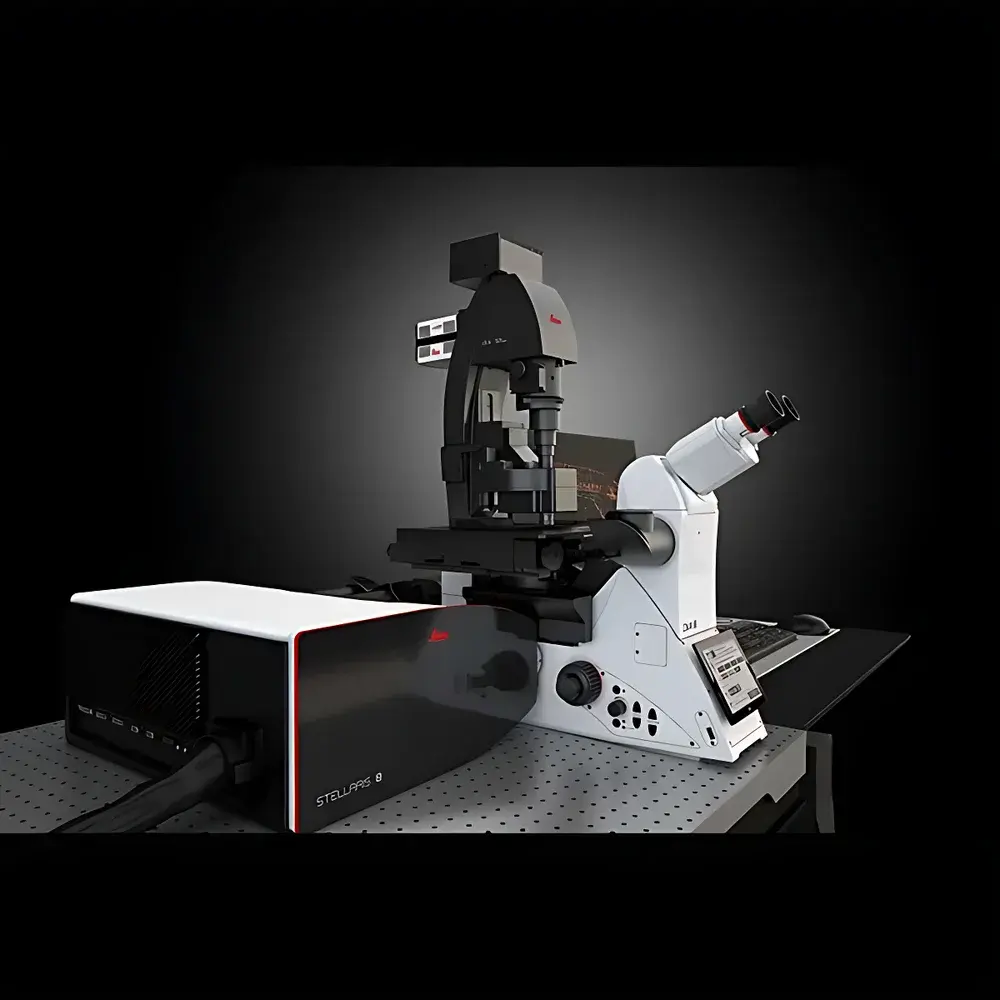
Leica STELLARIS DLS Digital Light Sheet Microscope
| Brand | Leica |
|---|---|
| Country of Origin | Germany |
| Model | STELLARIS DLS |
| Instrument Type | Point-Scanning Confocal Microscope with Integrated Digital Light Sheet Module |
| Integration Compatibility | STELLARIS 5 and STELLARIS 8 platforms |
| Optical Architecture | Inverted microscope with vertical dual-axis light sheet generation via TwinFlect mirror system |
| Illumination | Scanned Gaussian or top-hat light sheet (405–785 nm excitation range) |
| Detection | Dual sCMOS cameras (optional high-speed or high-sensitivity configuration) |
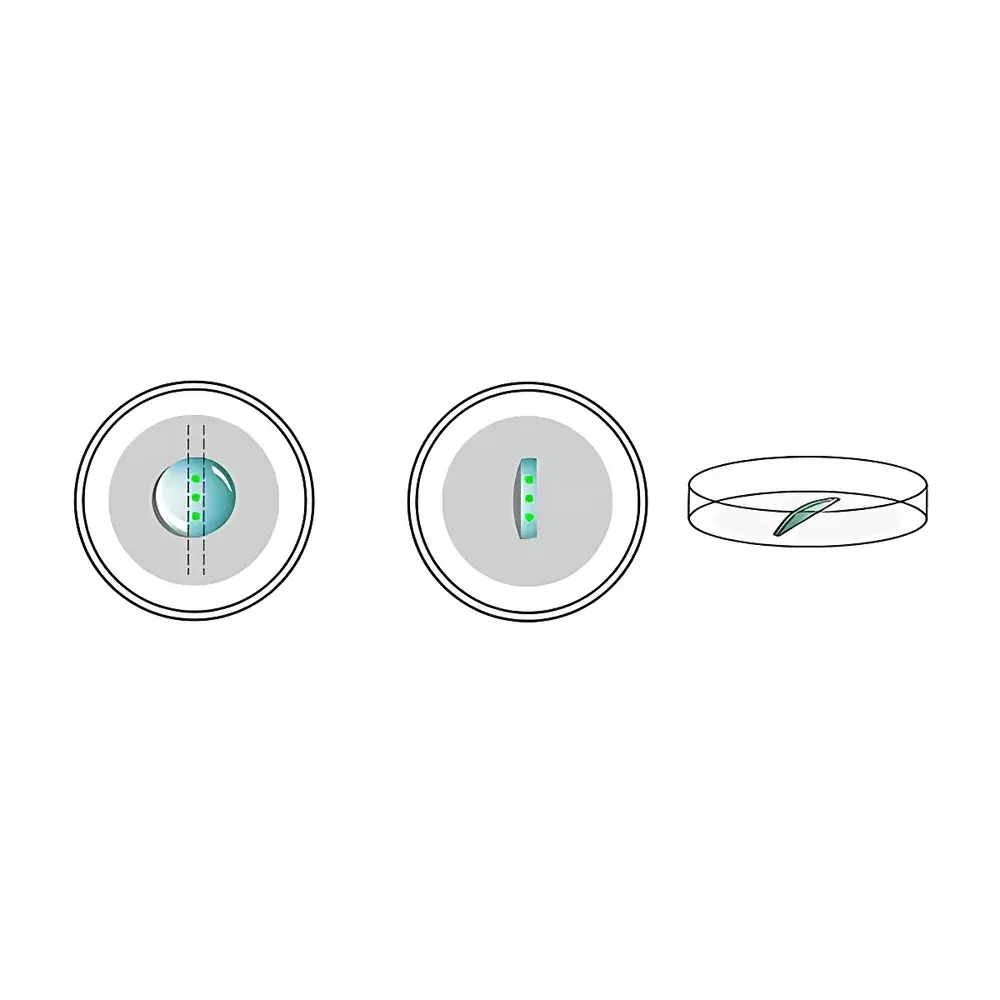
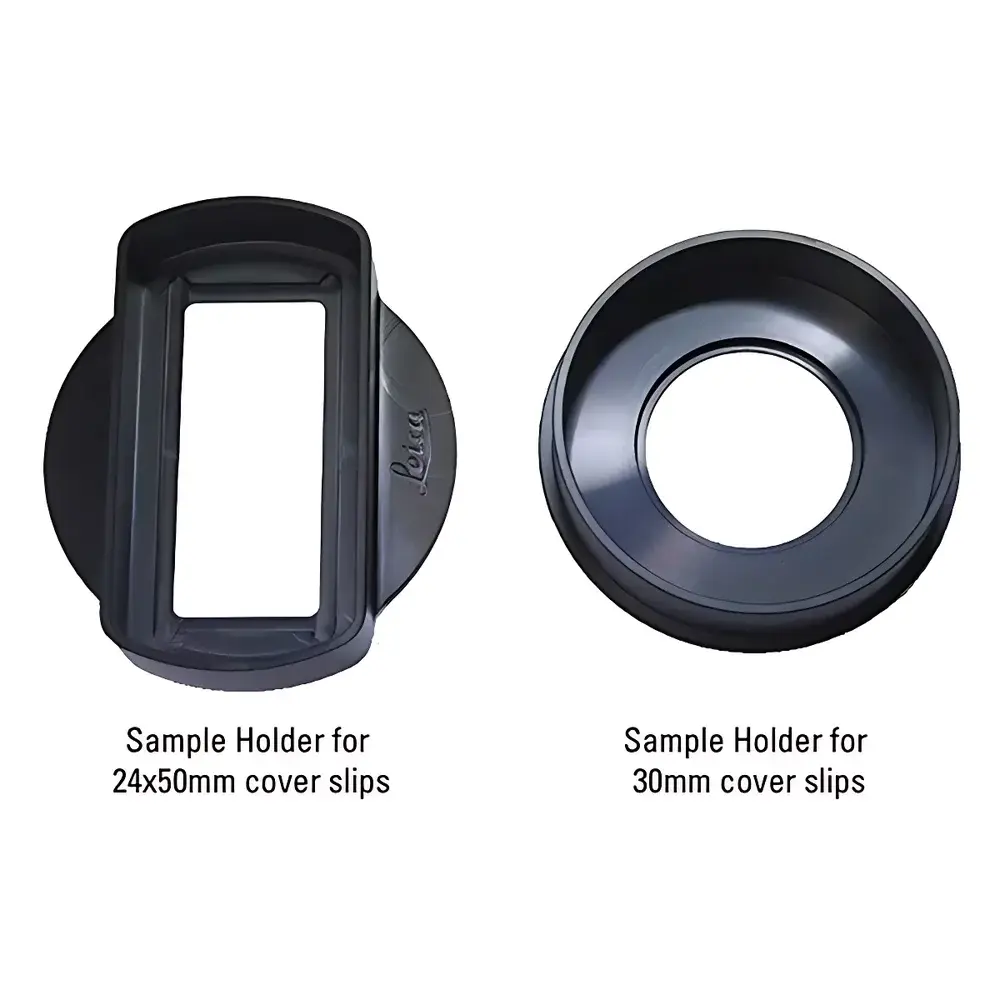
| Sample Mounting | Standard glass-bottom dishes, U-shaped capillaries, FEP tubing, or custom mounting frames (24 × 50 mm rectangular / Ø30 mm circular) |
| Refractive Index Matching | Compatible with water, glycerol, BABB, Scale, CUBIC, and other clearing media |
| Software Platform | LAS X LightSheet Wizard with real-time fusion, environmental control module, 3D Visualization, and GLP-compliant audit trail (21 CFR Part 11 ready) |
Overview
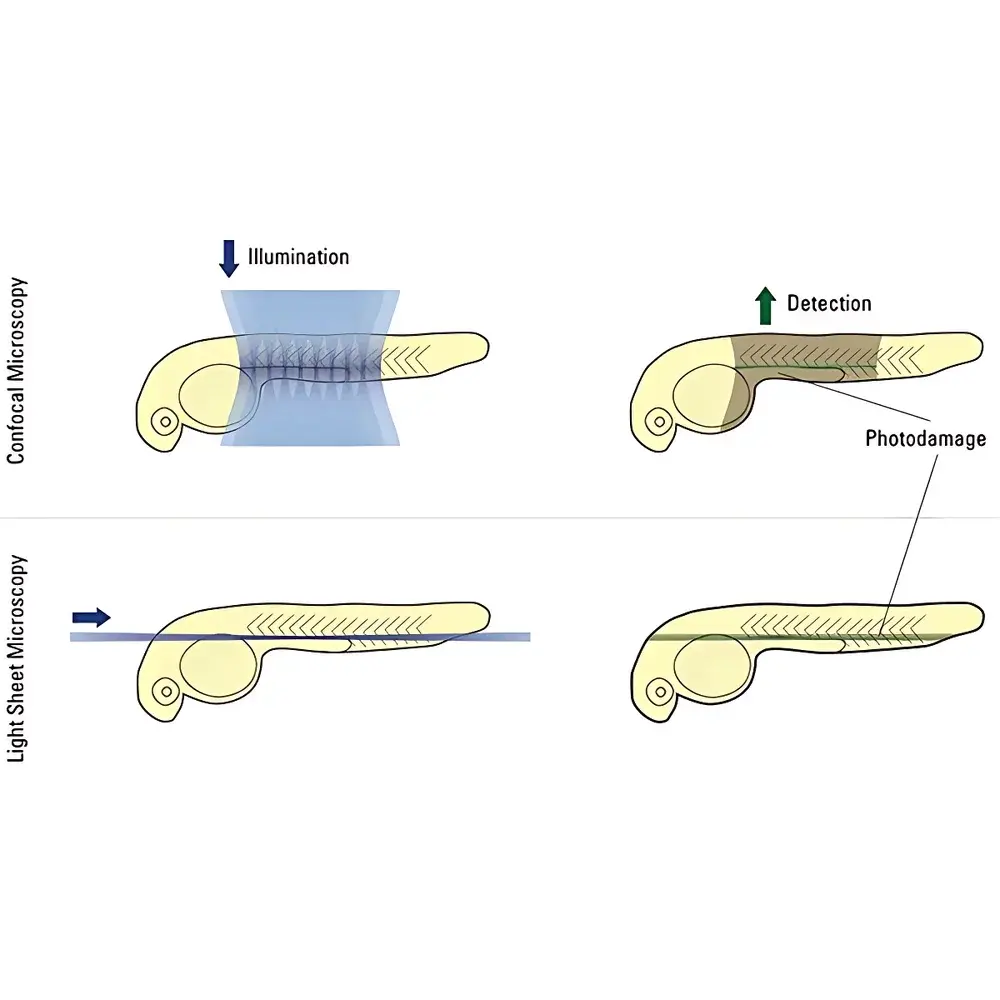
The Leica STELLARIS DLS is a fully integrated digital light sheet (DLS) microscopy platform engineered for high-fidelity, low-phototoxicity 3D imaging of living and cleared biological specimens. Unlike standalone light sheet systems requiring orthogonal illumination-detection geometry, the STELLARIS DLS implements a vertically aligned optical architecture that embeds light sheet generation directly into the inverted STELLARIS 5 or STELLARIS 8 confocal platform. This is achieved through the proprietary TwinFlect mirror system — a pair of precision-coated, motorized mirrors positioned orthogonally within the objective turret path — which deflects the excitation beam by 90° to form a thin, digitally scanned illumination plane coincident with the detection focal plane. The system preserves full point-scanning confocal functionality while enabling simultaneous or sequential acquisition modes. Its design adheres to fundamental principles of selective-plane illumination microscopy (SPIM): excitation is spatially confined to a single plane, eliminating out-of-focus photon exposure and minimizing photobleaching and photodamage. This makes the STELLARIS DLS particularly suited for long-term time-lapse studies of embryogenesis, organoid dynamics, neural activity, and vascular development — where physiological integrity must be maintained over hours or days.
Key Features
- Seamless dual-modality operation: switch between confocal and light sheet imaging within a single LAS X software session without hardware reconfiguration
- TwinFlect mirror system: enables vertical light sheet formation in inverted geometry; supports dual-sided illumination to eliminate shadow artifacts and improve signal uniformity across large fields of view
- Dual sCMOS camera options: configurable for speed (≥100 fps at full resolution) or sensitivity (quantum efficiency >80% at 550 nm), both synchronized with galvo-resonant scanning
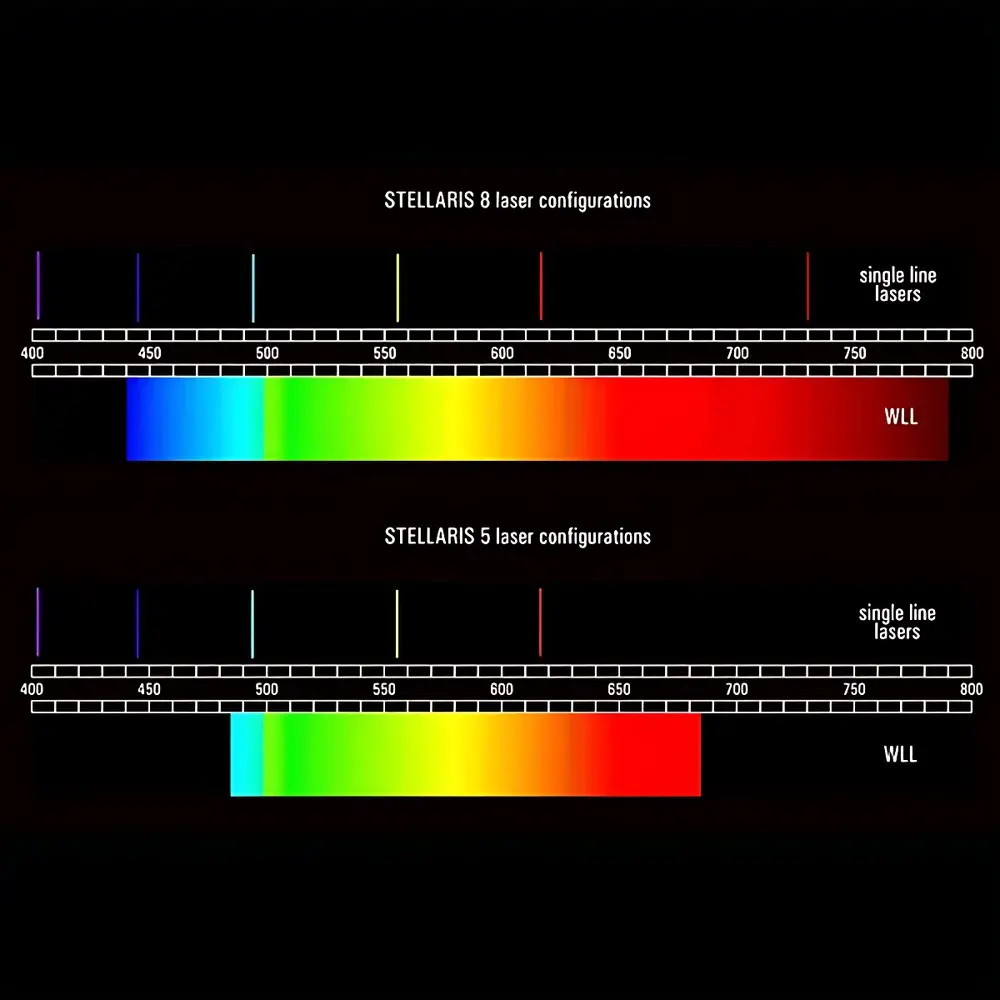
- Laser flexibility: all visible lasers (405, 440, 488, 514, 561, 594, 638, 685 nm) and optional near-infrared lines (730, 785 nm on STELLARIS 8) are available for light sheet excitation
- Optical adaptability: interchangeable illumination objectives (e.g., 5×/0.15 IMM, 10×/0.3 APO L) and detection objectives (e.g., FLUOTAR L 25×/0.95 W, APO L 20×/0.5 W) optimized for refractive index matching across aqueous, glycerol-based, and organic clearing media
- Environmental control integration: climate chamber modules support temperature (15–40°C), CO₂ (0–20%), humidity, and O₂ regulation, with real-time logging and programmable ramp profiles compliant with GLP/GMP workflows
Sample Compatibility & Compliance
The STELLARIS DLS accommodates diverse sample formats without compromising optical performance. Live specimens — including zebrafish embryos, Drosophila larvae, organoids, spheroids, and primary neuronal cultures — are imaged in standard glass-bottom dishes or custom U-shaped capillaries filled with physiological buffer. Cleared tissues (e.g., mouse brain, whole embryos processed with BABB, CUBIC, or ScaleS) are mounted in compatible refractive-index-matched media and imaged using high-NA water- or silicone-immersion objectives. All mounting configurations maintain mechanical stability during multi-position acquisition and long-duration timelapse. The system complies with ISO 13485 design controls for medical device-related research instrumentation and supports FDA 21 CFR Part 11 requirements via LAS X’s electronic signature, audit trail, and data integrity features. Validation documentation includes IQ/OQ protocols for environmental chamber performance, laser power calibration, and light sheet thickness verification per ASTM E2912-13 guidelines.
Software & Data Management
LAS X LightSheet Wizard provides a workflow-driven interface for experiment setup, calibration, acquisition, and post-processing. Key modules include: LightSheet Calibration Suite (automated light sheet thickness measurement and Z-offset correction), Online Fusion Engine (real-time merging of dual-sided acquisitions), Smart Load (selective loading of timepoints or Z-stacks from TB-scale datasets), and Batch Processing Pipeline (scripted application of deconvolution, background subtraction, channel alignment, and 3D rendering). The LAS X 3D Visualization module supports interactive clipping, volume rendering with GPU acceleration, stereoscopic display, and ROI-based quantification. All raw and processed data are stored in open-format HDF5 containers with embedded metadata (acquisition parameters, environmental logs, instrument configuration). Data provenance is preserved via timestamped audit trails, user authentication, and version-controlled analysis scripts — fulfilling FAIR (Findable, Accessible, Interoperable, Reusable) data principles.
Applications
The STELLARIS DLS addresses critical challenges in developmental biology, neuroimaging, and translational tissue engineering. It enables longitudinal tracking of endothelial cell migration in 4-day-old zebrafish embryos with subcellular resolution and minimal phototoxicity. In organoid research, it supports quantitative assessment of lumen formation, cell polarity, and drug-induced morphological changes across multiple positions in a single run. For cleared-tissue neuroscience, it delivers micron-level reconstruction of whole-brain vasculature or projection mapping in adult mouse cortex. Its compatibility with optogenetic actuators and photoconvertible probes permits hybrid experiments — e.g., confocal-guided ablation followed by gentle light sheet monitoring of regenerative responses. Additional use cases include cardiac dynamics in embryonic hearts, mitotic spindle orientation in epithelial monolayers, and immune cell trafficking in lymphoid organs.
FAQ
Can the STELLARIS DLS be retrofitted onto an existing STELLARIS 5 or STELLARIS 8 system?
Yes — the DLS module is offered as a field-upgrade kit including TwinFlect mirrors, illumination optics, sCMOS camera(s), mounting hardware, and LAS X LightSheet Wizard license.
Does the system support multiview fusion for improved isotropic resolution?
Yes — dual-sided illumination combined with LAS X’s online or offline fusion algorithms compensates for absorption and scattering artifacts, enhancing contrast and effective resolution across thick samples.
Is the climate chamber compatible with long-term (>24 h) live imaging under controlled conditions?
Yes — the integrated environmental control module maintains stable temperature, humidity, and gas composition throughout extended acquisitions, with continuous monitoring and automated fail-safe shutdown.
What sample preparation protocols are validated for BABB-cleared tissues?
Leica provides documented protocols for embedding, mounting, and refractive index matching of BABB-treated samples using the 24 × 50 mm rectangular mounting frame and APO L 10×/0.3 or FLUOTAR L 16×/0.6 IMM objectives.
How does the DLS module ensure compliance with regulatory data integrity standards?
LAS X supports 21 CFR Part 11 compliance through role-based access control, electronic signatures, immutable audit trails, and encrypted HDF5 data storage with checksum validation.



