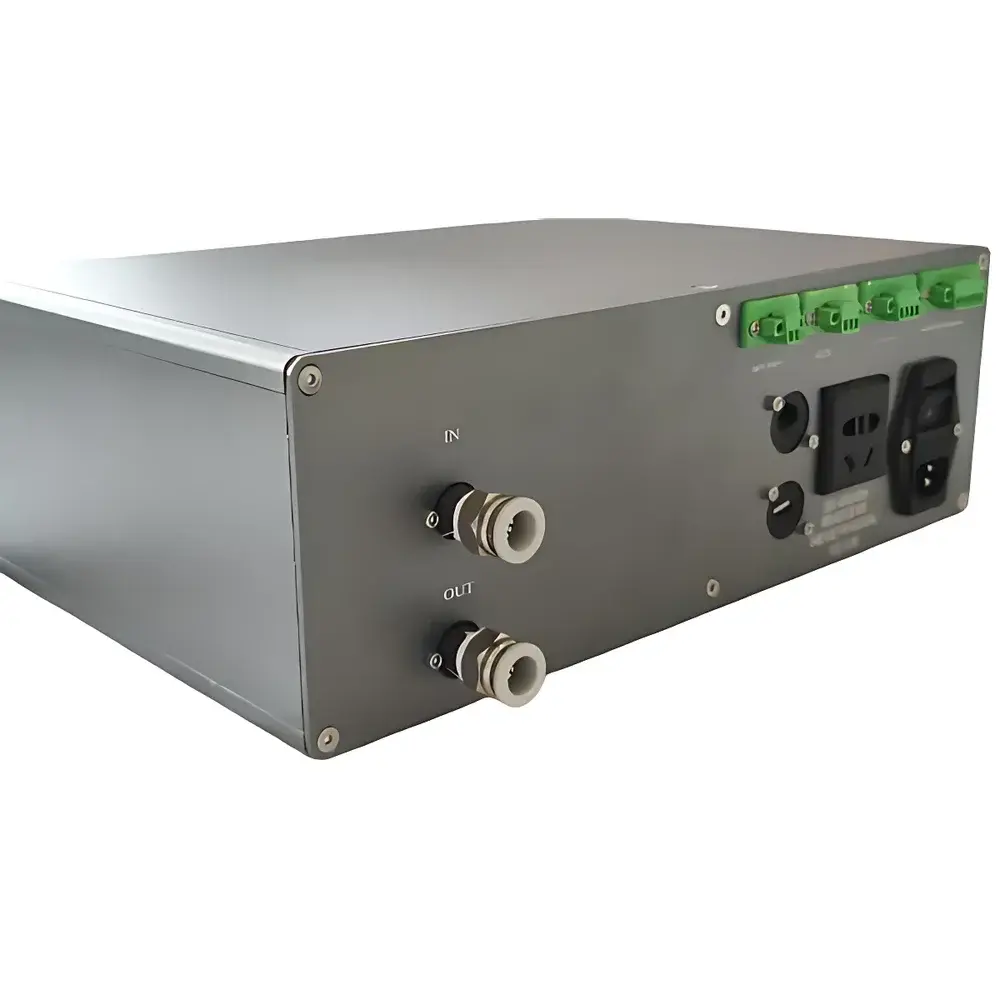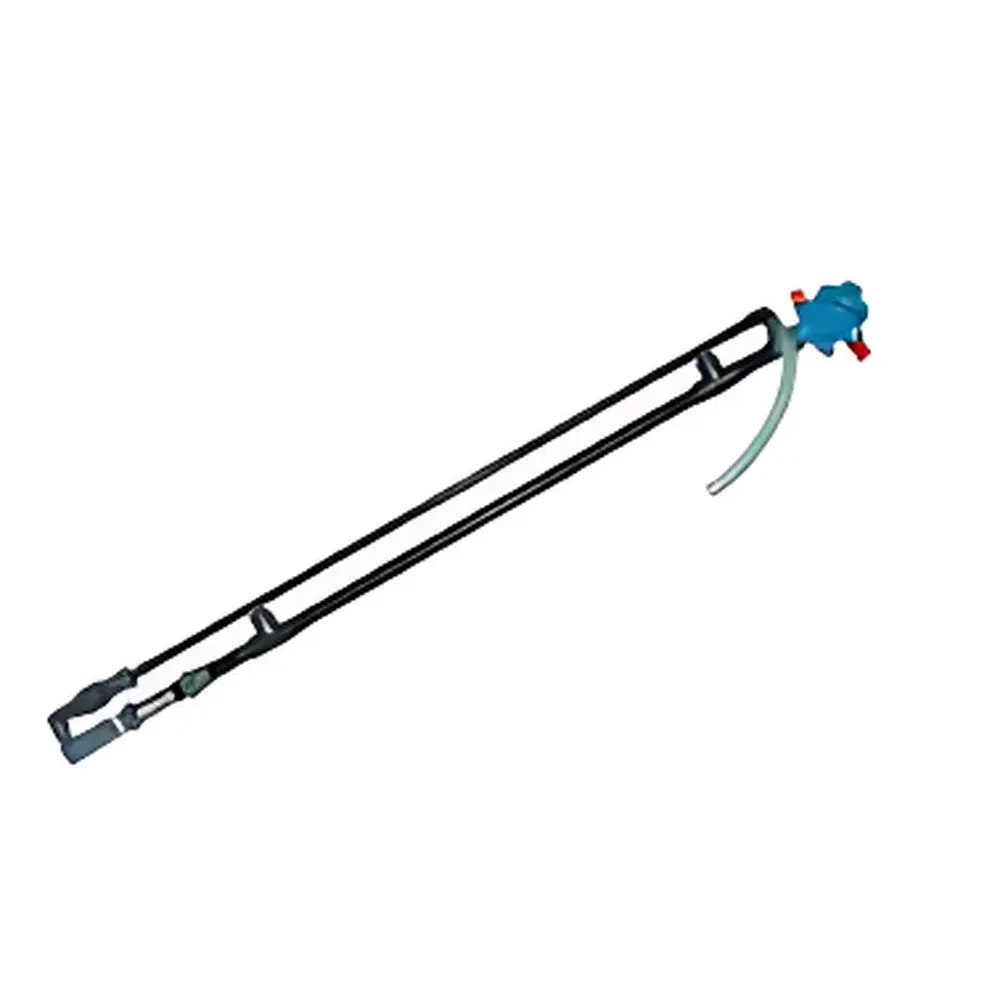
Leichi PHGF-43 Submersible pH/ORP Transmitter Series
| Brand | Leichi |
|---|---|
| Origin | Shanghai, China |
| Manufacturer Type | Direct Manufacturer |
| Country of Origin | China |
| Model | PHGF-43 |
| Pricing | Upon Request |
| Housing Material Options | PVC, CPVC, SS304, SS316 |
| Cleaning Function | None or Jet Flush |
| Pre-amplifier | Optional (Integrated or External) |
| Compatible Electrodes | FG-991 (pH) / ORP-1 (Redox) |
| Measurement Range | pH 0–14 |
| Process Temperature Range | 5–45 °C |
| Max. Pressure Rating | 0.6 MPa |
| Enclosure Protection | IP65 (Junction Box or High-Impedance Box) |
| Submersion Length Options | 0.5 m, 1.0 m, 1.5 m, 2.0 m, 2.5 m, 3.0 m (User-selectable) |
| Standard Cable Length | 20 m (Extended lengths available upon specification) |
Overview
The Leichi PHGF-43 Submersible pH/ORP Transmitter Series is an industrial-grade, direct-insertion process transmitter engineered for continuous, real-time monitoring of hydrogen ion activity (pH) and oxidation-reduction potential (ORP) in liquid-phase process streams. Designed according to the principles of electrochemical potentiometry, the PHGF-43 integrates a robust submersible probe body with configurable signal conditioning electronics to deliver stable, low-drift analog output (4–20 mA, two-wire) compatible with standard DCS, PLC, and SCADA systems. Its modular construction enables deployment in open channels, tanks, pipelines, and effluent lines across water treatment, chemical manufacturing, food & beverage processing, and pharmaceutical utilities where reliable in-situ measurement under variable hydraulic conditions is required.
Key Features
- Submersible design with user-selectable immersion lengths (0.5–3.0 m), enabling flexible installation in tanks, sumps, and flow-through cells without external mounting hardware.
- Chemically resistant housing options: PVC (standard), CPVC (for elevated temperature or mild caustic exposure), SS304, and SS316 (for high-corrosion environments including chlorinated or saline media).
- Optional integrated preamplifier reduces signal degradation over long cable runs and improves noise immunity—particularly critical in electrically noisy industrial settings.
- Jet-flush capability (PHGF-43-P2N/P2Y variants) supports automated electrode cleaning via externally supplied compressed air or process fluid, minimizing fouling-related drift in suspended-solids-laden or viscous streams.
- IP65-rated junction box or high-impedance enclosure ensures protection against dust ingress and water jets during routine maintenance or washdown operations.
- Compliant with IEC 61000-6-2 (immunity) and IEC 61000-6-4 (emissions) for electromagnetic compatibility in industrial plants.
Sample Compatibility & Compliance
The PHGF-43 operates with Leichi’s FG-991 combination pH electrode (glass membrane, Ag/AgCl reference, gel-filled electrolyte) and ORP-1 redox electrode (platinum sensing element, Ag/AgCl reference). It supports aqueous solutions within 5–45 °C and up to 0.6 MPa static pressure—suitable for gravity-fed or low-pressure recirculation loops. The transmitter meets CE marking requirements and conforms to ISO 9001-certified manufacturing practices. While not intrinsically safe, it may be deployed in non-hazardous zones per IEC 60079-0. For regulated environments (e.g., USP <797>, EU GMP Annex 1), users must validate system performance—including calibration frequency, electrode response time (<30 s to 95% of final value), and drift tolerance (<0.1 pH unit/24 h)—as part of their site-specific PQ protocol.
Software & Data Management
The PHGF-43 is a stand-alone analog transmitter and does not incorporate embedded digital communication protocols (e.g., HART, Modbus RTU, or Foundation Fieldbus). However, its 4–20 mA output is fully compatible with third-party data acquisition systems supporting analog input scaling and linearization. When paired with Leichi’s optional calibration verification tools (e.g., portable pH/ORP meters with traceable NIST-certified buffers), users can implement documented calibration logs aligned with GLP and FDA 21 CFR Part 11 audit-trail requirements—provided the host DCS or historian system provides electronic signature, version control, and change management functionality.
Applications
- Primary and secondary wastewater treatment: pH control in neutralization basins, ORP monitoring in denitrification and disinfection stages.
- Industrial cooling water systems: real-time pH tracking to prevent scale formation and corrosion; ORP feedback for biocide dosing control.
- Food & beverage CIP (Clean-in-Place) validation: verification of rinse cycle completion via rapid pH transition detection.
- Chemical blending and dosing stations: closed-loop control of acid/base addition using pH setpoint deviation signals.
- Pharmaceutical purified water (PW) and water-for-injection (WFI) distribution loop surveillance—subject to supplementary validation per pharmacopeial standards (USP <1231>, EP 2.2.42).
FAQ
What electrode models are certified for use with the PHGF-43 transmitter?
The FG-991 (pH) and ORP-1 (redox) electrodes are factory-matched and tested for optimal signal stability and thermal compensation alignment with the PHGF-43’s internal circuitry.
Can the PHGF-43 be installed in pressurized pipelines?
Yes—up to 0.6 MPa static pressure at ambient temperature; however, dynamic surge pressure must remain below 1.2 MPa, and mechanical stress from vibration or water hammer requires isolation mounting.
Is the transmitter compatible with HART-enabled control systems?
No—the PHGF-43 provides only analog 4–20 mA output; HART or digital fieldbus integration requires an external signal converter or replacement with Leichi’s PHGF-5X series.
How often should calibration be performed in continuous operation?
Initial calibration prior to commissioning, followed by verification every 7–14 days depending on process fouling tendency; critical applications (e.g., regulatory reporting) may require daily checks per internal SOP.
Does the jet-flush option support automated control integration?
Yes—the flush solenoid valve interface accepts dry-contact or 24 VDC trigger signals synchronized with programmable logic controllers for timed or event-driven cleaning cycles.