
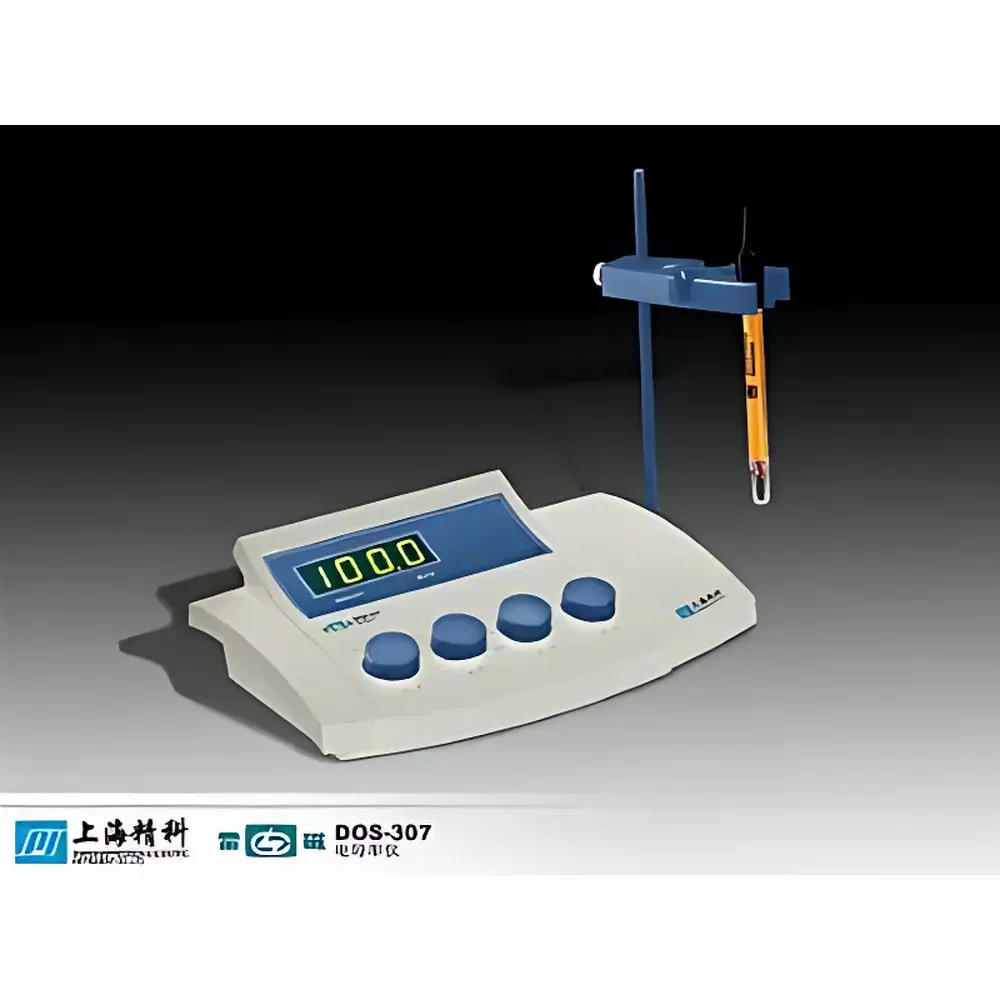
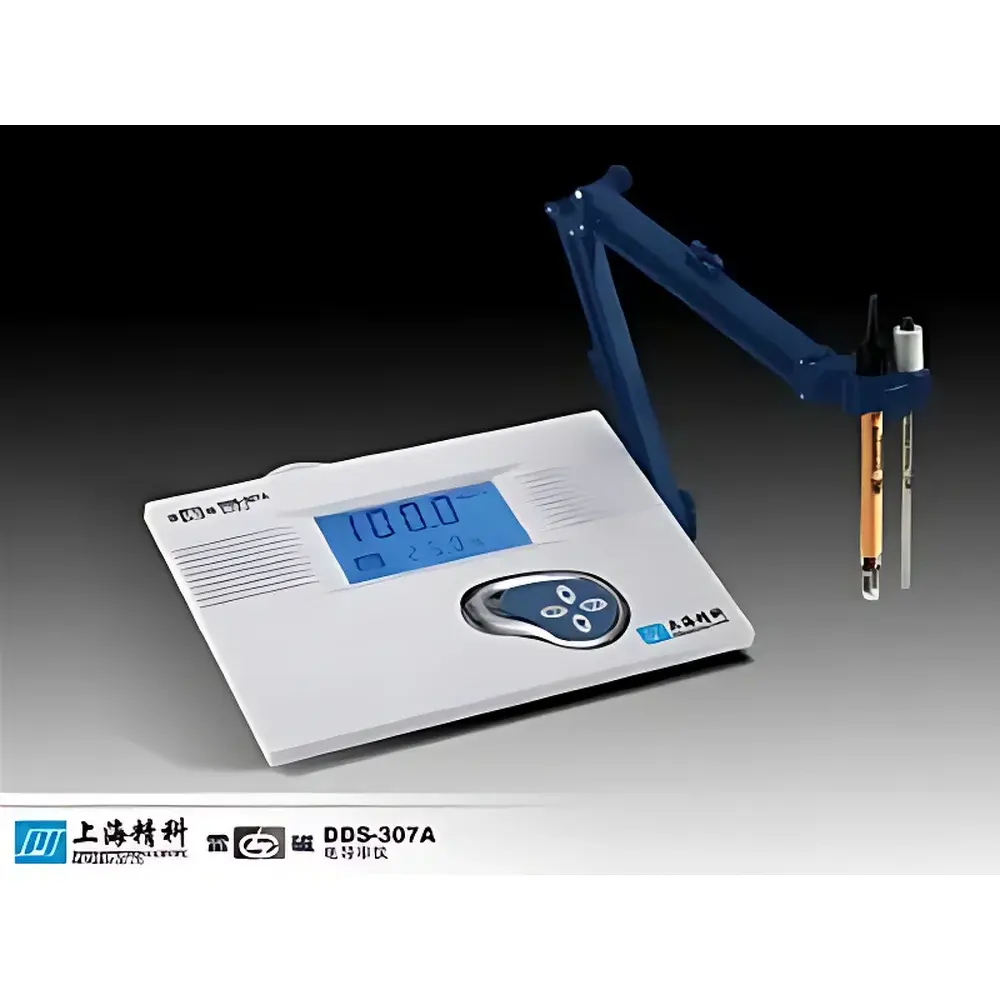
LeiCi DDS-307 / DDS-307A / DDS-308 Benchtop Conductivity Meters
| Brand | LeiCi |
|---|---|
| Origin | Shanghai, China |
| Instrument Type | Benchtop |
| Parameter Types | Multi-parameter (Conductivity, TDS, Temperature) |
| Measurement Range | 0–1.999 × 10⁵ µS/cm |
| Accuracy | ±0.5% FS |
| Resolution | 0.01 µS/cm (DDS-307), 0.01 µS/cm / 0.01 °C (DDS-307A), 0.001 µS/cm (DDS-308) |
| Calibration Standard | NIST-traceable conductivity standards (China-specific formulation) |
| Temperature Compensation | Manual (DDS-307), Automatic (DDS-307A & DDS-308) |
| Output Interface | 0–10 mV analog (DDS-307), RS232 (DDS-308) |
| Display | LED (DDS-307/307A), LCD (DDS-308) |
Overview
The LeiCi DDS-307, DDS-307A, and DDS-308 are benchtop conductivity meters engineered for routine laboratory measurement of aqueous ionic strength across environmental, pharmaceutical, academic, and industrial quality control applications. These instruments operate on the principle of two-electrode AC conductometric measurement, applying a low-frequency alternating current to minimize electrode polarization and ensure stable readings in low-to-moderate conductivity samples (0–199.9 mS/cm). Each model integrates temperature compensation—either manual (DDS-307) or automatic (DDS-307A, DDS-308)—to correct conductivity values to the standard reference temperature of 25 °C, in accordance with ISO 7888 and ASTM D1125 guidelines. The DDS-308 extends functionality with RS232 serial communication, enabling data logging and integration into centralized lab information management systems (LIMS).
Key Features
- Benchtop form factor with robust ABS housing, optimized for stable placement on analytical workbenches and fume hoods.
- Multi-parameter capability: simultaneous display of conductivity (µS/cm or mS/cm), total dissolved solids (TDS), and temperature (°C), with configurable TDS conversion factors (0.4–1.0).
- Calibration compatibility with NIST-traceable conductivity standards formulated per Chinese metrological requirements—ensuring traceability under CNAS-accredited calibration protocols.
- Automatic temperature compensation (ATC) using integrated Pt1000 or thermistor sensors (DDS-307A/308), compliant with IEC 60746-3 for electrochemical instrumentation.
- Linear range extension up to 199.9 mS/cm (DDS-308), supporting high-salinity samples such as seawater, brines, and industrial process streams without manual range switching.
- Stable analog output (0–10 mV) on DDS-307 for connection to chart recorders or PLC-based monitoring systems.
Sample Compatibility & Compliance
These meters are validated for use with deionized water, tap water, wastewater effluents, buffer solutions, cell culture media, and electrolyte formulations. They meet the essential performance criteria outlined in ISO/IEC 17025 for in-house verification of conductivity measurement uncertainty. While not certified to FDA 21 CFR Part 11 out-of-the-box, the DDS-308’s RS232 interface supports external audit-trail-enabled software for GLP/GMP environments when paired with compliant data acquisition platforms. All models comply with EMC Directive 2014/30/EU and Low Voltage Directive 2014/35/EU for CE-marked operation within EU laboratories.
Software & Data Management
The DDS-308 includes native RS232 protocol support (ASCII-based command set) for bidirectional communication with PC-based applications. It enables timestamped data export at user-defined intervals (1–60 seconds), supporting CSV or TXT formats compatible with Excel, LabChart, or custom Python/Matlab scripts. Though no proprietary software is bundled, third-party tools—including open-source serial terminal emulators and validated LIMS drivers—can be deployed to satisfy 21 CFR Part 11 audit requirements when configured with electronic signatures and secure user authentication. Firmware updates (where applicable) are delivered via UART programming interface under controlled change management procedures.
Applications
- Environmental monitoring: Surface water, groundwater, and wastewater conductivity profiling per EPA Method 120.1.
- Pharmaceutical water system validation: USP and EP 2.2.38 conductivity testing of Purified Water and Water for Injection (WFI).
- Academic teaching labs: Fundamental electrochemistry experiments, including Kohlrausch’s law verification and ion mobility studies.
- Food & beverage QC: Monitoring rinse water conductivity in CIP validation and measuring salt concentration in brine solutions.
- Electroplating bath control: Real-time tracking of electrolyte ionic strength to maintain deposition consistency.
FAQ
What calibration standards are recommended for these meters?
NIST-traceable KCl solutions (e.g., 1413 µS/cm, 12.88 mS/cm) prepared according to GB/T 601–2016 (Chinese national standard), with certificate of analysis specifying uncertainty ≤ ±0.25%.
Can the DDS-307A store calibration history?
No—calibration events are not logged internally; users must manually record date, standard used, slope, and offset in lab notebooks or ELN systems.
Is temperature compensation adjustable for non-aqueous solvents?
No—the ATC algorithm is fixed for aqueous systems per DIN EN 27888; alternative compensation curves require external calculation.
Does the DDS-308 support MODBUS RTU protocol?
No—it uses a proprietary ASCII command set over RS232; MODBUS integration requires an external protocol converter.
Are electrodes included with the instrument?
Yes—each unit ships with a calibrated, platinum-black-coated, two-electrode conductivity cell (K = 1.0 cm⁻¹), certified for stability over ≥500 measurements under normal use.





