
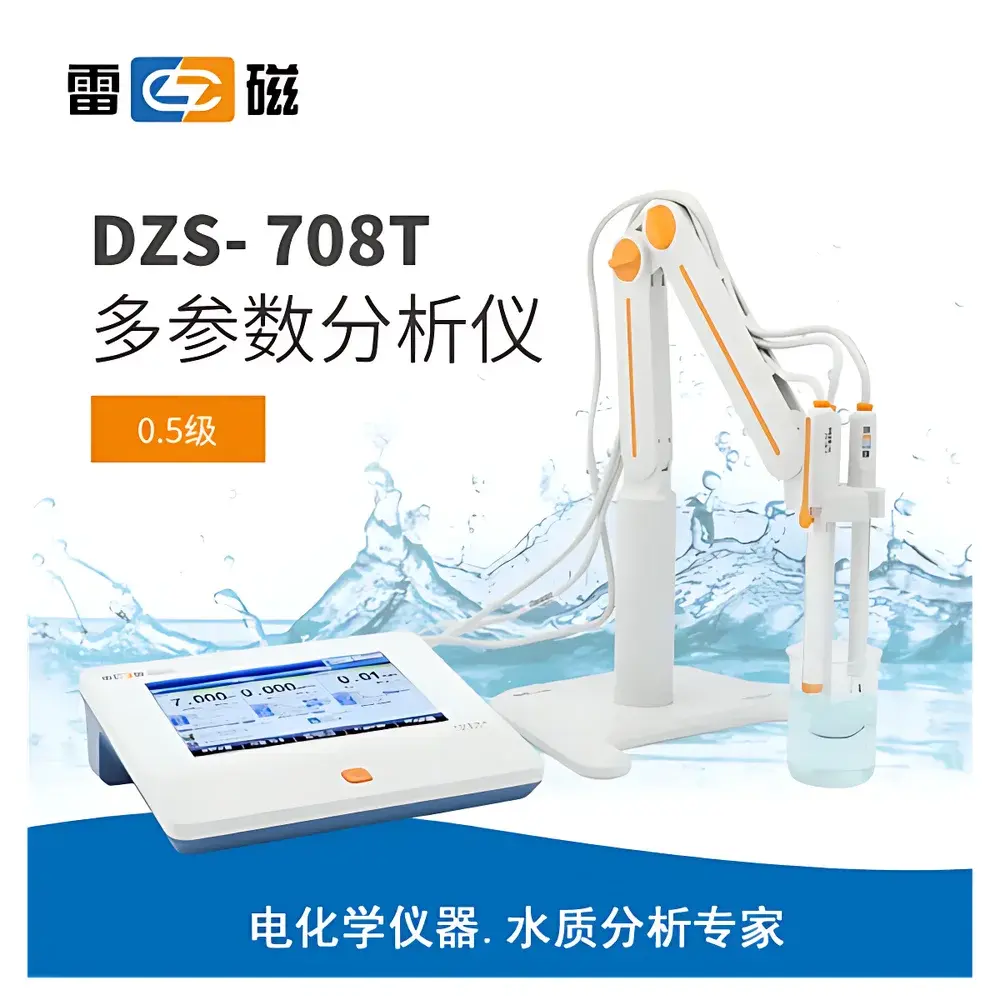
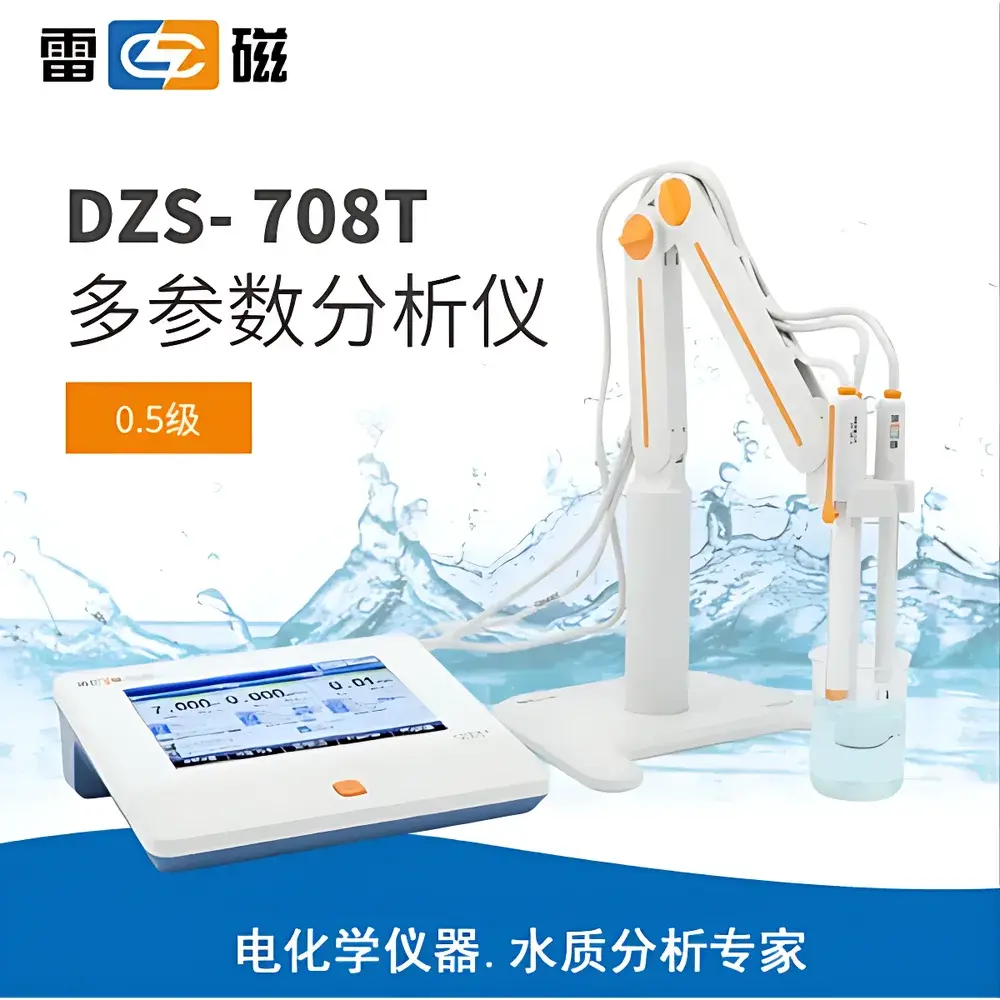
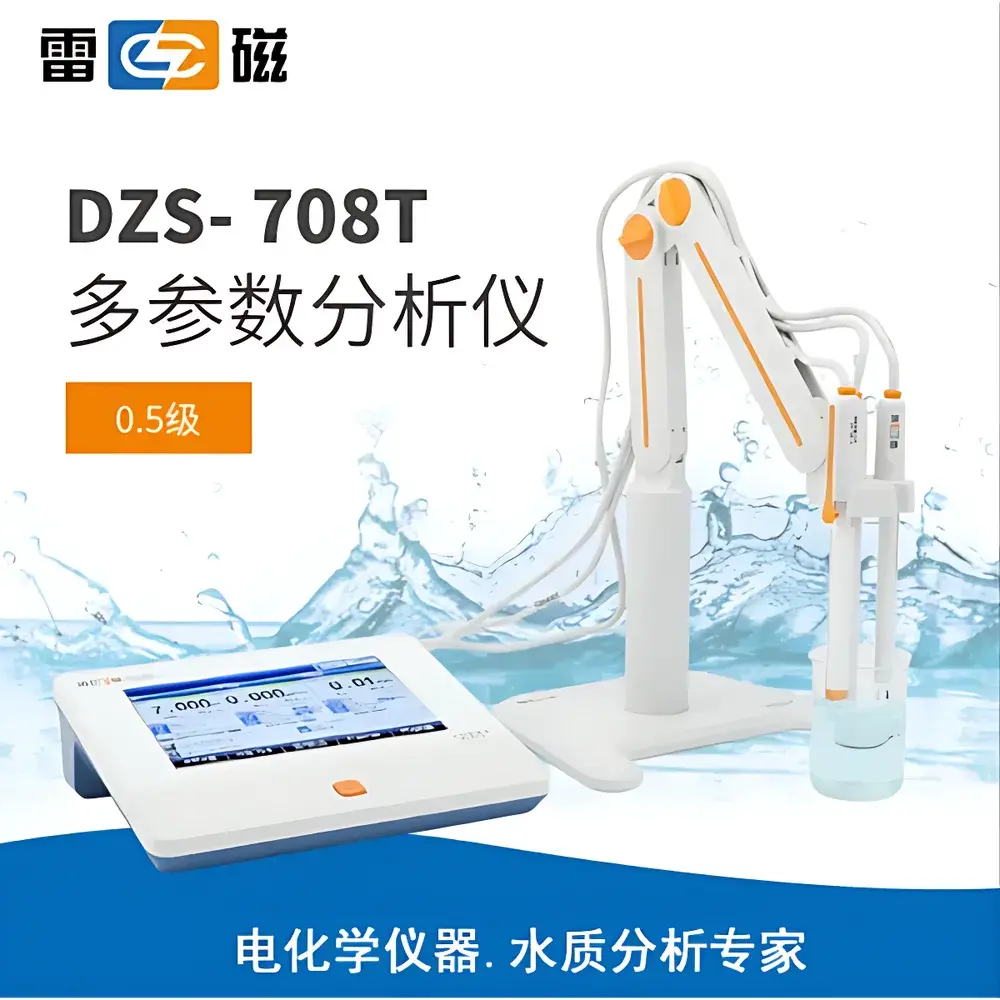
LeiCi DZS-708T Multi-Parameter Water Quality Analyzer
| Brand | LeiCi |
|---|---|
| Origin | Shanghai, China |
| Model | DZS-708T |
| Instrument Type | Laboratory Water Quality Analyzer |
| Detection Principle | Electrochemical Method |
| Measurable Parameters | pH, Conductivity, Dissolved Oxygen (DO), Ion Concentration (e.g., Na⁺, K⁺, NH₄⁺, Cl⁻, F⁻) |
| Measurement Ranges | pH/pX: (0.000–14.000) |
| DO | (0.00–50.00) mg/L |
| Repeatability | ±3% |
| IP Rating | IP54 |
| Compliance | GLP, GMP-supportive data integrity architecture |
| Connectivity | RS-232, USB, LIMS-compatible, optional autosampler interface |
Overview
The LeiCi DZS-708T Multi-Parameter Water Quality Analyzer is a laboratory-grade electrochemical platform engineered for precise, simultaneous measurement of pH/pX, conductivity (including TDS, resistivity, salinity, and ash content), and dissolved oxygen (DO) — with integrated ion-selective electrode (ISE) capability for quantitative analysis of Na⁺, K⁺, NH₄⁺, Cl⁻, F⁻, and other monovalent ions. Built upon a modular three-channel sensor architecture, the instrument applies potentiometric, conductometric, and polarographic principles in accordance with standardized electrochemical measurement protocols. Its design targets routine and regulatory-compliant water quality assessment in environmental monitoring labs, municipal water treatment facilities, academic research centers, and industrial QC environments where trace-level ion quantification and multi-parameter correlation are critical. The system operates under temperature-compensated conditions across a broad ambient range (5–40 °C), with automatic electrode diagnostics, endpoint recognition algorithms, and adaptive calibration logic ensuring measurement consistency without manual intervention.
Key Features
- High-resolution 7-inch color TFT touchscreen with intuitive icon-driven UI supporting both English and Chinese language modes
- Triple independent measurement modules: pH/pX + ORP, conductivity/resistivity/TDS/salinity/ash, and polarographic DO (with saturation % and mg/L output)
- IP54-rated enclosure for dust resistance and limited water ingress protection during benchtop operation
- Comprehensive electrode management system including automatic recognition, health diagnostics, and lifetime tracking
- GLP-compliant data handling: 1000+ measurement records with timestamp, operator ID, electrode serial number, calibration history, and environmental metadata
- GMP-aligned audit trail functionality with user-level permissions (admin/operator/visitor), password protection, and immutable operation logs
- Flexible calibration support: up to 6-point pH/ISE calibration; 1-point ORP; 1–5-point conductivity; zero/full-scale DO calibration with atmospheric pressure compensation (kPa/mbar/Torr/atm)
- Advanced compensation models: non-linear conductivity temperature correction, seawater vs. default salinity algorithms, selectable reference temperatures (5.0–25.0 °C), and manual/automatic barometric adjustment for DO
- Multi-mode ion quantification: direct concentration, standard addition, sample addition, and Gran plot methods — with unit switching among µg/L, mg/L, g/L, mol/L, mmol/L, ppm, and pX
Sample Compatibility & Compliance
The DZS-708T accommodates aqueous samples across drinking water, surface water, wastewater effluent, groundwater, and process streams. It supports standard electrode geometries including combination pH electrodes (with integrated reference), graphite or stainless-steel conductivity cells (cell constants 0.01–1.0 cm⁻¹), and Clark-type polarographic DO sensors. All measurements adhere to internationally recognized electrochemical test frameworks: ASTM D1293 (pH of water), ASTM D5391 (conductivity of pure water), ISO 5814 (electrochemical determination of dissolved oxygen), and USP (conductivity of purified water). Data integrity features — including electronic signatures, calibration lockout, forced recalibration alerts, and configurable alarm thresholds — align with FDA 21 CFR Part 11 requirements when deployed within validated laboratory workflows.
Software & Data Management
Data acquisition, review, and export are managed via embedded firmware with no external software dependency for basic operation. Full traceability is ensured through hierarchical storage: each record contains raw signal values, processed results, electrode status flags, calibration coefficients, environmental parameters (temperature, pressure, salinity), and user-defined sample IDs. Export options include CSV via USB flash drive, direct printing via RS-232 thermal or dot-matrix printers (configurable format templates), and secure PC transfer using LeiCi’s certified communication suite. The instrument natively supports LIMS integration through ASCII-based command-response protocols and provides structured metadata fields required for automated ingestion into enterprise laboratory information systems. U disk read/write capability enables offline method deployment and batch report generation.
Applications
- Regulatory compliance testing for EPA Method 150.1 (pH), 120.1 (conductivity), and 360.1 (dissolved oxygen)
- Ion-specific monitoring in nutrient-rich surface waters (e.g., NH₄⁺ in eutrophication studies, F⁻ in groundwater risk assessment)
- Process control in desalination plants, boiler feedwater conditioning, and pharmaceutical water systems (PW/WFI)
- Educational laboratories requiring pedagogically transparent electrochemical instrumentation with real-time sensor diagnostics
- Environmental field labs performing rapid multi-analyte screening prior to ICP-MS or IC confirmation
- Calibration verification of portable meters using lab-stable reference standards traceable to NIST or GB-certified materials
FAQ
Does the DZS-708T support ASTM D1129-compliant resistivity measurement for ultrapure water?
Yes — with appropriate 0.01 cm⁻¹ conductivity cell and linear/non-linear temperature compensation enabled, it meets ASTM D1129 specifications for resistivity down to 18.2 MΩ·cm at 25 °C.
Can custom ion calibrations be saved and recalled across power cycles?
Yes — all ISE calibration curves, including user-defined standards and slope/intercept parameters, are retained in non-volatile memory and persist after shutdown.
Is the polarographic DO sensor compatible with BOD incubation protocols?
Yes — the built-in temperature and atmospheric pressure compensation ensures stable DO readings across 20–30 °C incubation ranges, and the sensor housing is rated for continuous submersion.
How does the instrument enforce data integrity during multi-user operation?
Through role-based access control, mandatory login credentials, time-stamped action logs, and write-protected historical datasets that cannot be edited or deleted without administrative override.
What electrode validation protocols are implemented?
Real-time impedance monitoring, slope deviation alerts (>5% from theoretical), response time evaluation (<15 s for 95% step change), and buffer recognition confidence scoring during calibration.







