
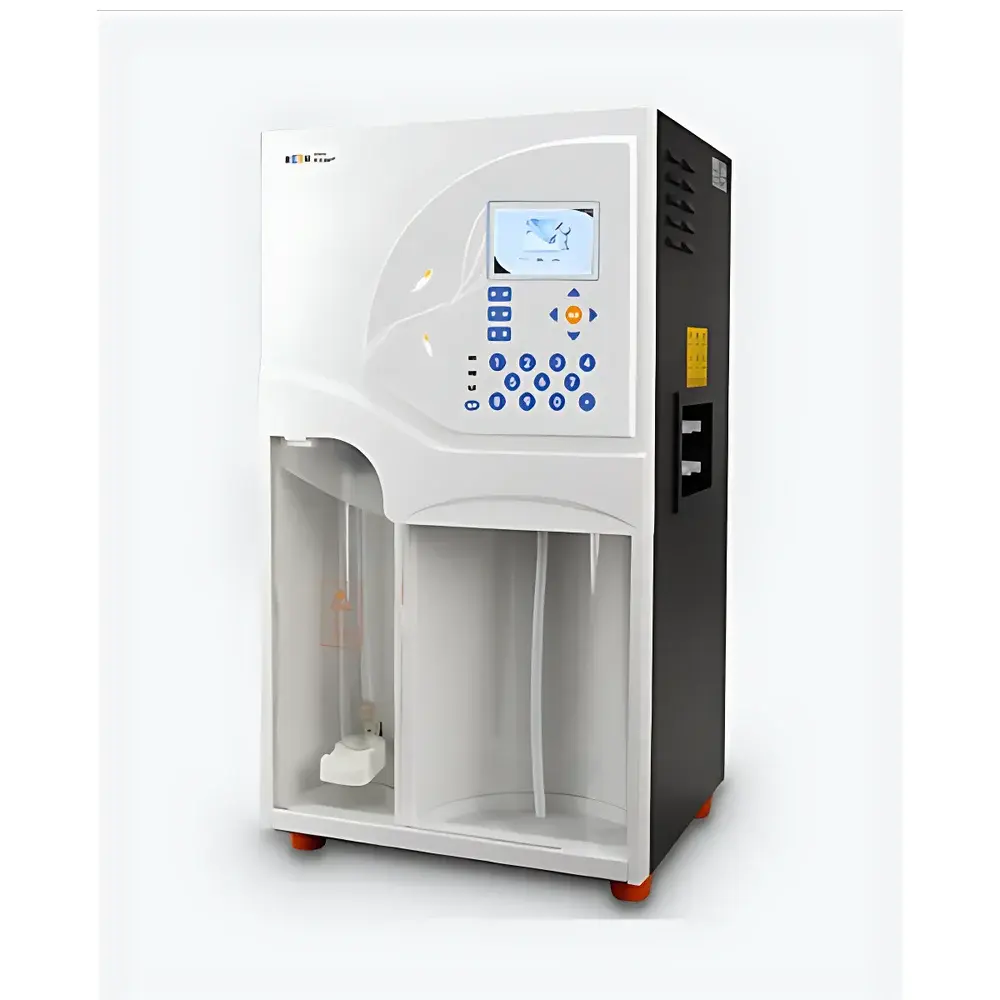
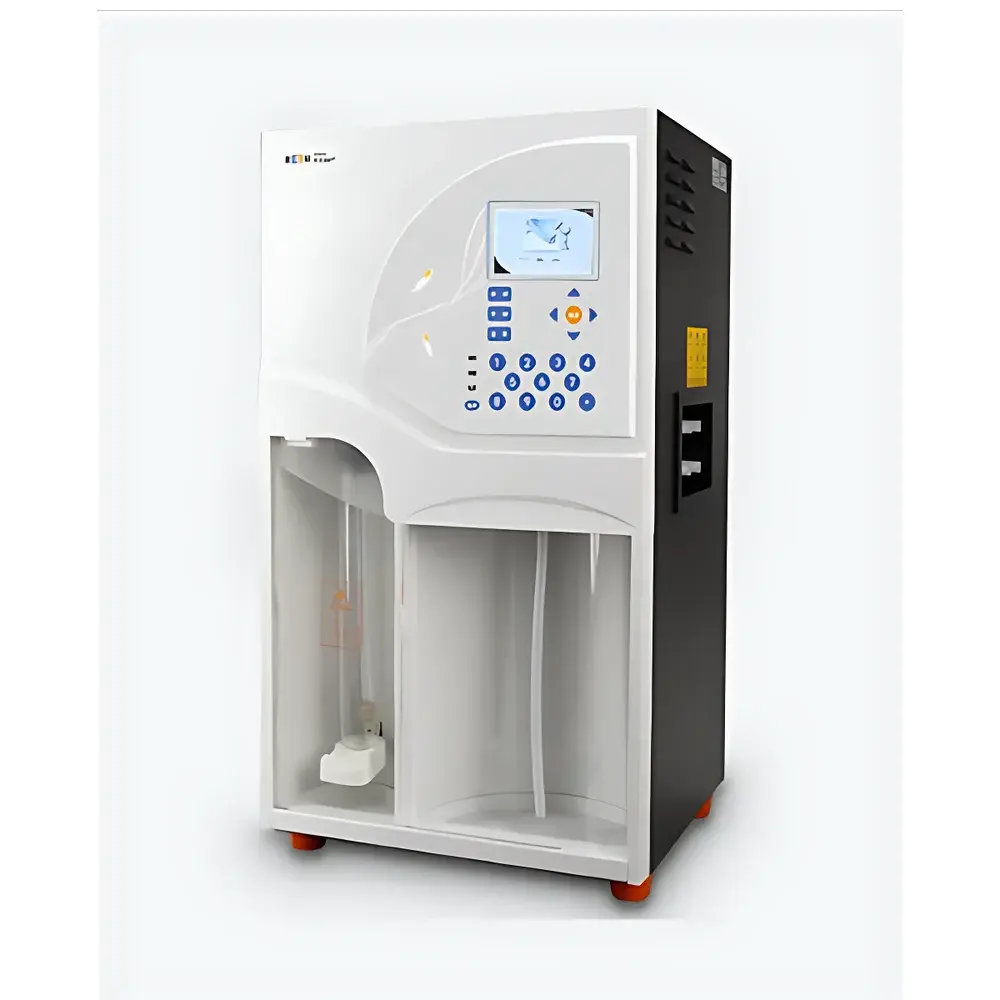
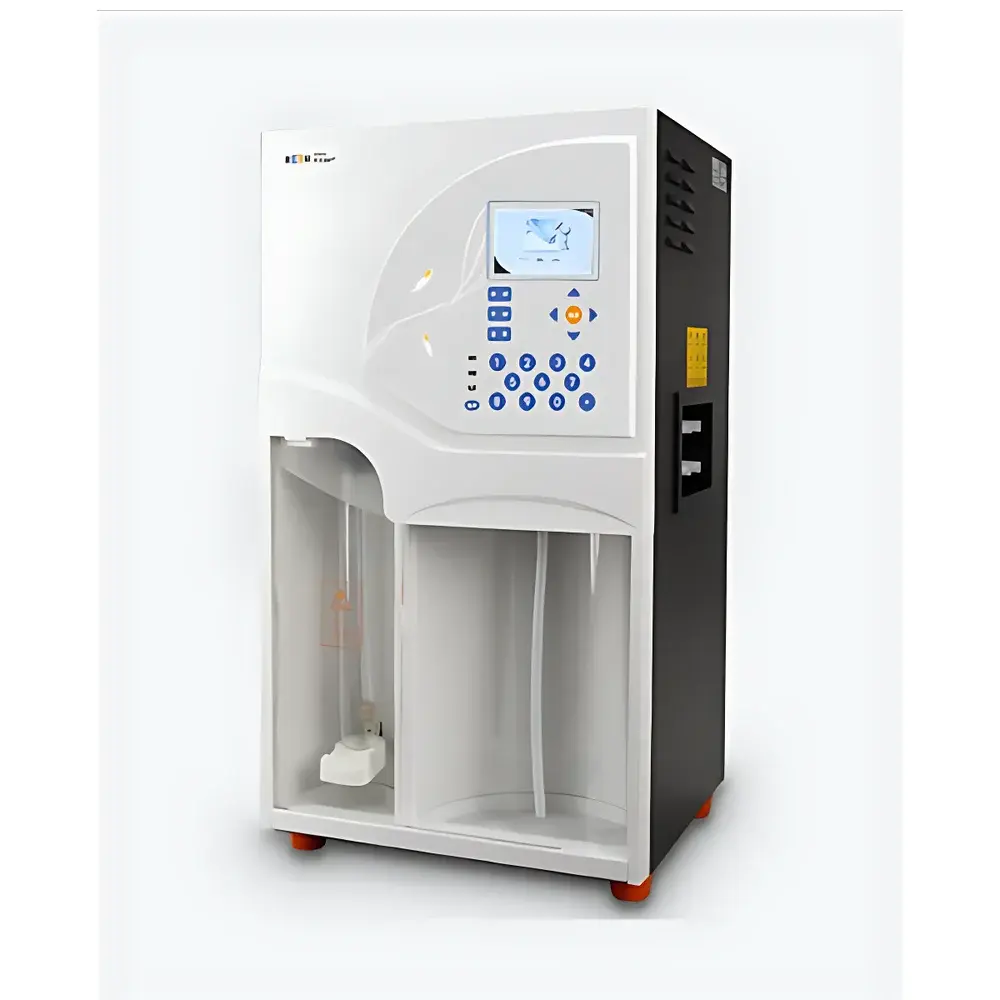
Leici KDN-1 Automated Kjeldahl Nitrogen Determinator
| Brand | Leici |
|---|---|
| Origin | Shanghai, China |
| Manufacturer Type | Authorized Distributor |
| Regional Classification | Domestic (China) |
| Model | Leici KDN-1 |
| Instrument Type | Kjeldahl Nitrogen Determinator |
| Automation Level | Fully Automated |
| Nitrogen Determination Range | 0.1 mg – 240 mg N |
| Steam Distillation Time | Programmable up to 60 min |
| Sample Weight Capacity | ≤6 g (solid), ≤16 mL (liquid) |
| Nitrogen Recovery Rate | ≥99.5% |
| Power Consumption | 1.3 kW |
| Dimensions (L×W×H) | 400 mm × 385 mm × 735 mm |
Overview
The Leici KDN-1 Automated Kjeldahl Nitrogen Determinator is a fully integrated benchtop system engineered for precise, reproducible total nitrogen quantification in accordance with standardized Kjeldahl methodology (ISO 8968-1, AOAC 984.13, ASTM D1122, and USP <467>). It implements classical wet digestion followed by alkaline distillation and titrimetric or colorimetric detection—enabling accurate determination of organic and ammoniacal nitrogen in diverse matrices including foodstuffs, agricultural products, environmental samples, pharmaceutical excipients, and feed materials. The instrument employs a closed-loop steam distillation process with real-time thermal monitoring of the heating mantle, ensuring consistent vapor generation and minimizing carryover or incomplete volatilization. Its architecture conforms to GLP-compliant laboratory workflows, supporting traceable, auditable nitrogen analysis under regulated quality systems.
Key Features
- 4.3-inch high-resolution color TFT LCD interface with intuitive icon-driven navigation and multilingual on-screen prompts (English default)
- Dual-mode operation: seamless switching between fully automated sequence control and manual step-by-step intervention for method development or troubleshooting
- Automated reagent dispensing: precision peristaltic pumps deliver exact volumes of NaOH solution and boric acid absorbent, eliminating volumetric error and operator variability
- Programmable diluent addition: supports both automatic and user-triggered injection of deionized water for sample dilution or blank correction
- Configurable distillation duration: adjustable from 1–60 minutes in 1-second increments; end-of-cycle acoustic/visual alert with auto-shutdown
- Intelligent condensate line rinsing: post-distillation automated flush cycle minimizes cross-contamination and maintains baseline stability across sequential runs
- Digestion tube presence sensing: optical detection confirms correct placement of the 100–500 mL digestion vessel prior to steam initiation, preventing dry-heating hazards
- Integrated safety interlocks: emergency stop button, overtemperature cutoff, low-flow cold water alarm (via calibrated flow sensor), and door-open detection
- Real-time heating element temperature monitoring via embedded thermocouple feedback loop, logged with timestamp for audit trail compliance
Sample Compatibility & Compliance
The KDN-1 accommodates solid samples up to 6 g and liquid samples up to 16 mL within standard Kjeldahl digestion tubes (e.g., 100 mL or 300 mL borosilicate glass). Its robust distillation chamber design tolerates variable digest clarity and suspended particulates common in crude digests from cereals, meat, soil, or wastewater sludge. The system meets mechanical and electrical safety requirements per GB/T 1226-2017 (Chinese national standard equivalent to IEC 61010-1) and supports documentation alignment with ISO/IEC 17025:2017 clause 7.2.2 (method validation) and FDA 21 CFR Part 11 when paired with validated LIMS or ELN software. All fluid pathways are constructed from chemically resistant PTFE, EPDM, and borosilicate components to ensure long-term integrity during repeated exposure to concentrated alkali and acidic condensates.
Software & Data Management
The onboard firmware stores up to 1,000 method protocols—including digestion parameters (if interfaced with external digester), distillation time, reagent volumes, and rinse cycles—with password-protected access levels for administrator, technician, and trainee roles. Raw data (distillation start/end timestamps, actual heating temperature profiles, pump actuation logs) are exportable via USB 2.0 to CSV or PDF report templates compliant with internal QA checklists. While the KDN-1 does not include built-in chromatographic or spectral analysis, its output format is compatible with third-party titration modules (e.g., Metrohm Titrino) or photometric detectors (e.g., Hach DR3900) for endpoint detection. Audit trail records—including user ID, action timestamp, parameter changes, and calibration events—are retained for ≥12 months and support retrospective review during regulatory inspections.
Applications
- Protein content estimation in dairy, grain, and legume products using the 6.25 conversion factor per AOAC 992.15
- Nitrogen balance studies in animal nutrition research and feed formulation labs
- Regulatory testing of fertilizer nitrogen content per ISO 5315 and EPA Method 350.1
- Pharmaceutical raw material qualification where residual ammonium salts or amine-based impurities must be quantified
- Environmental monitoring of total Kjeldahl nitrogen (TKN) in municipal wastewater and sediment extracts (aligned with APHA Standard Methods 4500-Norg)
- Quality control of biogas digestate and compost maturity assessment
FAQ
What digestion systems is the KDN-1 compatible with?
The KDN-1 accepts standard Kjeldahl digestion tubes (100–500 mL) and is designed for integration with Leici’s KDN series or third-party block digesters via shared tube geometry and cooling port alignment. No proprietary interface is required.
Does the instrument support direct titration output?
No—the KDN-1 performs only distillation and condensate collection. Endpoint detection requires external titration (manual or autotitrator) or spectrophotometric analysis of the boric acid–ammonia complex.
Can distillation parameters be locked per user group?
Yes—administrator-configured method templates can restrict editing rights for specific parameters (e.g., NaOH volume, distillation time) based on role-based access control.
Is routine maintenance documented in the system log?
All cleaning cycles, pump calibration events, and sensor self-tests initiated via service menu are timestamped and stored in the audit log, accessible for preventive maintenance scheduling.
What is the expected lifetime of the heating mantle under continuous use?
Rated for ≥10,000 operating hours with proper cooling and voltage stabilization; replacement mantles are available as OEM spare parts with full traceability documentation.
Related Products





