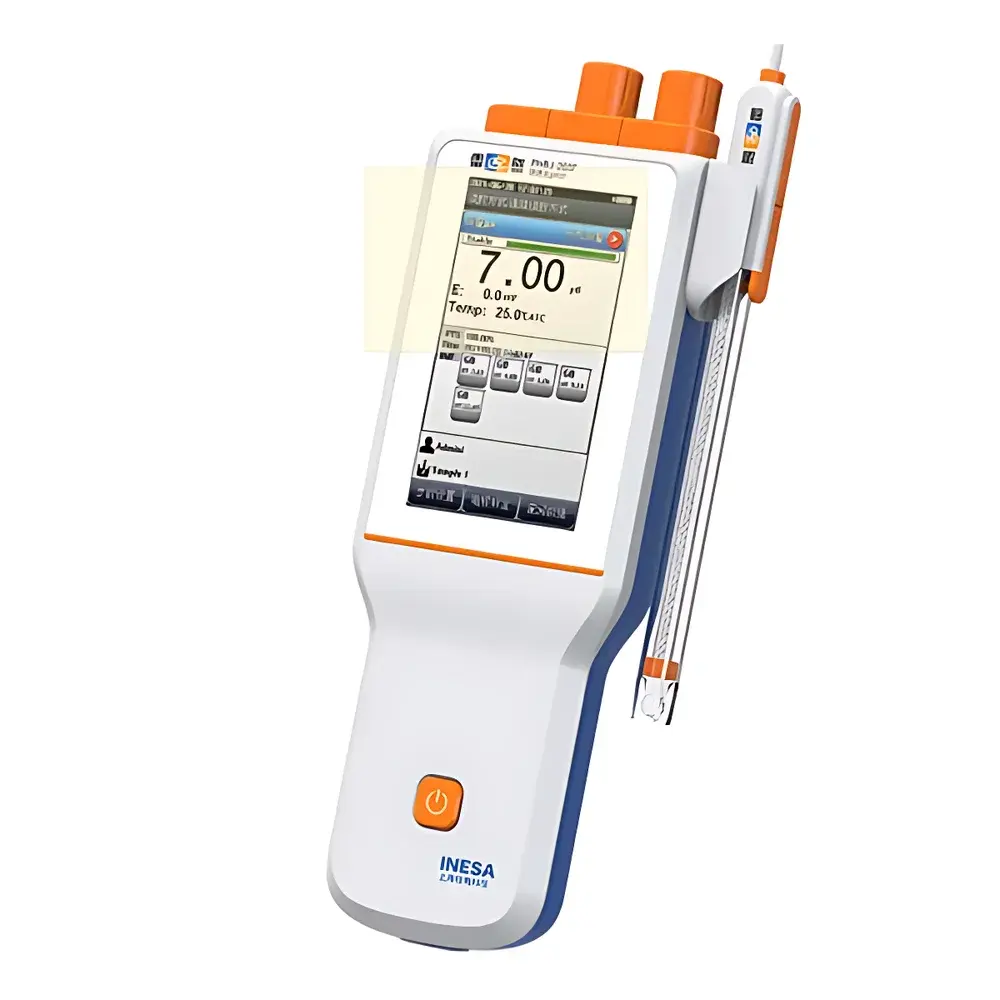
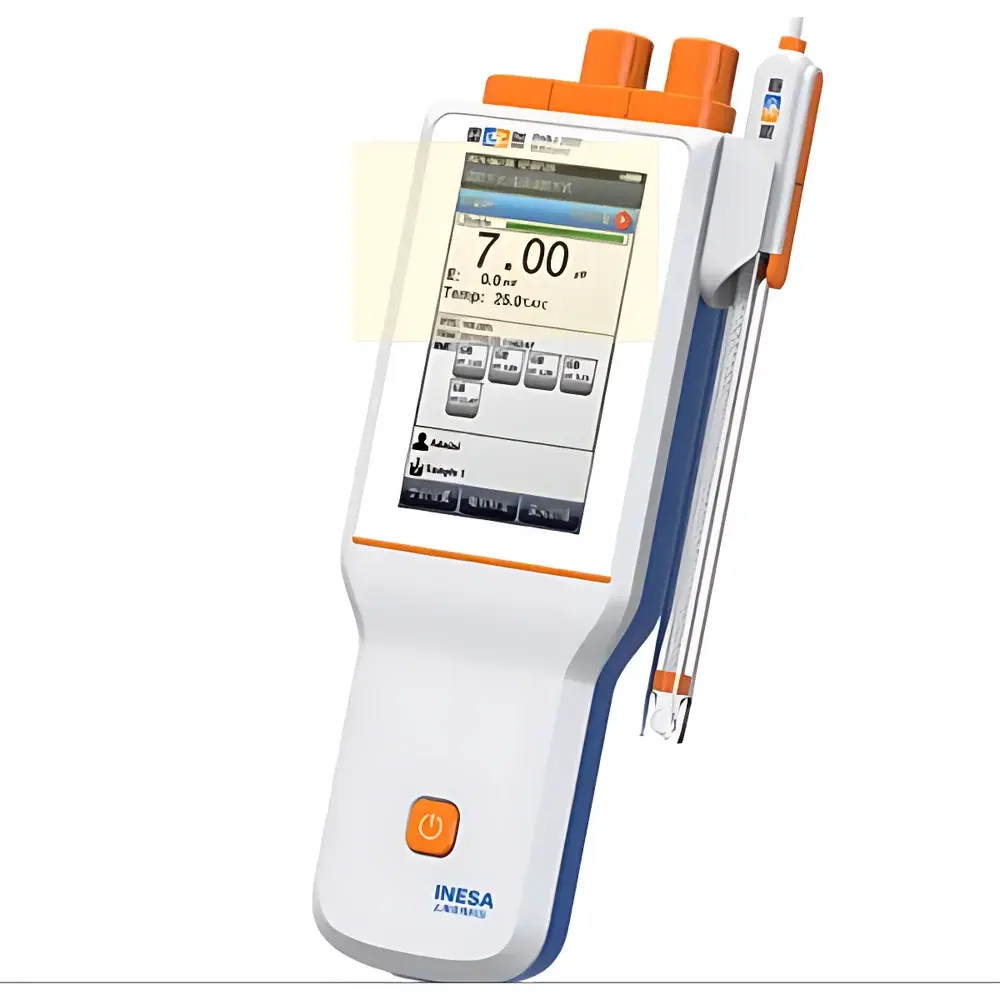
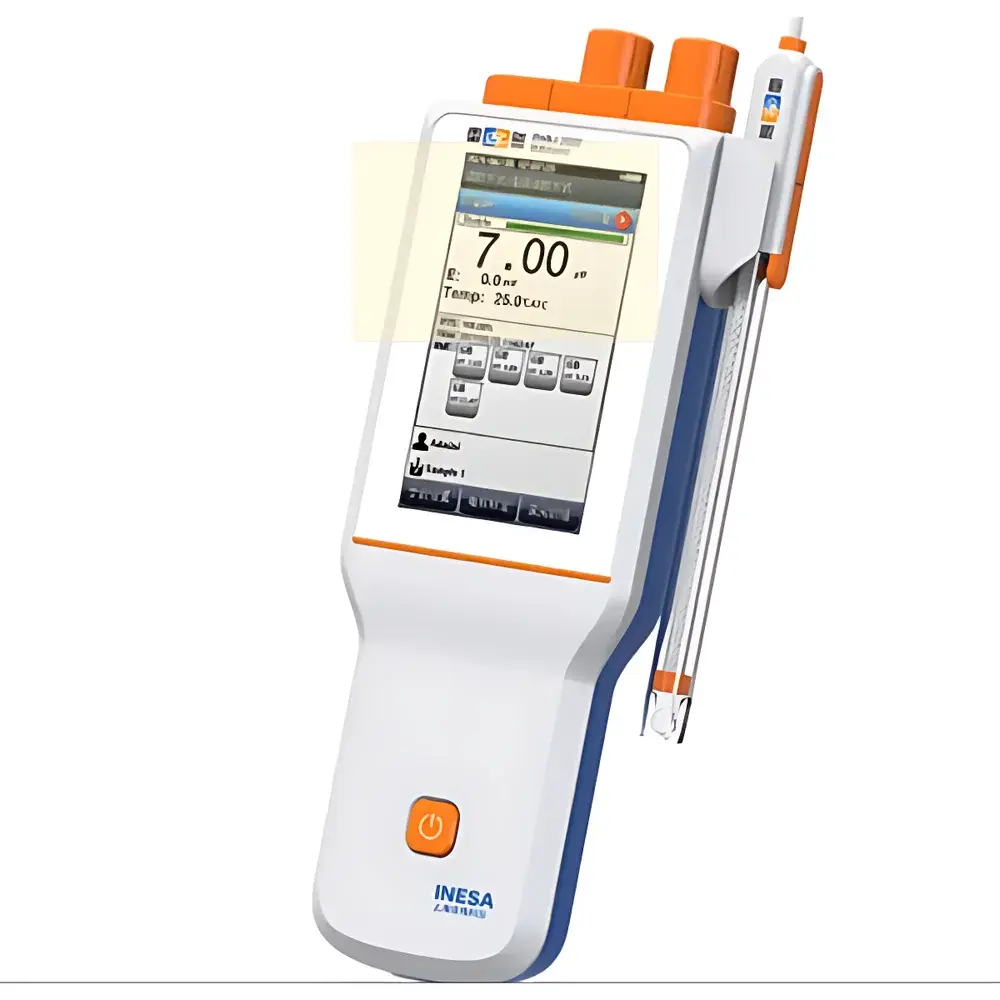
Leici PHBJ-260F Portable pH Meter
| Brand | Leici |
|---|---|
| Origin | Shanghai, China |
| Manufacturer Type | Authorized Distributor |
| Product Origin | Domestic (China) |
| Model | PHBJ-260F |
| Price | Upon Request |
| pH Measurement Range | –2.00 to 20.00 pH |
| Resolution | 0.01 pH |
| Accuracy | ±0.01 pH |
| Temperature Compensation Range | 0–100 °C (Automatic) |
| Dimensions | Approx. 180 × 80 × 50 mm |
| Weight | Approx. 0.3 kg |
| Display | High-definition color LCD touchscreen |
| Language Support | English & Chinese |
| pH Resolution Options | 0.01 / 0.1 pH |
| mV Resolution Options | 0.1 / 1 mV |
| Temperature Units | °C or °F |
| Auto-Diagnostics | Yes |
| Auto-Power-Off | Yes |
| Power Failure Data Protection | Yes |
| Factory Reset | Yes |
| Firmware Upgrade Capability | Yes |
| IP Rating | IP65 |
| Electrode | Integrated tri-combination pH electrode (standard) |
| Accessories | Electrode holder, silicone protective sleeve, wrist strap, portable carrying case, calibration buffer solutions |
| Endpoint Detection | Intelligent auto-read with manual/timed/interval modes |
| Calibration | 1–5 point pH calibration |
| Buffer Recognition | Automatic identification of GB, DIN, and NIST standard buffer sets |
| Data Storage Capacity | 1000 measurement records |
| Data Management | View, delete, export, print |
| GLP Compliance | Yes (audit trail, operator ID, timestamp, calibration history) |
| Printing Interface | RS-232 printer support (configurable print format) |
| PC Connectivity | USB interface with dedicated software |
| Power Supply | Rechargeable Li-ion battery |
| Battery Indicators | Low-voltage warning & charging status feedback |
| Backlight Adjustment | Yes |
Overview
The Leici PHBJ-260F Portable pH Meter is an engineered field-deployable instrument designed for high-fidelity pH and mV measurements in demanding industrial, environmental, and quality control settings. Built upon a robust electrochemical sensing architecture, it employs potentiometric measurement principles compliant with ISO 3696, ASTM D1293, and USP <791>, delivering traceable, repeatable acidity readings across an extended pH range of –2.00 to 20.00. Its core functionality centers on intelligent electrode signal processing, real-time temperature compensation (0–100 °C), and adaptive endpoint detection—ensuring stable, operator-independent results even under variable ambient conditions. The device meets IP65 ingress protection standards, enabling reliable operation in humid, dusty, or splash-prone environments typical of wastewater treatment plants, food processing lines, chemical dosing stations, and field-based environmental monitoring.
Key Features
- High-resolution 4.3-inch color TFT touchscreen with adjustable backlight for legibility in low-light or outdoor conditions
- Dual-language UI (English/Chinese) supporting international field teams and multilingual SOP documentation
- Configurable resolution modes: 0.01 pH / 0.1 pH and 0.1 mV / 1 mV — optimized for regulatory reporting or rapid screening
- Auto-recognized calibration using three standardized buffer groups (GB, DIN, NIST), plus user-defined buffer storage with metadata tagging
- Five-point calibration capability with slope and offset diagnostics, enabling rigorous electrode performance verification per ISO 17025 requirements
- Intelligent endpoint algorithm that dynamically assesses signal stability, eliminating subjective judgment in critical QC/QA workflows
- Firmware-upgradable architecture allowing future compliance alignment (e.g., enhanced audit trail logic or new buffer standards)
- Integrated tri-combination pH electrode with built-in temperature sensor, minimizing setup time and inter-electrode variability
Sample Compatibility & Compliance
The PHBJ-260F is validated for aqueous and semi-aqueous samples including process streams, effluents, fermentation broths, cleaning-in-place (CIP) rinse water, and pharmaceutical buffer solutions. It supports direct immersion or flow-cell integration via optional adapters. All measurement data adhere to Good Laboratory Practice (GLP) and Good Manufacturing Practice (GMP) frameworks: each record includes timestamp, operator ID (assignable), electrode serial number, calibration history, temperature, and environmental metadata. Audit trails are non-erasable and exportable in CSV or PDF formats—fully compatible with FDA 21 CFR Part 11–compliant LIMS implementations when paired with validated software drivers.
Software & Data Management
- USB-host interface enables direct connection to Windows PCs using Leici’s certified communication software (v3.2+), supporting batch export, spectral overlay, and statistical summary generation
- RS-232 output supports industry-standard thermal or dot-matrix printers; print templates configurable for lab notebooks, shift logs, or regulatory submission packages
- Data storage capacity: 1000 full-measurement entries with embedded calibration parameters and environmental context
- Export protocols include ASCII, CSV, and XML — facilitating automated ingestion into enterprise data lakes or ELN systems
- Battery management system provides real-time state-of-charge display, low-voltage alerts, and charging progress feedback during PC or power-bank charging
Applications
This meter serves as a primary field verification tool in applications requiring metrological rigor and operational flexibility: routine pH validation of bioreactor feedstocks; titration endpoint confirmation in neutralization control loops; corrosion inhibitor efficacy testing in cooling water systems; pH stability monitoring during API crystallization; and regulatory sampling at municipal wastewater discharge points. Its lightweight form factor (0.3 kg), extended battery life (>20 hours continuous use), and ruggedized housing make it ideal for mobile QA technicians performing cross-site audits or environmental consultants conducting multi-location groundwater profiling.
FAQ
Does the PHBJ-260F comply with ISO/IEC 17025 for accredited laboratory use?
Yes — when operated with documented procedures, calibrated electrodes, and traceable buffers, its measurement uncertainty budget satisfies ISO/IEC 17025 clause 7.6 for pH instrumentation used in accredited testing.
Can the device store calibration data separately for multiple electrodes?
Yes — each electrode can be assigned a unique ID; calibration records are tagged to both electrode ID and operator ID, enabling full traceability across shared instrument pools.
Is automatic temperature compensation (ATC) mandatory, or can manual input be used?
Both modes are supported: ATC via integrated Pt1000 sensor or manual entry of sample temperature for non-immersive measurements (e.g., vial-based analysis).
What is the expected service life of the included tri-combination electrode under typical industrial use?
With proper storage (in KCl solution) and weekly maintenance, the electrode maintains ±0.01 pH accuracy for ≥12 months in moderate conductivity samples (<10 mS/cm); replacement intervals are tracked within the device’s maintenance log.