
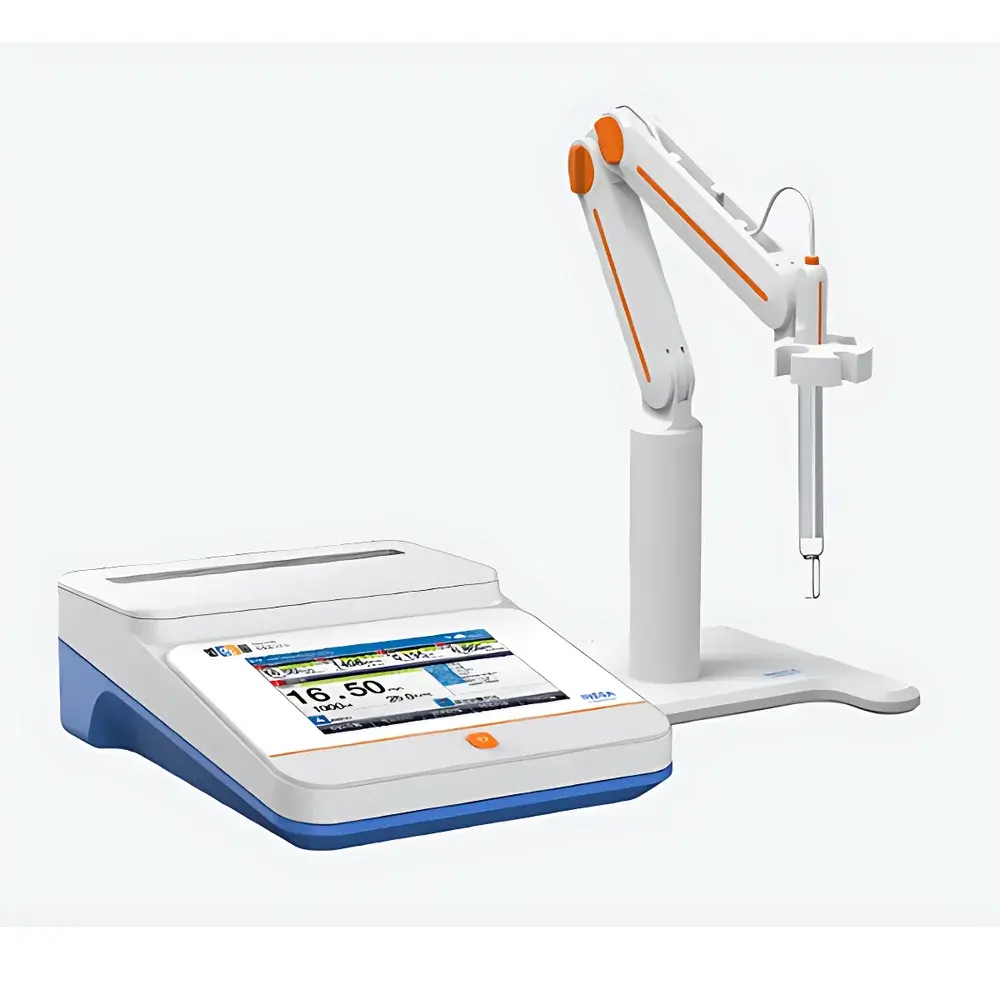
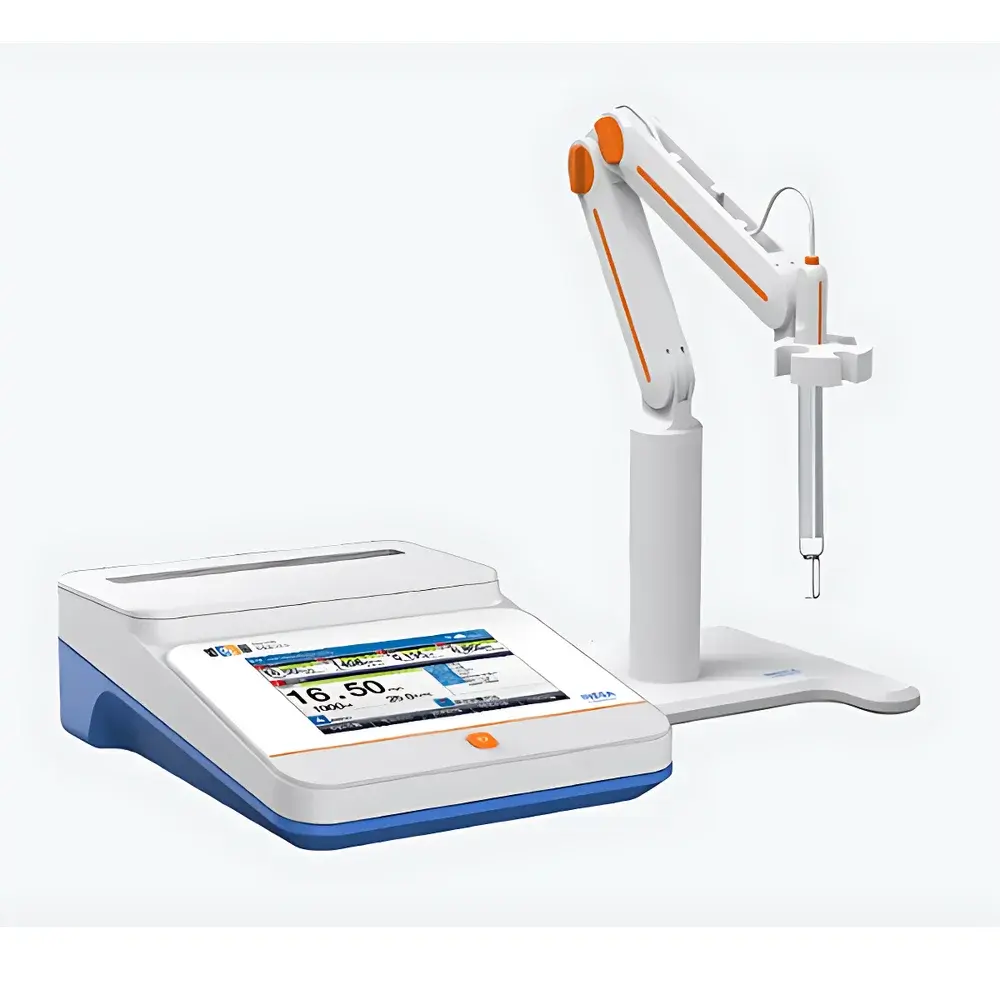
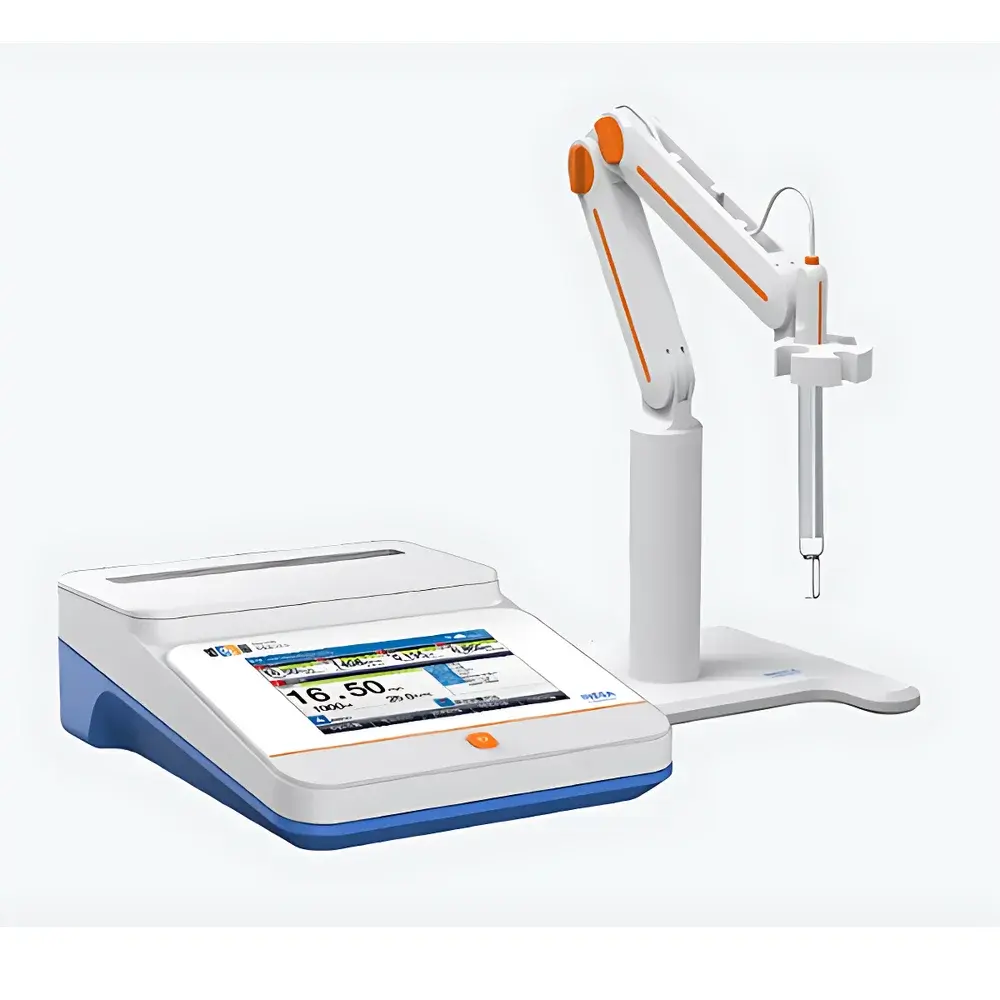
Leici PHSJ-6L Benchtop Multi-Parameter pH Meter
| Brand | Leici |
|---|---|
| Origin | Shanghai, China |
| Instrument Type | Benchtop |
| Parameter Types | pH, mV, Temperature |
| Measurement Range | pH: –2.000 to 20.000 |
| mV | –2000.00 to 2000.00 mV |
| Resolution | 0.001 pH / 0.01 mV |
| Accuracy | ±0.002 pH / ±0.03% FS (mV) |
| Temperature Compensation | Automatic (ATC), –5.0 to 135.0 °C |
| Calibration | Up to 6-point automatic calibration with auto-buffer recognition (GB, DIN, NIST, and 22 additional standard buffer sets) |
| Data Storage | 1000 measurement records with timestamp, electrode ID, calibration history, and user log |
| Compliance | GLP-compliant data management, audit trail support, 21 CFR Part 11–ready software configuration (when used with Leici LabManager Pro v3.2+) |
| Connectivity | RS-232, USB host/device, optional auto-sampler interface |
Overview
The Leici PHSJ-6L is a high-precision benchtop multi-parameter electrochemical analyzer engineered for routine and regulated pH and redox potential (mV) measurements in quality control laboratories, academic research facilities, and pharmaceutical manufacturing environments. It operates on the fundamental principle of potentiometric measurement—detecting the electromotive force (EMF) generated across a glass pH electrode and reference electrode pair immersed in an aqueous sample. The instrument employs a low-drift, high-input-impedance amplifier circuit (≥1013 Ω) to ensure stable signal acquisition under variable ionic strength conditions. With a certified pH accuracy of ±0.002 and mV accuracy of ±0.03% full scale, the PHSJ-6L meets the performance requirements for method validation under ISO 17025-accredited testing protocols and supports traceable calibration against internationally recognized reference standards including NIST SRM 186, DIN 19266, and GB/T 27502–2011.
Key Features
- Intelligent endpoint detection: configurable reading modes—including auto-read (with stability threshold detection), timed read (user-defined interval), fixed-interval sampling, and manual trigger—ensuring consistent endpoint determination across heterogeneous sample matrices.
- Comprehensive automatic temperature compensation (ATC): integrated Pt1000 sensor enables real-time correction across –5.0 to 135.0 °C, supporting both aqueous and non-aqueous applications where thermal drift significantly impacts electrode response.
- Advanced calibration architecture: supports up to six-point pH calibration with automatic buffer identification from 25 preloaded standard sets (including NIST, DIN, GB, JIS, and ASTM D1174–18 buffers); allows creation and storage of custom buffer groups with defined nominal values and tolerances.
- Electrode lifecycle management: built-in electrode health diagnostics track slope (%), offset (mV), and asymmetry potential; triggers proactive alerts when performance deviates beyond user-defined thresholds per GLP documentation requirements.
- Benchtop integration readiness: native RS-232 and dual-mode USB (host/device) ports enable direct connection to Leici AS-600 automatic samplers for unattended calibration verification and batch sample analysis—reducing operator variability and enhancing throughput reproducibility.
Sample Compatibility & Compliance
The PHSJ-6L accommodates standard 12-mm and 6-mm diameter combination pH electrodes, refillable and gel-filled reference types, and ORP electrodes compliant with IEC 60746-2. It is validated for use with aqueous solutions, buffer standards, cell culture media, pharmaceutical formulations (e.g., injectables, oral suspensions), wastewater effluents, and food extracts. All stored data include mandatory metadata: date/time stamp, operator ID, electrode serial number, calibration certificate ID, ambient temperature, and measurement mode. Data integrity conforms to Good Laboratory Practice (GLP) principles as defined in OECD Series on Principles of Good Laboratory Practice and supports FDA 21 CFR Part 11 compliance when deployed with Leici LabManager Pro software configured with electronic signatures, role-based access control, and immutable audit trails.
Software & Data Management
Data handling is governed by a secure, hierarchical database architecture supporting up to 1000 independent measurement records per instrument memory. Each record stores raw mV, calculated pH, temperature, electrode status flags, calibration parameters, and user annotations. Export formats include CSV (for LIMS ingestion), PDF (print-ready reports with header/footer branding), and XML (structured for ELN integration). USB mass-storage mode permits direct transfer to external drives without proprietary drivers. When connected to Windows PCs via RS-232 or USB, the instrument is fully compatible with Leici LabManager Pro v3.2+, which provides statistical process control (SPC) tools, trend analysis over time, calibration certificate generation per ISO/IEC 17025 Annex A.2, and automated report templating aligned with USP , EP 2.2.3, and JP 17 General Chapter 2.21.
Applications
- Pharmaceutical QC: pH verification of parenteral solutions, dissolution media, and cleaning validation swab extracts per USP and EU GMP Annex 8.
- Environmental monitoring: field-deployable lab verification of surface water, groundwater, and treated effluent pH per EPA Method 150.1 and ISO 10523.
- Food & beverage R&D: titration endpoint confirmation in acid-base titrations, shelf-life stability studies, and fermentation pH profiling.
- Academic teaching labs: demonstration of electrode theory, buffer capacity analysis, and systematic error evaluation in potentiometric measurements.
- Chemical manufacturing: in-process control of catalyst slurries, polymerization reaction pH, and neutralization endpoint detection.
FAQ
Does the PHSJ-6L support ISO/IEC 17025-compliant calibration documentation?
Yes—when used with Leici LabManager Pro and traceable NIST-certified buffer standards, the system generates calibration certificates containing uncertainty budgets, environmental conditions, equipment IDs, and analyst signatures.
Can custom buffer definitions be imported via USB?
Yes—users may define and load proprietary buffer sets with nominal pH values, tolerance limits, and temperature coefficients using CSV templates provided in the LabManager Pro toolkit.
Is the instrument suitable for non-aqueous pH measurements?
It supports non-aqueous measurements with appropriate electrodes (e.g., double-junction, solvent-resistant membranes), though accuracy specifications apply strictly to aqueous systems per IUPAC recommendations.
What is the maximum allowable input impedance for external electrodes?
The input impedance exceeds 1 × 10¹³ Ω at DC, enabling reliable measurement with high-resistance electrodes such as those used in low-conductivity ultrapure water applications.
How is data security enforced during USB export?
All exported files are digitally signed using SHA-256 hashing; LabManager Pro enforces write-once-read-many (WORM) archival policies for regulatory submissions.





