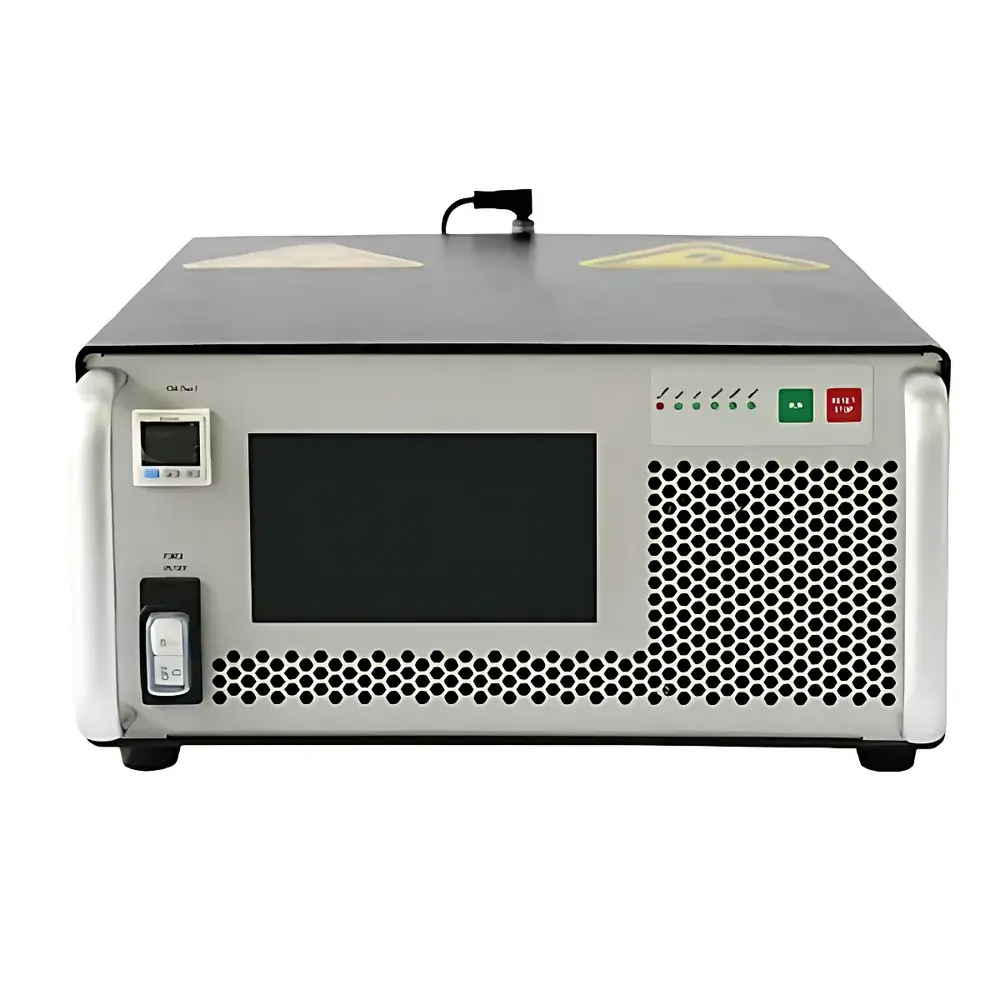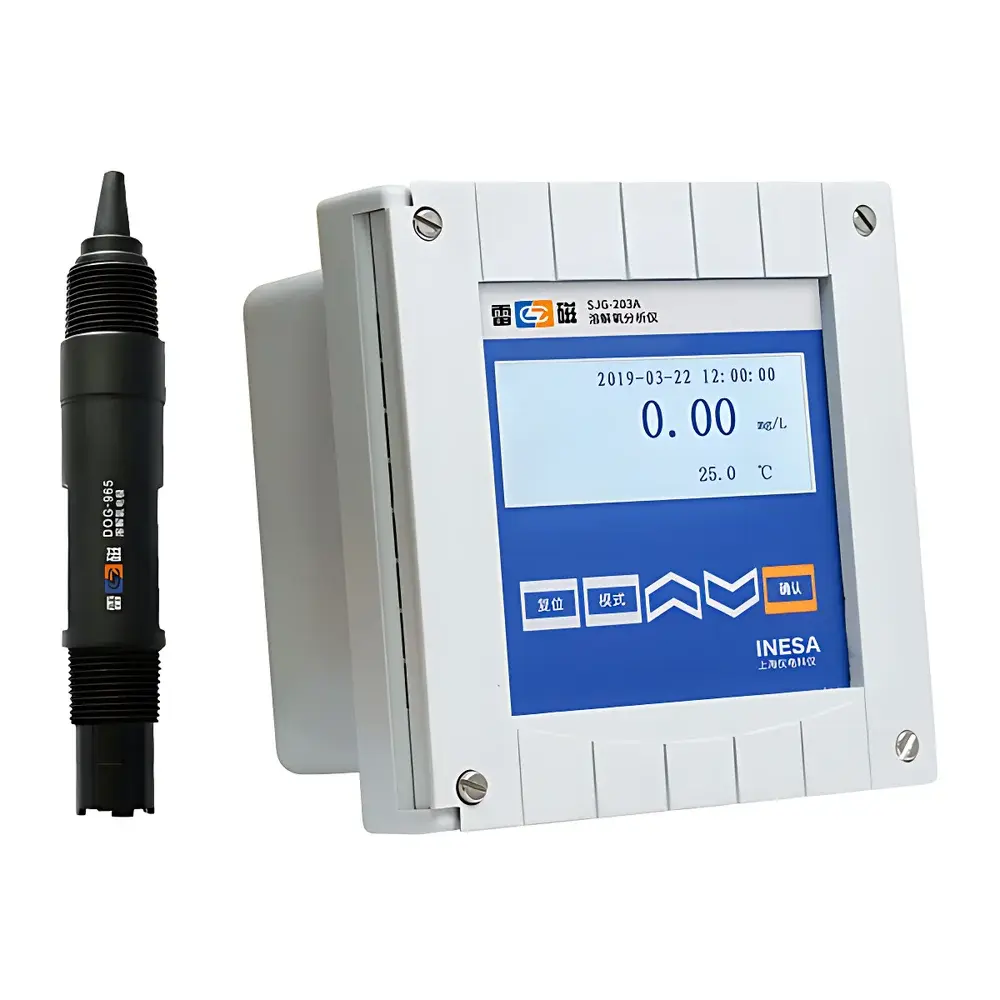
Leici SJG-203A Online Dissolved Oxygen Analyzer
| Brand | Leici |
|---|---|
| Origin | Shanghai, China |
| Manufacturer Type | Direct Manufacturer |
| Country of Origin | China |
| Model | SJG-203A |
| Price Range | USD 1–4,999 |
| Resolution | 0.01 mg/L, 0.1%, 0.1°C |
| Measurement Range | (0.0–20.00) mg/L DO, (0.0–200.0)% saturation |
| Repeatability | ≤0.20 mg/L |
| Stability | ±0.20 mg/L / 24 h |
| Temperature Compensation Range | (−10.0–120.0)°C |
| Communication Interface | RS-232 |
| Dimensions & Weight | 160 × 160 × 110 mm, 1 kg |
| Basic Accuracy | ±0.5 mg/L (DO), ±10.0% (saturation), ±1.0°C (temperature) |
| Electronic Unit Accuracy | ±0.20 mg/L (DO), ±5.0% (saturation), ±0.3°C (temperature) |
| Salt Compensation Range | (0.0–50.0) g/L |
| Salt Compensation Error | ≤±3% |
| 90% Response Time | ≤45 s (at 20°C) |
| Enclosure Rating | IP65 |
| Power Supply | AC (220 ± 22) V, (50 ± 1) Hz |
Overview
The Leici SJG-203A Online Dissolved Oxygen Analyzer is a microprocessor-based electrochemical measurement system engineered for continuous, real-time monitoring of dissolved oxygen (DO) concentration and saturation in aqueous process streams. It employs a polarographic Clark-type membrane-covered amperometric sensor principle—where molecular oxygen diffuses through a gas-permeable membrane and undergoes reduction at a cathode surface, generating a current linearly proportional to the partial pressure of O2. This analog signal is digitized, temperature-compensated, and converted into standardized units (mg/L and % saturation) using built-in calibration algorithms. Designed for integration into industrial water treatment infrastructure, the SJG-203A delivers stable, trace-level DO quantification across a broad operational temperature range—from cold intake water in municipal drinking water plants to high-temperature effluent streams in thermal power stations. Its architecture supports both bulk-phase monitoring (e.g., activated sludge aeration basins) and ultra-low-oxygen applications (e.g., boiler feedwater deaerator outlet control at sub-ppb levels when paired with appropriate low-range sensors).
Key Features
- Large dot-matrix LCD display showing simultaneous readouts of DO concentration (mg/L), DO saturation (%), and sample temperature (°C)
- Dual-point calibration capability: zero-oxygen (via sodium sulfite solution or nitrogen purge) and full-scale (air-saturated water or saturated air)
- Automatic temperature compensation (ATC) with user-selectable reference temperature; manual barometric pressure input for altitude correction
- Integrated data logging: stores up to 200 measurement records with configurable time-stamped intervals (1 min to 24 h)
- Programmable high/low limit alarms with relay output activation and visual/audio alert indicators
- Isolated 4–20 mA analog output with fully adjustable span (e.g., 0–10 mg/L mapped to 4–20 mA) and fault signaling capability
- RS-232 serial interface compliant with EIA/TIA-232 standard for direct connection to PLCs, SCADA systems, or local PCs
- IP65-rated polycarbonate enclosure suitable for indoor panel mounting or outdoor enclosures with environmental protection
- Non-volatile memory retains calibration coefficients, alarm thresholds, and configuration settings during power loss
Sample Compatibility & Compliance
The SJG-203A is validated for use in potable water, wastewater, aquaculture recirculation systems, cooling tower circuits, and steam-cycle condensate lines. It accommodates variable salinity (0.0–50.0 g/L NaCl equivalent) with automatic correction applied per ASTM D888–22 Annex A1 methodology. Sensor compatibility extends to standard 12-mm diameter galvanic or polarographic DO probes with BNC or DIN connectors. While the analyzer itself does not carry CE, UKCA, or UL certification out-of-the-box, its electrical isolation, creepage/clearance design, and fail-safe alarm logic align with IEC 61508 SIL 1 functional safety principles for non-critical process monitoring. For regulated environments (e.g., USP , EP 2.2.43), users must validate probe selection, calibration frequency, and data integrity protocols per site-specific SOPs and GLP/GMP documentation requirements.
Software & Data Management
Data retrieval occurs via ASCII command protocol over RS-232—supporting queries for live readings, logged entries, calibration history, and system diagnostics. No proprietary software is bundled; however, the device responds to industry-standard Modbus RTU commands (when configured via firmware update) for seamless integration into existing HMI platforms. All stored measurements include timestamp (YYYY-MM-DD HH:MM:SS), DO value, saturation %, temperature, and status flags (e.g., “CAL”, “ALARM”, “SENSOR_ERR”). Audit trail functionality is limited to manual log export; for 21 CFR Part 11 compliance, external historian servers or validated third-party SCADA systems must handle electronic signature, change control, and retention policies.
Applications
- Municipal water treatment: raw intake monitoring, ozonation chamber control, final disinfection verification
- Wastewater bioreactors: real-time aeration optimization in activated sludge and MBR systems to minimize energy consumption
- Aquaculture facilities: maintaining optimal DO thresholds (>5 mg/L) in hatcheries and raceways to support fish metabolism and reduce stress-related mortality
- Power generation: boiler feedwater deaerator outlet verification (with low-range sensor option) to prevent oxidative corrosion in economizers and turbine blades
- Environmental monitoring stations: long-term trend analysis of riverine DO dynamics correlated with BOD/COD loading and seasonal stratification
- Academic laboratories: teaching instrument principles of electrochemical sensing, mass transfer limitations, and Henry’s law behavior in aqueous systems
FAQ
What sensor types are compatible with the SJG-203A?
The analyzer accepts standard analog-output DO sensors with 0–20 mV or 0–100 mV polarographic output and integrated thermistor for temperature feedback. Both flow-through and immersion-style housings are supported.
Does the unit support automatic salinity compensation?
No—salinity compensation is manually entered by the operator prior to measurement. The device applies a fixed correction factor based on the input g/L value per ISO 5814:2012 guidelines.
Can the 4–20 mA output be assigned to temperature only?
Yes. Output mapping is fully configurable: users may assign the loop signal to DO concentration, saturation %, temperature, or a custom linear combination via setup menu.
Is firmware upgrade possible in the field?
Firmware updates require RS-232 connection to a Windows PC running Leici’s official configuration utility (v2.1+), which enables Modbus RTU mode and extended logging options.
What is the recommended calibration frequency for continuous operation?
Daily zero calibration is advised for critical applications (e.g., boiler feedwater); weekly two-point calibration suffices for municipal wastewater where DO variability is moderate and process stability is high.
Related Products