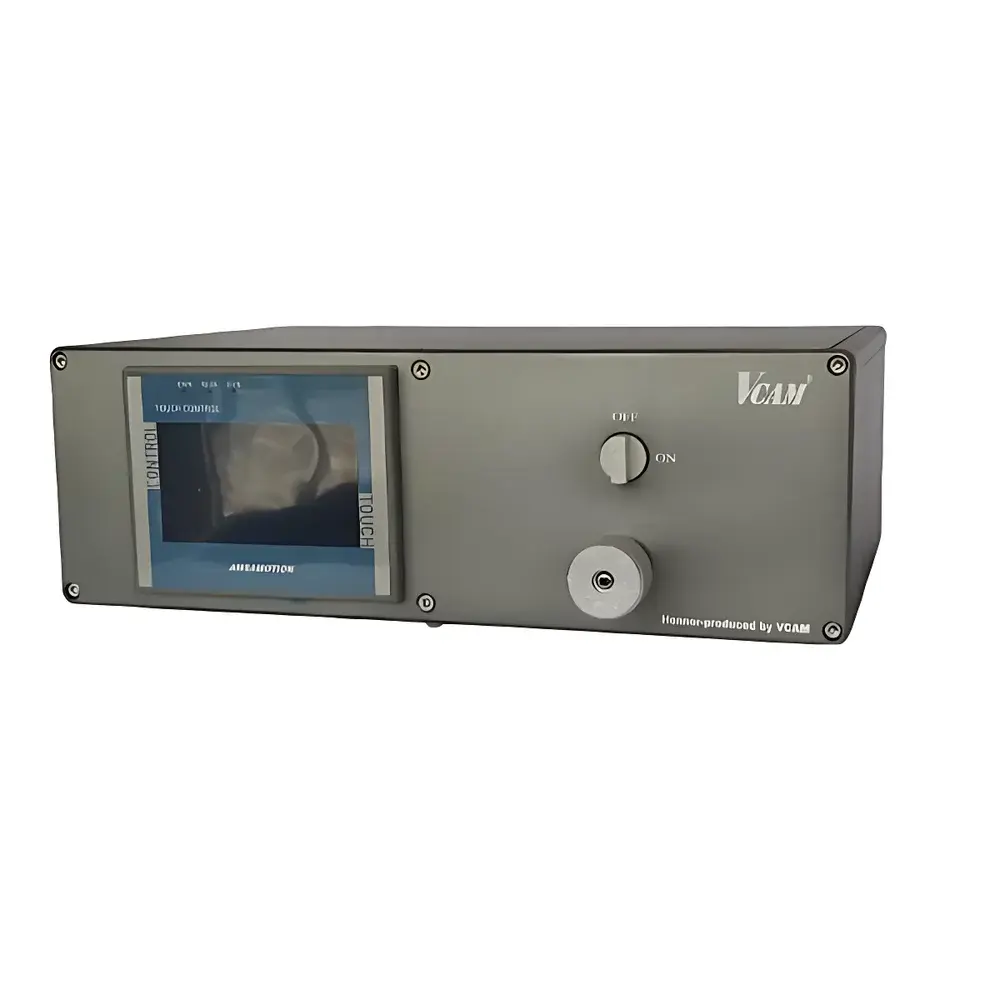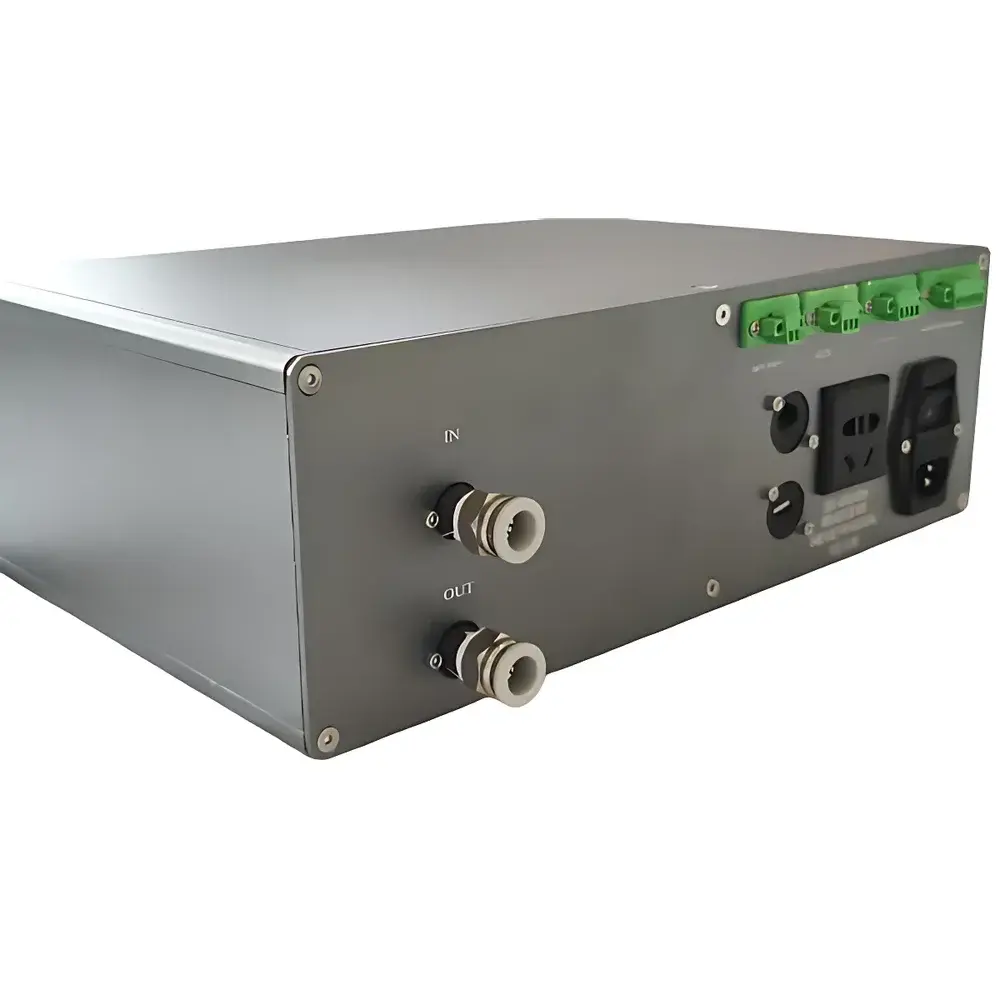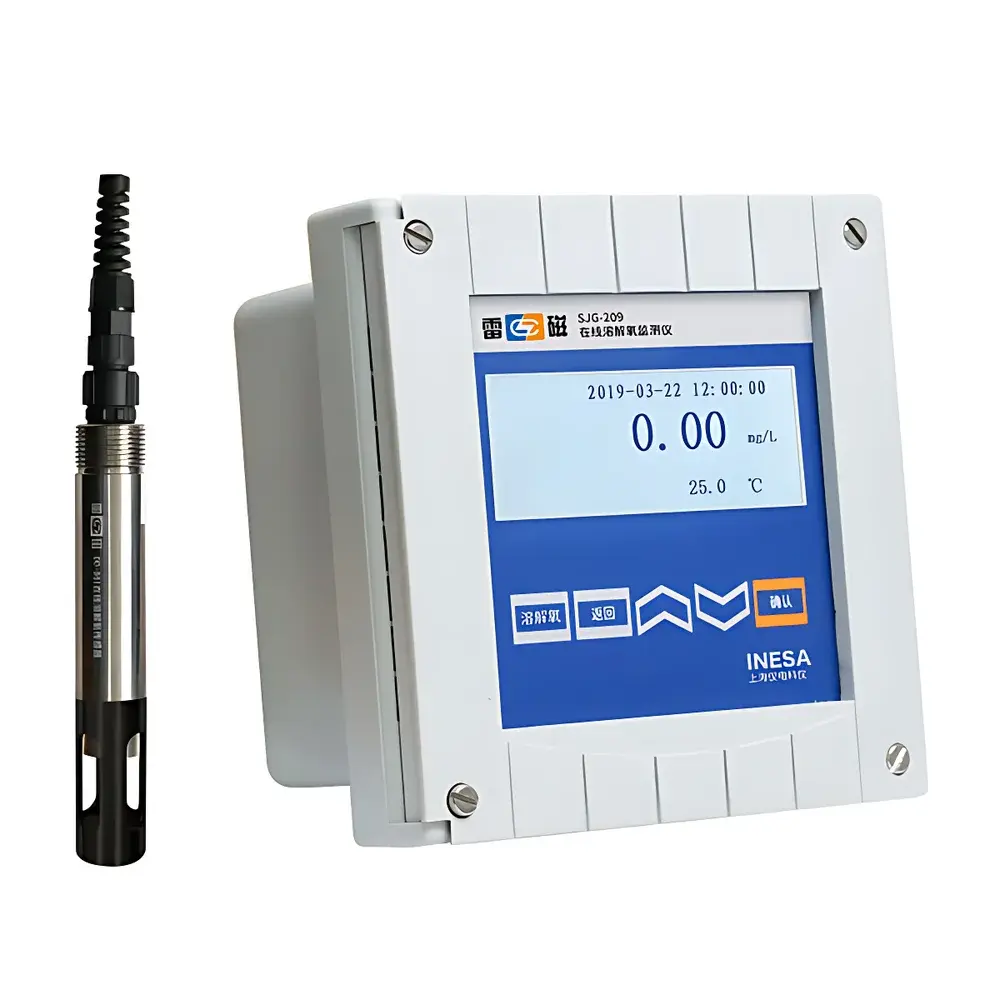
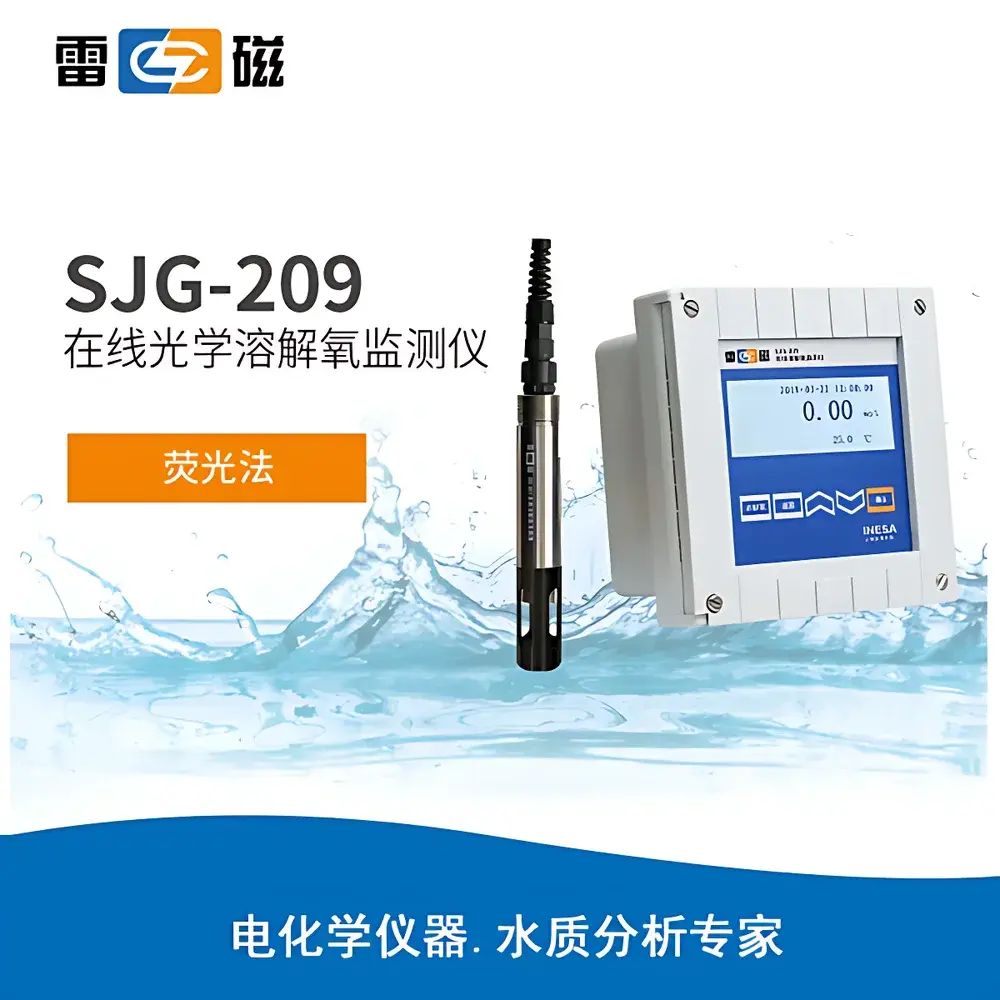
Leici SJG-209 Online Optical Dissolved Oxygen Analyzer
| Brand | Leici |
|---|---|
| Origin | Shanghai, China |
| Manufacturer Type | Manufacturer |
| Product Origin | Domestic (China) |
| Model | SJG-209 |
| Price | USD 1,380 (FOB Shanghai) |
| Resolution | 0.01 mg/L |
| Measurement Range | (0.0–20.0) mg/L |
| Repeatability | ≤ 0.20 mg/L |
| Stability | ±0.20 mg/L / 24 h |
| Temperature Compensation Range | (0.0–50.0) °C |
| Communication Interface | RS-485 |
| Dimensions | 166 × 166 × 110 mm |
| Weight | 2.5 kg |
| DO Saturation Range | (0.0–200.0) % |
| Temperature Range | (0.0–50.0) °C |
| DO Accuracy | ±0.30 mg/L |
| Saturation Accuracy | ±10.0 % |
| Temperature Accuracy | ±0.2 °C |
| Output Signal | Isolated 4–20 mA DC, max load 600 Ω |
| Alarm Outputs | 2 relay outputs (220 V AC, 2.5 A resistive) |
| Cleaning Control Output | 1 programmable relay output (220 V AC, 2.5 A) |
| Data Storage | 2000 records with timestamp |
| Enclosure Rating | IP65 |
| Power Consumption | 10 W |
Overview
The Leici SJG-209 Online Optical Dissolved Oxygen Analyzer is an industrial-grade, fluorescence-based dissolved oxygen (DO) monitoring system engineered for continuous, real-time measurement in demanding aqueous process environments. Unlike electrochemical sensors—prone to membrane fouling, electrolyte depletion, and oxygen consumption during measurement—the SJG-209 employs optical luminescence quenching technology: a blue LED excites a ruthenium-based luminophore immobilized on the sensor cap; molecular oxygen in the sample modulates the phase shift and intensity decay of the emitted red light. This non-consumptive, solid-state sensing principle ensures long-term stability, minimal maintenance, and immunity to flow rate variations or hydrogen sulfide interference. Designed for integration into distributed control systems (DCS) or programmable logic controllers (PLC), the SJG-209 delivers reliable DO concentration (mg/L), saturation (%), and temperature (°C) data across wastewater treatment plants, drinking water intake stations, aquaculture recirculating systems, and industrial cooling towers.
Key Features
- Optical fluorescence sensing technology—no membrane replacement, zero oxygen consumption, no electrolyte refills
- Simultaneous real-time output of dissolved oxygen concentration (0.0–20.0 mg/L), saturation (0.0–200.0 %), and temperature (0.0–50.0 °C)
- Automatic temperature compensation with NIST-traceable Pt1000 RTD integrated into the probe
- Three configurable relays: two for high/low DO alarms (220 V AC, 2.5 A resistive), one programmable for timed cleaning cycle activation
- Isolated 4–20 mA analog output with fully adjustable span and zero points—supports linear mapping to either DO concentration or saturation
- RS-485 Modbus RTU digital interface for bidirectional communication, remote configuration, and firmware updates
- Onboard data logging: stores up to 2000 timestamped measurements (DO, saturation, temperature, and system status)
- IP65-rated enclosure with dual-mounting options—panel-cut flush mounting or wall-mount bracket included
- Data hold function maintains displayed values during calibration, cleaning, or service interruptions
- Comprehensive calibration suite: zero-oxygen (sodium sulfite), full-scale air-saturation, and barometric pressure compensation
Sample Compatibility & Compliance
The SJG-209 is validated for use in municipal and industrial wastewater streams, surface water intakes, potable water distribution networks, and recirculating aquaculture systems (RAS). Its optical sensor exhibits negligible drift in turbid, high-suspended-solids, or low-conductivity media where traditional Clark-type electrodes suffer from polarization errors or clogging. The instrument complies with IEC 61000-6-2 (EMC immunity) and IEC 61000-6-4 (EMC emission) standards. While not certified to SIL or ATEX, its robust construction and electrical isolation meet general-purpose hazardous-area installation requirements per NEC Class I, Division 2 guidelines. For regulated laboratories and utilities operating under EPA Method 360.1 or ISO 5814:2012 (water quality — determination of dissolved oxygen — electrochemical probe method), the SJG-209 serves as a compliant alternative when paired with documented validation protocols and routine verification against Winkler titration reference methods.
Software & Data Management
The SJG-209 operates autonomously without external software but supports seamless integration via Modbus RTU over RS-485 into SCADA, Historian, or cloud-based IIoT platforms (e.g., Ignition, Siemens Desigo, or Azure IoT Hub). Configuration—including calibration coefficients, alarm thresholds, relay timing parameters, and analog output scaling—is performed locally via intuitive membrane keypad navigation or remotely via Modbus register writes. All critical events—including calibration executions, relay actuations, power cycles, and sensor diagnostics—are logged with UTC timestamps and retained in non-volatile memory. The device implements basic audit trail functionality: each configuration change is recorded with operator ID (if assigned), timestamp, and modified parameter address. While not FDA 21 CFR Part 11-compliant out-of-the-box, the system architecture permits third-party middleware integration to satisfy GLP/GMP data integrity requirements in regulated water quality monitoring applications.
Applications
- Wastewater treatment: dissolved oxygen control in aerobic bioreactors, oxidation ditches, and membrane bioreactor (MBR) aeration basins
- Drinking water facilities: monitoring raw water DO at reservoir intakes and finished water DO in clearwells to prevent corrosion or nitrification
- Aquaculture operations: maintaining optimal DO levels (>5 mg/L) in hatcheries, raceways, and RAS tanks to support fish metabolism and feed conversion efficiency
- Power plant cooling systems: detecting low DO conditions that accelerate carbon steel corrosion in condensate return lines
- Food & beverage processing: verifying DO residuals in deaerated process water used for CIP rinsing or product dilution
- Environmental monitoring stations: long-term deployment in rivers, lakes, and estuaries with solar-powered telemetry integration
FAQ
What calibration procedures does the SJG-209 support?
The analyzer supports three-point verification: zero-oxygen calibration using sodium sulfite solution, full-scale air-saturation calibration at ambient pressure and temperature, and optional barometric pressure compensation to correct for altitude-induced saturation changes.
Can the SJG-209 be used in seawater or brackish water?
Yes—the optical sensor is chemically inert and unaffected by salinity; however, salinity correction must be applied manually in post-processing or via external PLC logic, as the unit does not include built-in salinity input or automatic compensation.
Is the sensor probe replaceable without recalibrating the entire system?
Yes—the probe is field-replaceable as a modular assembly; factory calibration coefficients are stored in the probe’s embedded EEPROM and auto-loaded upon connection, eliminating the need for reconfiguration.
Does the SJG-209 support HART protocol?
No—it uses RS-485 Modbus RTU exclusively; HART compatibility requires an external protocol converter.
What is the expected service life of the optical sensor cap?
Under typical municipal wastewater conditions, the luminophore-coated cap maintains metrological performance for ≥24 months; replacement intervals extend beyond 36 months in clean surface water applications.
Related Products