
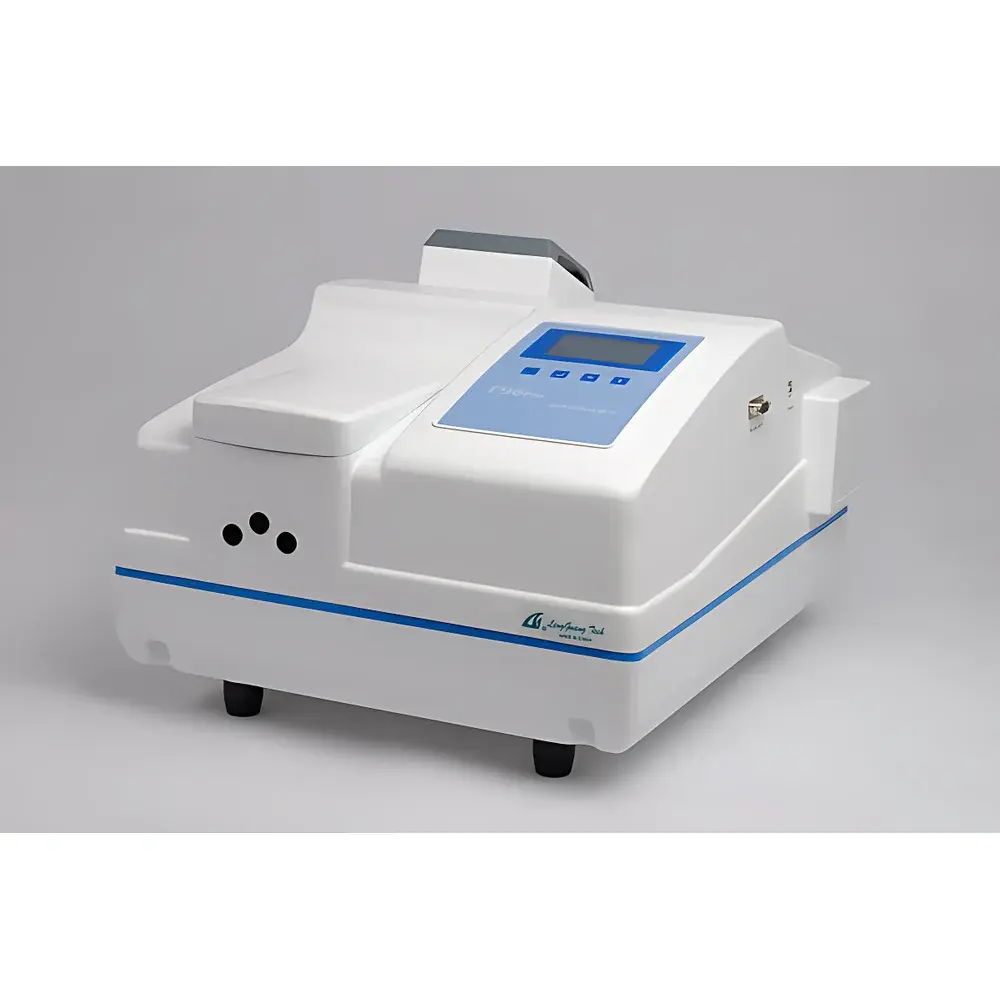
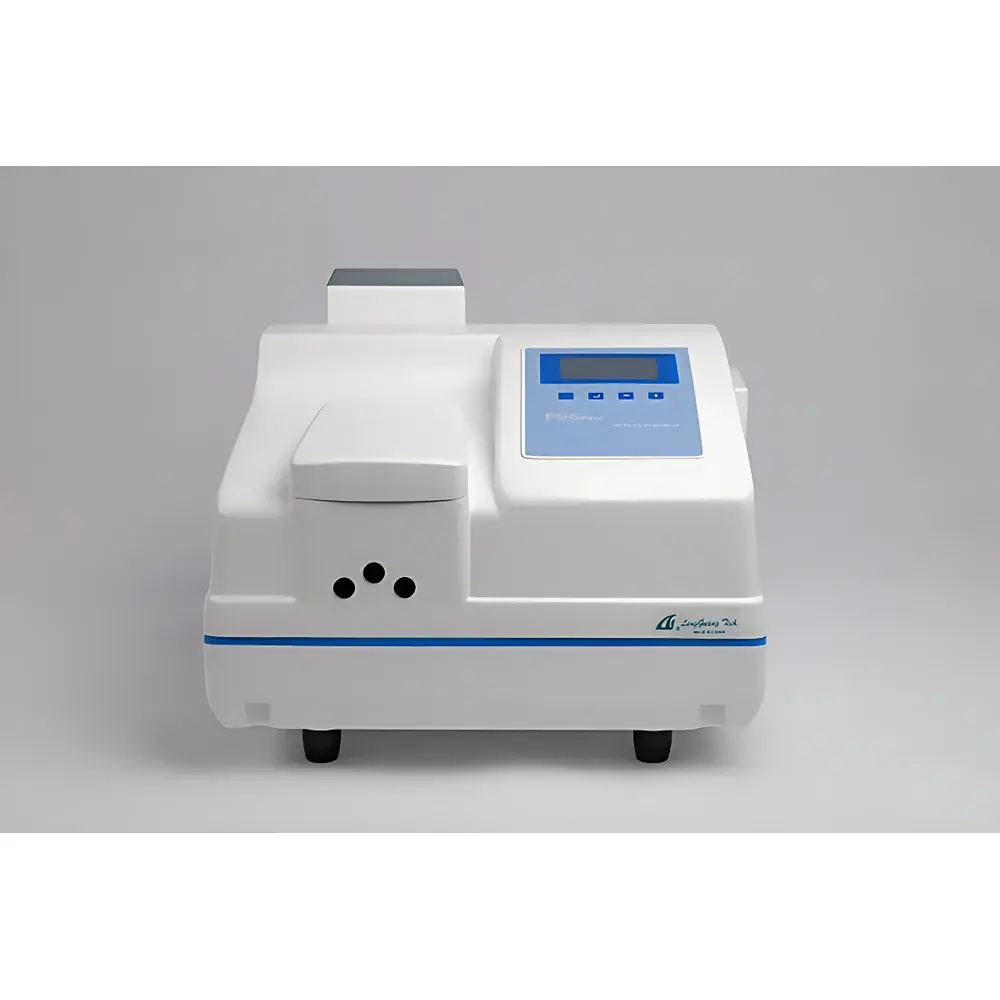
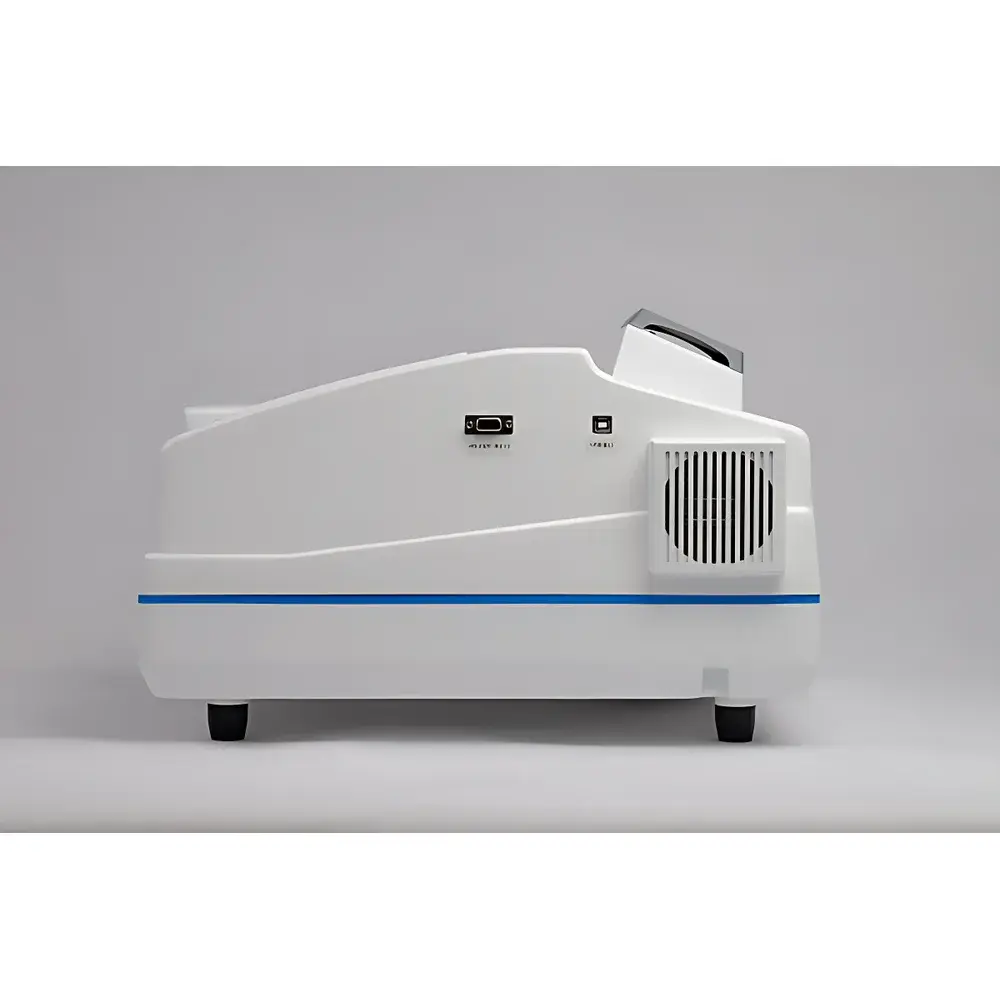
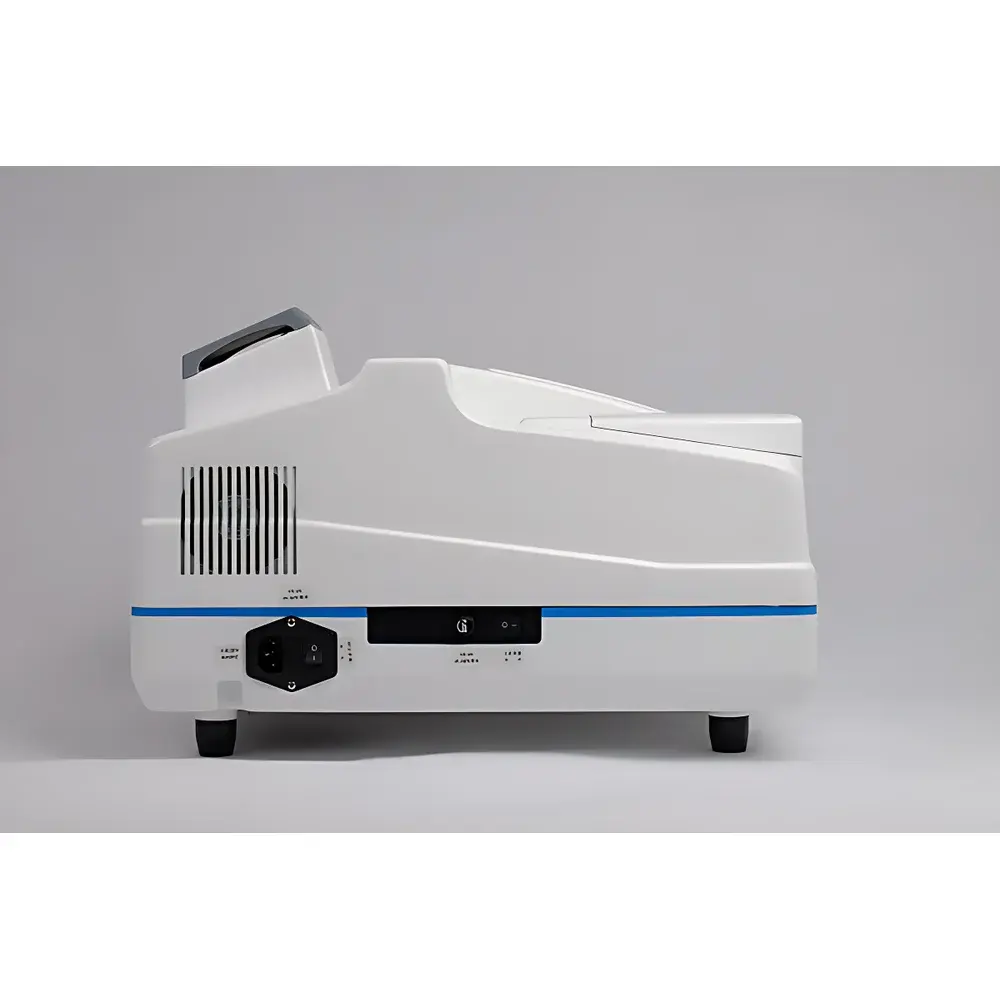
Lengguang Tech F96Pro Molecular Fluorescence Spectrometer
| Brand | Lengguang Tech |
|---|---|
| Origin | Shanghai, China |
| Manufacturer Type | Direct Manufacturer |
| Instrument Type | Steady-State Fluorescence Spectrometer |
| Model | F96Pro |
| Wavelength Range (Excitation) | 200–850 nm |
| Wavelength Range (Emission) | 200–900 nm |
| Excitation Source | 150 W Ozone-Free Xenon Lamp (Hamamatsu, 2000 h lifetime) |
| Monochromator | Czerny-Turner grating monochromator with interference filters |
| Slit Width (Spectral Bandpass) | 10 nm |
| Spectral Resolution | 10 nm |
| Wavelength Accuracy | ±1.0 nm |
| Wavelength Repeatability | ≤0.5 nm |
| Sensitivity (S/N) | >150:1 (at water Raman peak, 350 nm excitation) |
| Scan Speed | Up to 48,000 nm/min (10-point resolution) |
| Linearity (R²) | ≥0.995 |
| Standard Excitation Filter | 365 nm interference filter |
| Software | Quantitative & qualitative analysis suite with derivative spectroscopy (1st–4th order), multi-curve overlay, kinetic time-scan, spectral math, peak integration, and calibration curve fitting (linear, quadratic, cubic) |
Overview
The Lengguang Tech F96Pro Molecular Fluorescence Spectrometer is a high-performance, steady-state fluorescence instrument engineered for precision molecular emission analysis across research, quality control, and regulatory-compliant laboratories. Based on the principle of photoluminescence excitation and emission detection, the F96Pro employs a double-monochromator optical architecture—comprising a Czerny-Turner grating monochromator coupled with selectable interference filters—to isolate excitation and emission wavelengths with high spectral purity and minimal stray light. Its core excitation source is a 150 W ozone-free xenon lamp (Hamamatsu L2D2 series, rated for 2000 hours), delivering stable, broadband UV-Vis output from 200 nm to 850 nm. Emission is detected across 200–900 nm using a high-gain, low-noise photomultiplier tube (PMT) detector. The system’s 10 nm spectral bandpass and ±1.0 nm wavelength accuracy ensure reproducible spectral registration suitable for comparative studies, method validation, and reference material characterization.
Key Features
- Steady-state fluorescence measurement mode optimized for quantitative and qualitative spectral acquisition under controlled photonic conditions.
- Dual-wavelength scanning capability: independent, motorized excitation and emission monochromators enable synchronous, excitation-emission matrix (EEM), and fixed-wavelength kinetic scans.
- Ten-step scan speed selection—from ultra-fast 48,000 nm/min (full 200–900 nm emission scan in <1 s at 10-point resolution) to high-resolution fine-scan modes for narrow-band fluorophore discrimination.
- Integrated 365 nm interference filter as standard; optional filter wheel supports up to six additional excitation filters (e.g., 254, 280, 340, 405, 450, 488 nm) for selective excitation of aromatic, protein, or quantum dot probes.
- Robust mechanical design with temperature-stabilized optical bench and sealed PMT housing to minimize thermal drift and dark current variation during extended acquisitions.
- Compliance-ready architecture: supports audit trail logging, user access levels, and electronic signature protocols compatible with GLP and GMP environments when deployed with validated software configurations.
Sample Compatibility & Compliance
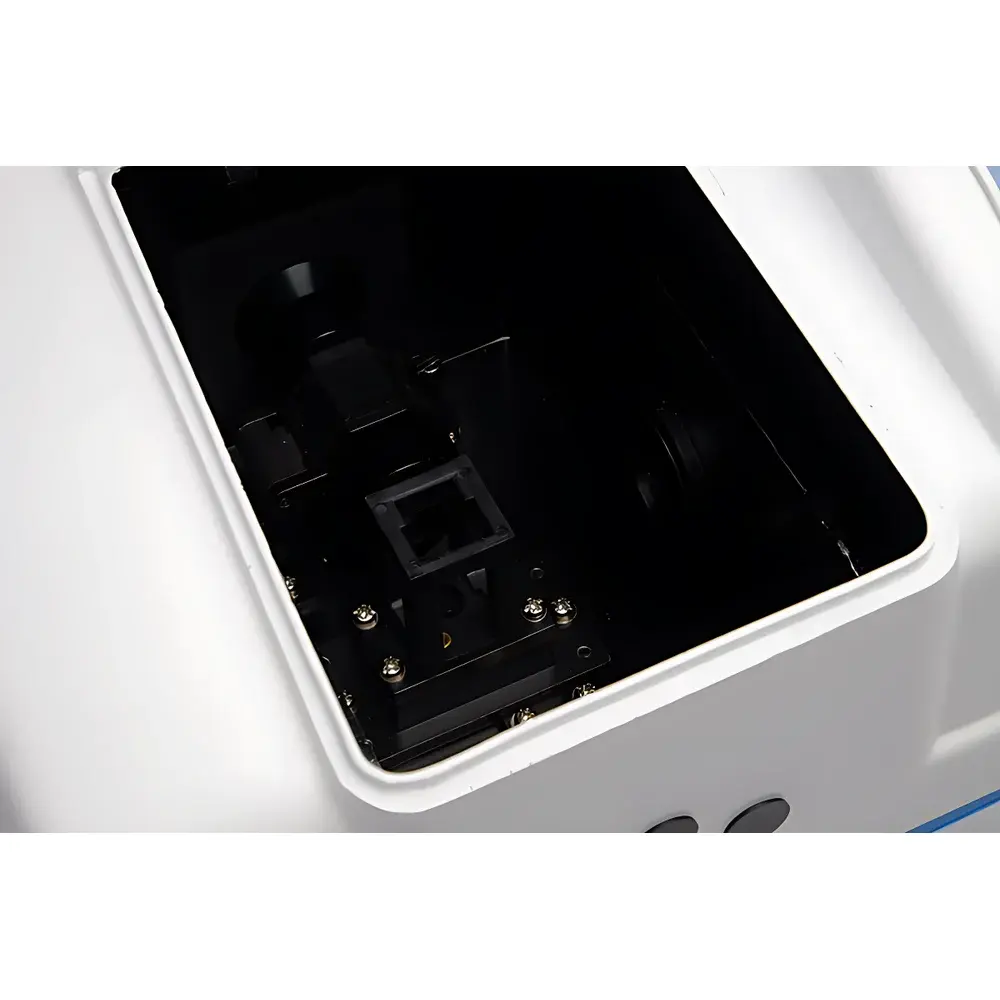
The F96Pro accommodates liquid (cuvette-based), solid (powder, film, membrane), and semi-solid (gel, suspension) samples via interchangeable accessories—including 10 mm quartz cuvettes, solid-sample holders, integrating spheres (optional), and fiber-optic probes. All optical paths conform to ISO 17025 metrological traceability requirements for photometric instruments. The system meets relevant sections of ASTM E275 (Standard Practices for Describing and Measuring Performance of Fluorometers) and ICH Q5C (Quality of Biotechnological Products: Stability Testing of Biotechnological/Biological Products). When operated with version-controlled firmware and validated software modules, data outputs satisfy FDA 21 CFR Part 11 requirements for electronic records and signatures in regulated pharmaceutical and clinical labs.
Software & Data Management
The bundled F96Pro Control & Analysis Suite provides native support for Windows OS (64-bit, Win 10/11) and includes three operational modes: (1) Spectrum Scan (emission/excitation/wavelength-ratio mapping), (2) Time Scan (kinetic fluorescence decay or reaction monitoring over minutes to hours), and (3) Quantitative Mode (calibration curve generation using linear, quadratic, or cubic regression; limit-of-detection calculation per ICH Q2(R2)). Raw data are stored in vendor-neutral .csv and .spc formats; spectral overlays, derivative transformation (1st–4th order), baseline correction, peak deconvolution, and area-under-curve (AUC) integration are performed in real time. Audit trails record operator ID, timestamp, parameter changes, and raw-data export events—fully exportable for internal review or regulatory submission.
Applications
- Pharmaceutical development: Excipient compatibility screening, degradation product identification, and assay validation for fluorescent APIs (e.g., tetracyclines, quinolones).
- Clinical biochemistry: Quantification of NADH/FAD autofluorescence in mitochondrial function assays; vitamin B2 (riboflavin) and porphyrin profiling in urine/plasma.
- Environmental monitoring: Detection of polycyclic aromatic hydrocarbons (PAHs), humic substances, and microplastic leachates in surface water and wastewater matrices.
- Materials science: Characterization of quantum dot quantum yield, conjugated polymer photostability, and carbon nanodot surface functionalization efficiency.
- Food safety: Screening for melamine adulteration (via complex-induced fluorescence enhancement) and aflatoxin B1 detection using immunoaffinity column-coupled fluorescence derivatization.
FAQ
What is the typical warm-up time required before achieving photometric stability?
The xenon lamp requires approximately 15 minutes of warm-up to reach thermal equilibrium; full spectral stability (±0.2 nm wavelength drift, <1% intensity fluctuation) is achieved within 20 minutes under ambient lab conditions (20–25 °C, <60% RH).
Can the F96Pro perform synchronous or excitation-emission matrix (EEM) scans?
Yes—the dual monochromator architecture supports both synchronous scanning (Δλ fixed) and full EEM acquisition with user-defined excitation/emission step increments (minimum 1 nm) and dwell times.
Is third-party software integration supported (e.g., MATLAB, Python, LabVIEW)?
The instrument SDK provides COM-based API access for custom scripting; DLL libraries and sample code (C#, VB.NET, Python via pywin32) are included for automated batch acquisition and data pipeline integration.
What maintenance is required for long-term performance consistency?
Annual lamp replacement (Hamamatsu L2D2), biannual PMT gain calibration using certified reference standards (e.g., quinine sulfate in 0.1 M H₂SO₄), and quarterly optical alignment verification using mercury-argon emission lines are recommended per ISO/IEC 17025 preventive maintenance guidelines.
Does the system support temperature-controlled sample measurement?
Yes—when paired with the optional Peltier-controlled cuvette holder (−10 °C to +80 °C, ±0.1 °C stability), the F96Pro enables thermally resolved fluorescence studies including protein unfolding transitions and ligand-binding thermodynamics.




