
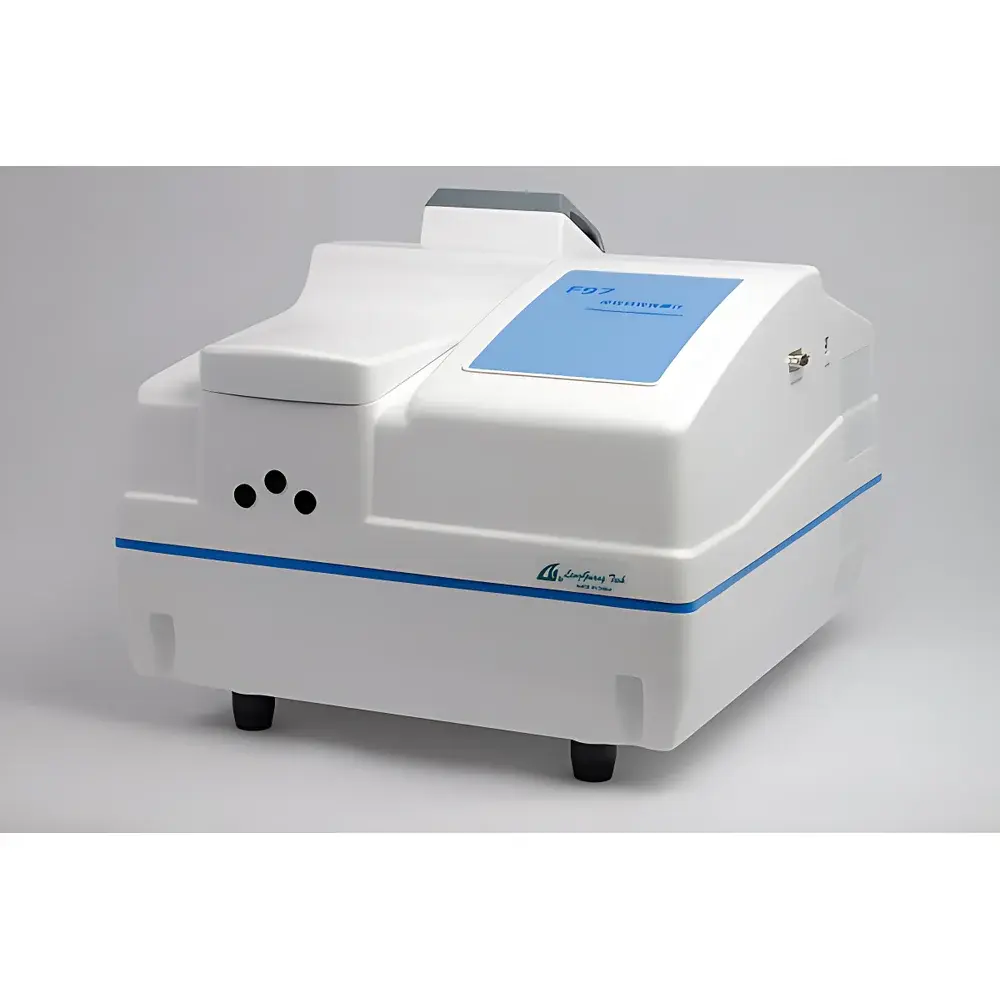
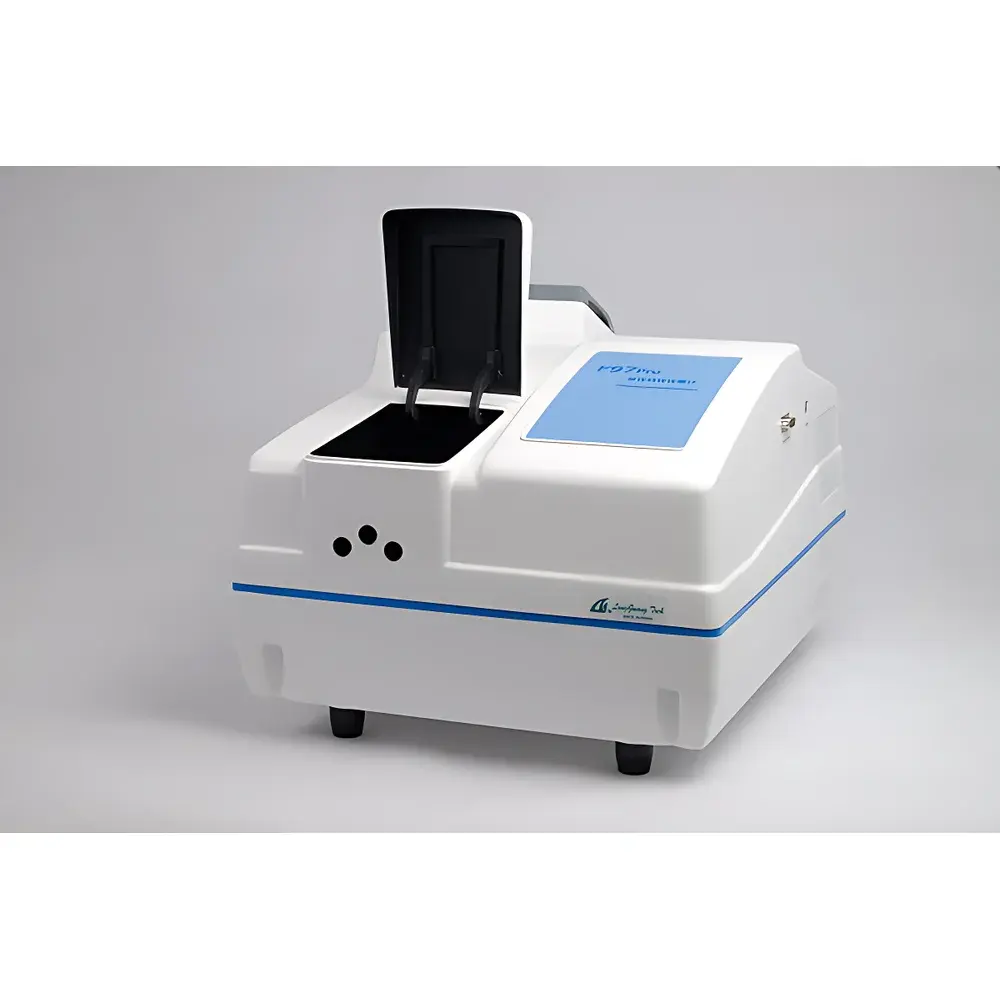
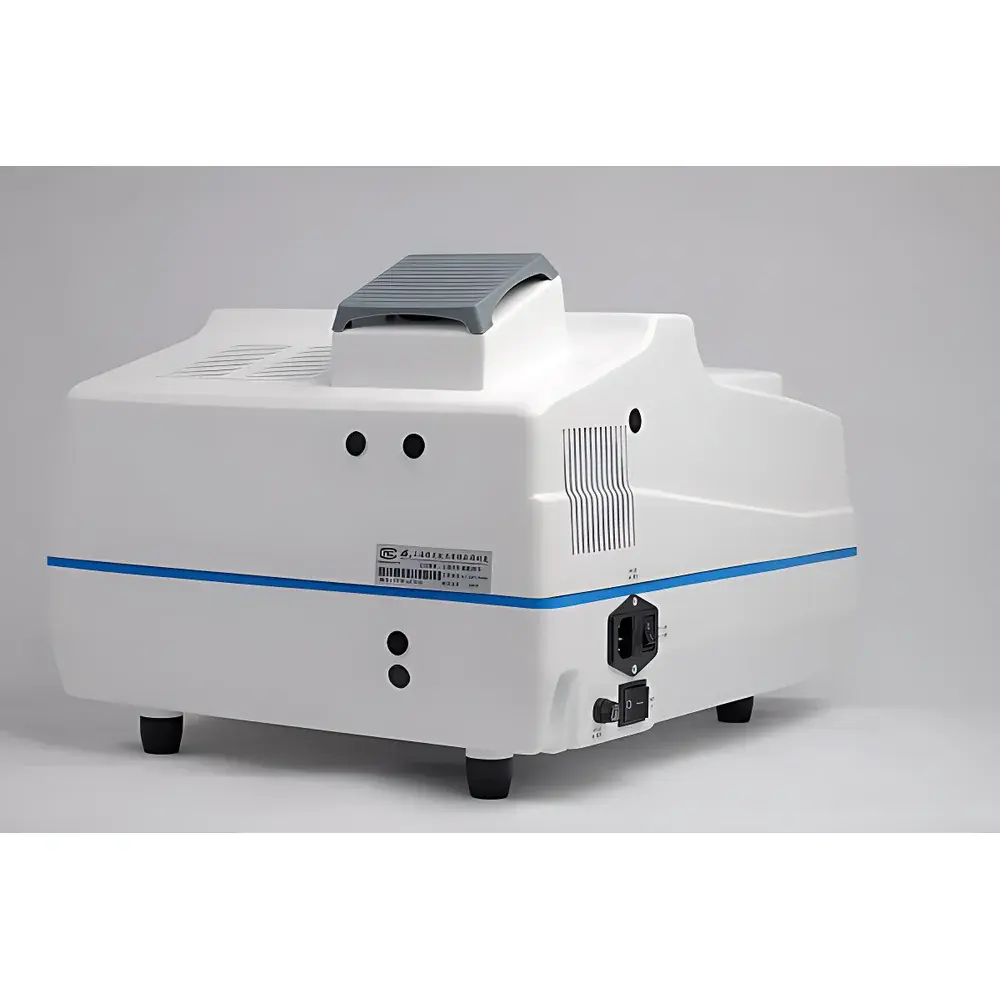
Lengguang Tech. F97 Series Molecular Fluorescence Spectrometer
| Brand | Lengguang Tech. |
|---|---|
| Origin | Shanghai, China |
| Manufacturer Type | Original Equipment Manufacturer (OEM) |
| Product Category | Domestic |
| Models | F97 / F97PRO / F97XP |
| Price Range | USD 14,000 – 28,000 |
| Dispersive Element | Holographic Grating |
| Instrument Type | Steady-State Fluorescence Spectrometer |
| Slit Width (Spectral Bandwidth) | 2.0 nm to 20 nm |
| Resolution | 2.0 nm |
| Sensitivity | S/N > 200 (peak-to-peak, F97XP) |
| Wavelength Accuracy | ±0.4 nm (F97XP), ±1.0 nm (F97PRO) |
| Light Source | 150 W Ozone-Free Xenon Arc Lamp (Hamamatsu, 2000 h lifetime) |
Overview
The Lengguang Tech. F97 Series Molecular Fluorescence Spectrometer is a high-performance steady-state fluorescence instrument engineered for precision molecular emission analysis across the ultraviolet–visible–near-infrared spectrum (200–900 nm). Built upon a dual-monochromator optical architecture, the system minimizes stray light and ensures high spectral purity—critical for resolving narrow emission bands and quantifying low-concentration fluorophores. The core optical path integrates a Hamamatsu-sourced 150 W ozone-free xenon lamp, delivering stable, broadband excitation with negligible UV-C output, and a Hamamatsu photomultiplier tube (PMT) detector optimized for quantum efficiency in the 200–900 nm range. This configuration enables rigorous compliance with ISO 17025 method validation requirements and supports routine operation under GLP and GMP-aligned laboratory workflows. The F97XP variant achieves a peak-to-peak signal-to-noise ratio exceeding 200 in water Raman scattering measurements—a benchmark widely adopted in instrument qualification per ASTM E275 and USP .
Key Features
- Dual-monochromator design with independently adjustable excitation and emission slits (2.0–20 nm bandwidth), enabling precise control of spectral resolution and stray-light suppression.
- High-speed wavelength scanning up to 48,000 nm/min—capable of acquiring full 3D excitation-emission matrices (EEMs) in under 60 seconds, supporting rapid screening and kinetic profiling.
- Programmable optical shutter integrated into the excitation beam path, allowing user-defined pulse timing and dwell control for photolabile or time-sensitive samples (e.g., conjugated polymers, photoactive proteins).
- Spectral correction functionality that applies instrument-specific response calibration curves to raw intensity data, yielding true relative quantum yield spectra compliant with CIE 177:2007 recommendations.
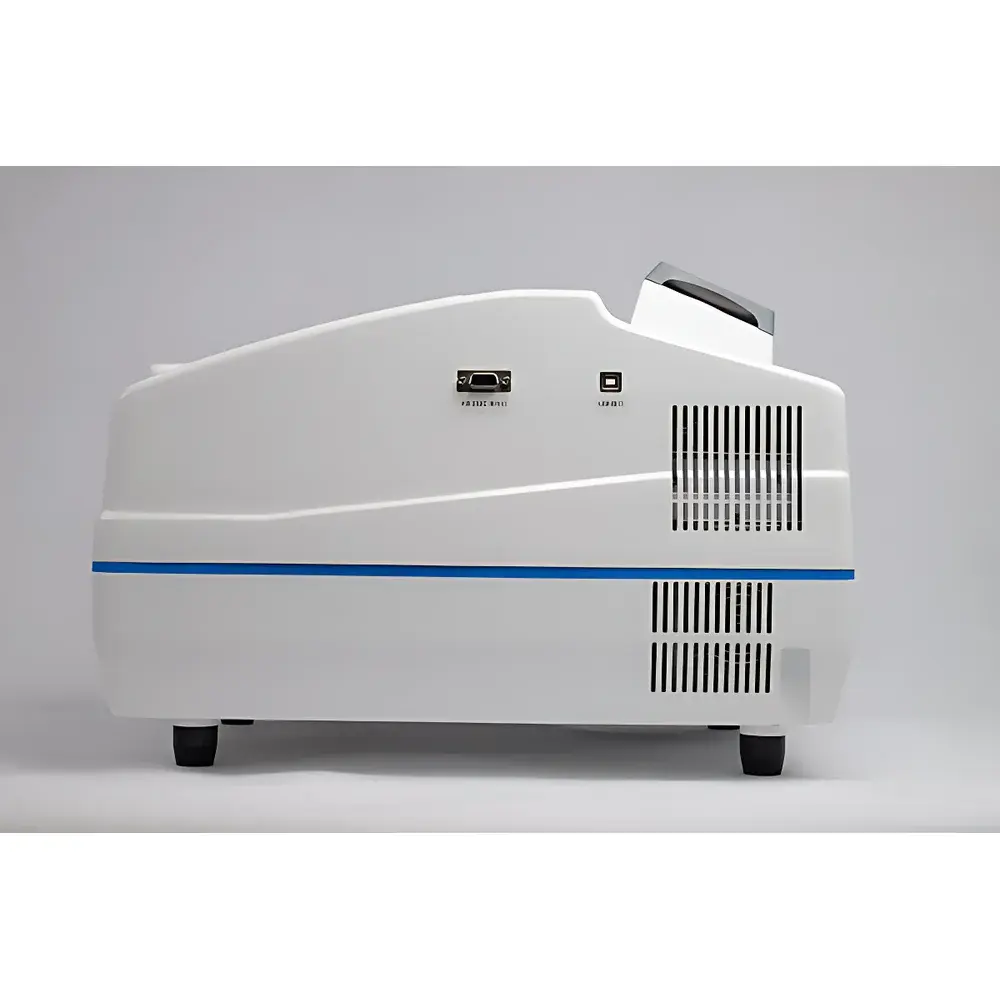
- Modular accessory interface supporting standardized optical mounts (SM1, SM2) and electrical I/O for synchronized external triggering—compatible with third-party temperature controllers, motorized sample stages, and electrochemical cells.
Sample Compatibility & Compliance
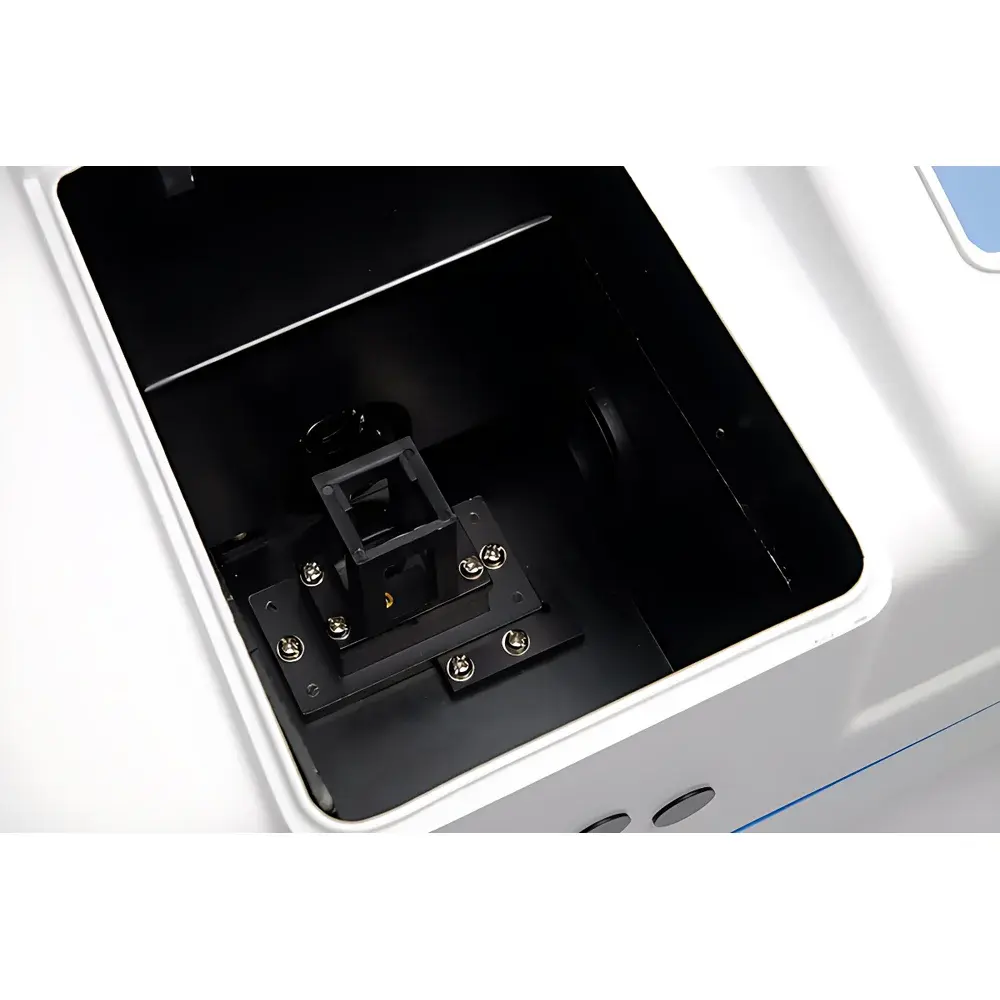
The F97 platform accommodates diverse sample formats via optional accessories: solid-state holders for thin films and powders; 200 µL microcentrifuge tube adapters for limited-volume biological extracts; upconversion fluorescence modules with NIR-excitation capability (e.g., 980 nm diode coupling); semi-automated sample changers with barcode recognition; Peltier-cooled cuvette holders (±0.1 °C stability); and water-jacketed cell racks for extended thermal equilibration. All optical components comply with RoHS 2011/65/EU directives. Firmware and embedded control logic adhere to IEC 61508 SIL-2 functional safety principles for lab instrumentation. Data acquisition meets audit-trail requirements under FDA 21 CFR Part 11 when operated with validated LIMS integration protocols.
Software & Data Management
The proprietary F97 Control Suite (v4.2+) provides native support for multi-dimensional data acquisition—including synchronous scanning (constant Δλ or constant Δcm⁻¹ modes), EEM mapping, lifetime-deconvolved intensity decay fitting (via external TCSPC module handshake), and spectral deconvolution using non-negative matrix factorization (NMF). Raw data are stored in HDF5 format with embedded metadata (wavelength calibration coefficients, slit settings, PMT voltage, ambient temperature/humidity logs). Export options include ASCII, CSV, JCAMP-DX, and mzML-compatible structured text. Software validation documentation (IQ/OQ/PQ templates) and electronic signature modules are available upon request for regulated environments.
Applications
This spectrometer serves analytical and research applications requiring high-fidelity fluorescence characterization: quantitative assay development (e.g., NADH/FAD⁺ ratios in mitochondrial respiration studies); environmental monitoring of polycyclic aromatic hydrocarbons (PAHs) in aqueous matrices; quality control of fluorescent dyes in OLED material synthesis; structural probing of protein folding via tryptophan emission shifts; and identification of humic substance fractions in soil leachates using PARAFAC modeling of EEM datasets. Its robustness and reproducibility make it suitable for inter-laboratory comparison studies referenced in ISO 10678:2010 (water quality—fluorescence measurement of dissolved organic matter).
FAQ
What is the maximum scan speed for excitation-emission matrix (EEM) acquisition?
Up to 48,000 nm/min—enabling full 200–500 nm excitation × 250–650 nm emission maps in ≤55 seconds at 1 nm data intervals.
Does the system support time-resolved fluorescence measurements?
No—the F97 series is strictly steady-state. Time-resolved capabilities require external TCSPC hardware interfaced via TTL synchronization ports.
Is spectral calibration traceable to NIST standards?
Yes—factory calibration uses NIST-traceable holmium oxide and didymium glass filters; users may perform on-site verification with optional tungsten-halogen and mercury-argon line sources.
Can the software generate reports compliant with GLP audit requirements?
Yes—audit trail logging, electronic signatures, and version-controlled method files are enabled when operating in “Regulated Mode” with password-protected administrator access.
What is the recommended maintenance interval for the xenon lamp?
Lamp replacement is advised after 2,000 hours of cumulative operation or upon observed decline in S/N below 180 (P-P) in water Raman tests—whichever occurs first.




