
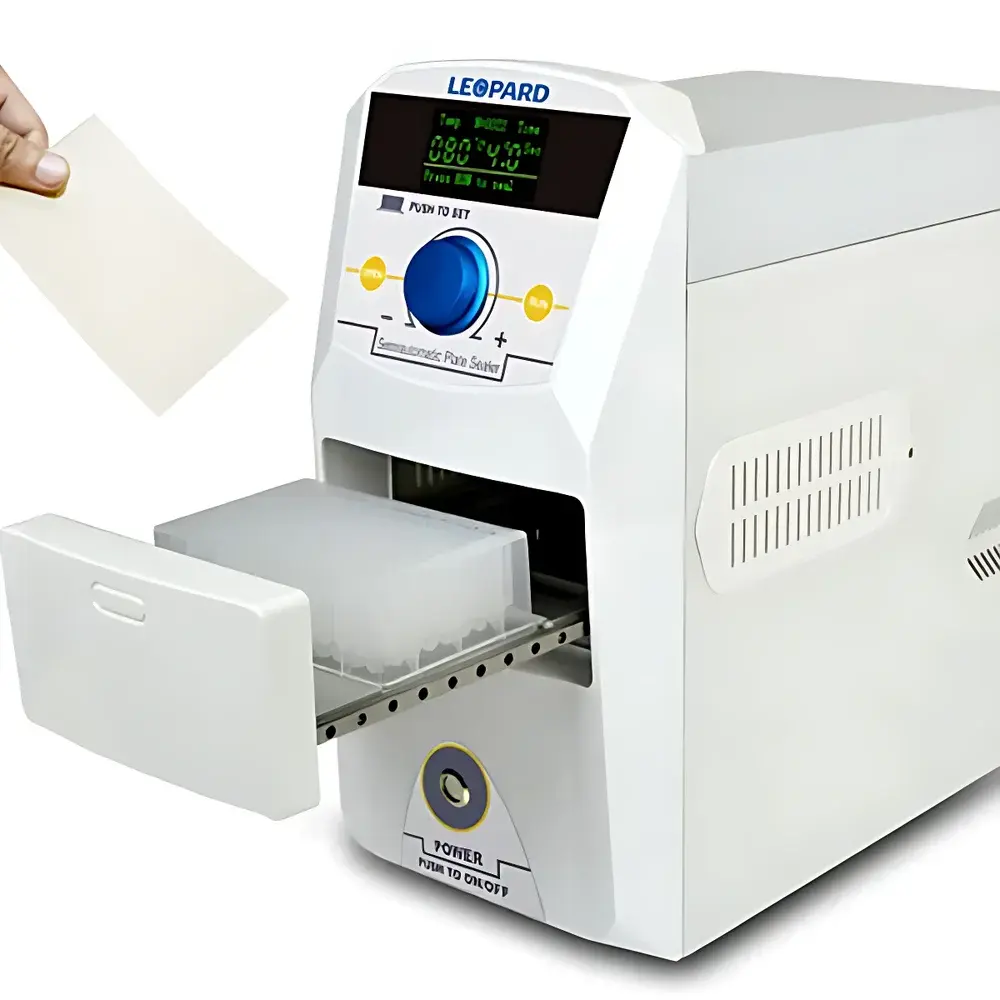
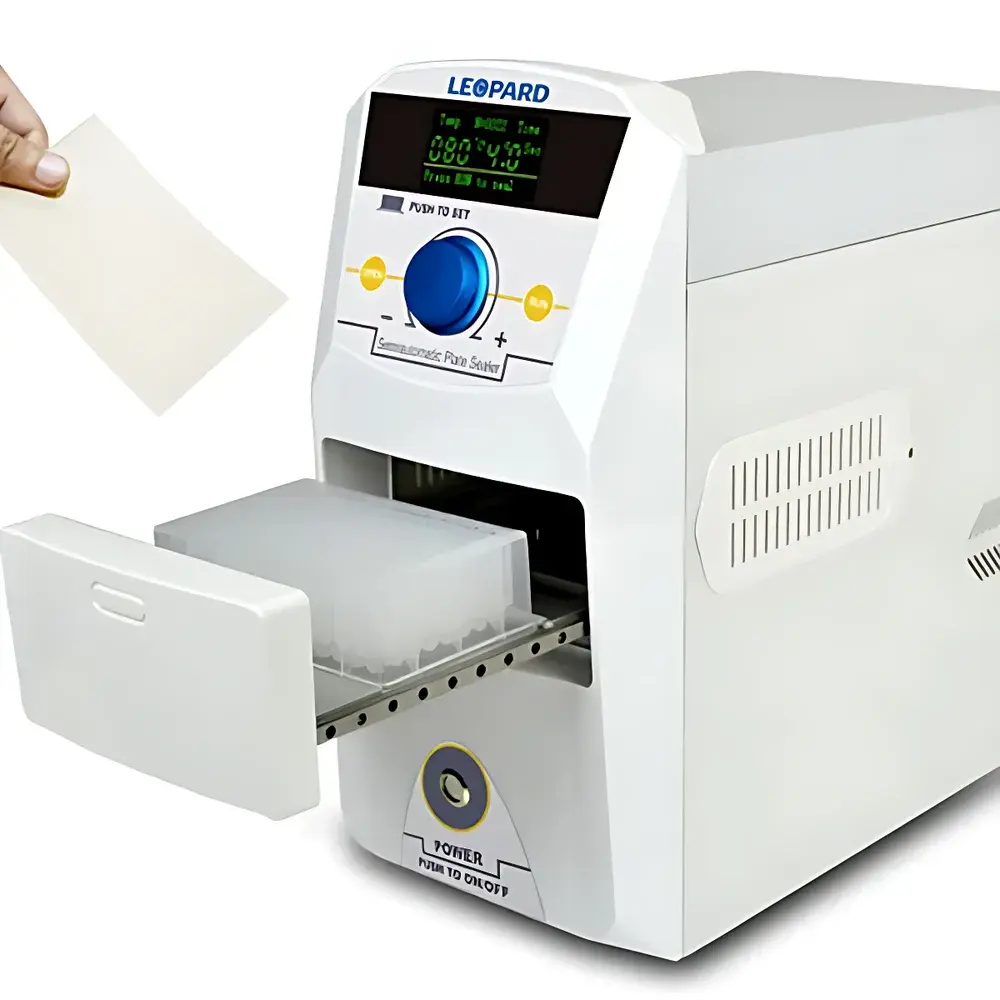
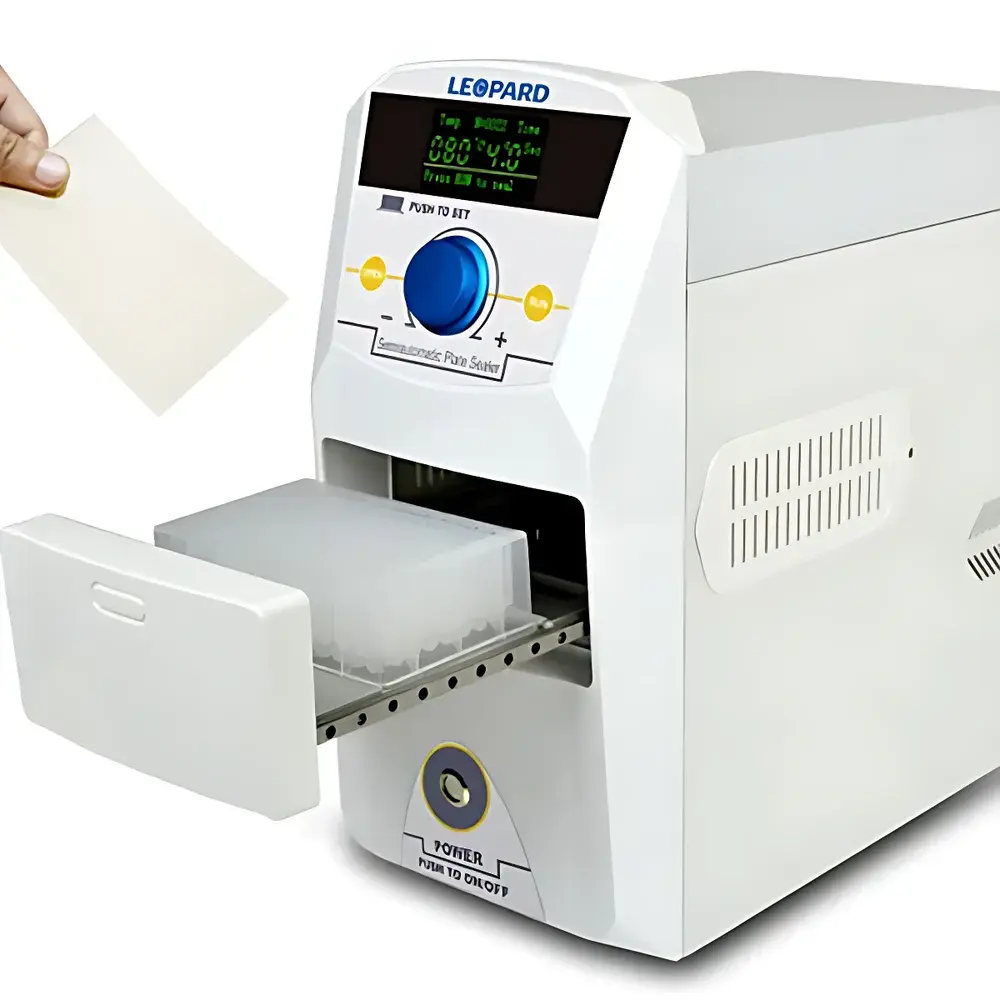
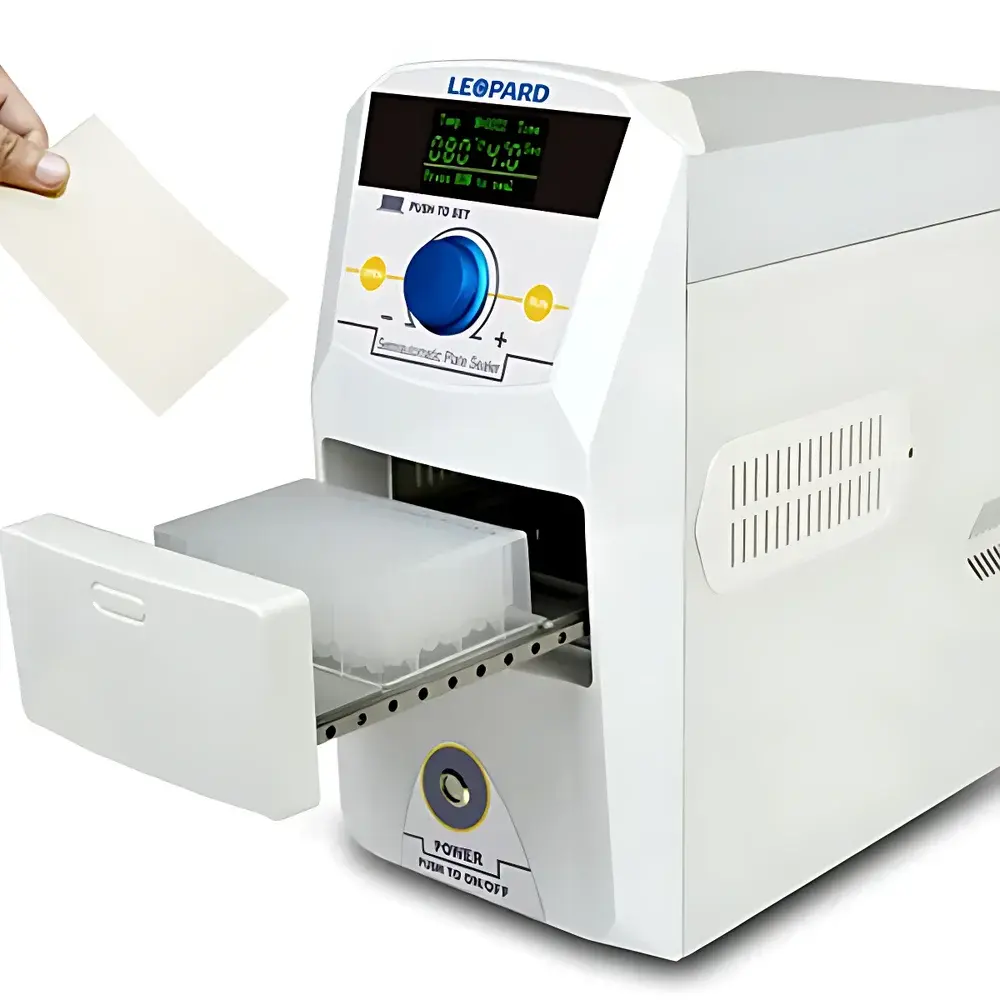
Leopard Easy-200 Semi-Automatic Microplate Heat Sealer
| Brand | Leopard |
|---|---|
| Origin | Beijing, China |
| Manufacturer Type | Direct Manufacturer |
| Product Origin | Domestic (China) |
| Model | Easy-200 |
| Automation Level | Semi-Automatic |
| Sealing Temperature Range | 80–200 °C (adjustable in 1.0 °C increments) |
| Temperature Accuracy | ±1 °C |
| Sealing Time Range | 0.5–10.0 s (adjustable in 0.1 s increments) |
| Plate Height Accommodation | 9–48 mm (no manual height adjustment required) |
| Max Input Power | 300 W |
| Dimensions (W×D×H) | 180 × 350 × 380 mm |
| Net Weight | 12 kg |
| Compatible Seal Films | (1) Aluminum foil–polypropylene laminates |
| Compatible Plate Types | Standard microplates including full-skirted, half-skirted, and non-skirted PCR plates |
| Plate Material Compatibility | Polypropylene (PP), Polystyrene (PS), Polyethylene (PE) |
| Heating Element | Ceramic heating plate |
| Display | OLED with wide viewing angle |
| Pressure Adjustment | 5-level manual knob control |
| Safety Features | Obstruction-sensing motorized lid, auto-reverse on contact |
| Power Management | Auto-standby (60 min inactivity → temp reduced to 60 °C) |
Overview
The Leopard Easy-200 Semi-Automatic Microplate Heat Sealer is an engineered solution for reproducible, contamination-controlled sealing of standard microplates used across molecular biology, clinical diagnostics, and drug discovery workflows. It operates on the principle of controlled conductive thermal sealing—applying precise temperature, time, and uniform pressure to fuse thermoplastic or foil-based sealing films onto microplate rims. Unlike manual sealing methods prone to inconsistent contact pressure and thermal gradients, the Easy-200 employs a ceramic-heated aluminum platen with ±1 °C temperature accuracy and real-time digital feedback, ensuring repeatable seal integrity across heterogeneous plate formats—from shallow 96-well ELISA plates to tall 96-well deep-well storage plates (up to 48 mm height). Its semi-automated architecture balances operator control with process reliability: users initiate the sealing cycle manually after loading, but all critical parameters—including ramp rate, dwell time, and cooling profile—are governed by embedded microprocessor logic calibrated per ISO/IEC 17025 traceable procedures.
Key Features
- Ceramic heating plate technology delivering rapid thermal response (<300 s to reach 170 °C) and eliminating hot-spot-induced film adhesion or delamination
- Five-level mechanical pressure adjustment optimized for variable plate rigidity and film thickness—ensuring uniform seal formation without warping PP or PS plates
- OLED display with wide-angle visibility, low-power consumption, and real-time temperature/time readout during active sealing cycles
- Obstruction-sensing motorized lid with automatic reversal upon physical interference—compliant with IEC 61000-6-2 electromagnetic compatibility and EN 61000-6-4 safety directives
- Dual-stage power management: auto-standby (reduces platen temperature to 60 °C after 60 min idle) and deep-sleep mode (cuts heater power and display after 120 min idle while retaining firmware state)
- Tool-free side access windows for routine cleaning of the ceramic platen surface—extending service life and maintaining thermal uniformity (±1 °C across active area)
- Compact footprint (180 × 350 × 380 mm) suitable for benchtop integration adjacent to qPCR systems, liquid handlers, or automated storage modules
Sample Compatibility & Compliance
The Easy-200 accommodates all ANSI/SBS-standard microplates (96-, 384-, and 1536-well formats) regardless of skirt configuration (full, half, or non-skirted), as well as deep-well plates up to 48 mm in height—no mechanical height recalibration required. It supports five classes of commercially available sealing films: aluminum foil–PP laminates (for long-term storage and freeze-thaw stability), clear polyester–PP composites (for optical clarity in fluorescence assays), transparent polymer films (for UV-transparent applications), thin-clear polymer variants (for low-profile PCR cycling), and high-barrier foil layers (for volatile compound containment). Compatible plate substrates include polypropylene (PP), polystyrene (PS), and polyethylene (PE)—validated per ASTM D882 tensile testing for seal burst resistance ≥ 250 kPa under standardized humidity conditions (50% RH, 23 °C). The device meets CE marking requirements for laboratory equipment (2014/30/EU EMC Directive and 2014/35/EU LVD Directive) and aligns with GLP documentation practices via timestamped parameter logging (optional RS-232 output).
Software & Data Management
While the Easy-200 operates as a stand-alone instrument with no proprietary software dependency, its parameter settings—including temperature setpoint, dwell time, pressure level, and sleep-mode thresholds—are stored in non-volatile memory and persist through power cycles. Optional RS-232 serial interface enables integration into lab information management systems (LIMS) or electronic lab notebooks (ELN) for audit-trail generation. All user-modifiable values are recorded with timestamps and operator IDs when connected to external data loggers compliant with FDA 21 CFR Part 11 requirements (electronic signatures, audit trails, and data integrity controls). Firmware updates are delivered via USB flash drive and verified using SHA-256 checksums to ensure traceability and version control in regulated environments.
Applications
- qPCR and RT-qPCR workflow consolidation—sealing plates prior to thermal cycling to prevent evaporation-induced concentration drift and cross-contamination between wells
- High-throughput screening (HTS) plate archival—applying permanent barrier seals to deep-well plates containing compound libraries or biological samples stored at –80 °C
- ELISA and immunoassay plate preparation—using optical-grade films to maintain signal fidelity during plate reader measurements
- Cell-based assay plate sealing—preserving sterility and humidity during extended incubation periods without compromising gas exchange in breathable membranes
- GMP-compliant sample handling—supporting documented, repeatable sealing protocols aligned with ISO 13485 and USP <1058> analytical instrument qualification guidelines
FAQ
What types of microplates can the Easy-200 seal without manual height adjustment?
It accommodates plates ranging from 9 mm (e.g., standard 96-well ELISA plates) to 48 mm (e.g., 96-well deep-well storage plates) without any mechanical reconfiguration.
Does the Easy-200 support validation documentation for regulated laboratories?
Yes—parameter logs, firmware version history, and calibration certificates (available upon request) support IQ/OQ/PQ execution per GAMP 5 and FDA guidance on computerized system validation.
Can the sealing temperature and time be adjusted independently for different film types?
Yes—temperature is adjustable from 80–200 °C in 1.0 °C steps, and dwell time from 0.5–10.0 s in 0.1 s increments, enabling method-specific optimization for foil vs. polymer films.
Is the ceramic heating plate resistant to chemical exposure during routine cleaning?
The alumina-ceramic surface is inert to 70% ethanol, isopropanol, and mild alkaline detergents; avoid abrasive pads or chlorine-based cleaners to preserve emissivity and thermal response linearity.
How does the obstruction-sensing lid meet laboratory safety standards?
The integrated current-monitoring motor controller detects torque anomalies and reverses lid motion within <100 ms, satisfying EN 61000-6-2 immunity requirements for electrostatic discharge and fast transient bursts.





