
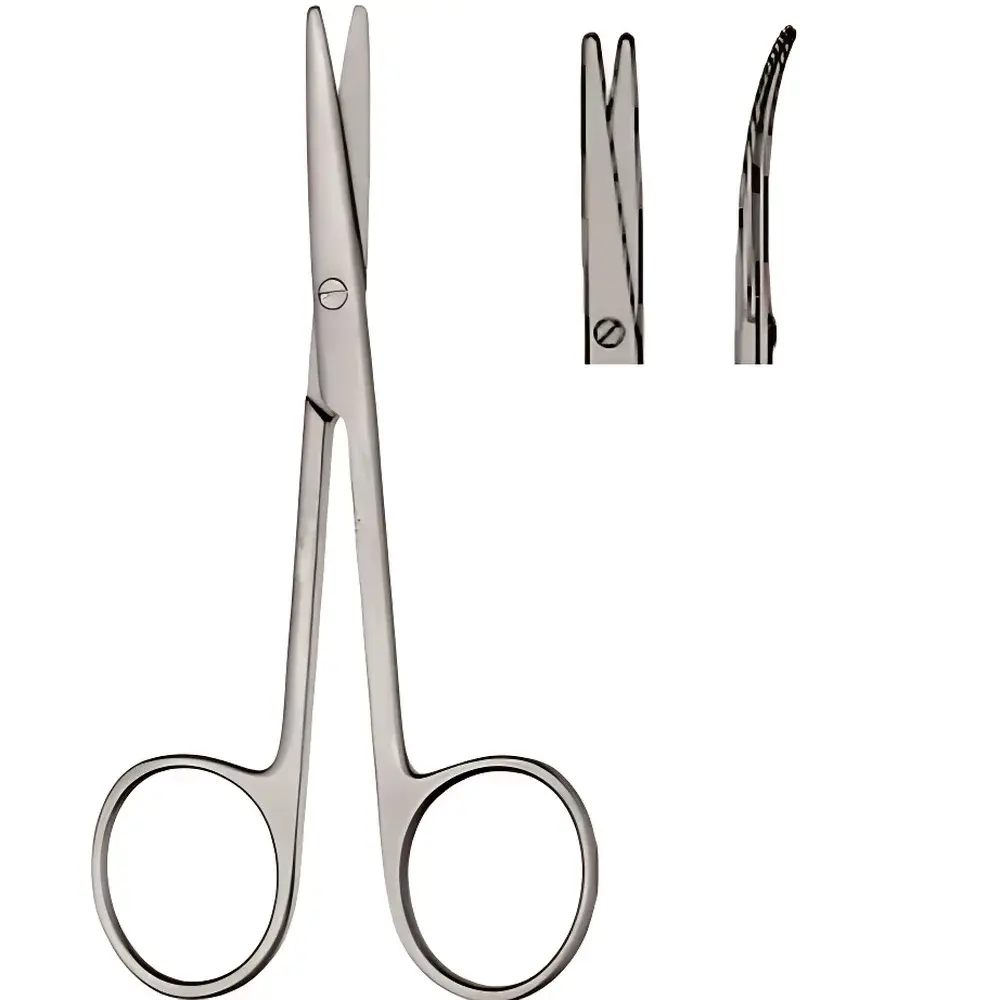
LEXER Precision Dissection Scissors – Straight Blunt/Blunt and Curved Blunt/Blunt, 165 mm
| Brand | RWD |
|---|---|
| Origin | Shenzhen, China |
| Manufacturer Type | Direct Manufacturer |
| Country of Origin | China |
| Model | S13035-16, S13036-16 |
| Pricing | Upon Request |
Overview
LEXER Precision Dissection Scissors are high-precision surgical instruments engineered for delicate soft-tissue manipulation in preclinical research, histology, and academic laboratory settings. Designed and manufactured by RWD (Shenzhen), a certified ISO 13485 medical device manufacturer, these scissors operate on the fundamental mechanical principle of lever-based force amplification with optimized blade geometry to minimize tissue trauma. The narrow-profile design ensures enhanced control and access in confined anatomical spaces—particularly critical during microdissection of neural tissues, vascular isolation, or embryonic specimen preparation. Both models comply with international biocompatibility standards (ISO 10993-5 and ISO 10993-10) and are constructed from premium-grade martensitic stainless steel (AISI 420 equivalent), offering superior edge retention, corrosion resistance, and autoclavability up to 134 °C per ISO 17664.
Key Features
- Narrow-profile blade geometry (≤2.1 mm blade width at tip) enables precise navigation in tight anatomical planes without lateral tissue displacement
- Dual-blunt configuration (blunt tip / blunt edge) eliminates accidental puncture risk—ideal for dissection adjacent to fragile structures such as dura mater, peripheral nerves, or developing vasculature
- Ergonomically contoured finger rings with matte-textured surface reduce hand fatigue during prolonged procedures and improve grip stability under wet conditions
- Micron-level precision grinding and cryogenic stress-relief heat treatment ensure consistent cutting performance across >500 autoclave cycles
- Model S13035-16 features straight blades for linear incision and blunt separation; S13036-16 incorporates a 15° controlled curvature for improved visibility and angled access around anatomical contours
- Each instrument is individually serialized and traceable to batch-specific metallurgical certification and dimensional inspection reports
Sample Compatibility & Compliance
LEXER Dissection Scissors are validated for use with all standard biological specimens encountered in rodent, avian, and ex vivo human tissue research—including fixed and unfixed neural, muscular, connective, and epithelial tissues. They are compatible with common laboratory sterilization protocols: saturated steam autoclaving (121–134 °C), ethylene oxide (EtO), and low-temperature hydrogen peroxide plasma. Instruments meet EU Medical Device Regulation (MDR 2017/745) Class I requirements and carry CE marking. Manufacturing adheres to ISO 13485:2016 quality management systems, with full documentation available for GLP-compliant study audits. All materials are RoHS-compliant and free of nickel sensitizers above 0.05% w/w per EN 1811:2011+A1:2015.
Software & Data Management
As a manually operated mechanical instrument, LEXER Dissection Scissors do not incorporate embedded electronics, firmware, or software interfaces. However, RWD provides comprehensive digital traceability support through its QMS portal: each instrument’s serial number links to downloadable calibration verification records, material certificates (EN 10204 3.1), and sterilization compatibility summaries. For laboratories operating under FDA 21 CFR Part 11 or Annex 11 requirements, RWD supplies audit-ready documentation packages—including equipment history logs, preventive maintenance checklists, and revalidation templates aligned with ISO 13485 clause 7.5.10.
Applications
- Microdissection of hippocampal slices and cortical explants in electrophysiology preparation
- Delicate removal of perineural sheaths during peripheral nerve harvesting
- Embryonic dissection (E12–E18 murine, HH18–HH24 chick) requiring minimal mechanical stress
- Preparation of intact aortic rings and coronary artery segments for myography
- Isolation of dorsal root ganglia and sympathetic chain ganglia without neuronal damage
- Supporting standardized SOPs in AAALAC-accredited facilities where instrument consistency directly impacts inter-laboratory reproducibility
FAQ
Are these scissors suitable for sterile surgical procedures in live animal models?
Yes—provided they undergo validated terminal sterilization (e.g., 134 °C steam autoclaving for 5 min) and are handled using aseptic technique per AVMA Guidelines.
What is the recommended sharpening protocol?
RWD does not recommend field sharpening. Blade geometry is optimized for single-instrument longevity; resharpening alters mechanical balance and voids warranty. Replacement is advised after visible wear or diminished cutting efficiency.
Do the instruments include a certificate of conformance?
Yes—each pair ships with a printed CoC referencing ISO 13485:2016, material grade, and dimensional compliance to ASTM F899-22 (Standard Specification for Stainless Steels for Surgical Instruments).
Can these be used in cryosectioning workflows?
They are compatible with cold-room dissection (4 °C) but not designed for direct use inside cryostat chambers due to thermal contraction effects on handle ergonomics.
Related Products




