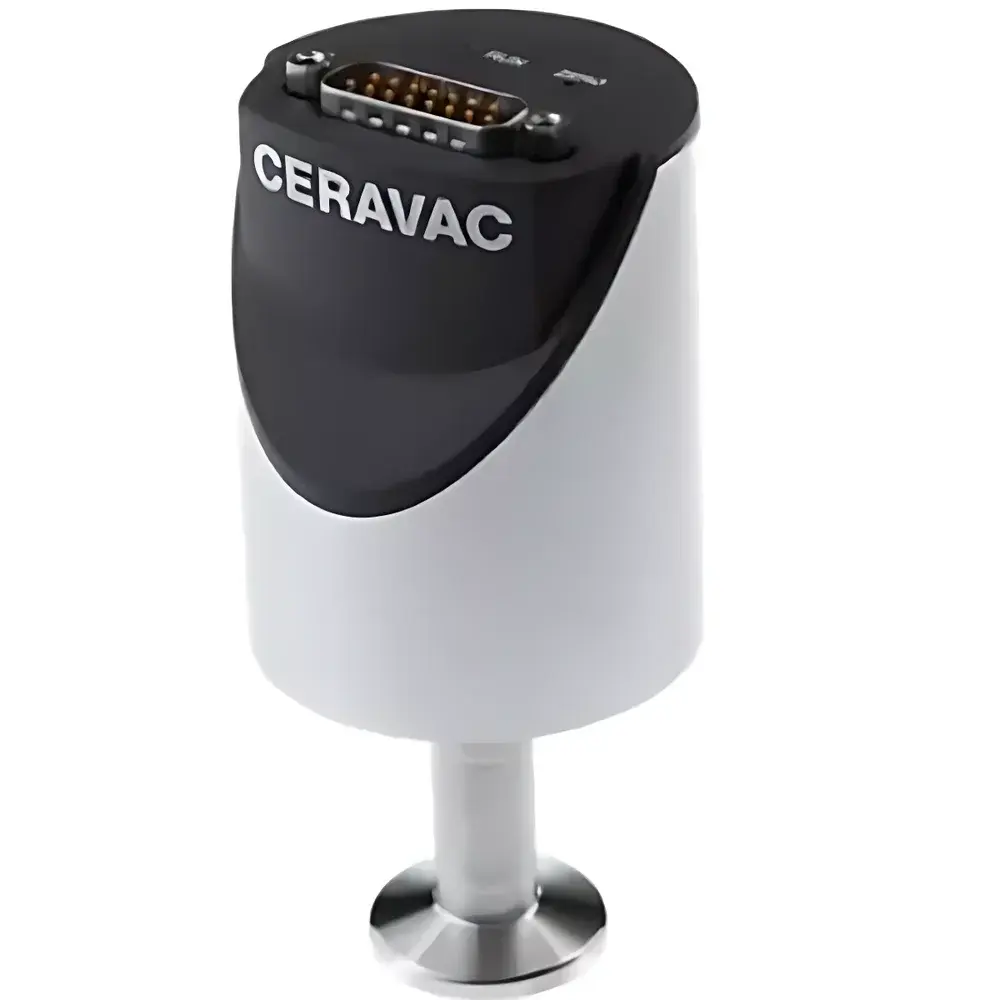
Leybold CERAVAC CTR 100 Ceramic Capacitive Vacuum Gauge
| Brand | Leybold |
|---|---|
| Origin | Germany |
| Model | CTR 100 |
| Measurement Principle | Ceramic Diaphragm Capacitance |
| Range | 1000 to 0.1 Torr |
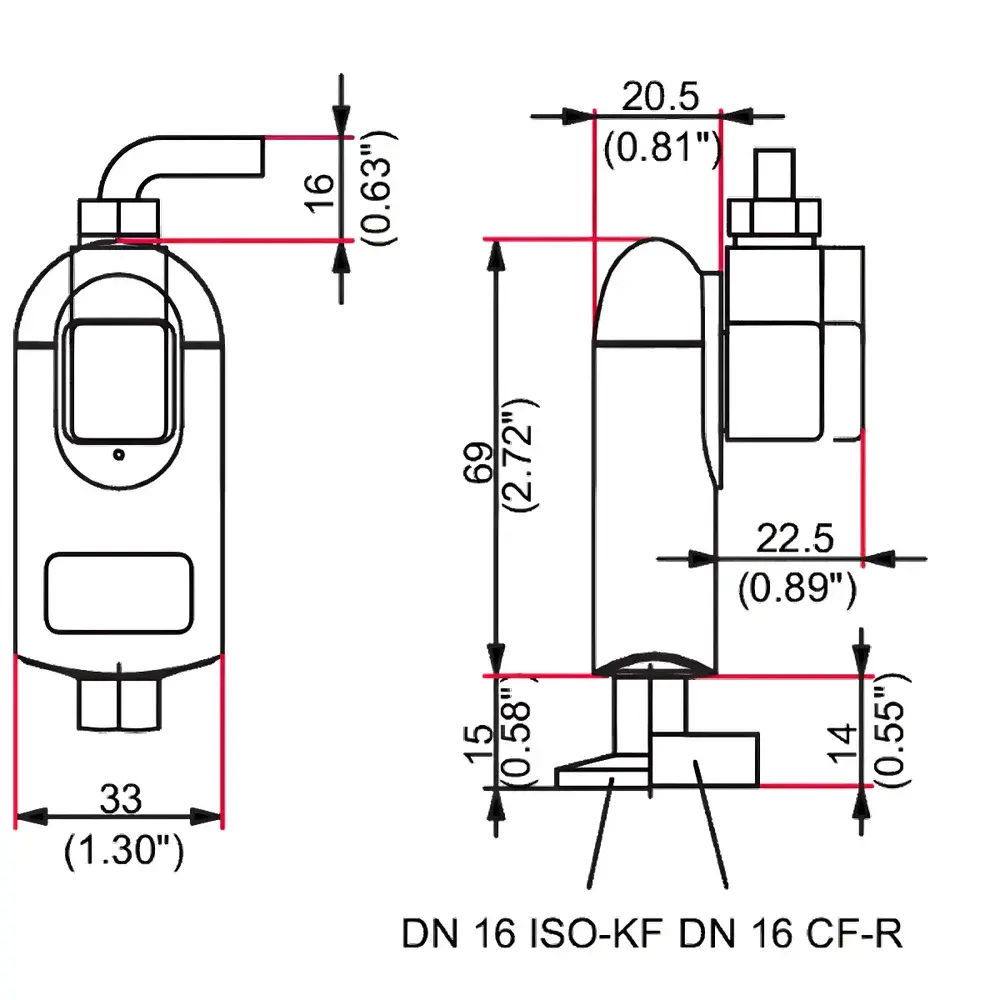
| Vacuum Port | KF 16 |
| Output | 0–10 V analog + RS232 digital interface |
| Accuracy | ±0.12% of full scale |
| Sensor Material | Al₂O₃ ceramic diaphragm with 316 stainless steel flange |
| Temperature Compensation | Integrated |
| Overpressure Tolerance | ≥2× full scale |
| Compliance | CE, RoHS, ISO 9001-manufactured |
Overview
The Leybold CERAVAC CTR 100 is a high-stability, ceramic-based capacitive vacuum gauge engineered for precise, long-term pressure measurement in the intermediate vacuum range (1000 to 0.1 Torr). Unlike thermal conductivity or ionization gauges, the CTR 100 operates on the principle of capacitance change induced by mechanical deflection of a rigid alumina (Al₂O₃) diaphragm under differential pressure. This solid-state sensing architecture eliminates moving parts and organic materials, delivering intrinsic immunity to chemical attack, zero hysteresis, and exceptional long-term drift performance—typically <0.1% FS/year. Its measurement physics is fundamentally traceable: capacitance shift is linearly proportional to applied pressure over its calibrated span, enabling use as a transfer standard in vacuum system validation and calibration workflows per ISO 20487 and ASTM E2275. Designed and manufactured in Germany under strict ISO 9001 quality controls, the CTR 100 integrates a microprocessor-controlled electronics module with real-time temperature compensation, ensuring metrological integrity across ambient conditions from 5 °C to 45 °C.
Key Features
- Ceramic sensing element (96% Al₂O₃) with inherent resistance to halogens, acids, solvents, and plasma byproducts—validated per ASTM F2000 for corrosive process compatibility
- Full-scale accuracy of ±0.12% FS with repeatability better than ±0.05% FS, certified via individual final-test report (NIST-traceable reference standards)
- Robust overpressure tolerance up to 2000 Torr without permanent zero shift or diaphragm deformation
- KF 16 (ISO-KF) vacuum interface with electropolished 316 stainless steel flange for UHV-compatible bake-out capability (≤150 °C)
- Dual-output architecture: isolated 0–10 V analog signal (linear, 12-bit effective resolution) and ASCII-protocol RS232 serial interface (9600 baud, no parity)
- Integrated temperature compensation circuitry eliminating thermal zero drift across operational ambient range
- No consumables, no filament, no gas-species dependence—provides identical response for N₂, Ar, O₂, CF₄, Cl₂, and other common process gases
Sample Compatibility & Compliance
The CTR 100 is compatible with all non-condensable gases and vapors within its operating range, including aggressive chemistries encountered in semiconductor etching, thin-film coating (PVD/CVD), vacuum drying, and pharmaceutical lyophilization. Its all-ceramic/316SS wetted path meets USP <1058> analytical instrument qualification requirements for GMP environments. The device conforms to CE marking directives (2014/30/EU EMC, 2014/35/EU LVD), RoHS 2011/65/EU, and supports audit-ready documentation: each unit ships with a factory-issued calibration certificate (including raw capacitance vs. pressure data points), serial-numbered test report, and material compliance declaration. It is suitable for installation in Class 100–Class 10,000 cleanrooms and complies with SEMI F27-0204 for semiconductor tool integration.
Software & Data Management
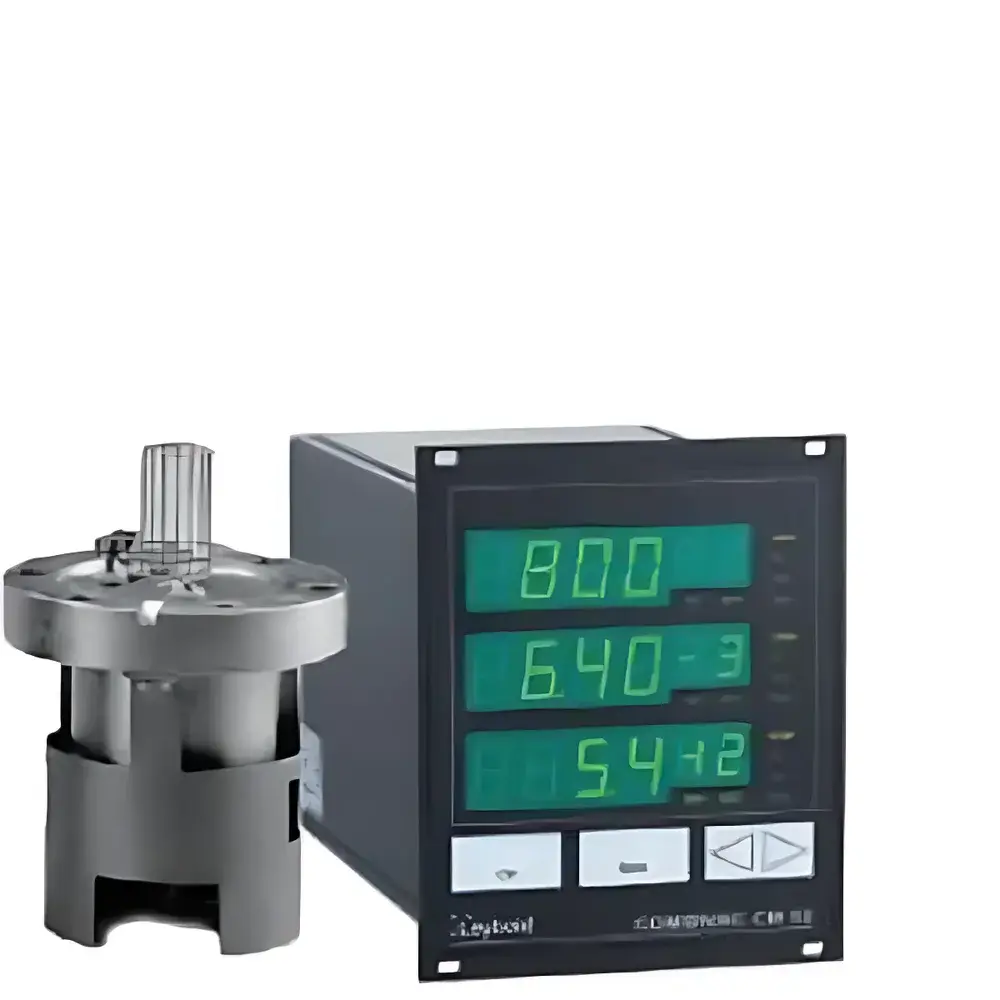
While the CTR 100 operates autonomously as a stand-alone transducer, it is fully interoperable with Leybold’s GRAPHIX series controllers (e.g., GRAPHIX 200, GRAPHIX 300) for multi-gauge system configuration, trend logging, and alarm management. Analog output enables direct connection to PLCs (Siemens S7, Allen-Bradley ControlLogix) or SCADA systems without signal conditioning. RS232 communication supports bidirectional command/response protocol for remote zeroing, range verification, and firmware interrogation. Data logging intervals, scaling factors, and alarm thresholds can be configured via terminal emulation or integrated into LabVIEW™, Python (pySerial), or MATLAB® environments using provided ASCII command set. All configurations are non-volatile and retained during power cycling. Audit trail functionality—including timestamped calibration events and parameter changes—is available when paired with GRAPHIX controllers compliant with FDA 21 CFR Part 11 requirements.
Applications
- Process pressure monitoring and closed-loop control in sputtering, evaporation, and ALD reactors
- Chamber leak rate verification and pump-down profiling in R&D and production vacuum systems
- Quality-critical vacuum hold tests in medical device packaging and aerospace component testing
- In-situ pressure feedback for turbomolecular pump speed regulation and foreline protection
- Reference-grade verification of Pirani or capacitance manometer arrays in ISO Class 5–8 cleanroom tools
- Corrosive gas handling in plasma-enhanced chemical vapor deposition (PECVD) and reactive ion etching (RIE)
FAQ
Is the CTR 100 suitable for measuring corrosive gases such as Cl₂ or NF₃?
Yes. The Al₂O₃ ceramic diaphragm and 316 stainless steel body provide documented resistance to halogen-based etchants, silane derivatives, and acidic vapors per ASTM F2000 exposure testing protocols.
Does the CTR 100 require periodic recalibration?
No scheduled recalibration is mandated under normal operating conditions. Long-term stability data shows <0.1% FS drift over 36 months; users may perform optional verification using a NIST-traceable reference gauge per ISO/IEC 17025 internal procedure.
Can the CTR 100 be baked out in situ?
Yes. The KF 16 flange and ceramic sensor assembly support continuous operation at ≤150 °C, provided electrical connectors remain outside the heated zone per Leybold Technical Note TN-CTR-004.
What is the response time of the CTR 100?
Full-scale step response is ≤100 ms (10–90%), enabling real-time pressure control in fast-cycling vacuum processes.
Is temperature compensation active across the entire operating range?
Yes. A dedicated thermistor network and embedded algorithm correct for both sensor self-heating and ambient fluctuations, maintaining accuracy specifications from 5 °C to 45 °C.