
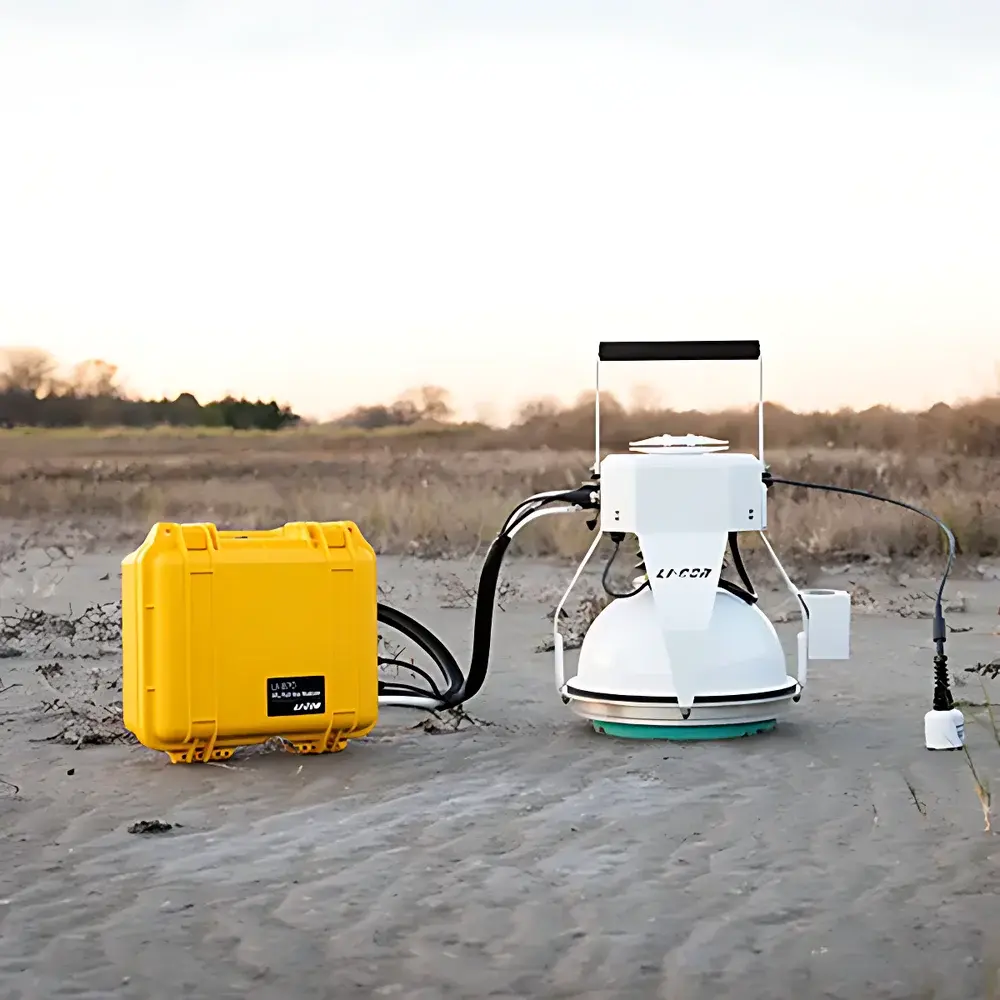
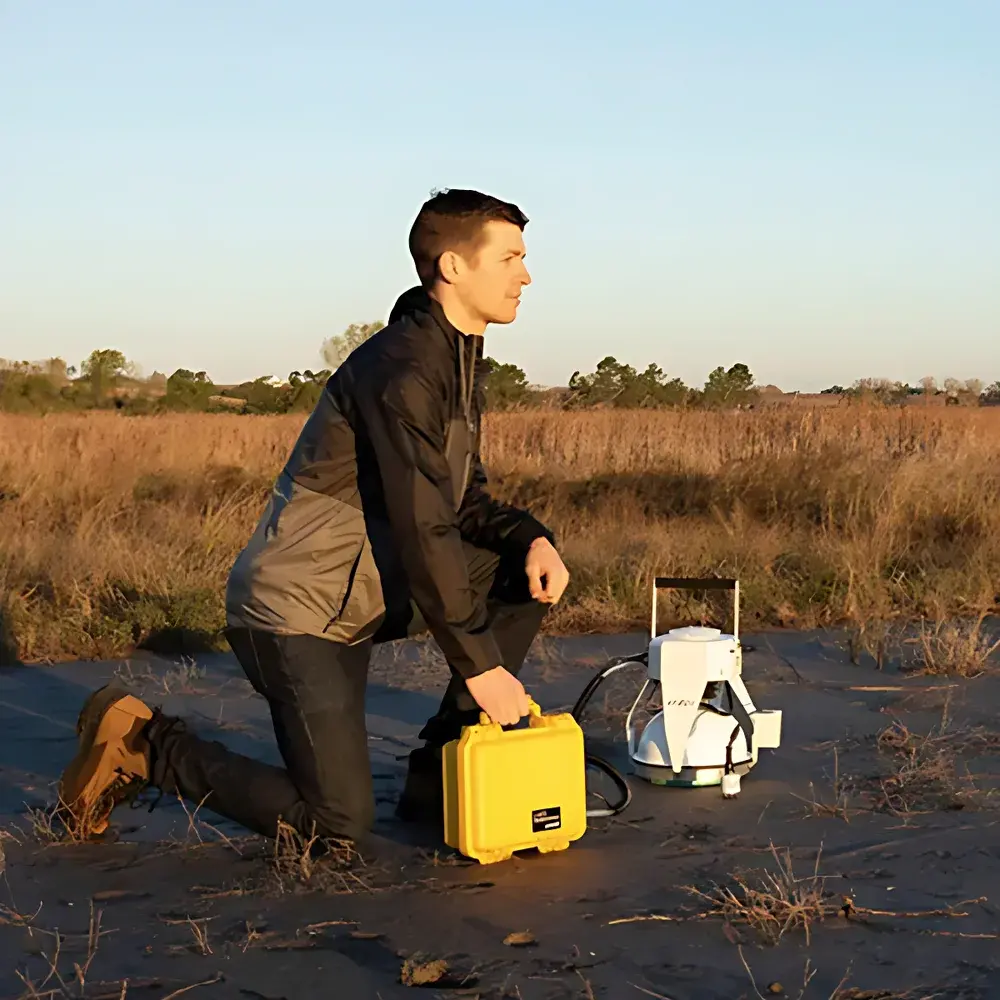
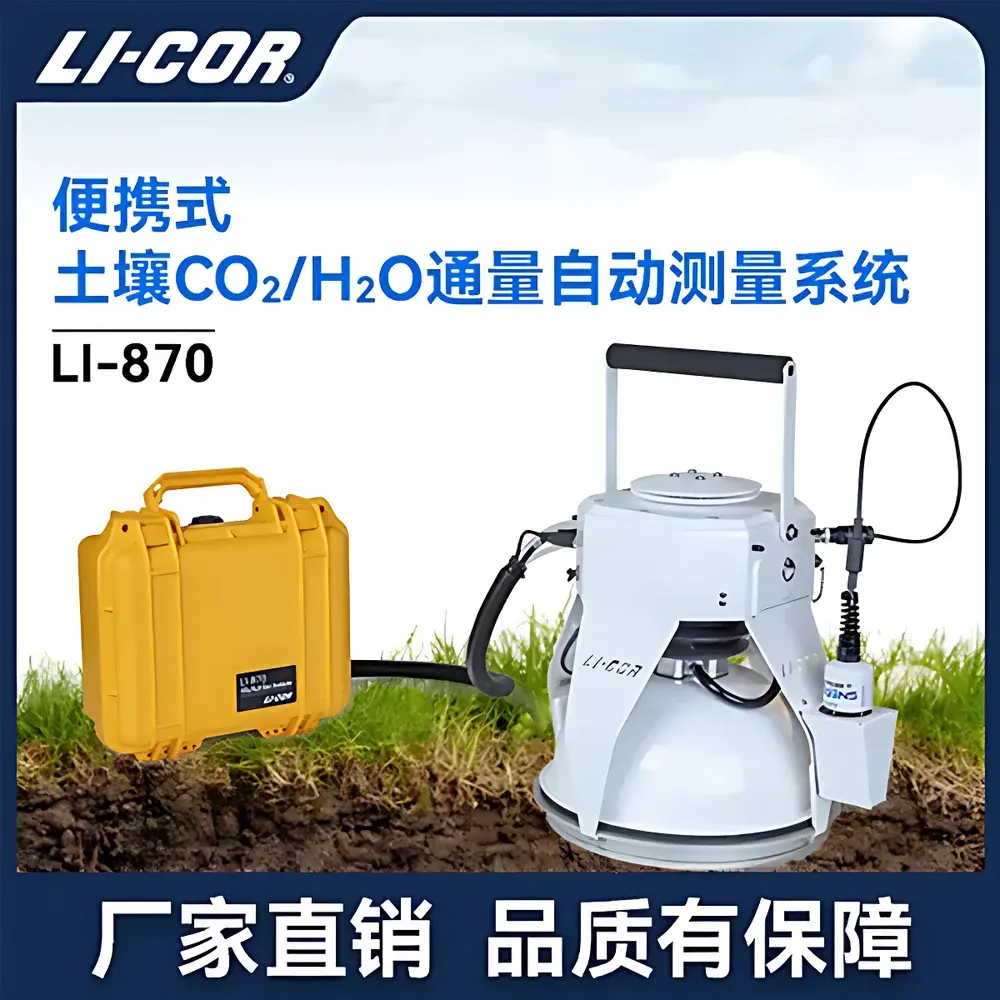
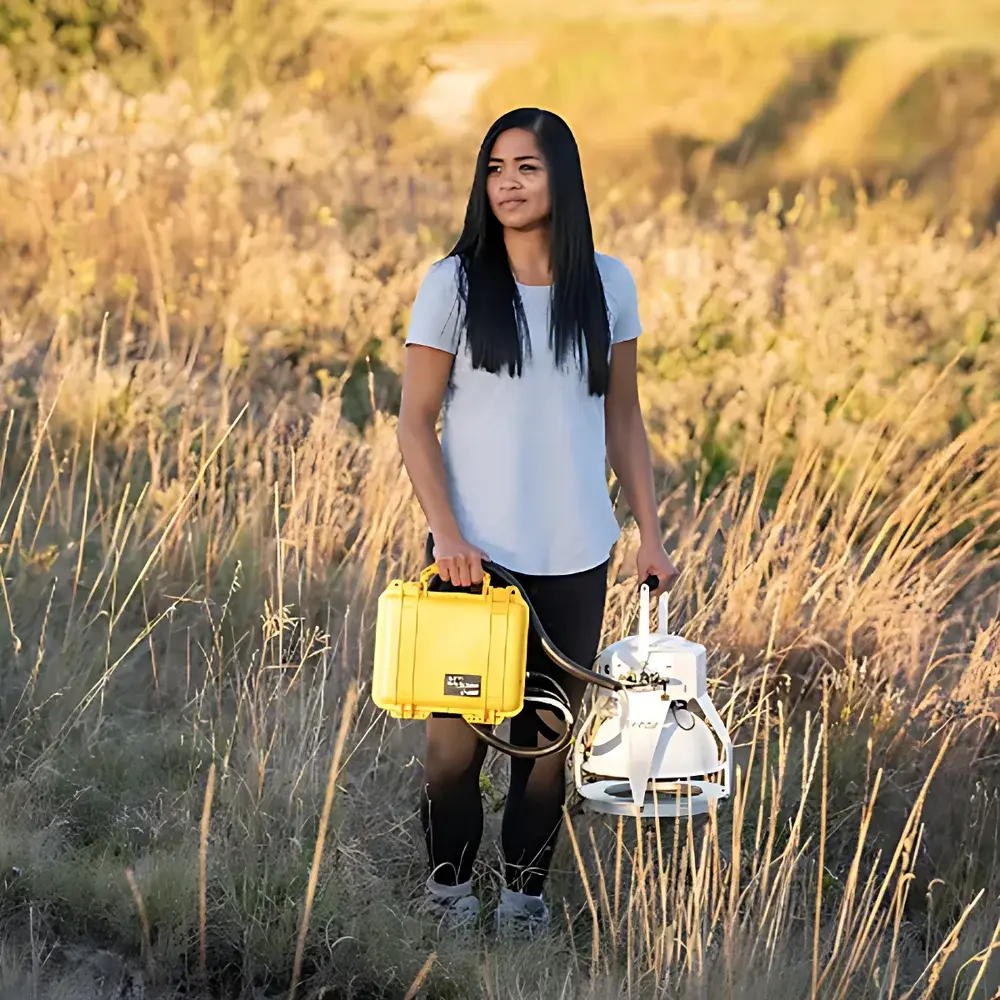
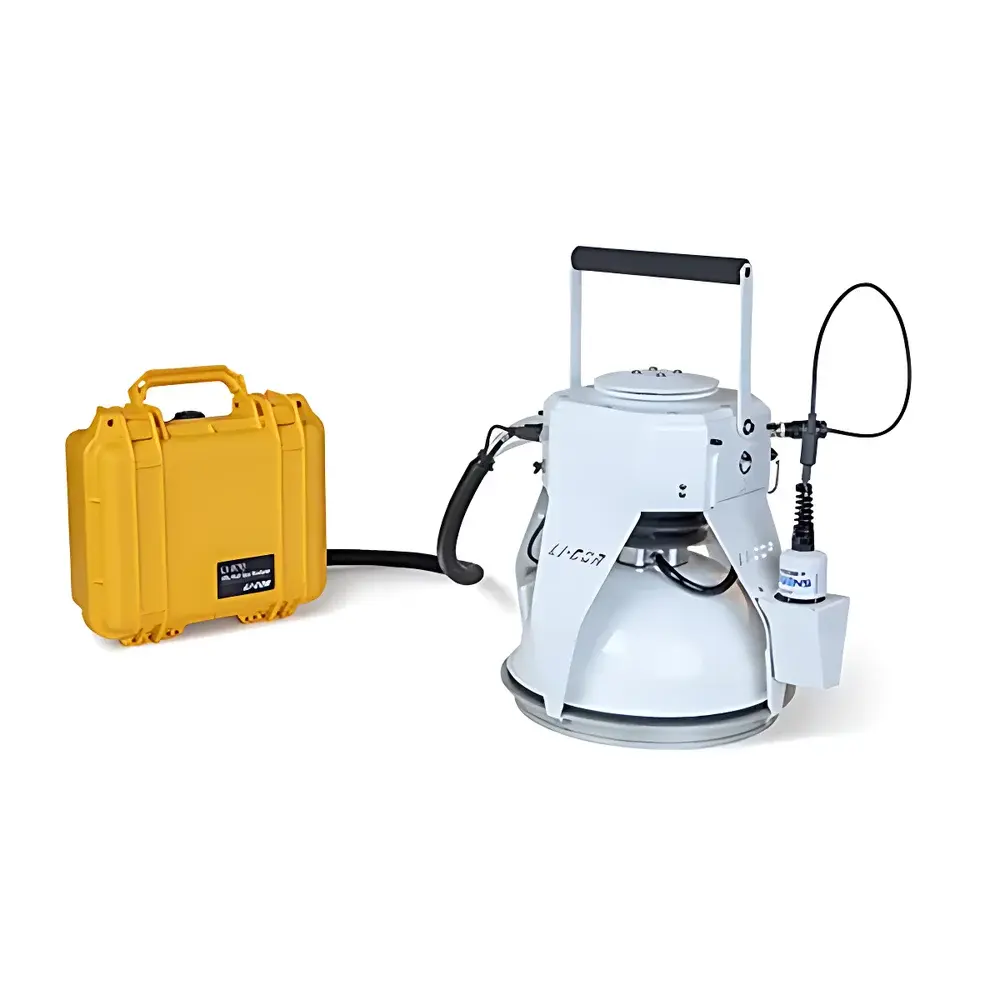
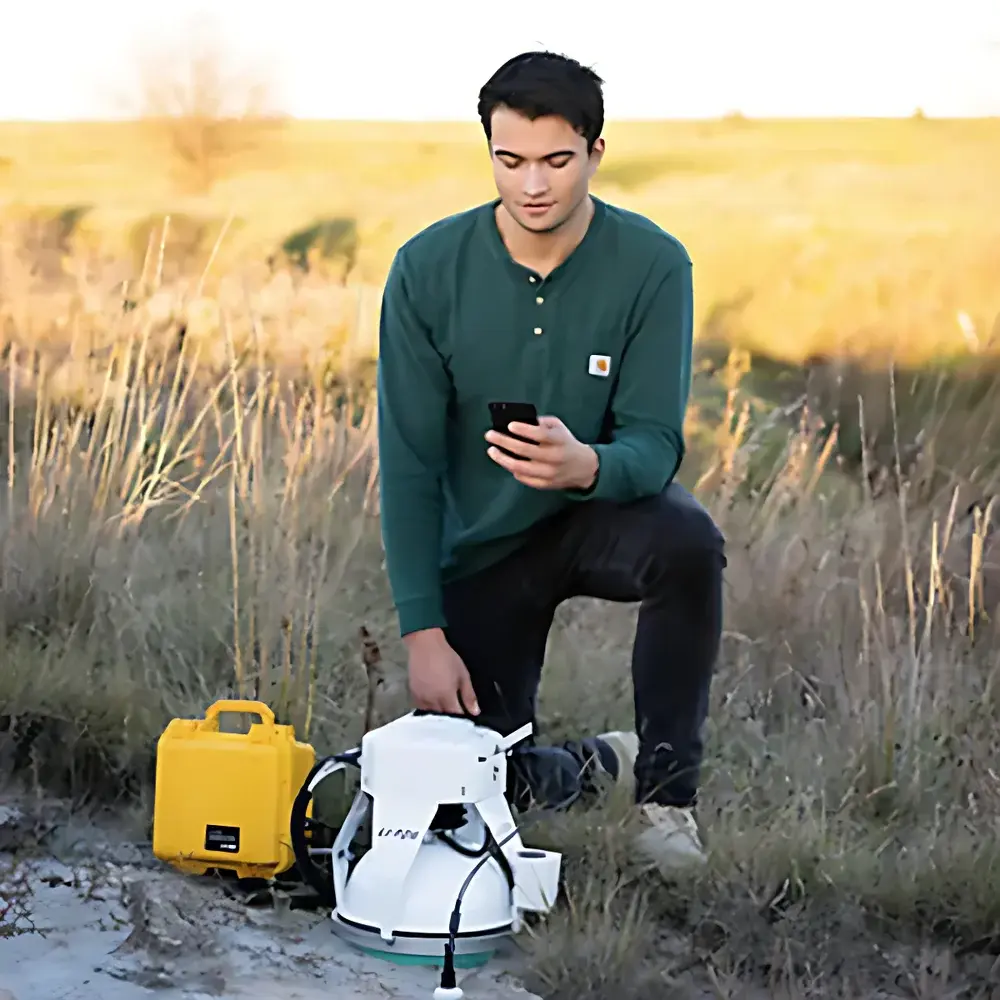
LI-COR LI-870 Portable Soil Carbon Flux and Greenhouse Gas Measurement System
| Brand | LI-COR |
|---|---|
| Origin | Germany |
| Manufacturer Type | Original Equipment Manufacturer (OEM) |
| Import Status | Imported |
| Model | LI-870 |
| Price Range | USD 52,000–65,000 |
Overview
The LI-COR LI-870 Portable Soil Carbon Flux and Greenhouse Gas Measurement System is a field-deployable, integrated solution engineered for high-precision, real-time quantification of soil CO2 and H2O fluxes using non-dispersive infrared (NDIR) spectroscopy. Designed specifically for eddy-covariance–compatible chamber-based soil respiration studies, the system combines the compact LI-870 CO2/H2O gas analyzer with the 8200-01S Smart Chamber—a self-powered, GPS-enabled, Wi-Fi–equipped flux measurement unit. Unlike legacy systems requiring external data loggers or PC tethering, the LI-870 architecture embeds real-time flux computation directly within the chamber’s onboard SoilFluxPro™ software, enabling autonomous operation in remote terrestrial ecosystems. Its NDIR optical path is user-serviceable, minimizing downtime during extended field campaigns, while its pressure-balanced venting, bowl-shaped chamber geometry, and active air-mixing mechanism collectively suppress artifacts from barometric drift, chamber-induced pressure transients, and boundary-layer stagnation—critical for achieving <±2% inter-chamber reproducibility under variable wind and soil moisture conditions.
Key Features
- Compact, lightweight design: Analyzer dimensions 28.4 × 27.9 × 12.4 cm; mass 2.31 kg—optimized for backpack transport and rapid site deployment.
- Low-power architecture: Dual battery operation supports up to 20 hours of continuous field measurement at 1 Hz sampling frequency.
- Robust environmental sealing: IP54-rated connectors resist dust ingress and water splashing; operational range −20 to +45 °C and 0–95% RH (non-condensing).
- Integrated smart chamber (8200-01S): Onboard GPS geotagging, Wi-Fi data streaming, and real-time flux computation eliminate dependency on external PCs or telemetry gateways.
- User-maintainable optical path: Field-replaceable NDIR light source and detector modules reduce lifecycle maintenance costs and extend service intervals.
- Self-regulating flow control: Chamber automatically modulates sample flow (0.75 L/min nominal) and compensates for ambient pressure fluctuations (50–110 kPa operating range).
Sample Compatibility & Compliance
The LI-870 system is validated for use across diverse soil matrices—including mineral soils, organic peats, agricultural tillage zones, permafrost-affected tundra, and restored wetland sediments. It complies with ASTM D6575–20 (Standard Test Method for Determining Soil Respiration Using Closed Dynamic Chambers), ISO 16634-2:2021 (Soil quality — Determination of total nitrogen — Part 2: Combustion method), and supports GLP/GMP-aligned data integrity requirements through timestamped, audit-trail–enabled data logging. All firmware and SoilFluxPro™ software versions are traceable and version-controlled per FDA 21 CFR Part 11 guidelines for electronic records and signatures when deployed in regulated environmental monitoring programs.
Software & Data Management
SoilFluxPro™ v4.x (embedded in 8200-01S) executes real-time flux calculation using the linear regression slope method (Hutchinson & Mosier, 1981) and optional quadratic or exponential curve-fitting algorithms. Raw CO2 (0–20,000 µmol/mol) and H2O (0–60 mmol/mol) time series are stored alongside concurrent soil temperature (via integrated thermistor probe), volumetric water content (VWC), chamber pressure, and GPS coordinates. Data export formats include CSV, NetCDF4, and CF-compliant metadata headers. Remote access via Wi-Fi enables live dashboard viewing, over-the-air firmware updates, and synchronized time calibration using NTP servers—ensuring temporal coherence across multi-instrument networks.
Applications
- Long-term soil carbon stock change assessment in climate mitigation projects (e.g., SOC sequestration under IPCC Tier 2/3 reporting frameworks).
- In situ validation of ecosystem models (e.g., DAYCENT, CENTURY) by constraining microbial respiration parameters.
- Comparative studies of land-use change impacts—forestry vs. agriculture vs. urban green infrastructure—on belowground C cycling.
- Soil health monitoring in regenerative agriculture trials, correlating CO2 efflux dynamics with cover crop biomass, tillage intensity, and biochar amendment rates.
- Permafrost thaw monitoring in Arctic-boreal transects, where sub-zero operational capability enables winter flux capture previously unattainable with conventional chambers.
FAQ
What is the measurement principle employed by the LI-870 analyzer?
The LI-870 uses dual-beam non-dispersive infrared (NDIR) spectroscopy with temperature-stabilized optical filters to independently quantify CO2 and H2O concentrations based on their characteristic absorption bands at 4.26 µm and 2.6 µm, respectively.
Can the 8200-01S chamber operate without external power sources?
Yes—the 8200-01S is equipped with an internal rechargeable lithium-ion battery pack and solar-compatible charging interface, enabling fully autonomous operation for ≥72 hours under typical field conditions.
Does the system support compliance with ISO 17025-accredited laboratory protocols?
While primarily designed for field use, the LI-870’s documented accuracy (±1.5% of reading), traceable NIST-calibrated reference gases, and full uncertainty budget documentation enable integration into ISO/IEC 17025 quality management systems when paired with certified calibration procedures.
Is third-party sensor integration supported?
The 8200-01S provides analog and digital I/O ports compatible with industry-standard 0–5 V, 4–20 mA, and SDI-12 sensors—including soil matric potential, NOx, CH4, and N2O analyzers—enabling multi-gas flux studies without hardware modification.







