
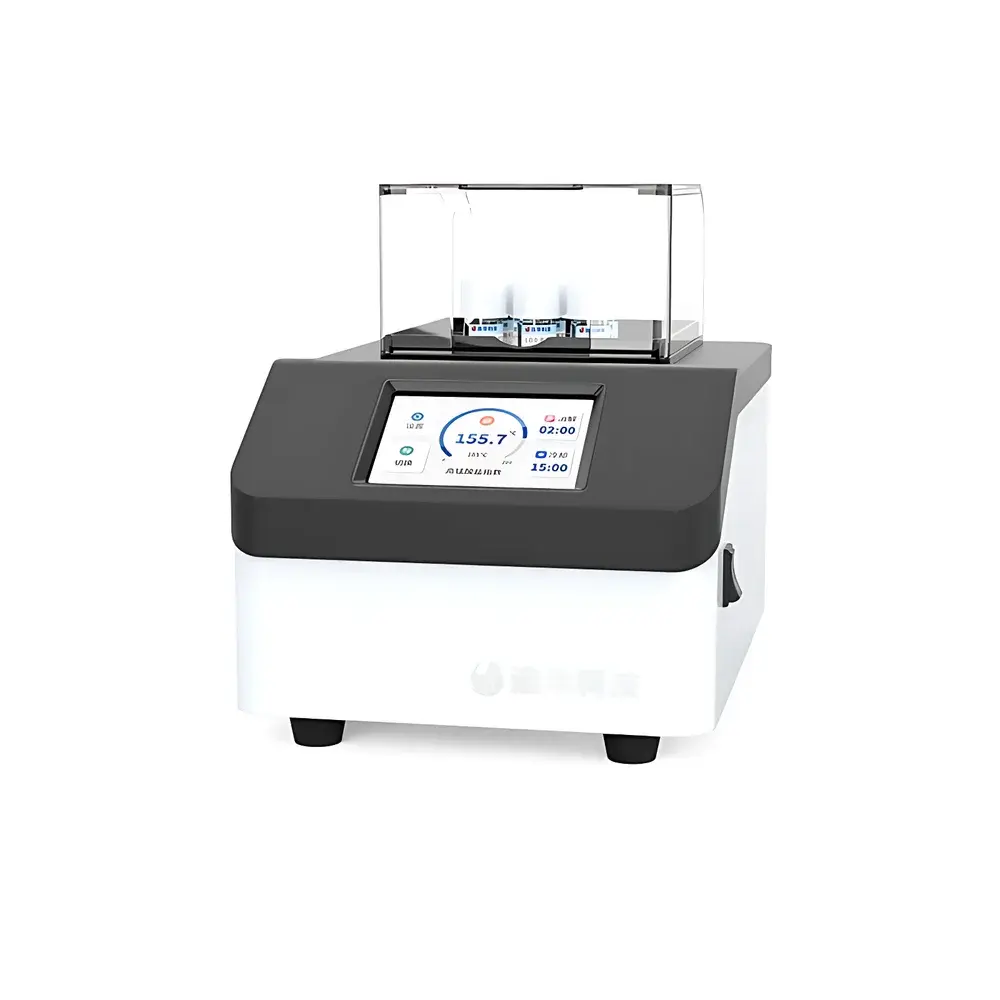
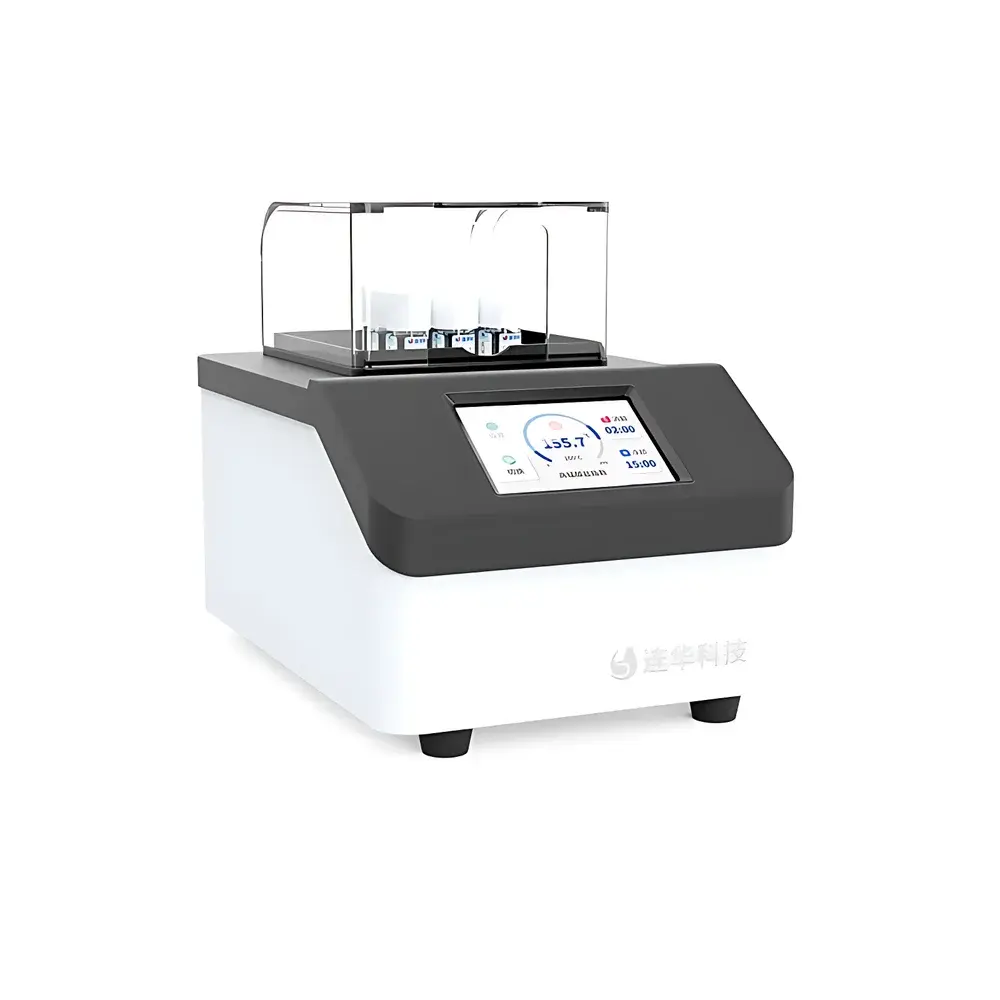
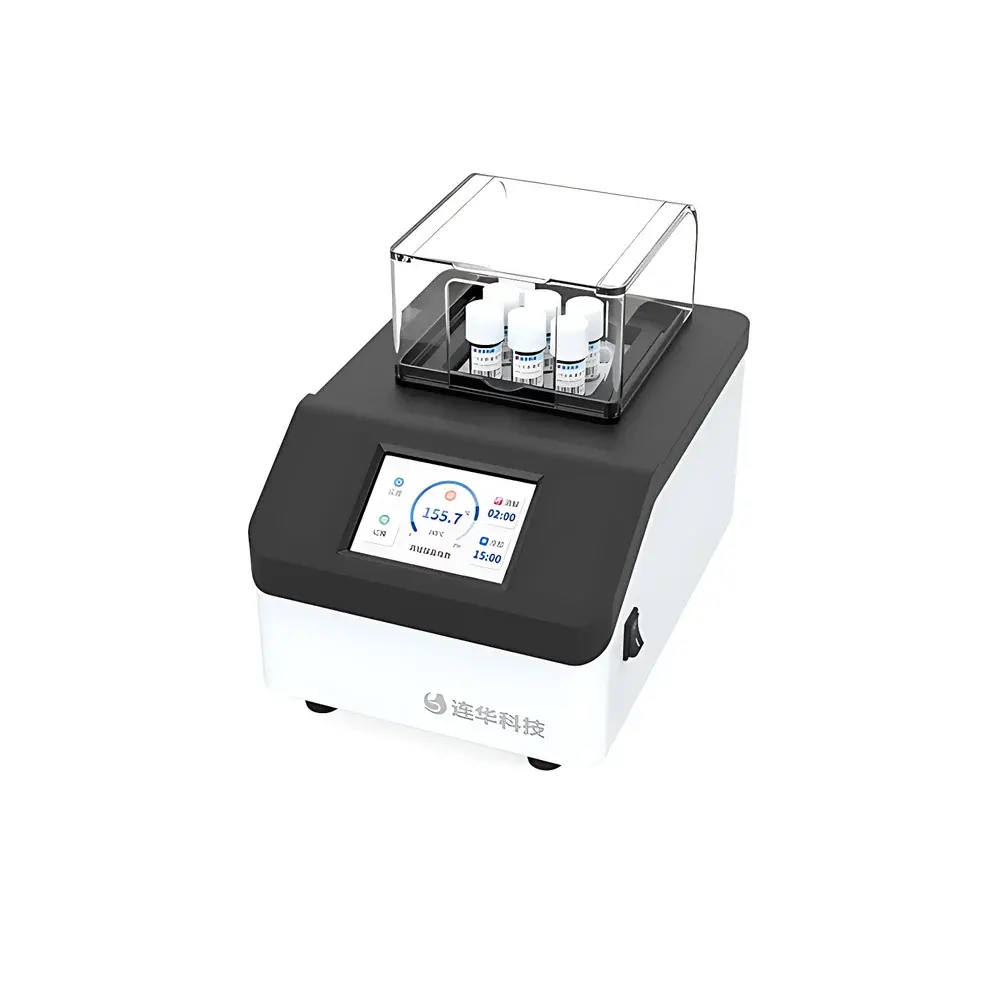
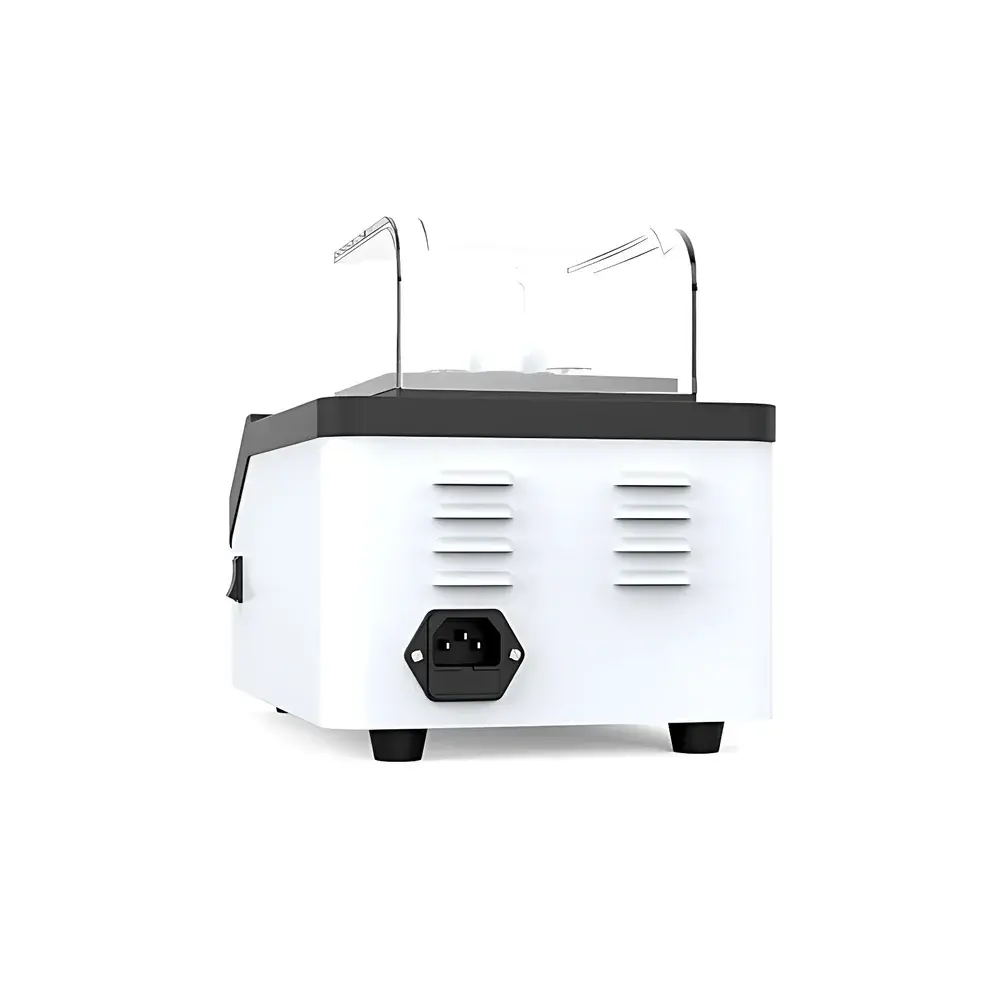
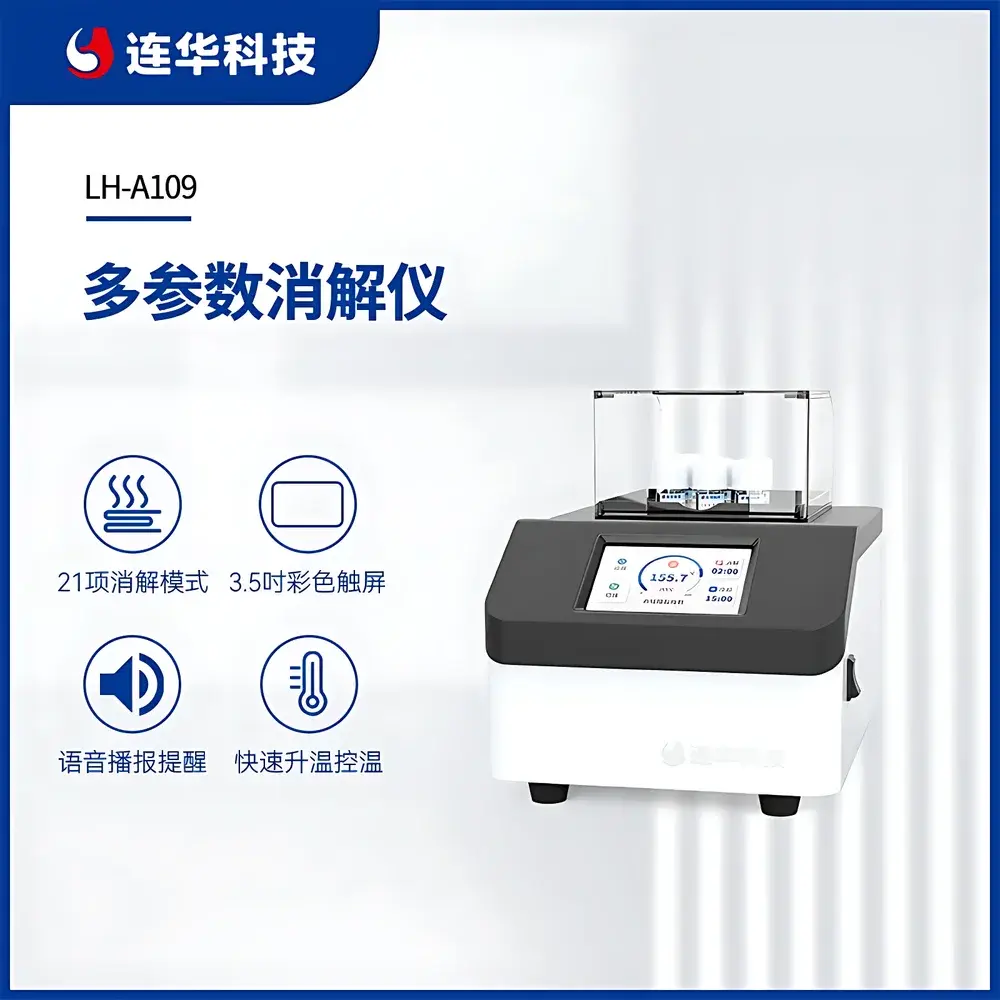
Lianhua LH-A109 Multi-Parameter COD Digestion Analyzer
| Brand | Lianhua |
|---|---|
| Origin | Beijing, China |
| Manufacturer Type | Direct Manufacturer |
| Product Origin | Domestic (China) |
| Model | LH-A109 |
| Pricing | Upon Request |
| Digestion Method | Rapid Digestion |
| Heating Module | Single Aluminum Heating Block |
| Batch Capacity | 9 samples |
| Temperature Range | Ambient to 190 °C |
| Temperature Accuracy | ≤ ±2 °C |
| Sample Vial Capacity | 0–10 mL |
| Timer Drift | ≤ ±0.2 s per 60 min |
Overview
The Lianhua LH-A109 Multi-Parameter COD Digestion Analyzer is a benchtop thermal digestion system engineered for precise, reproducible, and compliant chemical oxygen demand (COD), total phosphorus (TP), total nitrogen (TN), and other oxidizable parameter determinations in water and wastewater matrices. It operates on the principle of controlled high-temperature acid digestion—typically using potassium dichromate (K₂Cr₂O₇) under sulfuric acid conditions—enabling rapid oxidation of organic matter prior to spectrophotometric or titrimetric quantification. Designed for routine environmental laboratories, municipal wastewater treatment plants, and third-party testing facilities, the LH-A109 delivers consistent thermal profiles across all nine sample positions, minimizing inter-vial temperature deviation—a critical factor in achieving ASTM D1252 (Methods A & B) and ISO 6060-compliant results.
Key Features
- Single high-efficiency aluminum heating block with uniform thermal distribution, validated for ≤±1.5 °C inter-position variance at 165 °C.
- 3.5-inch full-color resistive touchscreen interface with intuitive Chinese-language navigation, supporting real-time temperature and countdown display.
- Pre-programmed library of 21 standardized digestion protocols—including EPA 410.4, HJ 828–2017 (Chinese EPA equivalent), and custom TP/TN methods—accessible via one-touch selection.
- Independent temperature and time parameter control: adjustable from ambient to 190 °C in 1 °C increments; timer range 1–120 min with ≤0.2 s/60 min stability.
- Integrated safety architecture: fully transparent borosilicate glass protective cover rated to 250 °C, enabling continuous visual monitoring without compromising operator protection or heat retention.
- Aerospace-grade thermal insulation layer applied to the upper surface of the heating module, reducing external surface temperature to <45 °C during operation at 190 °C—meeting IEC 61010-1 touch-safety requirements.
- Voice-guided operational prompts (English and Chinese bilingual firmware optional upon request) for step confirmation, alarm alerts, and completion notifications.
Sample Compatibility & Compliance
The LH-A109 accommodates standard 16 mm × 100 mm or 16 mm × 150 mm digestion vials (glass or quartz), supporting volumes from 2.0 mL to 10.0 mL—optimized for both low-range (e.g., 0–150 mg/L COD) and high-range (e.g., 0–10,000 mg/L COD) applications. Its thermal performance aligns with method-specific validation criteria under ISO/IEC 17025:2017 for calibration and verification of digestion equipment. The instrument’s temperature accuracy (≤±2 °C) and timer stability meet the technical prerequisites of US EPA Method 410.4, HJ 828–2017, and GB/T 11914–1989. While the unit itself does not include data integrity features such as electronic signatures or audit trails, its operational parameters are manually recordable in laboratory notebooks compliant with GLP documentation practices.
Software & Data Management
The LH-A109 operates as a standalone hardware platform with no embedded PC or network connectivity. All method parameters—including setpoint temperature, duration, and selected protocol—are stored in non-volatile memory and persist through power cycles. Users may export method logs via manual transcription or integrate the device into broader LIMS workflows by recording run IDs, timestamps, and observed endpoint conditions in external validated software. For laboratories requiring 21 CFR Part 11 compliance, external digital loggers with timestamped thermal profiling (e.g., calibrated thermocouple arrays + data acquisition systems) may be deployed alongside the LH-A109 to satisfy traceability and electronic record retention requirements.
Applications
- Routine COD analysis in municipal influent/effluent, industrial discharge, and surface water monitoring programs.
- Simultaneous digestion for TP and TN determination using alkaline persulfate or acid-persulfate oxidation protocols.
- Method development and validation studies requiring precise thermal ramping and hold-phase control.
- Educational laboratories conducting AP Chemistry or environmental engineering experiments on redox-based water quality metrics.
- Quality control in drinking water treatment facilities performing periodic oxidizability screening.
FAQ
Does the LH-A109 support remote monitoring or Ethernet/Wi-Fi connectivity?
No—the LH-A109 is a stand-alone thermal digester without built-in communication interfaces. Remote supervision requires integration with external data loggers or PLC-based lab automation systems.
Is the heating block compatible with 12-mm or 20-mm diameter vials?
The standard block is configured for 16-mm vials. Adapters for alternate diameters are not supplied but may be fabricated per ISO 8513 mechanical tolerances.
Can the instrument be used for chloride interference correction protocols requiring reflux condensation?
No—the LH-A109 is designed exclusively for sealed-tube, closed-vessel digestion. Reflux-based methods (e.g., classical 2-hr reflux per Standard Methods 5220B) require dedicated reflux apparatus.
What calibration documentation is provided with the unit?
Each unit ships with a factory-verified temperature uniformity report (9-point mapping at 150 °C and 165 °C) and a timer accuracy certificate traceable to NIM (National Institute of Metrology, China).
Is routine maintenance required beyond cleaning the heating block surface?
Yes—users must inspect the protective glass shield for acid etching or microfractures before each use; replace if compromised. Annual recalibration of the internal PT100 sensor is recommended for labs operating under ISO/IEC 17025 accreditation.
Related Products







