
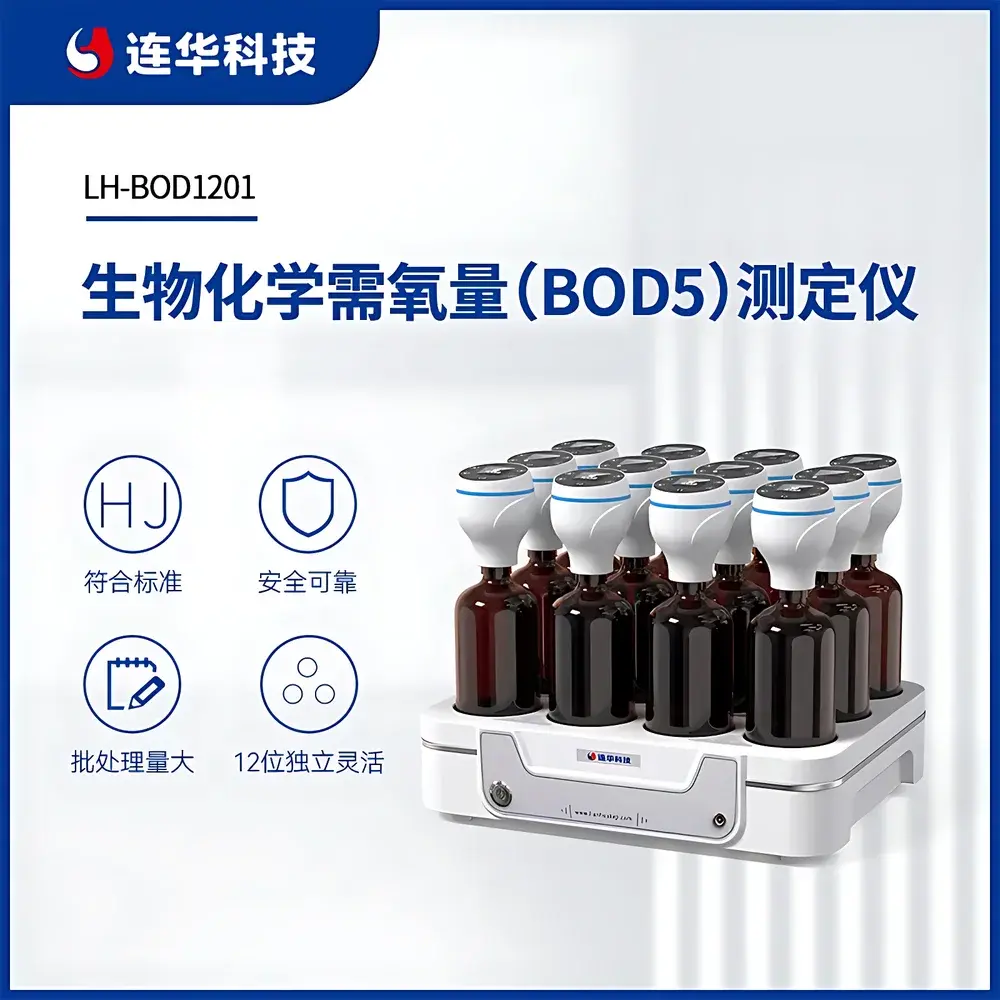
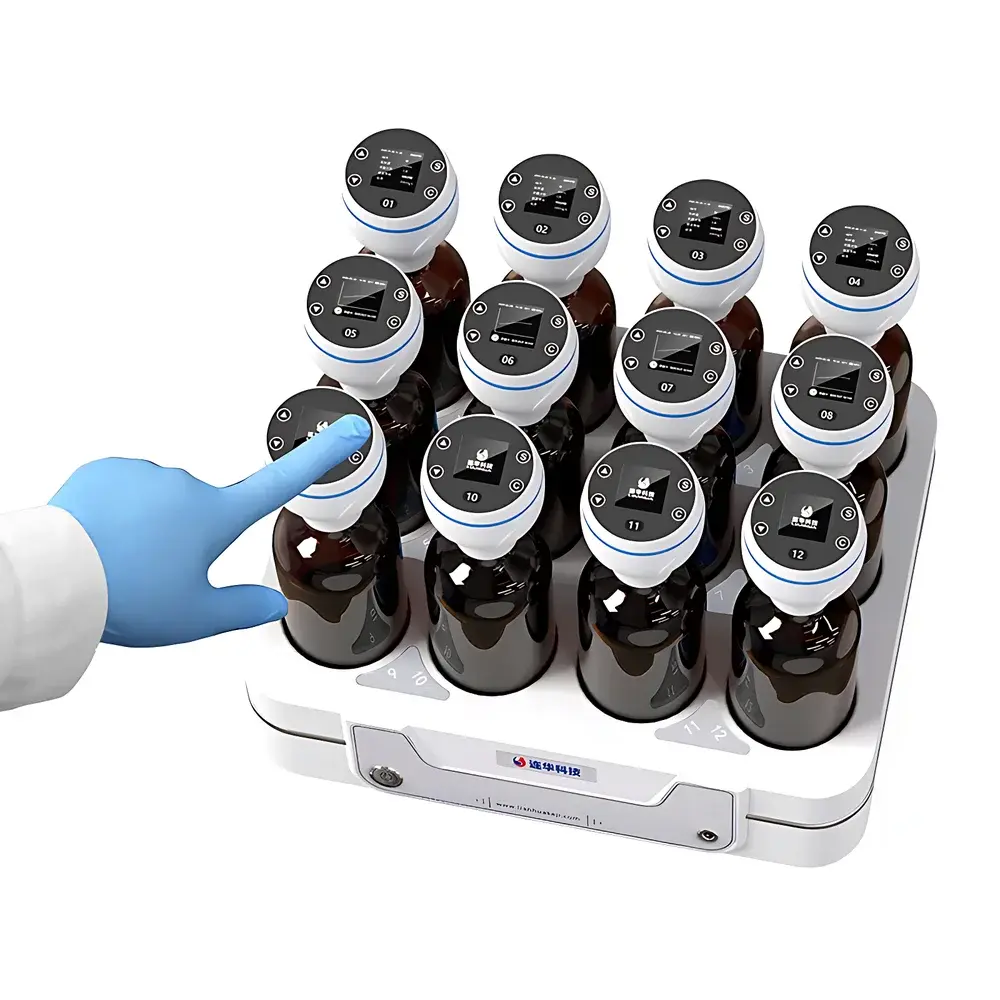
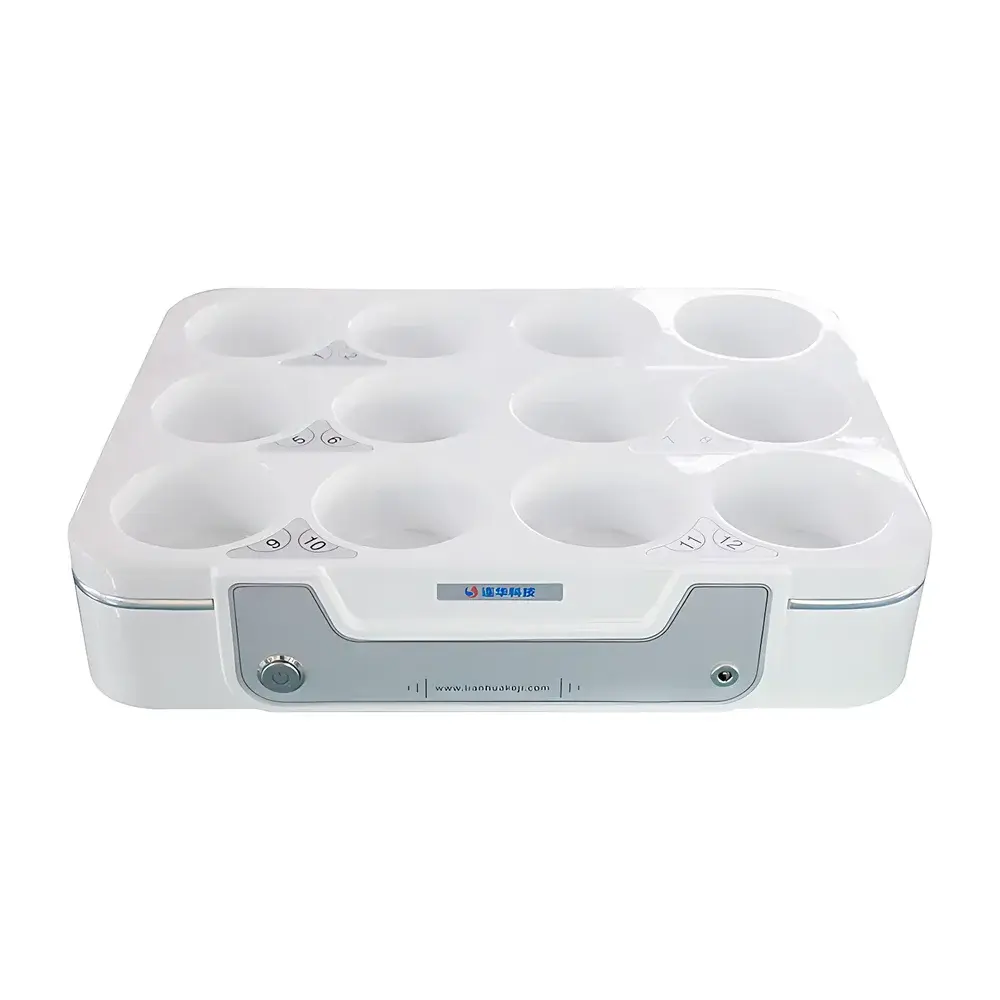
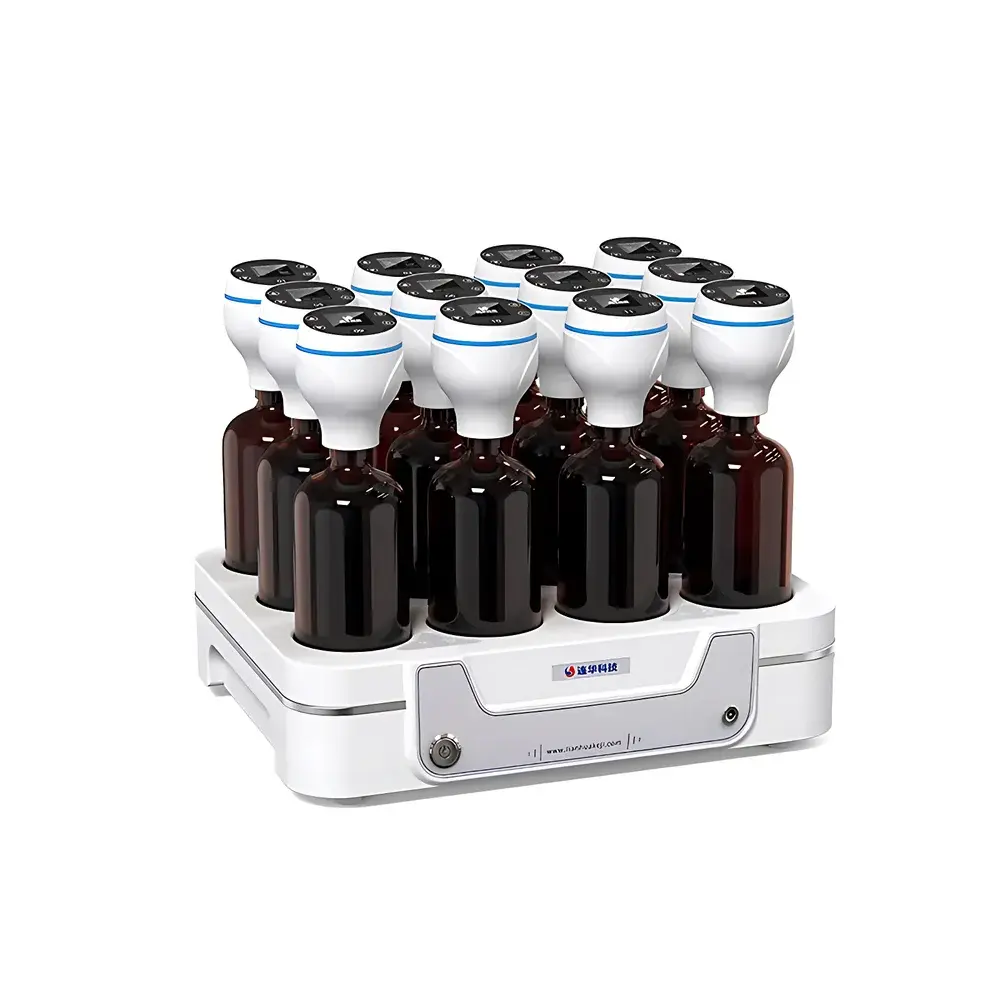
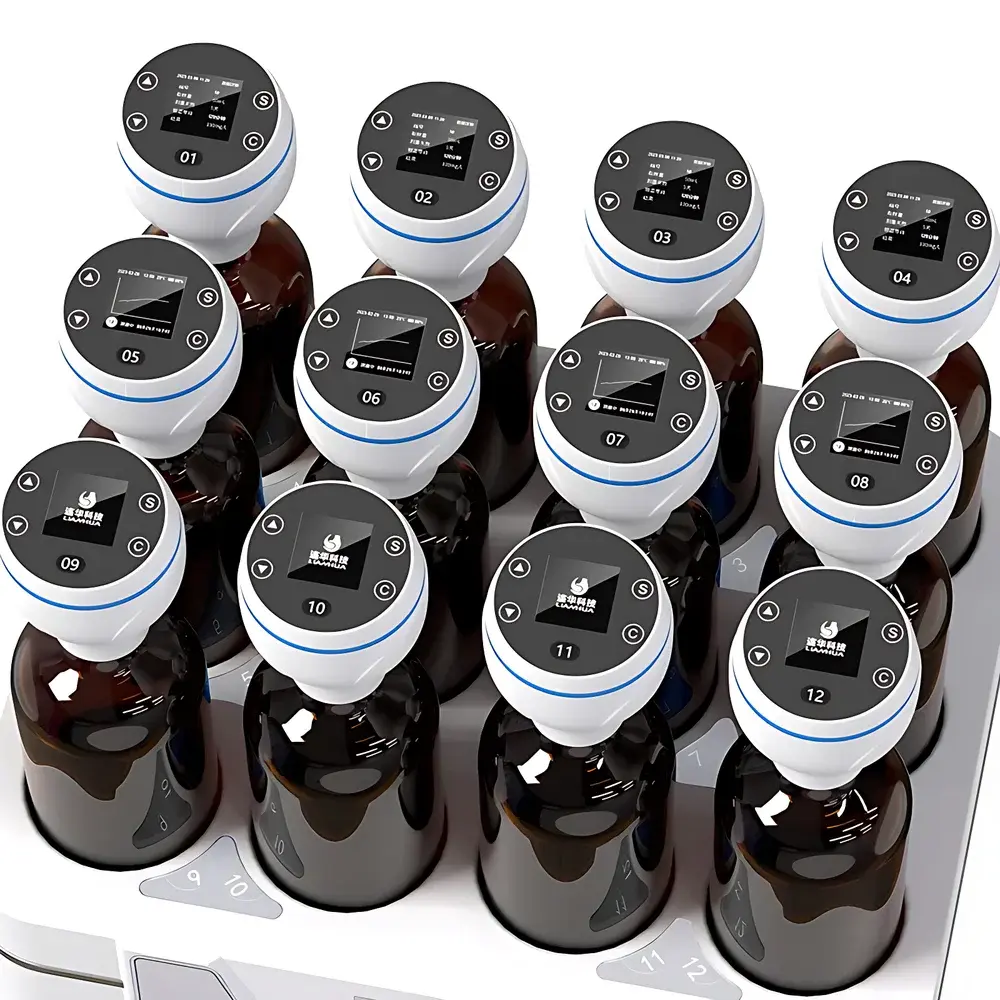
Lianhua LH-BOD1201 Differential Pressure-Based Biochemical Oxygen Demand (BOD₅) Analyzer
| Brand | Lianhua |
|---|---|
| Origin | Beijing, China |
| Manufacturer Type | Direct Manufacturer |
| Instrument Type | Laboratory BOD Analyzer |
| Model | LH-BOD1201 |
| Measurement Principle | Differential Pressure Method |
| Measurement Range | 0–4000 mg/L |
| Detection Limit | 5 mg/L |
| Accuracy | ±10% |
| Incubation Duration | 5 days |
| Repeatability | ±3% |
| Sample Capacity | 12 independent channels |
| Display | Individual color LCD per test cap |
| Power Supply | Integrated rechargeable battery per sensor cap |
| Data Logging | Automatic time-stamped BOD₅ records with on-device history retrieval |
Overview
The Lianhua LH-BOD1201 is a dedicated laboratory-grade biochemical oxygen demand (BOD₅) analyzer engineered for precise, compliant, and operator-independent quantification of dissolved oxygen consumption by aerobic microorganisms in water and wastewater samples over a standard five-day incubation period. It employs the differential pressure method—a well-established, non-mercury alternative to traditional manometric or dilution-based BOD assays—where microbial respiration within a sealed sample vial reduces internal pressure proportionally to oxygen consumed. This pressure differential is measured via high-stability piezoresistive transducers integrated into each test cap, eliminating mercury hazards while maintaining traceability to ISO 5815-1:2019 and ASTM D5210–22 standards for BOD determination. Designed for routine environmental monitoring labs, municipal wastewater treatment facilities, and academic research settings, the LH-BOD1201 delivers regulatory-grade data without requiring manual titration, reagent handling, or daily intervention.
Key Features
- Dual-redundant pressure sensing architecture per channel ensures long-term drift stability and minimizes calibration frequency.
- Twelve independent, self-contained test caps—each with an embedded color LCD, microprocessor, pressure transducer, and rechargeable lithium-ion battery—enable asynchronous start times and uninterrupted operation during brief power outages.
- Full-range direct BOD₅ readout from 0 to 4000 mg/L without sample dilution, reducing analyst error and cross-contamination risk associated with serial dilution protocols.
- Automated incubation timing, real-time pressure-to-BOD conversion using built-in stoichiometric algorithms (based on O₂ molar volume at 20 °C), and auto-zero referencing prior to seal closure.
- On-device data storage retains up to 1,000 complete BOD₅ experiments with timestamps, sample IDs, incubation start/end dates, and raw pressure curves—accessible via intuitive menu navigation.
- Compliance-ready firmware supports GLP audit trails: all parameter changes, measurement initiations, and result exports are logged with user ID (if configured) and system timestamp.
Sample Compatibility & Compliance
The LH-BOD1201 accommodates standard 60 mL or 250 mL BOD bottles (glass or PET) fitted with proprietary threaded test caps. It is validated for use with domestic sewage, industrial effluents, surface water, groundwater, and treated wastewater—provided samples meet ISO 5815-1 requirements for initial dissolved oxygen ≥2 mg/L and pH 6.5–7.5. The instrument’s pressure-based methodology avoids interference from nitrate reduction or sulfide oxidation, making it suitable for moderately nitrified or anaerobic-pretreated samples where iodometric titration may overestimate BOD. All hardware and firmware conform to IEC 61000-6-3 (EMC emissions) and IEC 61010-1 (safety for laboratory equipment). Documentation includes factory calibration certificates traceable to NIM (National Institute of Metrology, China) and alignment statements with US EPA Method 405.1 and ISO/IEC 17025:2017 competence criteria.
Software & Data Management
Data export is supported via USB 2.0 interface to Windows-based PCs running Lianhua BOD Manager v3.2 software (included). The application enables batch report generation in PDF or CSV format, customizable templates aligned with local regulatory submission formats (e.g., China MEP Form HJ/T 91–2002, EU WFD Annex V reporting), and optional integration with LIMS via ODBC-compliant database schema. Audit trail files comply with FDA 21 CFR Part 11 requirements when used with enabled electronic signatures and role-based access control. Raw pressure vs. time datasets are retained at 1-minute resolution for post-hoc validation or kinetic modeling.
Applications
- Regulatory compliance testing for discharge permits under national water pollution control statutes.
- Performance evaluation of biological treatment units (e.g., activated sludge, MBR, trickling filters) in wastewater plants.
- Environmental impact assessment (EIA) baseline and monitoring studies for industrial outfalls and riverine systems.
- Research on biodegradability kinetics of emerging contaminants (e.g., pharmaceuticals, surfactants) under standardized BOD₅ conditions.
- Quality assurance in drinking water source protection programs and reclaimed water reuse verification.
FAQ
Does the LH-BOD1201 require daily manual intervention during the 5-day incubation?
No. Once capped and initiated, each channel operates autonomously—including temperature compensation, pressure sampling, and BOD calculation—without operator input.
Can the instrument be used for samples with high suspended solids or toxicity?
Yes, provided appropriate seed acclimation and nitrification inhibition (e.g., allylthiourea) are applied per ISO 5815-1; the pressure method is less sensitive to turbidity than optical DO probes.
Is third-party calibration verification supported?
Yes. The system accepts external pressure calibrators (e.g., Fluke 754) via analog output port; factory calibration certificates include uncertainty budgets at 100, 500, and 2000 mg/L reference points.
What is the recommended maintenance interval?
Transducer zero-check every 90 days; full recalibration annually or after 500 test cycles per cap—documented in the onboard service log.
Are consumables limited to the test caps and bottles?
Yes. No reagents, membranes, or electrolytes are required; only standard BOD nutrient buffer, phosphates, and magnesium sulfate (supplied in kit form) are needed for sample preparation.
Related Products







