
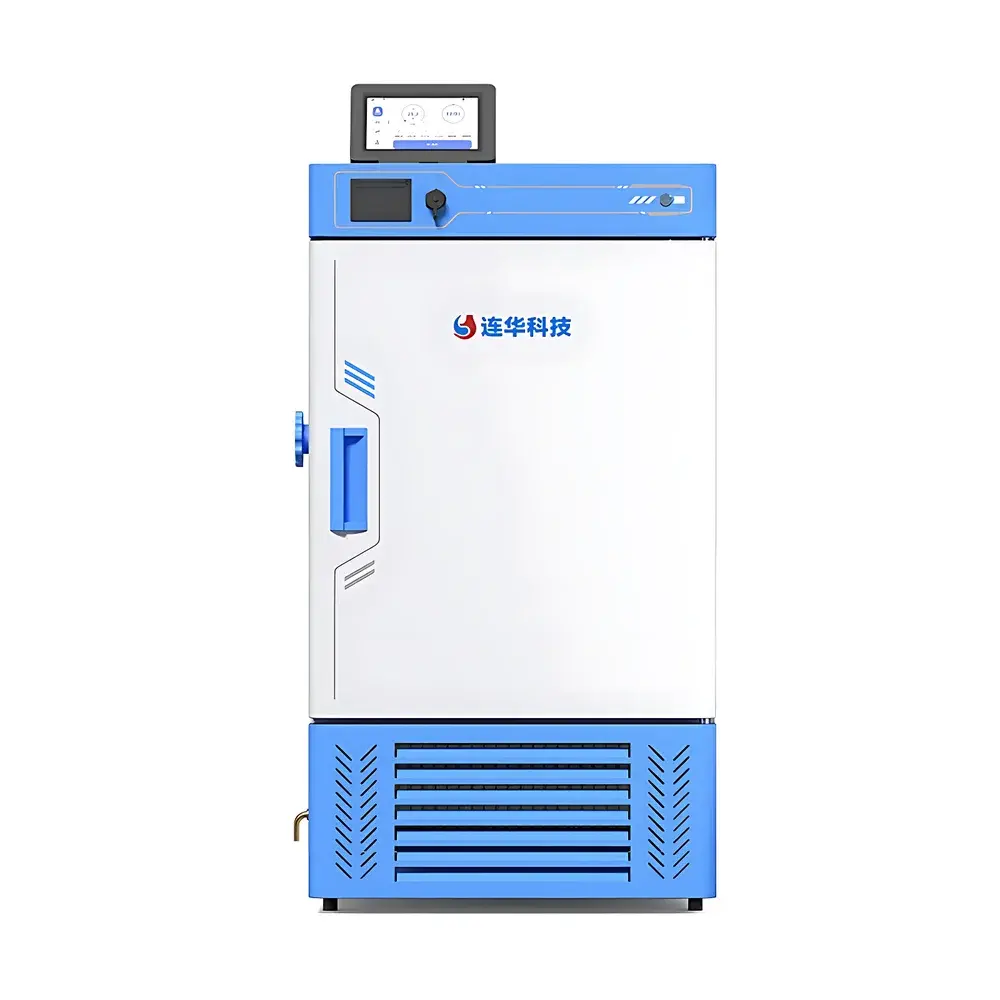
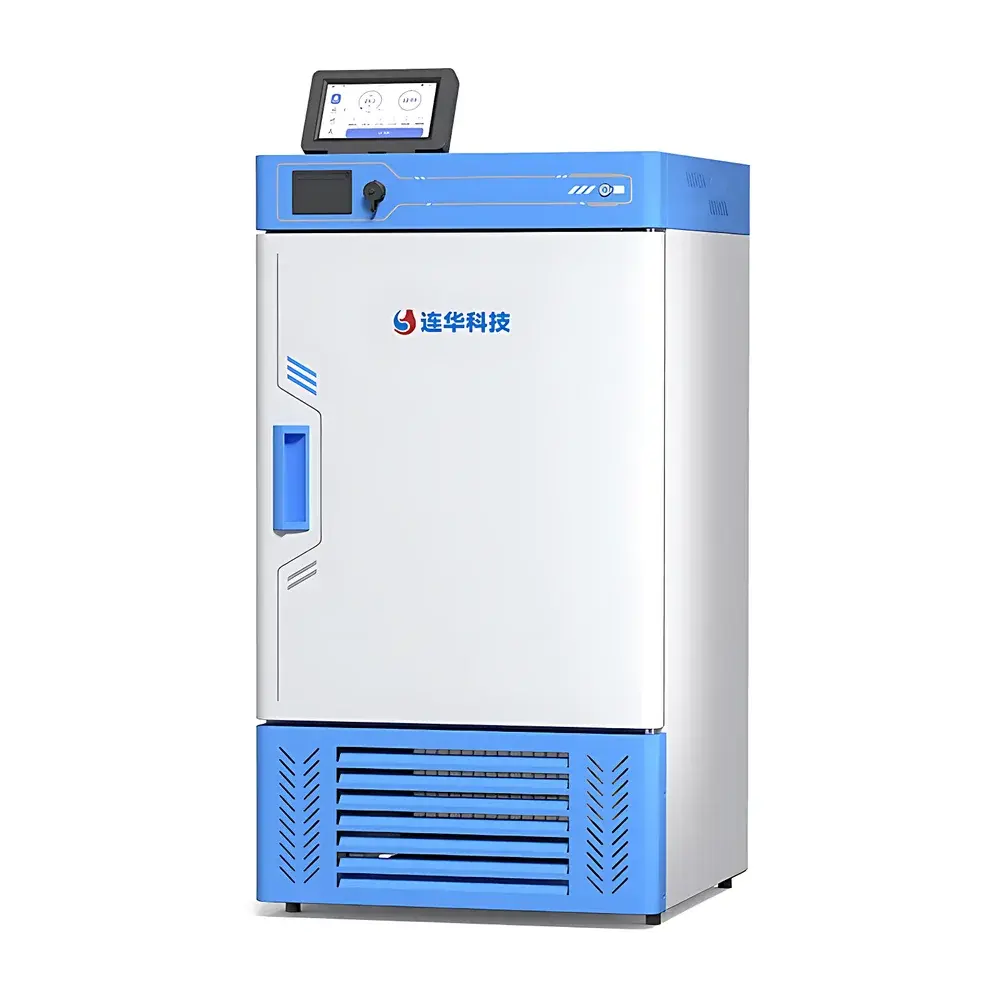
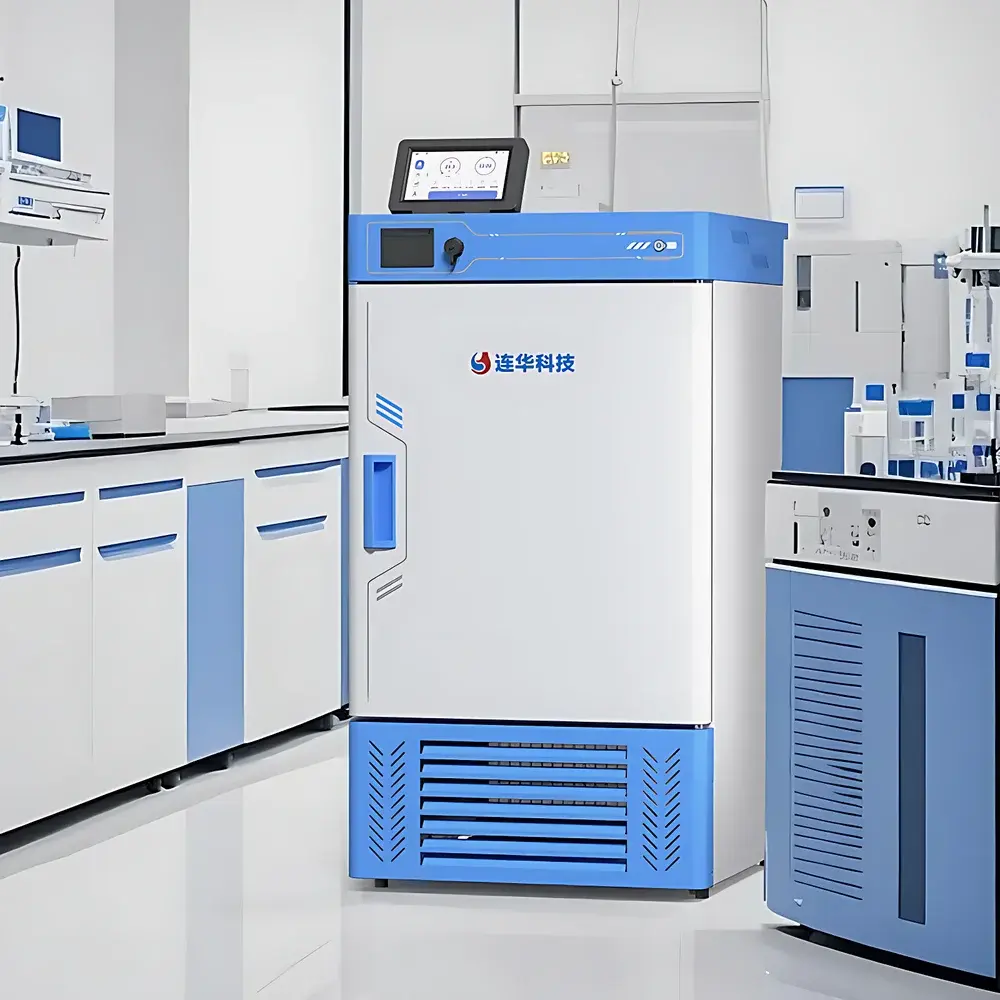
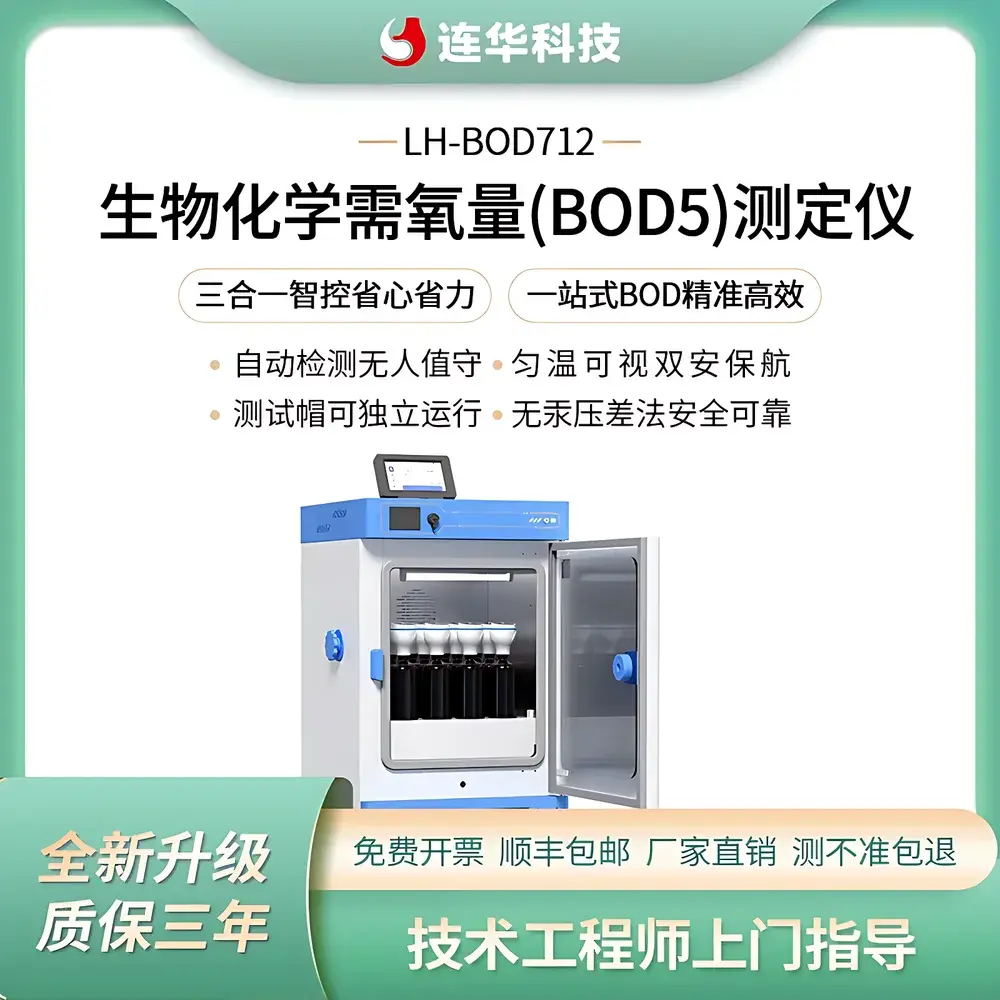
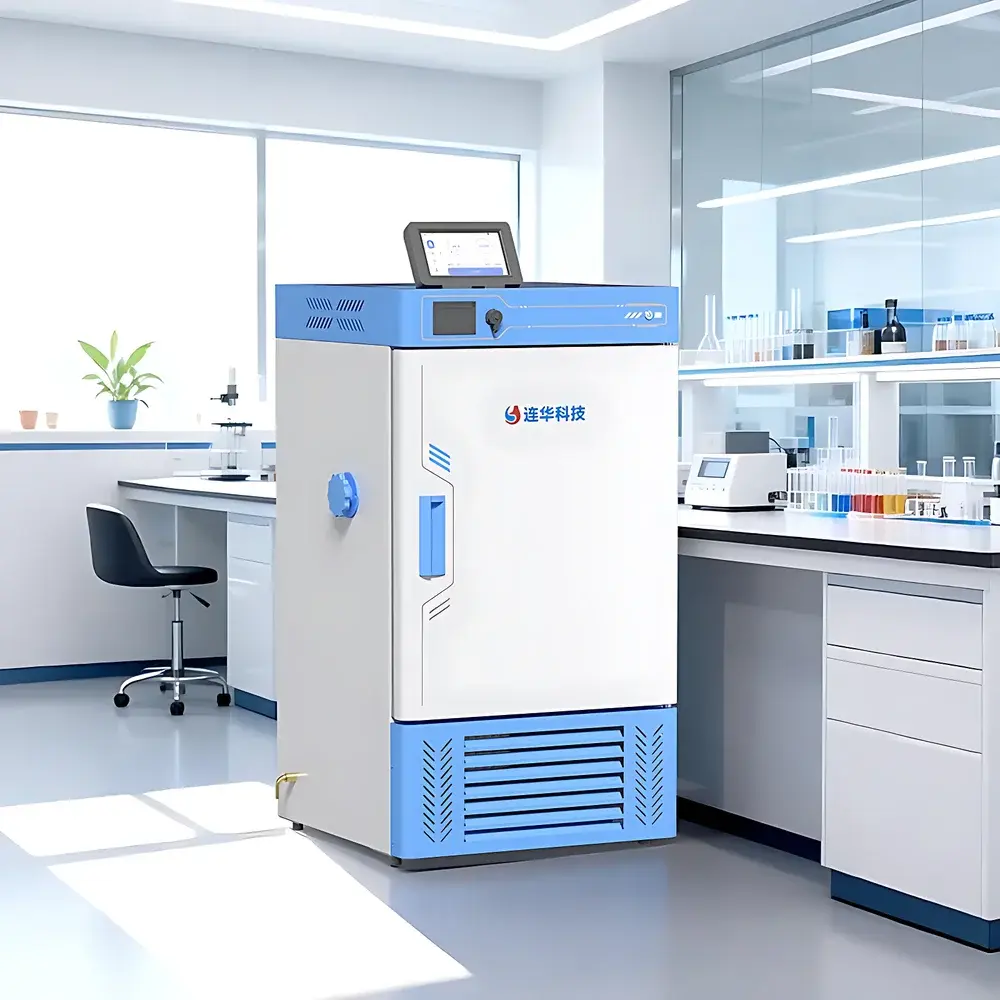
Lianhua LH-BOD712 Laboratory BOD Analyzer
| Brand | Lianhua |
|---|---|
| Origin | Beijing, China |
| Manufacturer Type | Direct Manufacturer |
| Product Origin | Domestic (China) |
| Model | LH-BOD712 |
| Instrument Type | Laboratory BOD Analyzer |
| Measurement Principle | Pressure Differential Method |
| Measurement Range | 0–4000 mg/L |
| Accuracy | ±10% |
Overview
The Lianhua LH-BOD712 Laboratory BOD Analyzer is a dedicated instrument engineered for the standardized determination of Biochemical Oxygen Demand over a five-day incubation period (BOD5) in aqueous samples. It operates on the pressure differential principle—measuring the consumption of dissolved oxygen by aerobic microorganisms during the biodegradation of organic matter under controlled conditions (20 °C, dark, sealed environment). This method complies with core international protocols including ISO 5815-1:2019 and APHA Standard Methods 5210B, and aligns with national regulatory frameworks such as China’s HJ 505-2009 and US EPA Method 405.1 for wastewater and surface water analysis. Designed for routine compliance testing and research-grade monitoring, the LH-BOD712 eliminates manual titration and manometric reading errors, delivering repeatable, operator-independent results essential for environmental laboratories subject to GLP or regulatory audit requirements.
Key Features
- Integrated pressure-sensing module with temperature-compensated transducers, enabling real-time tracking of O2 depletion without sample interruption or reagent addition
- Multi-channel capacity supporting up to 12 independent BOD bottles simultaneously, each with individual pressure calibration and data logging
- Programmable incubation control: precise 20.0 ± 0.5 °C thermostatic regulation via Peltier-based heating/cooling system with active air circulation
- Self-diagnostic firmware that validates sensor drift, seal integrity, and zero-point stability prior to each assay cycle
- Robust architecture compliant with IP54 rating for dust and splash resistance—suitable for shared lab environments with variable humidity and ambient particulate levels
- Non-consumable sensor design: no membranes, electrolytes, or replacement electrodes required—reducing long-term operational cost and calibration frequency
Sample Compatibility & Compliance
The LH-BOD712 accommodates standard 60 mL or 300 mL BOD bottles (glass or PET), compatible with seeded and unseeded configurations per ISO 5815-1 guidelines. It supports dilution series preparation for high-strength effluents (e.g., food processing, pharmaceutical wastewater) and low-O2 samples requiring nitrification inhibition (using allylthiourea per ASTM D5210). Data output meets traceability requirements for regulatory submissions: each measurement record includes timestamp, bottle ID, incubation duration, temperature log, pressure delta curve, and final BOD5 value with uncertainty estimation (±10% at 95% confidence). The system is validated for use in laboratories operating under CNAS-CL01 (equivalent to ISO/IEC 17025), and supports documentation workflows aligned with FDA 21 CFR Part 11 when paired with optional secure user authentication and electronic signature modules.
Software & Data Management
The LH-BOD712 is operated via the Lianhua BODControl v3.2 desktop application (Windows 10/11, 64-bit), which provides full audit trail functionality—including user login history, parameter change logs, and raw pressure vs. time datasets stored in encrypted .bdb binary format. Export options include CSV (for LIMS integration), PDF analytical reports with embedded QA/QC metadata, and XML files compliant with WQX (Water Quality Exchange) schema. Calibration records are retained for ≥7 years; all data modifications require dual authorization and generate immutable append-only entries. Optional cloud synchronization enables remote instrument status monitoring and centralized multi-site data aggregation for municipal utilities or contract environmental labs.
Applications
- Municipal wastewater treatment plants: daily influent/effluent BOD5 verification and process optimization
- Environmental consulting firms: field-collected sample analysis for EIA (Environmental Impact Assessment) reporting
- Academic and research institutions: kinetic studies of biodegradability, microbial community activity assays, and method validation projects
- Industrial compliance labs: routine monitoring for petrochemical refineries, dairy processors, pulp & paper mills, and livestock facility discharge streams
- Regulatory agencies: reference-level testing for permit compliance (e.g., NPDES, discharge consent), inter-laboratory proficiency testing, and enforcement sampling
FAQ
What standards does the LH-BOD712 comply with?
It conforms to ISO 5815-1:2019, APHA 5210B, HJ 505-2009, and EPA Method 405.1 for BOD5 determination.
Can the instrument measure samples with high turbidity or suspended solids?
Yes—no filtration is required prior to analysis, as the pressure differential method is unaffected by particulates; however, excessive solids may necessitate dilution to remain within the 0–4000 mg/L range.
Is nitrification suppression supported?
Yes—user-defined addition of nitrification inhibitors (e.g., ATU) is fully compatible with the assay protocol and documented in the software’s sample annotation field.
How is accuracy verified during routine operation?
A certified glucose-glutamic acid (GGA) control standard (198 ± 31 mg/L BOD5) is run weekly; deviation beyond ±10% triggers automated recalibration prompts and QA flagging.
Does the system support 21 CFR Part 11 compliance?
With optional configuration (audit trail encryption, role-based access control, and electronic signatures), it meets FDA 21 CFR Part 11 requirements for regulated environments.







