
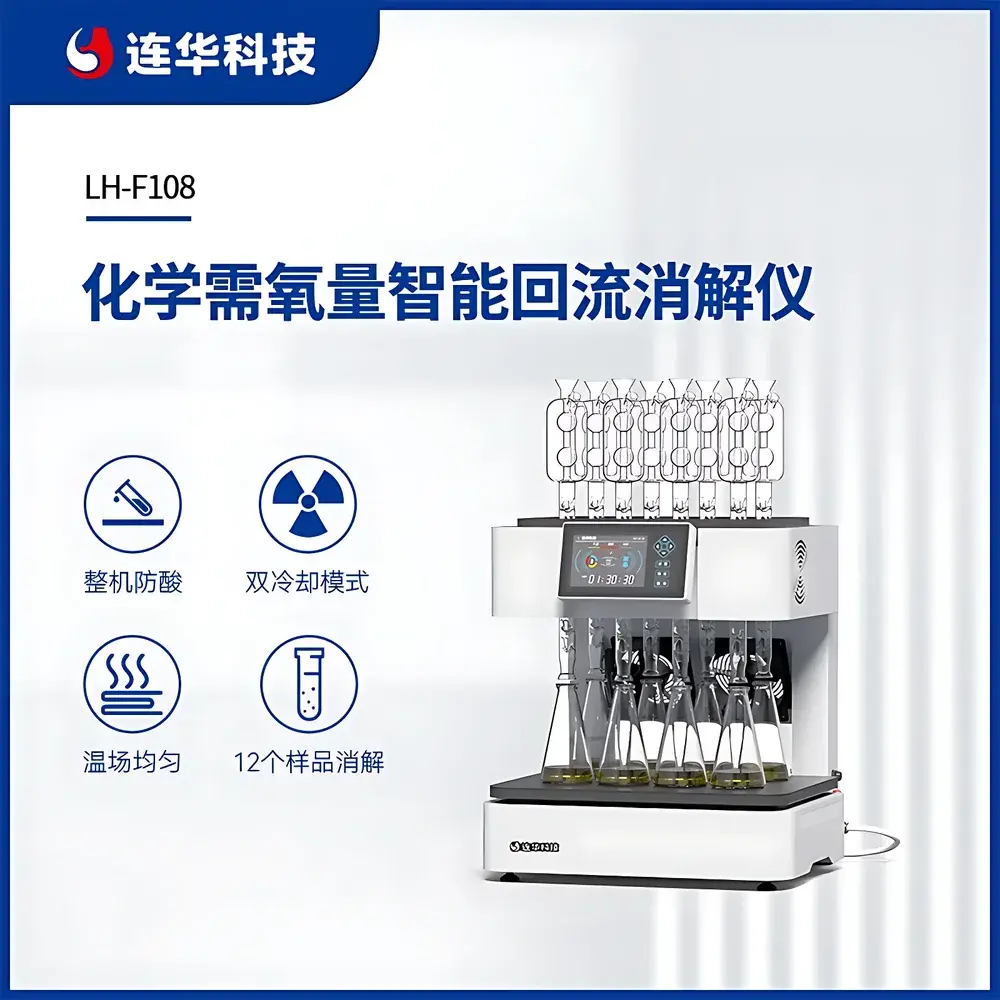
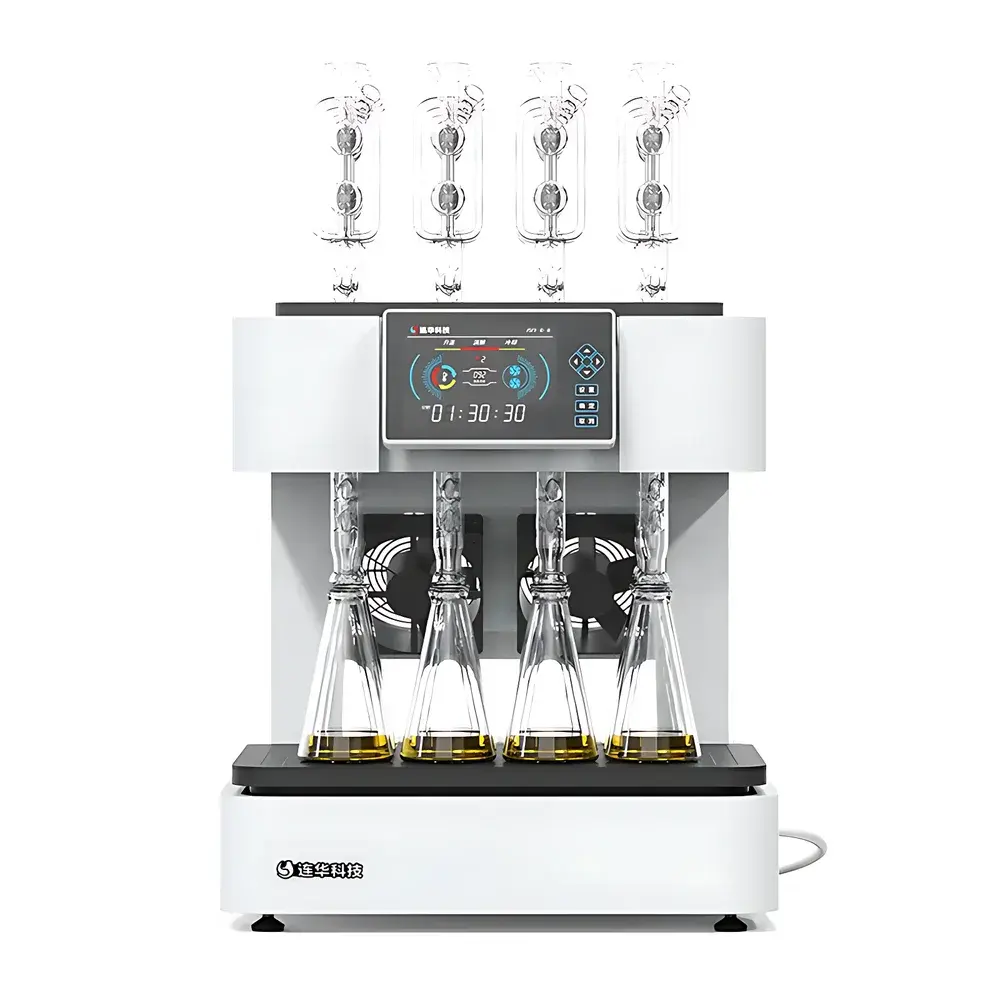
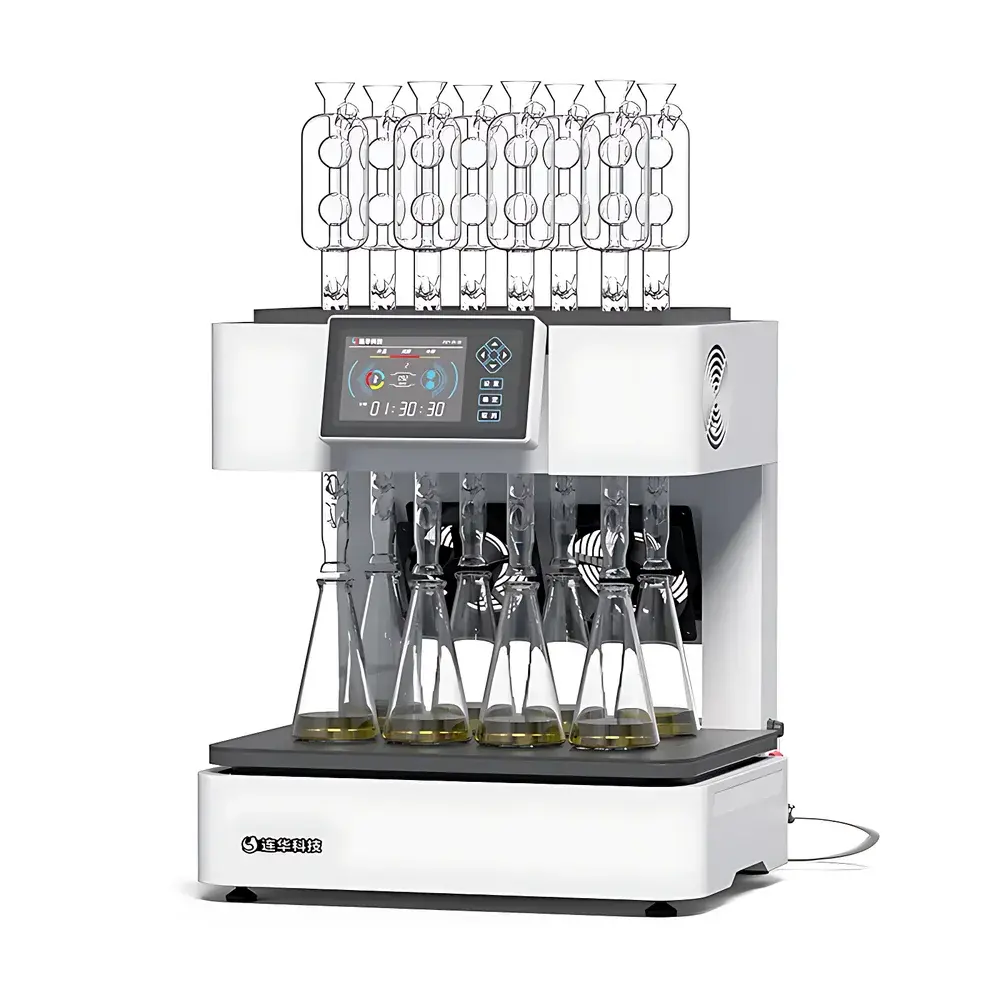
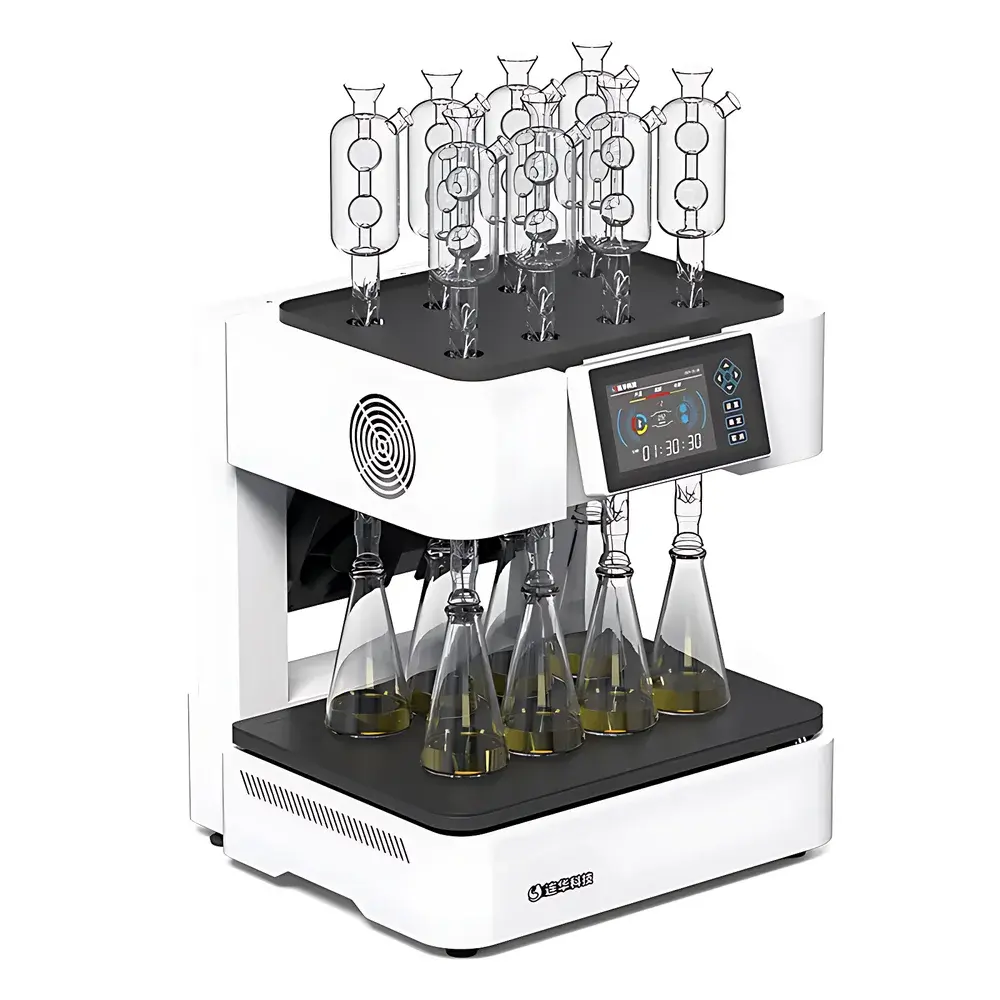
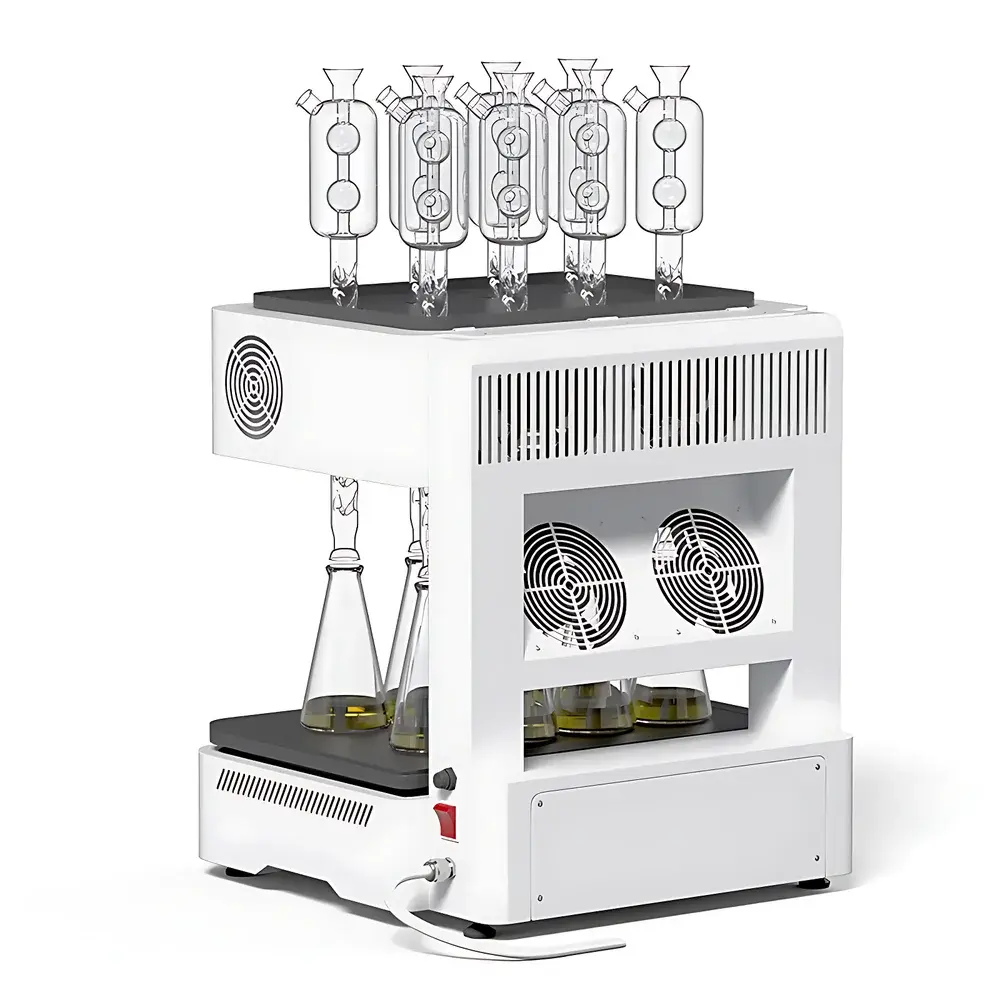
Lianhua LH-F108 Smart Reflux COD Digestion System
| Brand | Lianhua |
|---|---|
| Origin | Beijing, China |
| Manufacturer Type | Direct Manufacturer |
| Country of Origin | China |
| Model | LH-F108 |
| Digestion Method | Reflux Digestion |
| Heating Module | Single Aluminum Heating Block |
| Batch Capacity | 12 samples |
| Temperature Range | Ambient to 350 °C |
| Temperature Accuracy | ±0.5 °C |
| Timer Drift | ≤0.2 seconds per hour |
Overview
The Lianhua LH-F108 Smart Reflux COD Digestion System is a laboratory-grade, fully automated digestion platform engineered for precise and reproducible chemical oxygen demand (COD) determination in aqueous environmental samples. Designed in strict accordance with the Chinese national standard HJ 828–2017 (“Water Quality — Determination of Chemical Oxygen Demand — Dichromate Method”), the system implements controlled reflux digestion under acidic, high-temperature conditions using potassium dichromate as the oxidant. Its core architecture integrates thermal stability, temporal precision, and process autonomy to ensure compliance with regulatory digestion protocols—particularly those requiring 2-hour reflux at boiling temperature (~150 °C under reflux condensation) or elevated setpoints up to 350 °C for accelerated or alternative matrix digestion. Unlike open-heating or block-only systems, the LH-F108 employs a sealed reflux configuration with integrated condensation management, minimizing reagent loss, cross-contamination risk, and operator exposure to hazardous vapors.
Key Features
- Intelligent one-touch operation: Fully automated sequence control—from heating ramp to target temperature hold, reflux duration, and post-digestion cooling—eliminates manual intervention and inter-operator variability.
- Rapid thermal response: Achieves full temperature range (ambient to 350 °C) in ≤10 minutes with uniform heat distribution across the single aluminum heating block, ensuring consistent digestion kinetics across all 12 sample positions.
- Dual-cooling architecture: Combines water-cooled reflux condensers with four high-efficiency axial fans to accelerate post-digestion cooldown—reducing total cycle time by up to 40% compared to passive air-cooling systems while maintaining energy efficiency.
- Chemically resistant black crystal glass panel: Engineered for long-term durability against concentrated sulfuric acid, chromic acid, and other aggressive reagents used in COD digestion; surface remains non-porous, scratch-resistant, and easy to decontaminate.
- Precision temperature regulation: Digital PID control enables fine-tuned adjustment of heating setpoints with ±0.5 °C accuracy—critical for preventing boil-over, organic volatilization, or incomplete oxidation during reflux.
- Ergonomic human-machine interface: 5.5-inch adjustable-angle LCD display with intuitive icon-based navigation, bilingual (Chinese/English) menu prompts, and real-time status feedback—designed for rapid operator onboarding without reliance on printed documentation.
Sample Compatibility & Compliance
The LH-F108 accommodates standard 24-mm or 29-mm round-bottom digestion tubes (e.g., borosilicate glass, 15–20 mL capacity), compatible with both conventional HJ 828–2017 methodology and modified digestion protocols for wastewater, surface water, industrial effluent, and sludge extracts. All thermal and timing parameters are traceable and repeatable under GLP-aligned operating conditions. The system supports audit-ready documentation when paired with external lab information management systems (LIMS). While not certified to ISO/IEC 17025 or FDA 21 CFR Part 11 out-of-the-box, its deterministic timer (drift ≤0.2 s/h), calibrated temperature sensor, and unambiguous operational logs provide foundational elements for method validation and internal quality assurance programs.
Software & Data Management
The LH-F108 operates via embedded firmware with no external PC dependency. All digestion protocols—including temperature profiles, hold durations, and cooling thresholds—are stored locally in non-volatile memory. Event logs record start time, peak temperature, actual hold duration, final cooldown temperature, and any user-triggered overrides. Data export is supported via USB flash drive (CSV format), enabling integration with spreadsheet-based QA/QC workflows or third-party analytical software. Optional RS-232 or Ethernet modules (sold separately) allow remote monitoring and centralized fleet management in multi-instrument laboratories.
Applications
- Routine COD analysis in municipal wastewater treatment plants and environmental monitoring stations.
- Regulatory compliance testing for discharge permits under local ecological protection authorities.
- Method development and validation studies requiring tightly controlled reflux conditions.
- Teaching laboratories where safety, repeatability, and ease of use are prioritized for undergraduate and technician training.
- Pre-treatment digestion step prior to spectrophotometric or titrimetric COD quantification (e.g., following APHA 5220B or ISO 6060).
FAQ
Does the LH-F108 meet international standards such as ISO 6060 or ASTM D1252?
The instrument is designed to fulfill the procedural requirements of HJ 828–2017, which aligns closely with ISO 6060:1989 and ASTM D1252–12 (Method B) in terms of reflux duration, reagent ratios, and temperature control. However, formal conformance certification to those standards requires method-specific validation by the end user.
Can the system be used for total phosphorus or total nitrogen digestion?
While not optimized for those analytes, the LH-F108’s temperature range and reflux capability support certain alkaline persulfate or sulfuric acid–catalyzed digestion protocols—subject to method adaptation and verification per EPA 365.4 or ISO 11908.
Is the heating block interchangeable or upgradeable to higher capacity?
The LH-F108 uses a fixed 12-position aluminum block. Custom configurations (e.g., 20-position) are available upon OEM request but require mechanical and firmware recalibration.
What maintenance is required for long-term reliability?
Routine cleaning of the glass panel and condenser tubing is recommended after each batch. Annual calibration of the PT100 temperature sensor and timer module is advised to maintain metrological integrity per internal QA procedures.







