
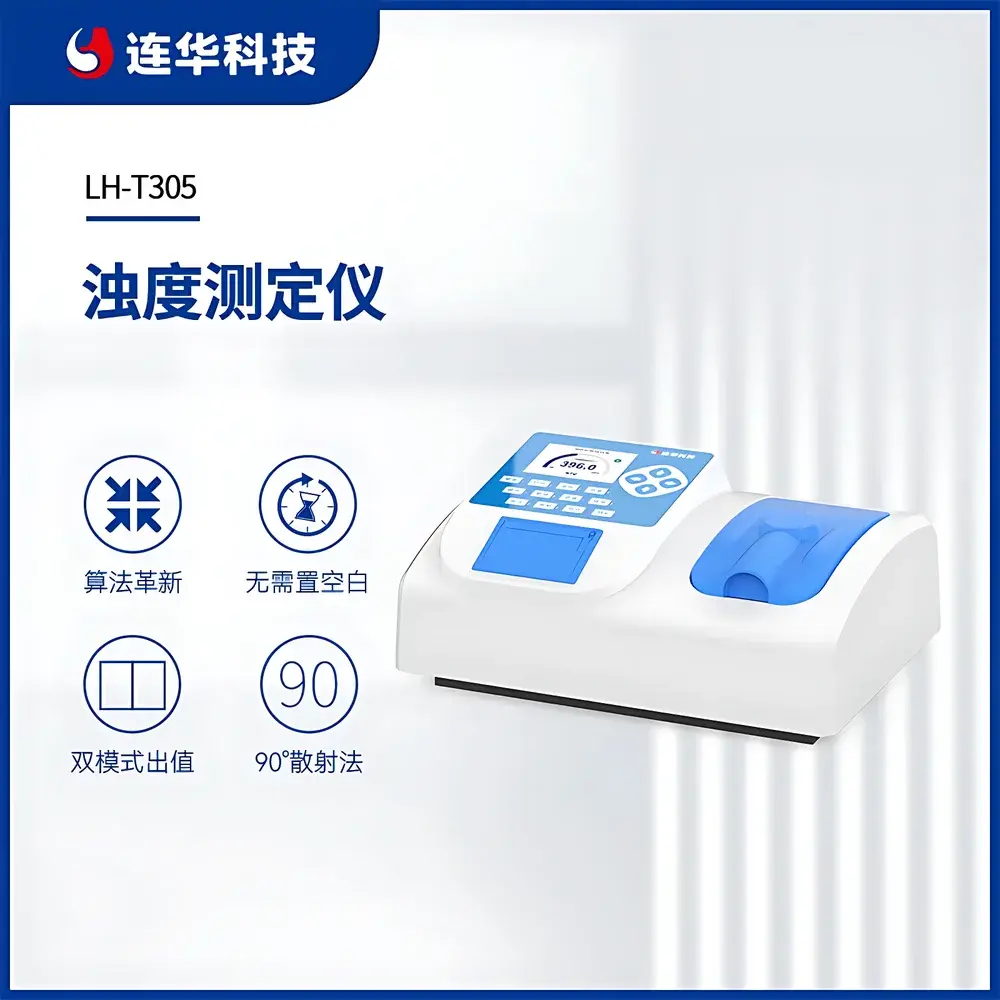
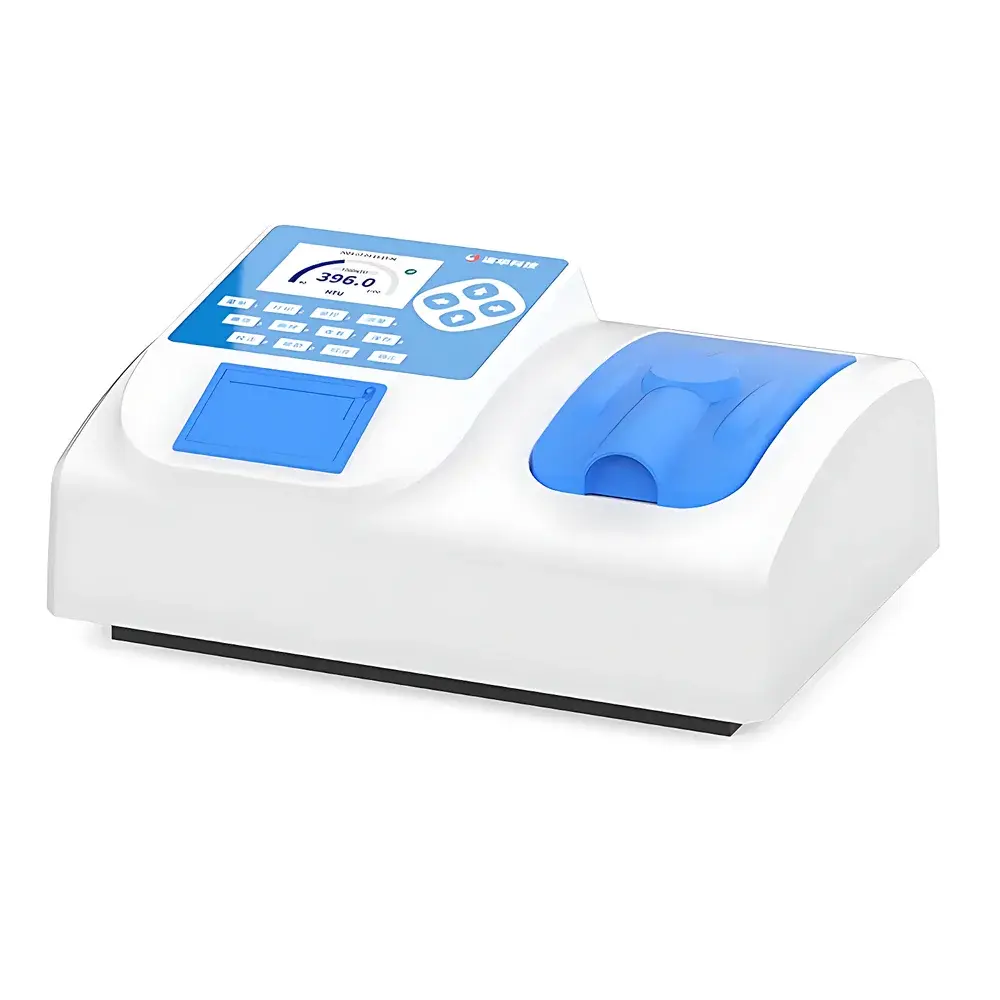
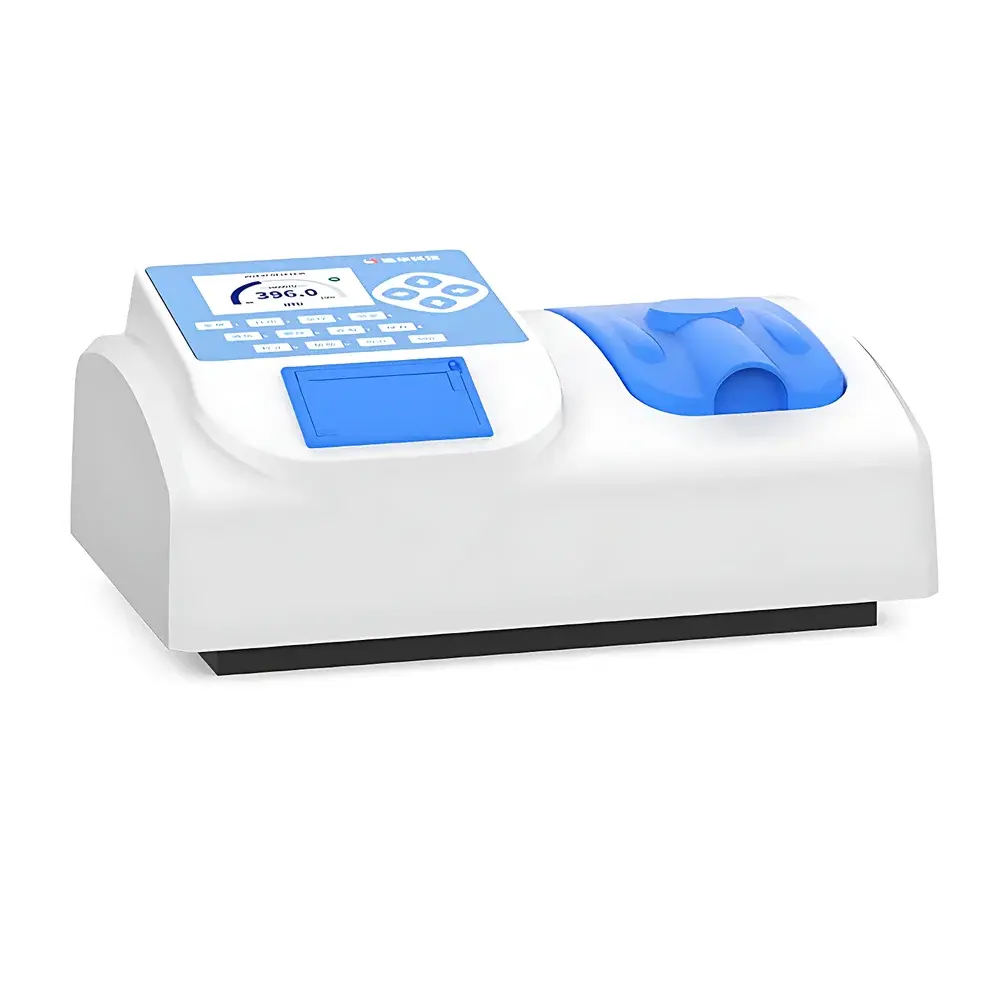
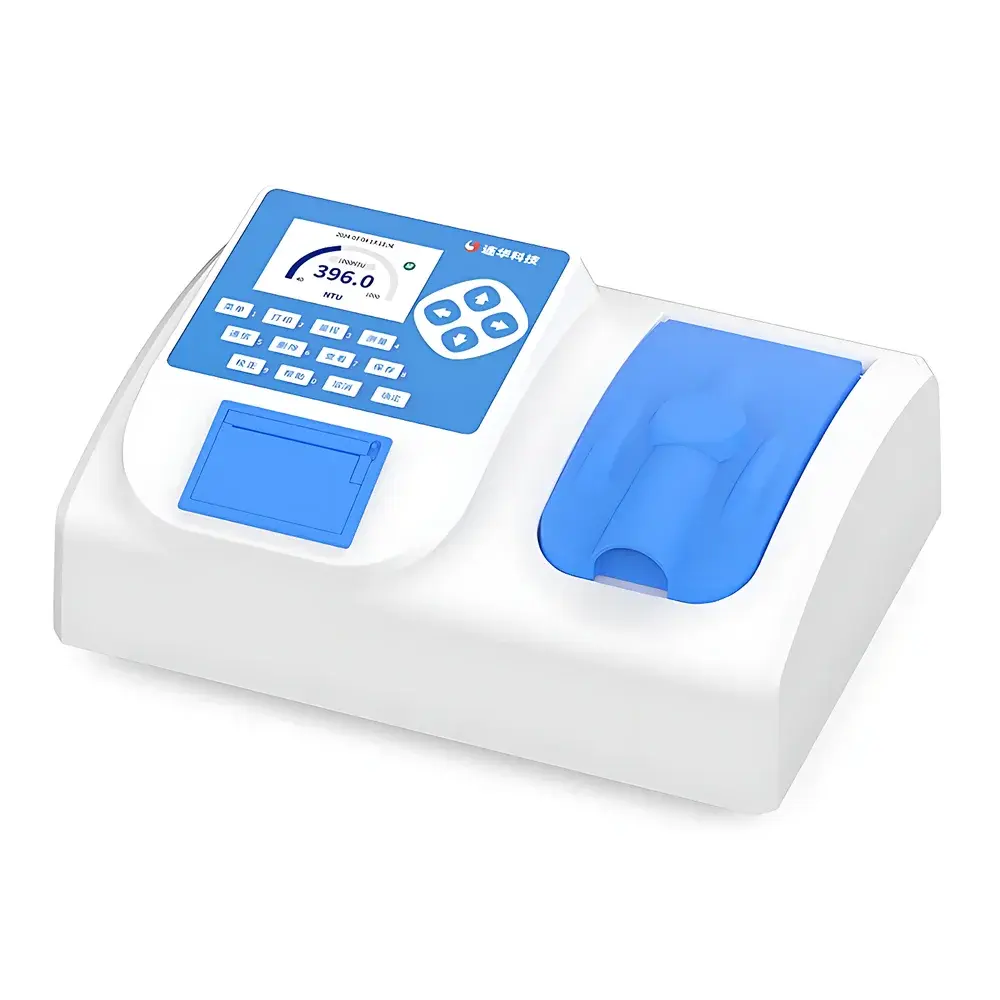
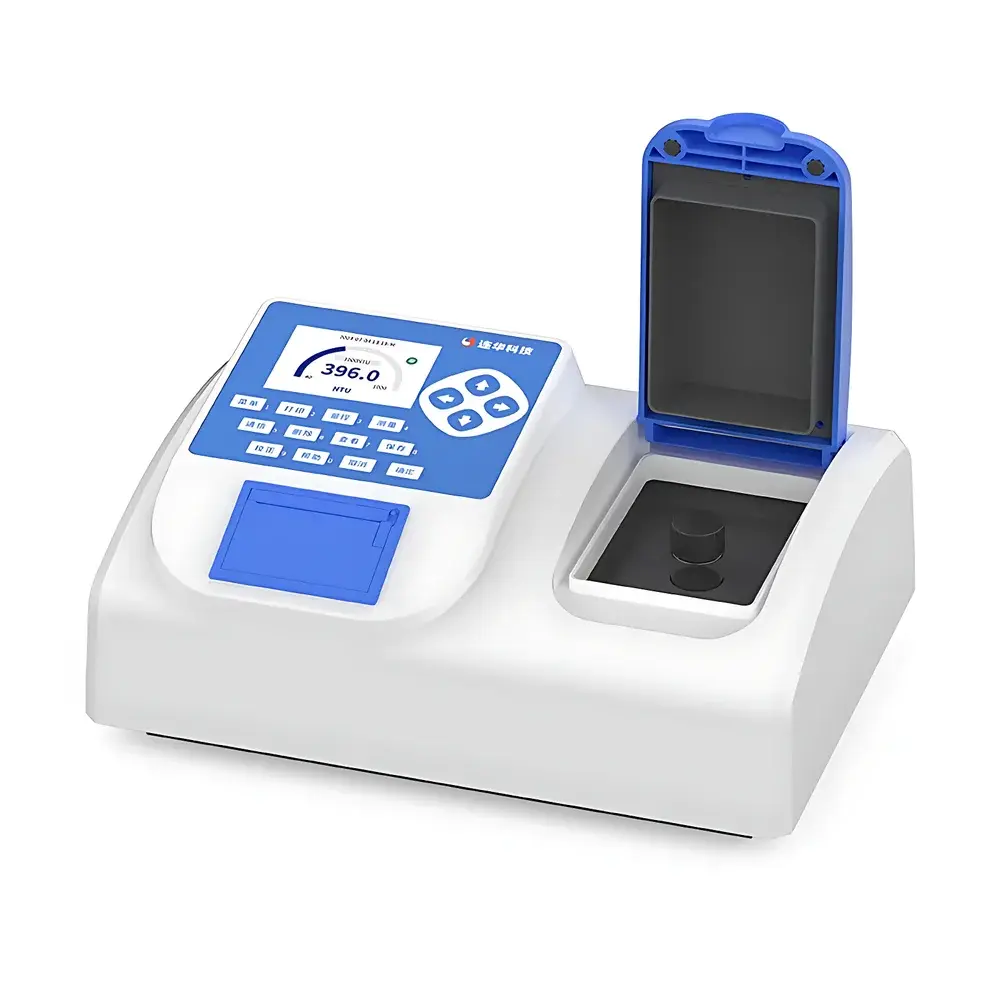
Lianhua LH-T305 Turbidity Meter
| Brand | Lianhua |
|---|---|
| Origin | Beijing, China |
| Manufacturer Type | Original Equipment Manufacturer (OEM) |
| Country of Manufacture | China |
| Model | LH-T305 |
| Pricing | Available upon Request |
Overview
The Lianhua LH-T305 Turbidity Meter is a precision optical instrument engineered for reliable, field- and laboratory-grade turbidity measurement in drinking water, wastewater, surface water, and process water applications. It operates on the principle of 90° nephelometric light scattering—fully compliant with ISO 7027-1:2016(E), GB/T 5750.4–2023, and U.S. EPA Method 180.1. This standardized detection geometry ensures traceable, inter-laboratory comparable results by measuring scattered light intensity at a right angle to the incident beam path, minimizing interference from absorption or coloration. Unlike transmission-based systems, the 90° configuration delivers high sensitivity across a broad dynamic range (40–4000 NTU) without dilution or manual range switching, making it suitable for both low-turbidity potable water verification and high-turbidity industrial effluent monitoring.
Key Features
- Optical architecture based on stable 90° nephelometry per ISO 7027-1:2016(E), eliminating temperature-induced drift through thermally compensated LED excitation and detector alignment
- Dual operational modes: Standard Mode for routine analysis and Signal Averaging Mode for samples containing transient particulates or heterogeneous suspensions, enhancing measurement reproducibility
- Zero-blank operation enabled by 25 mm round glass cuvette geometry and fixed-path optical calibration—no blanking step required prior to sample measurement
- Long-life, narrow-band LED light source (typically >50,000 hours MTBF) with wavelength stability <±2 nm; no warm-up time required, reducing workflow latency
- 3.5-inch high-resolution color TFT display with Lianhua’s proprietary dial-style UI—real-time NTU value, active range indicator, battery status, and calibration timestamp are simultaneously visible
- On-device multi-point calibration support (up to 5 points) using NIST-traceable formazin or AMCO-AE standards; automatic storage of last calibration parameters including date, slope, intercept, and R²
Sample Compatibility & Compliance
The LH-T305 accepts standard 25 mm outer-diameter glass or quartz cuvettes (10 mm path length), compatible with common turbidity reference standards including formazin suspension, StablCal®, and AMCO-AE. Its optical design mitigates interference from sample color, dissolved organics, and minor air bubbles—critical for compliance-driven environments. The instrument meets regulatory data integrity requirements under GLP and GMP frameworks: all measurements include embedded timestamps, operator ID fields (via optional password-protected user accounts), and immutable audit trails for calibration events. While not pre-certified for 21 CFR Part 11, its firmware supports exportable CSV logs with digital signatures for third-party validation workflows.
Software & Data Management
Data output is supported via USB-C interface for direct transfer to Windows-based PCs. The included Lianhua DataLink software enables batch calibration curve management, statistical summary generation (mean, SD, CV%), and export to Excel-compatible formats (.csv, .xlsx). All stored measurements retain metadata—including ambient temperature (measured via internal sensor), measurement mode, cuvette ID (user-assigned), and calibration version. Firmware updates are delivered via signed binary packages with SHA-256 checksum verification to ensure system integrity.
Applications
- Drinking water treatment: raw intake screening, coagulation/flocculation optimization, filter performance validation, and finished water release compliance (per GB 5749–2022)
- Wastewater discharge monitoring: secondary clarifier effluent verification, membrane bioreactor (MBR) permeate quality control, and NPDES permit reporting
- Environmental field studies: river/lake sediment plume tracking, stormwater runoff characterization, and wetland outflow assessment
- Pharmaceutical water systems: PW and WFI distribution loop turbidity trending per USP and EU Annex 1 guidance
- Industrial process water: boiler feedwater clarity checks, cooling tower sidestream filtration efficiency, and food & beverage rinse water verification
FAQ
Does the LH-T305 require daily blank calibration?
No—its optical path is factory-aligned for zero-blank operation using the 25 mm cuvette format. Only periodic calibration with certified standards is required per QA/QC protocols.
Can it measure samples below 40 NTU?
The specified lower limit is 40 NTU due to signal-to-noise constraints in high-range 90° geometry. For sub-40 NTU applications (e.g., ultrapure water), a dedicated low-range turbidimeter complying with ISO 7027-2 is recommended.
Is the LED source replaceable in the field?
The LED module is soldered and calibrated as an integrated optical assembly; replacement requires return-to-factory service with full recalibration and NIST-traceable certification.
What environmental conditions affect measurement stability?
Ambient temperatures between 5–40 °C are supported; the instrument includes thermal compensation algorithms. Condensation on the cuvette exterior or internal optics must be avoided—always wipe cuvettes dry before insertion.
How is compliance with ISO 7027-1 verified during installation qualification?
A documented IQ protocol—available in the Instrument Qualification Kit—includes photometric linearity verification, repeatability testing at three concentration levels (100, 1000, 3000 NTU), and cross-reference against a primary-standard turbidimeter.







