
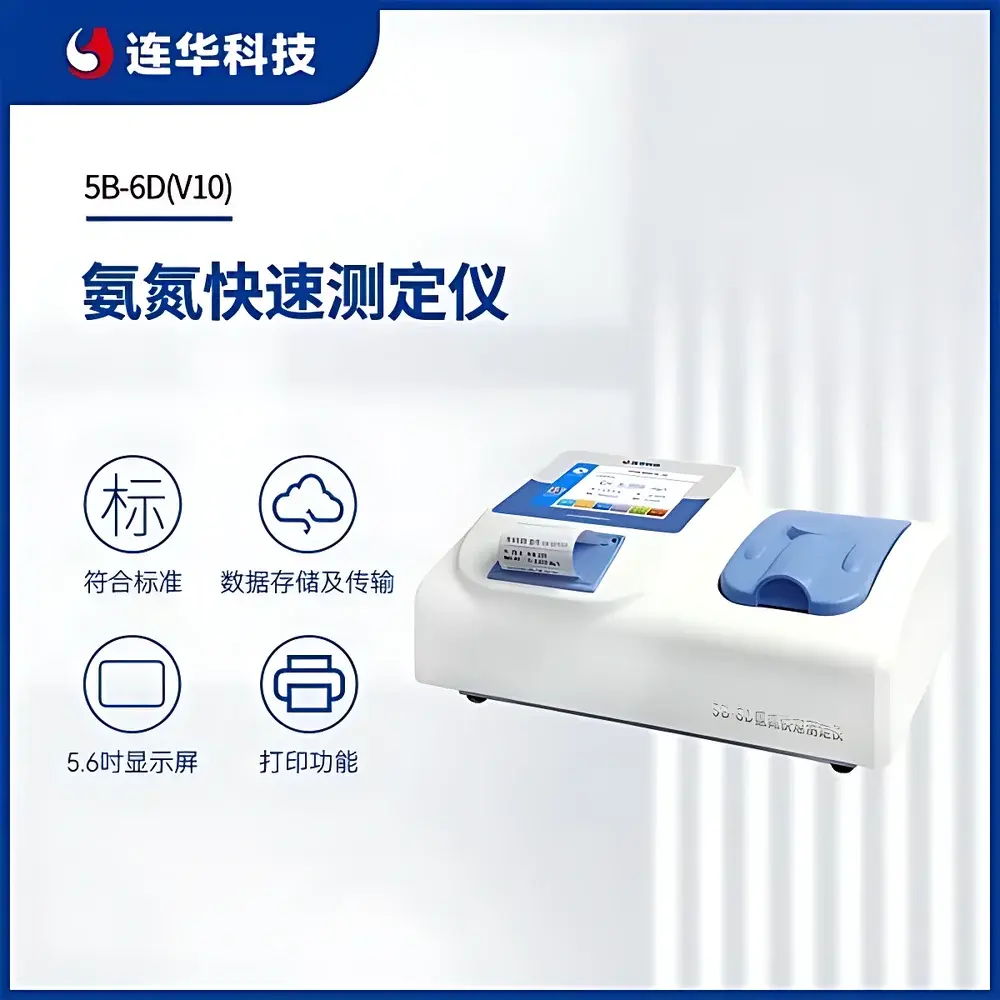
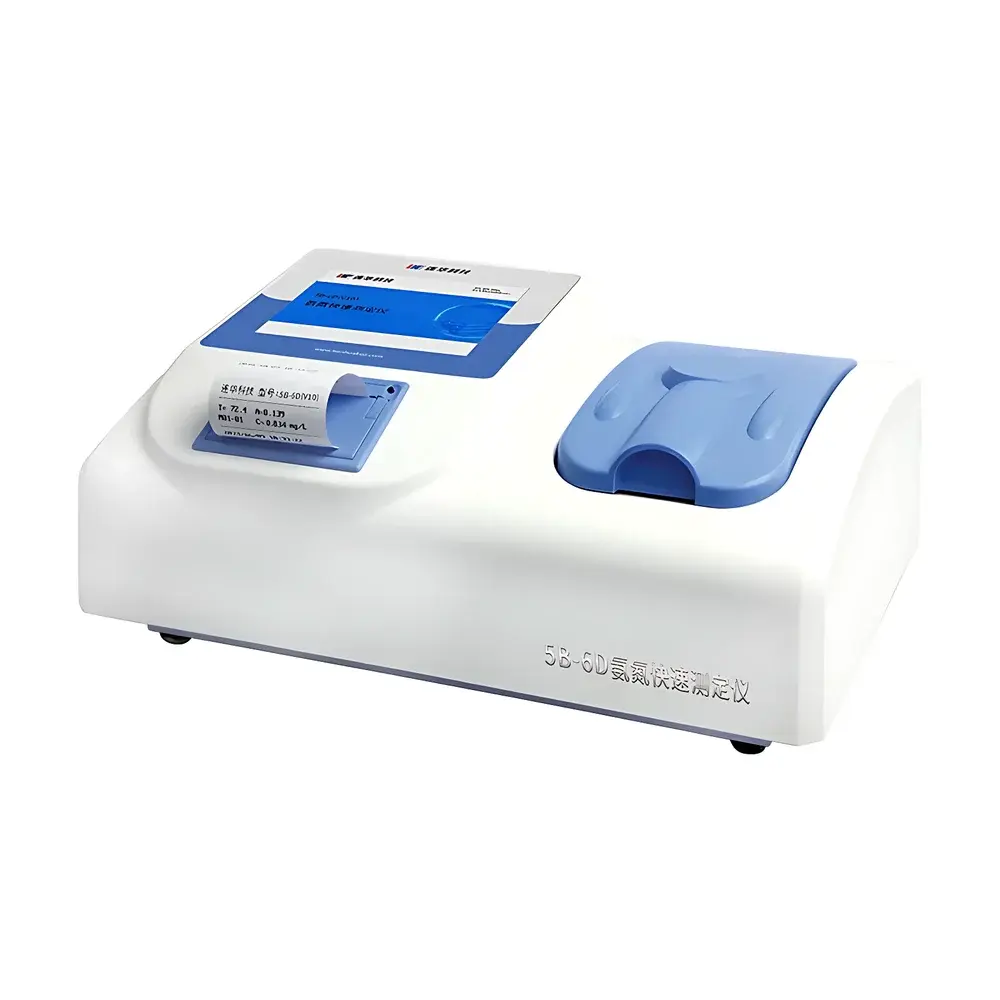
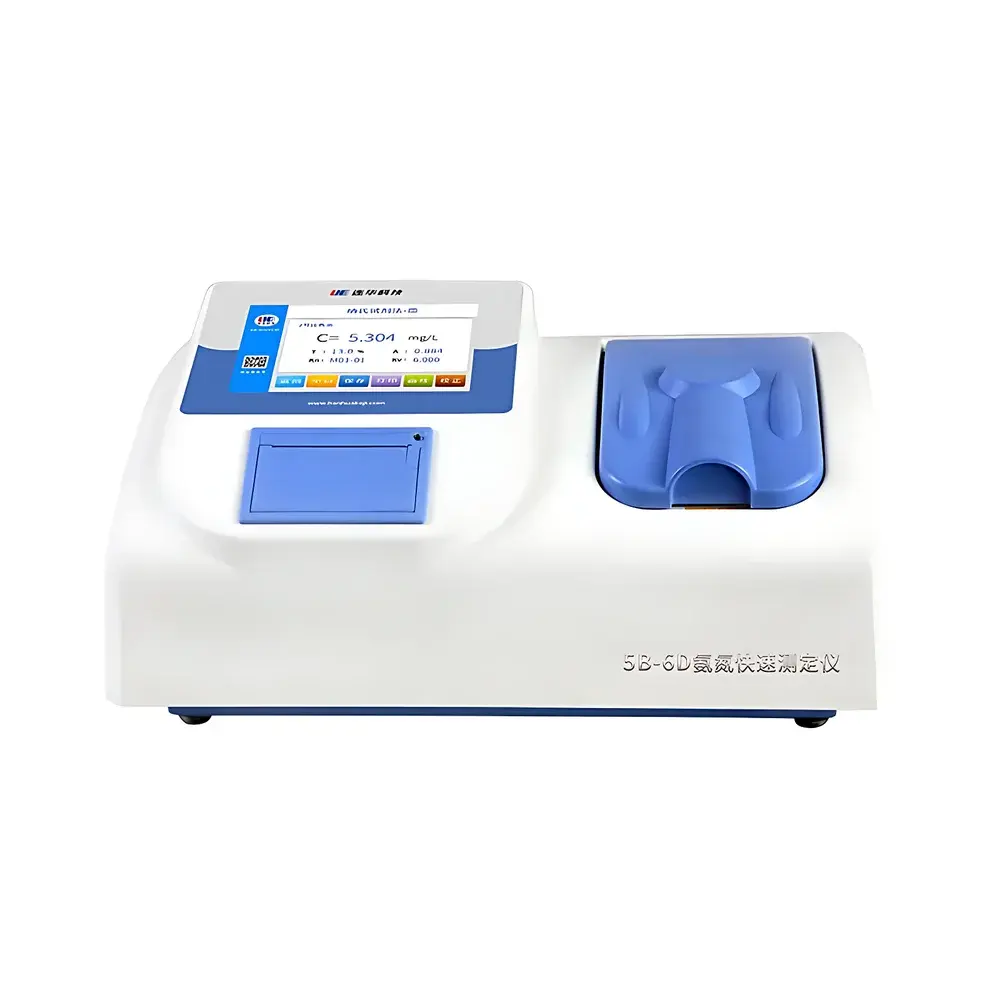
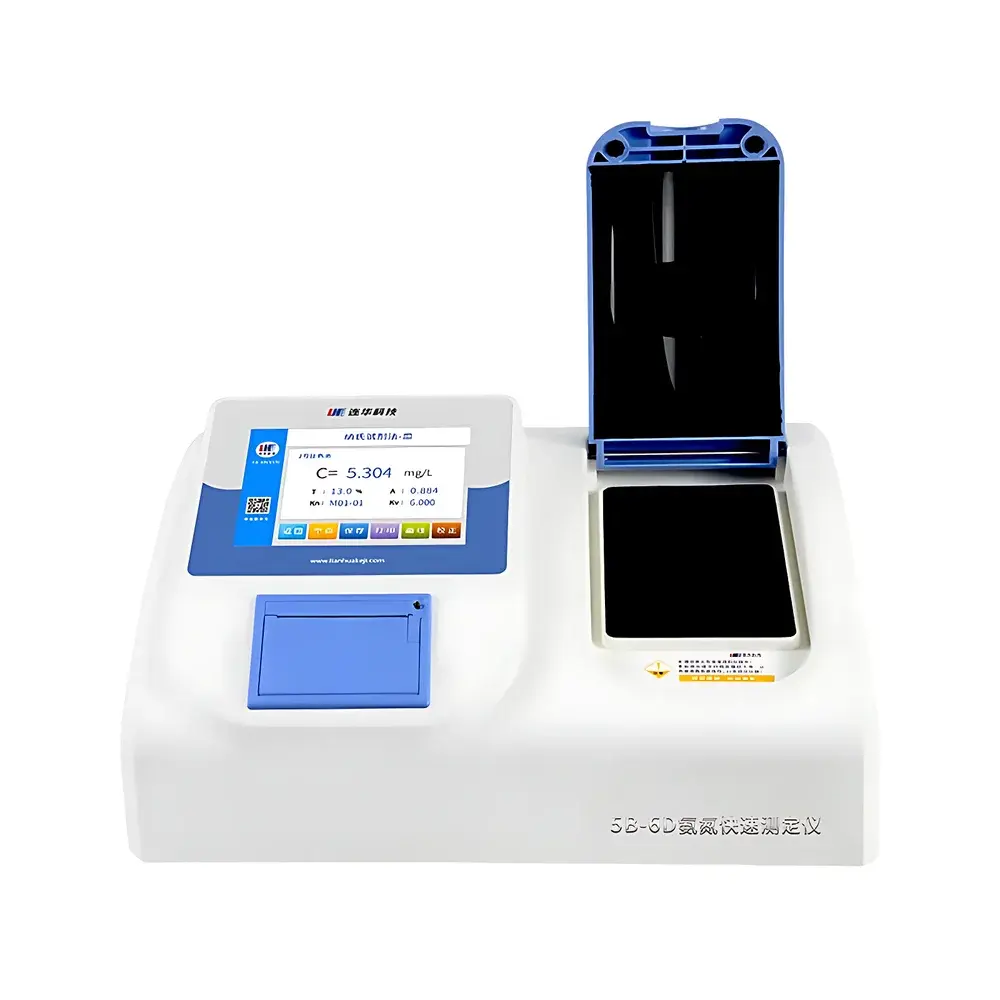
Lianhua Tech 5B-6D(V10) Ammonia Nitrogen Rapid Analyzer
| Brand | Lianhua Tech |
|---|---|
| Origin | Beijing, China |
| Manufacturer Type | Manufacturer |
| Product Origin | Domestic (China) |
| Model | 5B-6D(V10) |
| Instrument Type | Laboratory Analyzer |
| Measurement Principle | Colorimetry (Nessler and Salicylate Methods) |
| Measurement Range | 0–160 mg/L NH₃-N |
| Accuracy | ≤ ±5% |
| Measurement Time | 10–40 minutes |
| Batch Processing Capacity | Configurable (via optional cuvette racks or tube holders) |
| Display | 5.6-inch color touchscreen |
| Data Storage | Up to 12,000 measurement records |
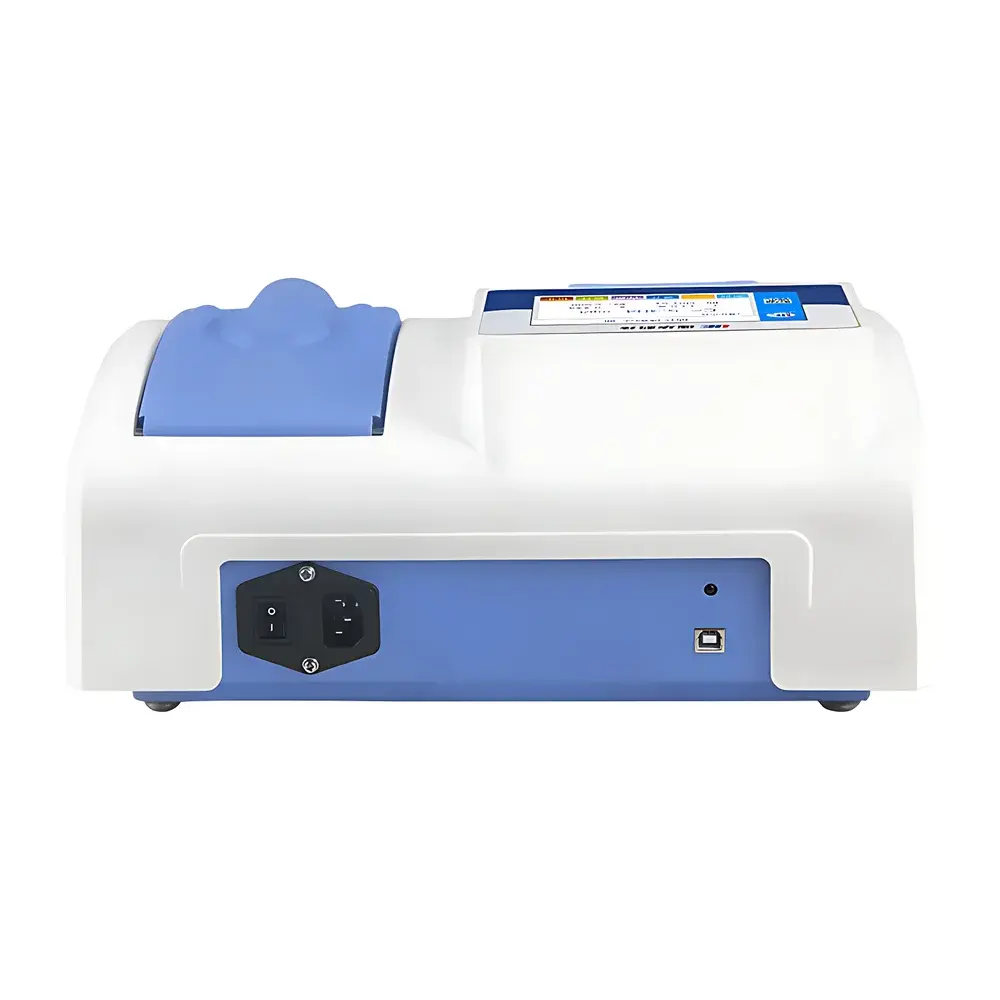
| Data Export | USB port and infrared interface |
| Output | Built-in thermal printer |
| Calibration | Auto-curve generation and storage using standard solutions |
| Curve Customization | User-defined calibration curve fitting supported |
| Reagent Compatibility | Pre-packaged Nessler reagents |
Overview
The Lianhua Tech 5B-6D(V10) Ammonia Nitrogen Rapid Analyzer is a dedicated laboratory-grade photometric instrument engineered for precise, reproducible quantification of ammonia nitrogen (NH₃-N) in water and wastewater samples. It operates on established colorimetric principles compliant with internationally recognized standard methods: the Nessler method (ISO 7150-1, APHA 4500-NH₃ B) for routine and higher-concentration applications, and the salicylate-hypochlorite method (APHA 4500-NH₃ F, ISO 11732) for enhanced sensitivity at low concentrations. The dual-optical-path interference-free optical architecture ensures stable photometric performance across varying ambient lighting conditions and minimizes drift during sequential batch analysis. Designed for regulatory compliance workflows, the analyzer supports traceable calibration, audit-ready data logging, and method-specific procedural controls—making it suitable for environmental monitoring laboratories operating under CNAS, CMA, or GLP frameworks.
Key Features
- Dual-method capability: Simultaneous support for Nessler and salicylate colorimetric protocols, enabling seamless transition between standard-range (0–160 mg/L) and extended low-range (e.g., 0.02–2.0 mg/L) or high-range (e.g., 5–100 mg/L) ammonia nitrogen determination.
- Interference-resistant dual-beam optics: Independent reference and sample light paths eliminate baseline drift caused by lamp aging or temperature fluctuation, improving long-term measurement stability.
- 5.6-inch capacitive color touchscreen: Intuitive graphical user interface with context-sensitive soft keys, multi-language menu navigation (English included), and real-time status feedback—including reagent expiry alerts and calibration due reminders.
- Integrated calibration engine: Automatic generation and storage of multi-point calibration curves from user-prepared standard solutions; supports linear, quadratic, and cubic regression models for optimal fit across non-linear response ranges.
- Modular sample handling: Compatible with both 10-mm square cuvettes and 16-mm round reaction tubes; optional accessories include multi-position rack holders for parallel processing of up to 12 samples per run.
- Thermal printer and dual-data export: Onboard thermal printer produces timestamped, operator-annotated hard copies; digital data transfer via USB mass storage mode or infrared (IrDA 1.1) to Windows-based laboratory information management systems (LIMS).
Sample Compatibility & Compliance
The 5B-6D(V10) is validated for use with raw surface water, drinking water, treated effluent, industrial process water, and digested sludge supernatant—provided turbidity is reduced to <5 NTU via filtration or centrifugation prior to analysis. Interferences from residual chlorine, heavy metals (e.g., Fe³⁺, Cu²⁺), and high alkalinity are mitigated through built-in pretreatment prompts and recommended masking agents (e.g., sodium thiosulfate, EDTA). The instrument’s firmware and documentation align with ISO/IEC 17025:2017 requirements for method validation, including documented linearity assessment (r² ≥ 0.999 over full range), repeatability (RSD ≤ 3.5%), and recovery testing (85–115% for spiked matrices). All reagent kits meet GB/T 27404–2008 guidelines for certified reference materials used in environmental testing.
Software & Data Management
Data integrity is maintained through a secure, password-protected local database supporting 12,000 entries with full metadata: date/time stamp, operator ID, sample ID, method selected, calibration curve ID, measured absorbance, calculated concentration, and QC flag status (e.g., “within control limits”, “recalibration required”). Audit trail functionality logs all critical events—including parameter changes, calibration updates, and data deletions—with immutable timestamps. Exported CSV files include column headers compliant with ASTM D5847 and EPA Method 350.1 reporting conventions. Optional PC software (LH-DataLink v3.2) enables automated report generation, trend charting, statistical summary (mean, SD, CV%), and integration with Excel-based QA/QC dashboards.
Applications
- Regulatory compliance monitoring: Routine NH₃-N analysis for municipal wastewater treatment plants reporting to local ecological environment bureaus (e.g., China’s HJ 535–2009 standard).
- Drinking water safety verification: Verification of ammonia removal efficiency in chloramination or biological filtration processes.
- Environmental impact assessment: Field-deployable lab analysis for river, lake, and groundwater quality surveys.
- Industrial effluent characterization: Monitoring of semiconductor rinse water, pharmaceutical process streams, and aquaculture recirculation systems.
- Academic and method development labs: Flexible curve-fitting and open reagent protocol support facilitate validation of novel derivatization chemistries or alternative catalyst systems.
FAQ
What colorimetric methods does the 5B-6D(V10) support?
It supports both the Nessler reagent method (for 0.1–160 mg/L) and the salicylate method (with optional low-range or high-range kits), each with method-specific wavelength selection and reaction timing.
Is the instrument compliant with international data integrity standards?
Yes—the internal database enforces ALCOA+ principles (Attributable, Legible, Contemporaneous, Original, Accurate); all exported data include traceable instrument serial number and firmware version.
Can calibration curves be transferred between instruments?
Calibration parameters are stored in encrypted binary format and are not cross-compatible between units; however, curve coefficients can be manually imported as CSV for method replication.
Does the analyzer require external PC software for basic operation?
No—all core functions—including measurement, calibration, data review, and printing—are fully operational without PC connectivity.
What maintenance is required for long-term optical stability?
Annual verification of photometric accuracy using NIST-traceable neutral density filters is recommended; routine cleaning of cuvette holder and optical window with lint-free isopropyl alcohol wipes is sufficient for daily use.







