
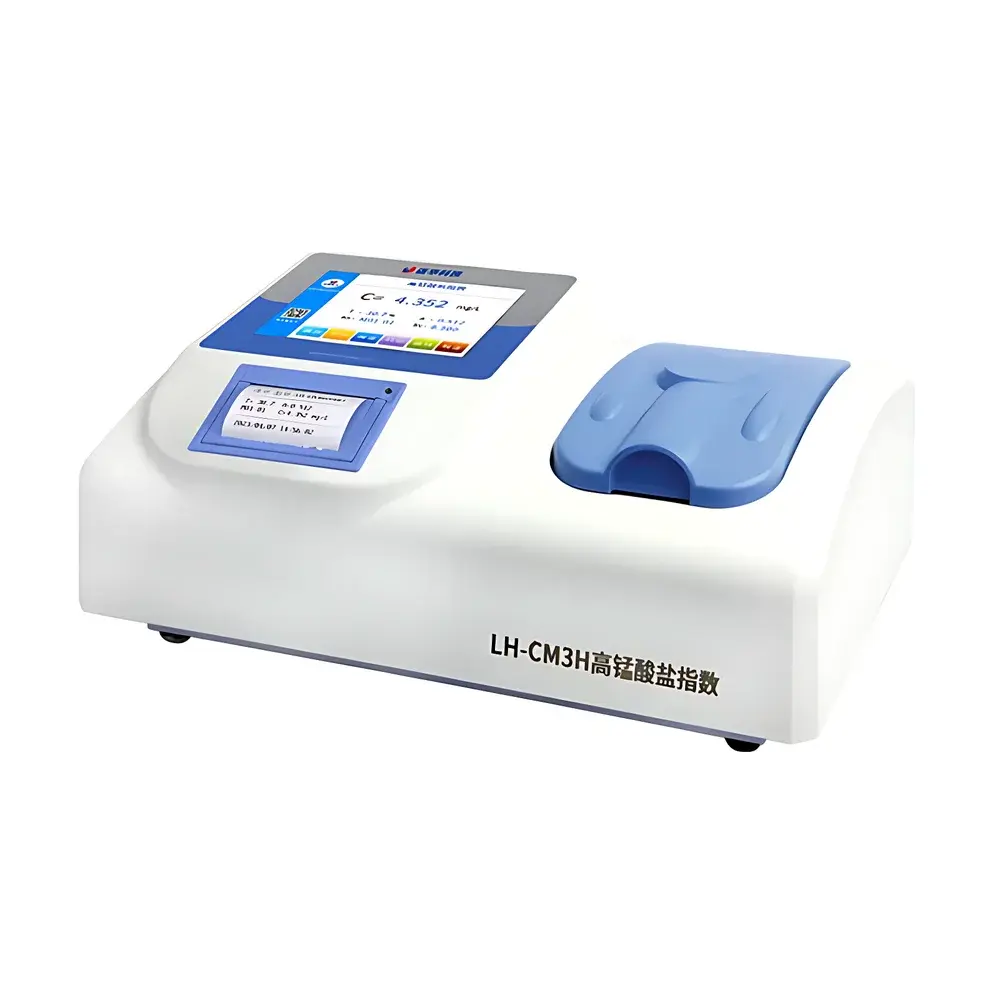
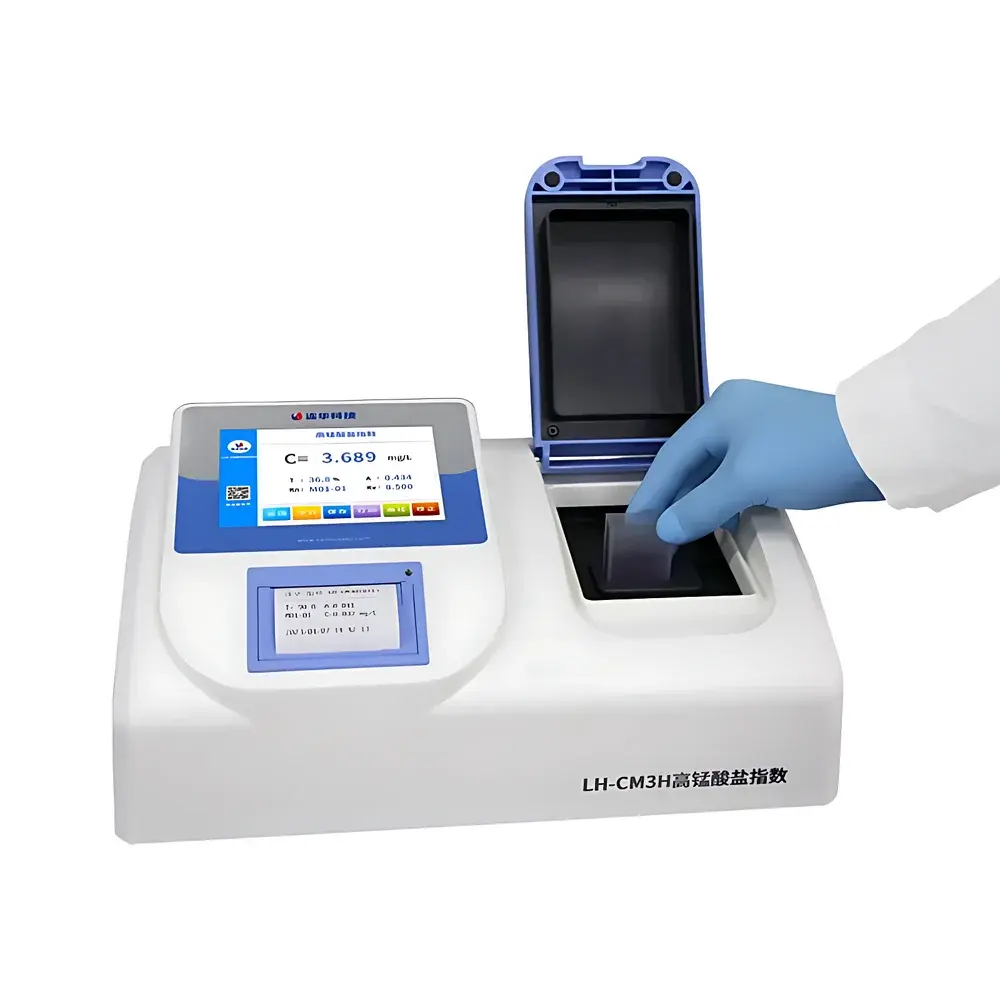
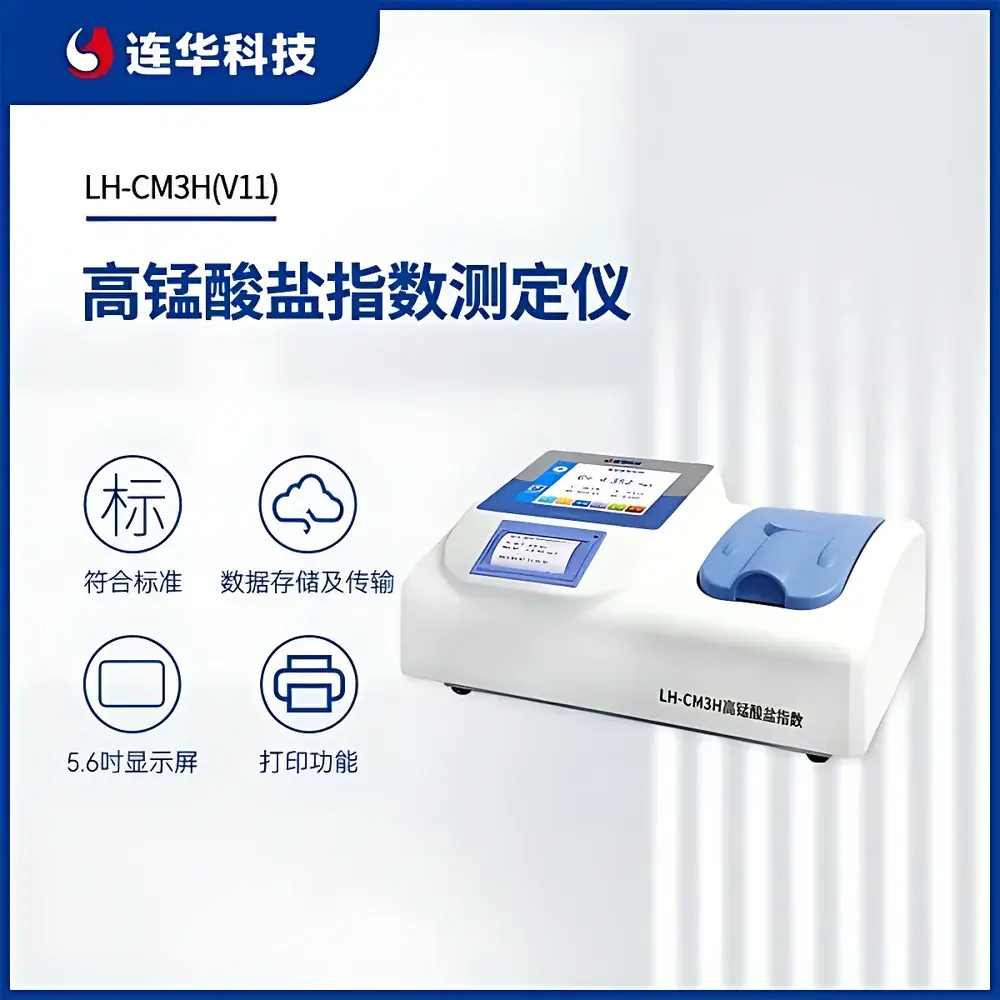
Lianhua Technology LH-CM3H(V11) Potassium Permanganate Index Analyzer
| Brand | Lianhua Technology |
|---|---|
| Origin | Beijing, China |
| Manufacturer Type | Direct Manufacturer |
| Product Category | Domestic |
| Model | LH-CM3H(V11) |
| Instrument Type | Benchtop Laboratory Analyzer |
| Measurement Principle | Rapid Digestion Spectrophotometry |
| Measurement Range | 0.3–20 mg/L (multi-range segmented) |
| Accuracy | ≤ ±10% |
| Repeatability | ≤ ±5% |
| Limit of Detection (LOD) | 0.08 mg/L |
| Analysis Time per Batch | 50 minutes |
| Sample Throughput | 16 samples per run |
Overview
The Lianhua Technology LH-CM3H(V11) Potassium Permanganate Index Analyzer is a dedicated benchtop instrument engineered for precise, standardized determination of the potassium permanganate index (CODMn) in surface water, groundwater, drinking water, and low-pollution wastewater. CODMn serves as a critical surrogate parameter for oxidizable organic and inorganic substances under mild acidic conditions—distinct from dichromate-based COD (CODCr)—and is widely specified in national environmental monitoring protocols including China’s HJ 1002–2018 and ISO 8467:1993. The LH-CM3H(V11) implements rapid digestion spectrophotometry: samples undergo controlled thermal oxidation with potassium permanganate in sulfuric acid medium, followed by quantitative measurement of residual permanganate at 525 nm using stable cold-light LED excitation and narrow-band optical interference filtering. This principle ensures high specificity for MnO4− absorption while minimizing interferences from turbidity or colored matrix components.
Key Features
- Optimized optical architecture featuring a 100,000-hour lifetime cold LED light source and 5 nm bandwidth interference filter—ensuring long-term photometric stability and minimal drift across extended operation cycles.
- Integrated 16-position heated digestion block with precise temperature control (±0.5 °C), enabling simultaneous processing of up to 16 samples under strictly standardized digestion conditions (100 °C, 30 min).
- High-resolution monochrome LCD display with full Chinese-language UI—designed for intuitive navigation, real-time status feedback, and on-device method selection without external software dependency.
- Built-in thermal printer supporting immediate hardcopy output of current results, calibration logs, and historical records—including timestamped acquisition metadata (date, time, operator ID if configured).
- Onboard memory stores up to 1,000 test records with full traceability: sample ID, measurement value, range used, calibration curve ID, and exact timestamp (year/month/day/hour/minute).
- Embedded calibration management system: supports manual curve entry, automatic curve generation from standard reference solutions, and storage of up to 99 user-defined calibration curves with editable parameters and version tagging.
Sample Compatibility & Compliance
The LH-CM3H(V11) is validated for use with clarified, non-turbid aqueous samples meeting ISO 5667-3 requirements for sampling preservation and filtration (e.g., 0.45 µm membrane). It complies with analytical performance criteria defined in HJ 1002–2018 (China) and aligns with the metrological framework of ISO/IEC 17025 for routine laboratory testing. While not certified to FDA 21 CFR Part 11 out-of-the-box, its data integrity features—including immutable timestamps, non-editable raw absorbance values, and USB-exportable audit-ready CSV files—support GLP-compliant documentation workflows. All firmware and calibration routines are internally validated and version-controlled; instrument self-diagnostics run at power-on and prior to each analysis cycle.
Software & Data Management
Data transfer occurs via standard USB 2.0 interface to Windows-based PCs running Lianhua’s proprietary LH-DataLink v3.x software (Windows 10/11 compatible). The software enables batch export of .csv and .xlsx files with columnar fields for sample ID, measured CODMn, detection range, curve ID, digestion temperature/time, and operator log. Audit trail functionality records all calibration events, curve modifications, and firmware updates with digital timestamps. Raw absorbance readings (A525nm) and blank-subtracted values are retained separately to support method validation and uncertainty budgeting per GUM (JCGM 100:2008). No cloud connectivity or remote access is implemented—data remains fully under local laboratory control.
Applications
- Regulatory monitoring of source water quality in municipal drinking water plants (per GB 5749–2022 Annex A)
- Ecological assessment of lakes, reservoirs, and rivers where low-level organic load requires sensitive Mn-based oxidation metrics
- Process verification in advanced oxidation unit operations (e.g., ozone or UV/H2O2) treating recalcitrant micropollutants
- Educational laboratories requiring robust, repeatable CODMn methodology aligned with national syllabi and proficiency testing schemes
- Field-deployable lab support: compact footprint (320 × 240 × 180 mm), 220 VAC/50 Hz input, and integrated digestion eliminates need for external heating mantles or spectrophotometers
FAQ
What digestion protocol does the LH-CM3H(V11) follow?
It implements the standardized acidic potassium permanganate digestion method per HJ 1002–2018: 100 °C for 30 minutes in 0.5 mol/L H2SO4 medium with excess KMnO4, followed by back-titration with sodium oxalate or direct photometric quantification.
Can the instrument measure beyond 20 mg/L CODMn?
No—the upper limit is fixed at 20 mg/L. Samples exceeding this range must be diluted with deionized water prior to analysis, and dilution factors must be manually applied during result interpretation.
Is method validation documentation provided?
Yes—each unit ships with a Factory Verification Report including linearity (R² ≥ 0.999 over 0.3–20 mg/L), LOD/LOQ confirmation, repeatability testing (n=6 at three concentrations), and optical stability verification.
Does the analyzer support multi-point calibration verification?
Yes—users may run independent calibration checks at any time using NIST-traceable potassium permanganate standards; results are logged with pass/fail flags based on ±5% tolerance thresholds.
How is firmware updated?
Firmware upgrades are delivered via encrypted USB flash drive and installed through the instrument’s service menu—requiring authorized technician credentials and generating an immutable update log entry.







