
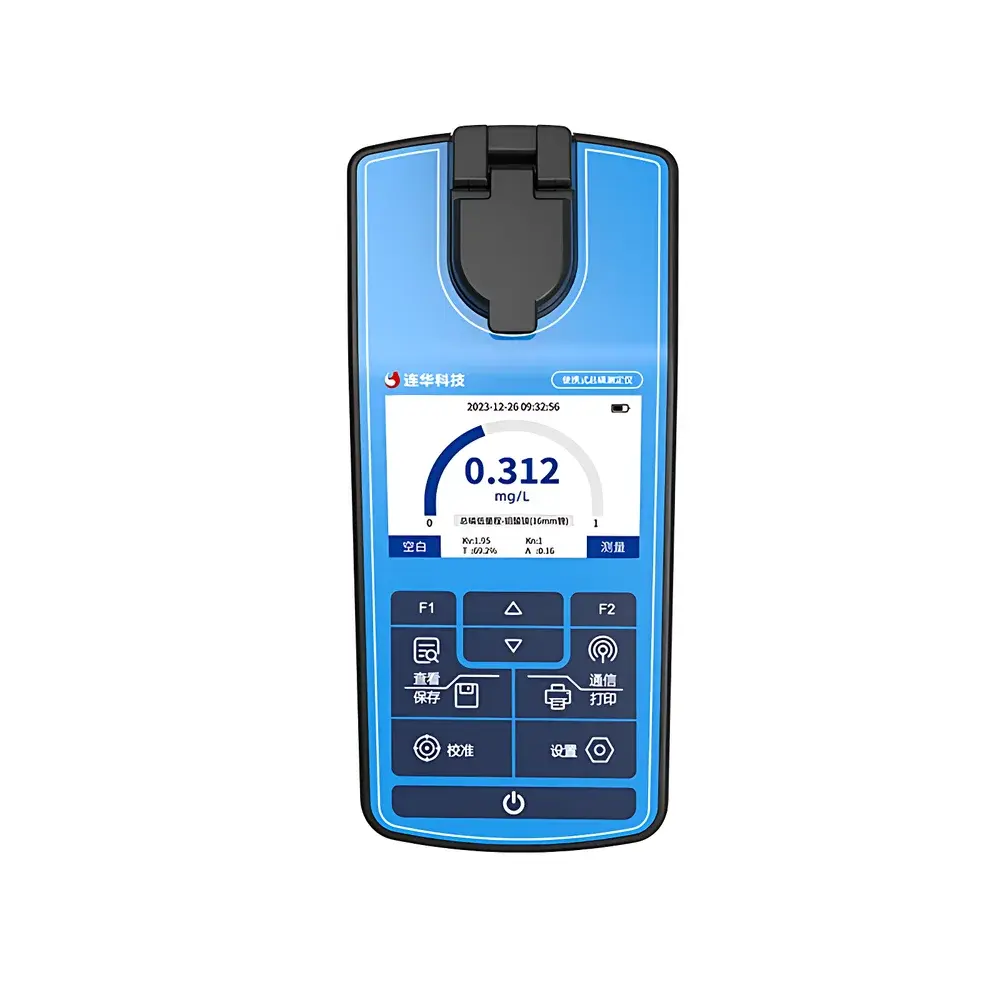
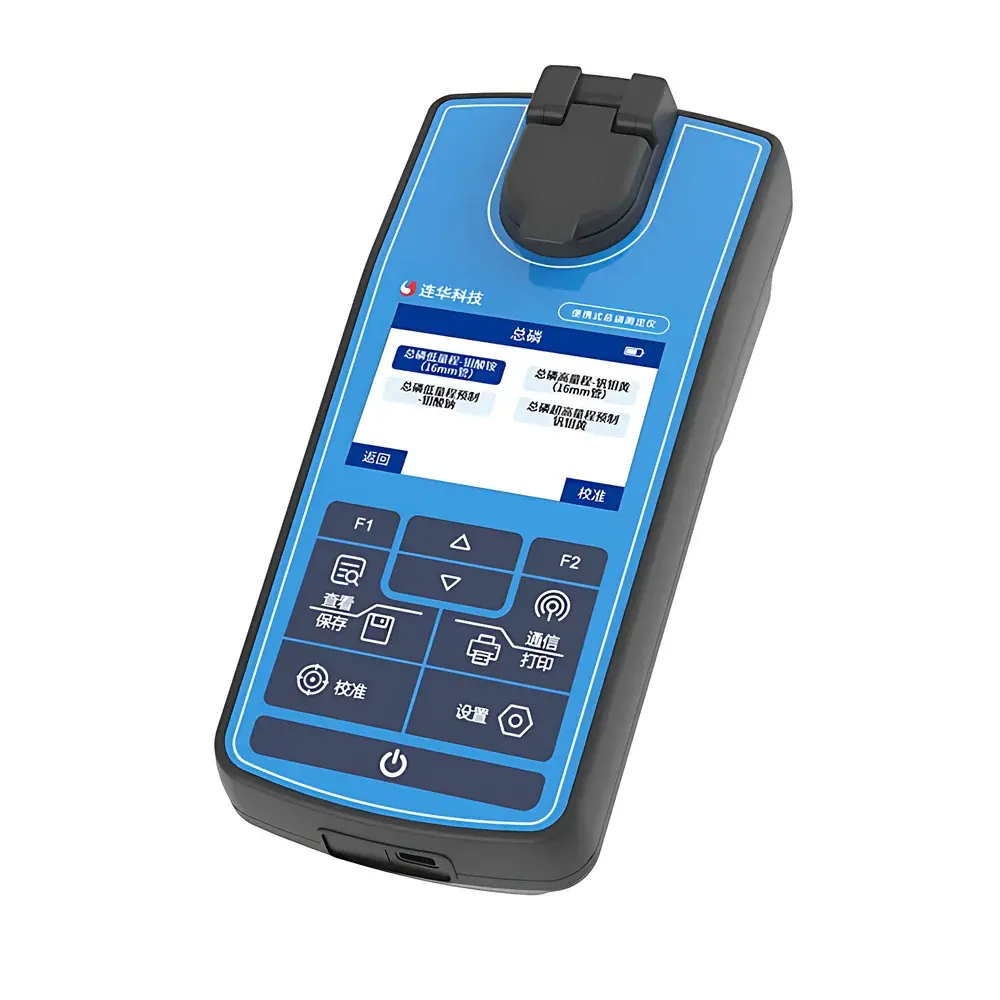
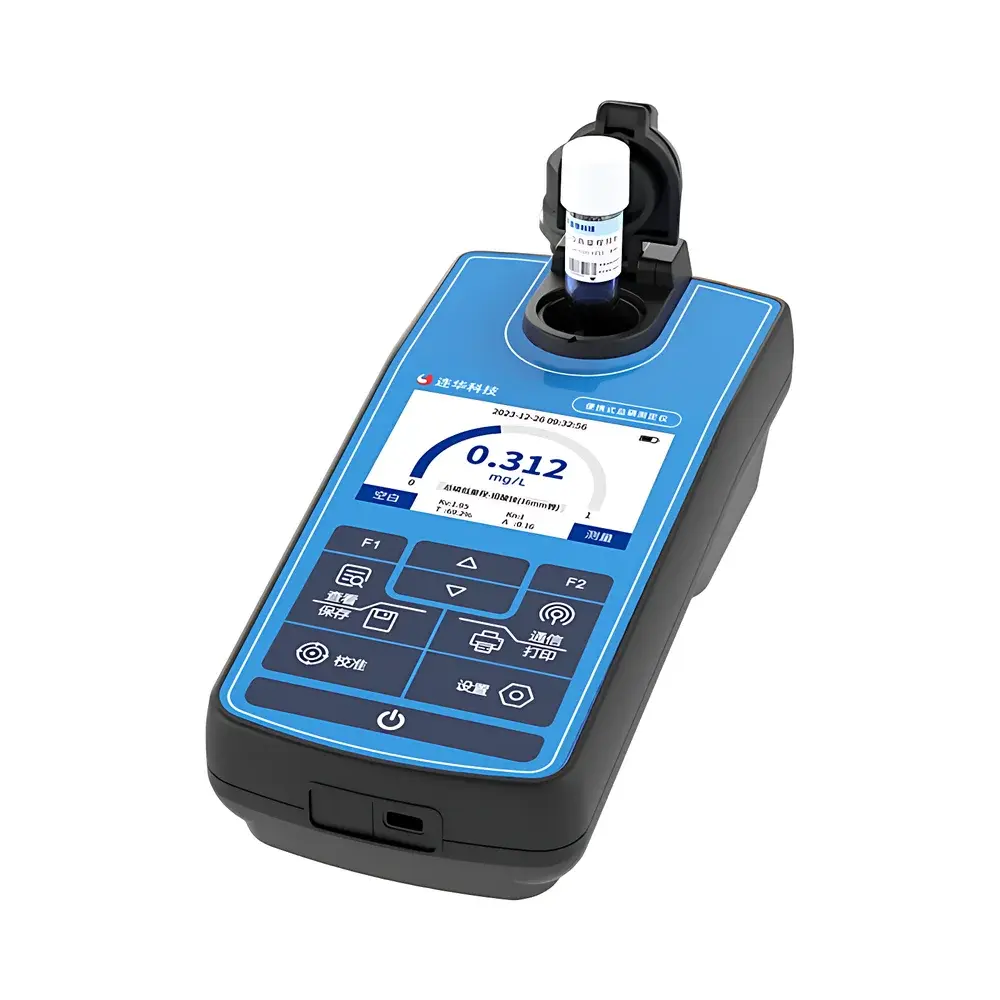
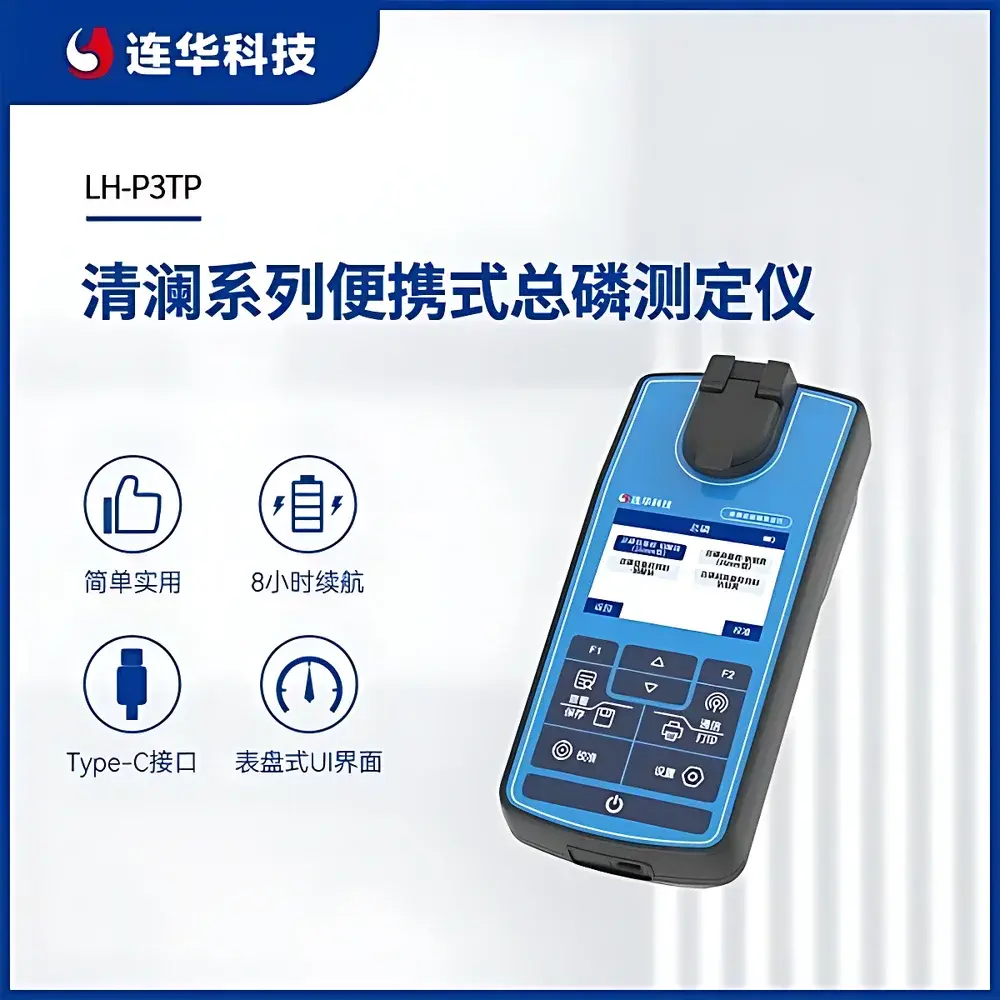
Lianhua Technology Qinglan Series LH-P3TP Portable Total Phosphorus Analyzer
| Brand | Lianhua Technology |
|---|---|
| Origin | Beijing, China |
| Manufacturer Type | Manufacturer |
| Product Origin | Domestic (China) |
| Model | LH-P3TP |
| Measurement Parameter | Total Phosphorus |
| Instrument Type | Portable |
| Measurement Principle | Spectrophotometry (Molybdenum Blue Method) |
| Measurement Range | 0–100 mg/L as P |
| Accuracy | ≤ ±8% |
| Display | 3.5-inch color TFT LCD with dial-style UI |
| Built-in Calibration Curves | 20 pre-programmed curves with user calibration capability |
| Optical Calibration Support | Yes, for LED intensity stabilization |
| Over-range Indication | Visual red alert on dial interface |
| Reagent Compatibility | Pre-formulated liquid reagent kits supplied by Lianhua Technology |
| Compliance | Designed to meet standard requirements of HJ 670–2013 (Chinese EPA method for total phosphorus in water), compatible with ISO 6878:2004 and ASTM D515-89 (revised) |
Overview
The Lianhua Technology Qinglan Series LH-P3TP Portable Total Phosphorus Analyzer is a field-deployable, spectrophotometric instrument engineered for rapid, on-site quantification of total phosphorus (TP) in surface water, wastewater, drinking water sources, and environmental monitoring samples. It operates on the standardized molybdenum blue spectrophotometric principle—where orthophosphate, liberated from all phosphorus-containing species via persulfate digestion under acidic, high-temperature conditions, reacts with ammonium molybdate and antimony potassium tartrate to form phosphomolybdate heteropoly acid, subsequently reduced to an intensely colored molybdenum blue complex. Absorbance is measured at 700 nm using a stable LED light source and precision optical path, enabling direct concentration readout in mg/L as P. Its compact, battery-powered architecture supports uninterrupted operation for >8 hours per charge, making it suitable for routine surveillance, emergency response, and multi-point sampling campaigns where laboratory access is limited.
Key Features
- Integrated 3.5-inch color TFT LCD with intuitive dial-style graphical user interface—enabling immediate visual interpretation of results without data export or secondary analysis.
- Dedicated optical calibration routine for LED intensity verification and drift compensation—ensuring long-term photometric stability and minimizing recalibration frequency in variable ambient lighting conditions.
- Pre-loaded library of 20 factory-validated calibration curves, including linear, quadratic, and logarithmic models—supporting both regulatory compliance and research-grade flexibility across diverse matrix types (e.g., low-turbidity lakes vs. high-organic wastewater).
- Built-in over-range detection logic: when sample concentration exceeds the upper measurement limit (100 mg/L), the display renders the dial needle at maximum scale and overlays a persistent red warning—preventing misinterpretation of saturated absorbance signals.
- Optimized for use with Lianhua’s proprietary liquid-phase reagent kits—eliminating powder handling, dissolution errors, and shelf-life variability associated with dry reagents; each kit is lot-certified and traceable to NIST-traceable phosphorus standards.
- Ruggedized housing rated IP65 for dust and water resistance—tested per IEC 60529—and equipped with shock-absorbing silicone bumpers for transport durability in field vehicles or backpack deployment.
Sample Compatibility & Compliance
The LH-P3TP is validated for use with clarified aqueous samples meeting turbidity < 5 NTU (per HJ 670–2013). For higher-turbidity matrices, optional centrifugation or membrane filtration (0.45 µm) is recommended prior to analysis. The instrument conforms to the procedural framework of Chinese Environmental Protection Standard HJ 670–2013, and its optical performance aligns with the photometric accuracy criteria defined in ISO 6878:2004 (Water quality — Determination of phosphorus — Ammonium molybdate spectrophotometric method). While not certified to FDA 21 CFR Part 11, its firmware supports audit-ready data logging—including timestamp, operator ID (via optional USB keyboard), curve ID, and raw absorbance values—with CSV export via micro-USB for integration into LIMS or GLP-compliant reporting workflows.
Software & Data Management
Data acquisition and storage are handled internally by embedded ARM Cortex-M4 firmware with 128 MB flash memory—capable of storing ≥5,000 test records with full metadata. No external software installation is required; however, optional Lianhua DataLink PC utility (Windows 10/11 compatible) enables batch export, curve editing, statistical summary (mean, SD, CV%), and PDF report generation compliant with ISO/IEC 17025 documentation templates. All calibration events—including optical checks and curve updates—are time-stamped and retained in a non-volatile event log accessible via diagnostics menu, supporting internal QA audits and method validation documentation.
Applications
- Regulatory compliance monitoring of TP discharge limits in municipal wastewater treatment plant effluents (e.g., according to GB 18918–2002 Class I-A standards).
- Field-based eutrophication assessment in lakes, reservoirs, and rivers—particularly during algal bloom seasons requiring rapid turnaround.
- Source water quality screening for drinking water utilities performing pre-treatment phosphorus load evaluation.
- Educational laboratories and environmental science programs requiring portable, curriculum-aligned instrumentation for hands-on method validation exercises.
- Industrial pretreatment verification for facilities discharging process water containing phosphate-based detergents or corrosion inhibitors.
FAQ
What digestion method is required prior to measurement with the LH-P3TP?
A high-temperature, acid-persulfate digestion step (typically 120 °C for 30 min in a dedicated block digester) is mandatory to convert organic and condensed phosphates into orthophosphate. The LH-P3TP itself does not include digestion capability.
Can the instrument store custom calibration curves generated in-house?
Yes—up to 10 user-defined curves can be imported via micro-USB using the Lianhua DataLink software, provided they conform to supported polynomial formats and include reference standard concentrations and corresponding absorbance values.
Is the device suitable for seawater or brackish water analysis?
Not without matrix-specific validation. High chloride interference may suppress color development; users must perform spike recovery tests and apply salinity-matched calibration if deploying in estuarine or coastal environments.
Does the LH-P3TP support Bluetooth or Wi-Fi connectivity?
No—data transfer is exclusively via micro-USB 2.0 to maintain electromagnetic compatibility in industrial field settings and avoid firmware complexity that could compromise regulatory traceability.
How often should optical calibration be performed?
Lianhua recommends optical calibration before each daily usage session in critical applications; for routine monitoring, once per week is sufficient if ambient temperature variation remains within ±5 °C and no physical impact has occurred.
Related Products







