
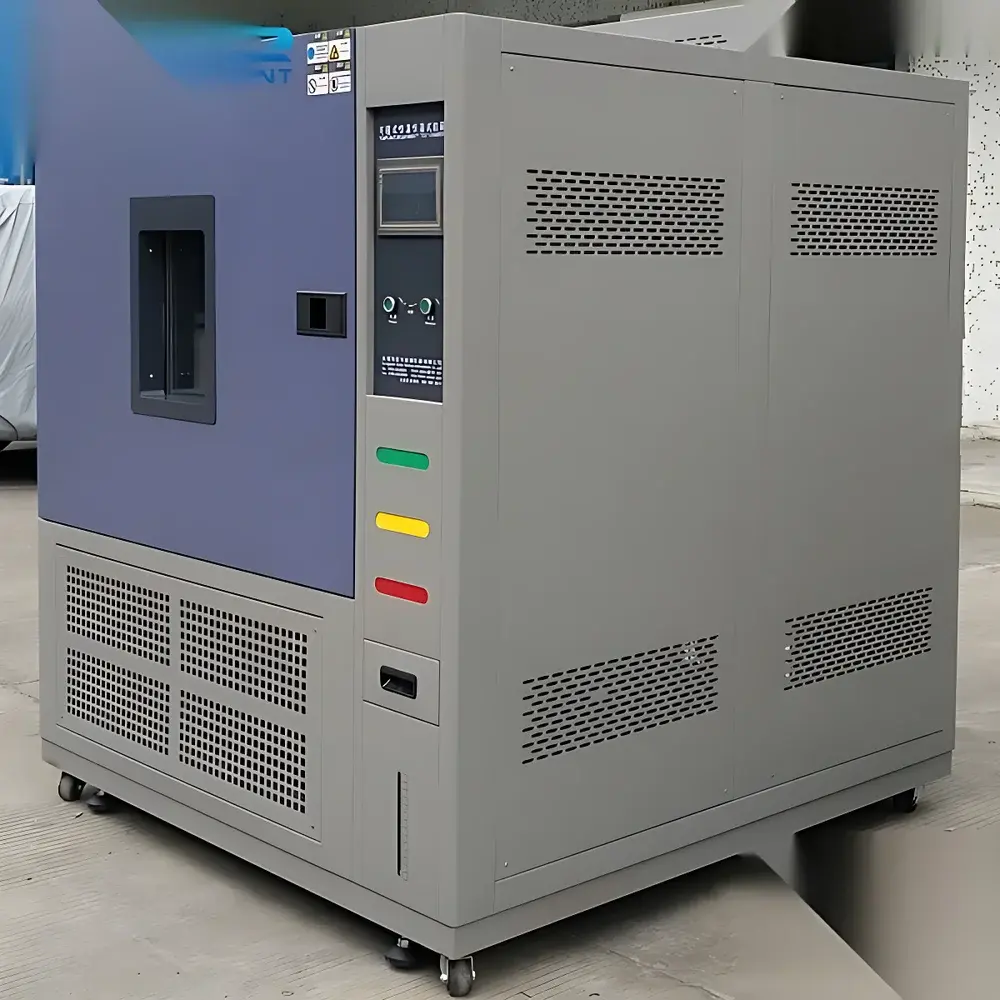
Linear Temperature and Humidity Controlled Chamber
| Brand | OEM / Custom-Built |
|---|---|
| Origin | Imported |
| Manufacturer Type | Authorized Distributor |
| Price | USD 2,800–3,200 (FOB) |
| Temperature Range | –40 °C to +150 °C (standard) |
| Humidity Range | 30–98 % RH (standard) |
| Temp. Resolution | 0.01 °C |
| Humidity Resolution | 0.1 % RH |
| Temp. Uniformity | ±0.5 °C |
| Temp. Deviation | ≤ ±2 °C |
| Humidity Deviation | ≤ ±2.5 % RH |
| Heating Rate | 2.0–3.0 °C/min |
| Cooling Rate | 0.7–1.0 °C/min |
| Control System | TEMI880 color LCD touchscreen controller with programmable ramp-soak profiles |
| Power Supply | 380 V ±5 %, 50 Hz, 3P+N+G (custom 220 V available) |
| Interior Material | SUS304 stainless steel |
| Exterior Material | SUS304 stainless steel or A3 steel with epoxy powder coating |
| Compliance | GB10589, GB10592, GB11158, GB/T5170.2, GB/T5170.5, GB2423.1, GB2423.2, GB2423.22, GB2424.1 |
Overview
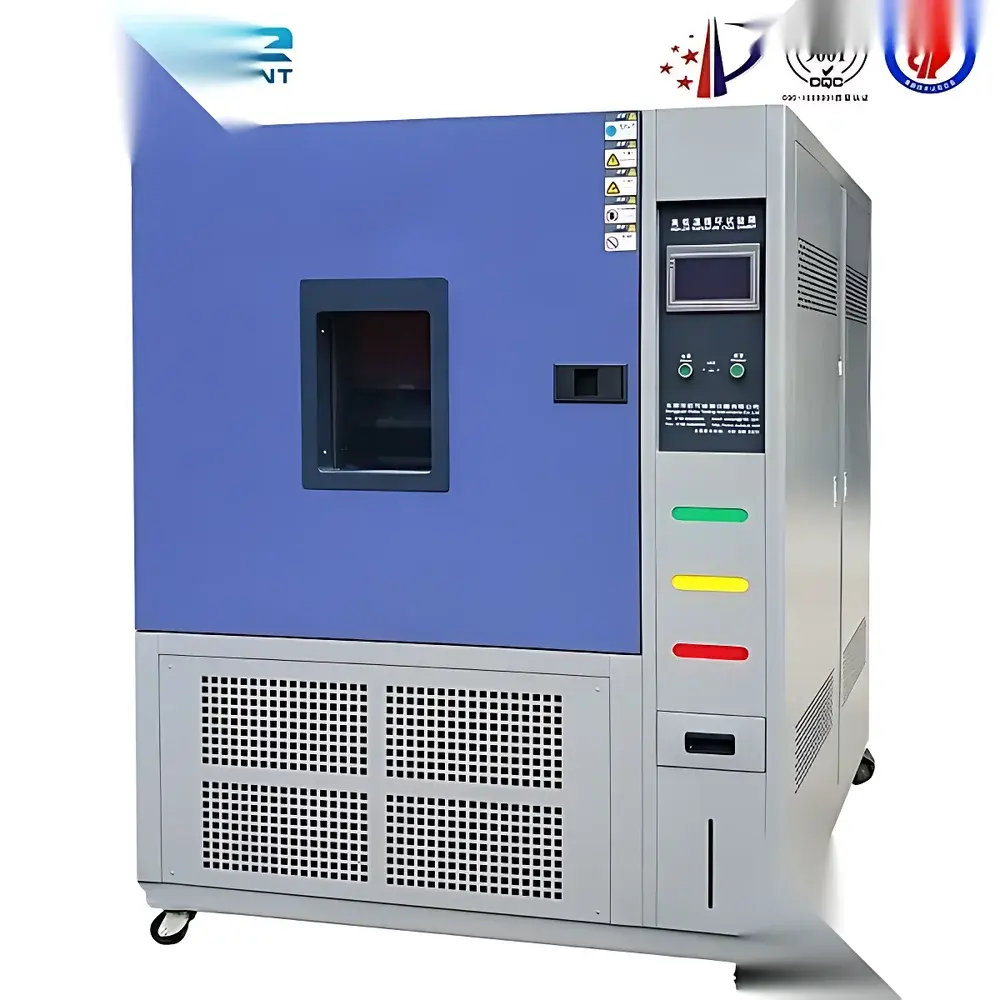
The Linear Temperature and Humidity Controlled Chamber is an engineered environmental test system designed for precise, repeatable simulation of thermal and hygrothermal stress conditions in accordance with international standards for reliability validation and material stability assessment. Operating on the principle of forced-air convection with dual independent PID-controlled refrigeration and humidification subsystems, this chamber delivers stable, linear temperature ramping and high-fidelity humidity regulation across a wide operational envelope. Its architecture supports both steady-state conditioning and dynamic profile testing—including step, ramp, and soak cycles—making it suitable for qualification testing of electronic components, polymers, pharmaceutical packaging, automotive interiors, and aerospace materials under defined climatic loads.
Key Features
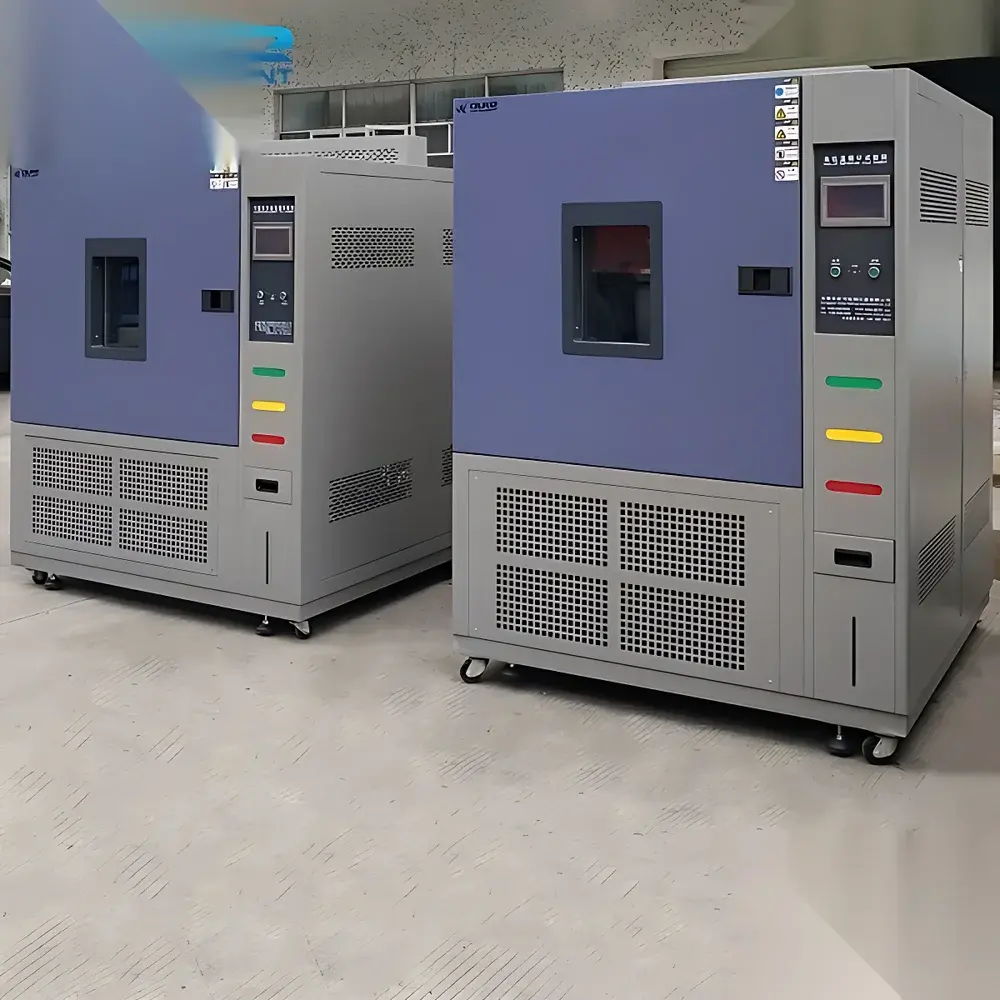
- Compact footprint design optimized for space-constrained laboratories—minimal floor area without compromising internal volume or airflow uniformity;
- Large double-layer tempered glass observation window with anti-condensation heating film ensures unobstructed visual monitoring during active test cycles;
- High-capacity, drawer-type water reservoir with quick-release mechanism simplifies maintenance and enables extended uninterrupted operation;
- Multi-tier safety protection including over-temperature cut-off, compressor high-pressure shutdown, humidity sensor fault detection, and door-open alarm with automatic power interlock;
- TEMI880 intelligent controller featuring 7-inch color LCD touchscreen interface, USB data export, real-time trend graphing, and up to 100 programmable test segments per profile;
- Robust thermal insulation using high-density polyurethane foam (≥100 mm thick) and seamless SUS304 interior construction minimizes thermal leakage and condensation risk;
- Refrigeration system configured with cascade low-temperature compressors (for –70 °C and below models) and environmentally compliant R404A/R23 refrigerant blends.
Sample Compatibility & Compliance
This chamber accommodates a broad range of sample geometries and mass loads—including PCB assemblies, molded plastic housings, battery modules, and sealed medical device packages—without significant deviation from setpoint performance when operated within specified load limits (≤30 % chamber volume occupancy). All standard configurations comply with China’s national standards GB10589, GB10592, GB11158, and GB/T5170.2–5 for environmental test equipment verification. The system supports traceable calibration documentation aligned with ISO/IEC 17025 requirements and may be validated for GLP/GMP-regulated environments upon request. Humidity control accuracy meets IEC 60068-3-5 for wet bulb/dry bulb consistency and adheres to ASTM E1823 definitions of relative humidity uncertainty.
Software & Data Management
The TEMI880 controller provides local data logging at user-selectable intervals (1–600 seconds), storing up to 10,000 hours of timestamped temperature/humidity readings internally. Data export via USB flash drive yields CSV-formatted files compatible with Excel, MATLAB, and statistical process control (SPC) platforms. Optional Ethernet or RS485 communication enables integration into centralized lab management systems (LIMS) and supports Modbus RTU protocol for SCADA interfacing. Audit trail functionality records all parameter changes, operator logins, and alarm events—meeting foundational requirements for FDA 21 CFR Part 11 compliance when deployed with supplementary access controls and electronic signature modules.
Applications
- Accelerated aging studies of polymer-based medical devices per ISO 11607;
- Thermal cycling validation of automotive ECUs according to AEC-Q200;
- Moisture absorption/desorption kinetics measurement in composite laminates;
- Stability testing of lyophilized pharmaceuticals under ICH Q1A(R2) conditions;
- Environmental stress screening (ESS) of avionics hardware per MIL-STD-810H Method 502.7;
- Qualification of consumer electronics enclosures for IPX4/IPX5 moisture resistance;
- Material coefficient of thermal expansion (CTE) characterization under controlled RH gradients.
FAQ
What is the difference between “air temperature change rate” and “product temperature change rate”?
Air temperature change rate refers to the average rate at which chamber air reaches target setpoints under no-load conditions. Product temperature change rate depends on specimen thermal mass, geometry, emissivity, and placement—typically lagging air rate by 30–60%. Actual product response must be verified separately using calibrated thermocouples.
Can this chamber operate continuously at –70 °C with 95 % RH?
No. Sub-zero operation above 85 % RH is not recommended due to frost accumulation on sensors and evaporator surfaces. For deep-cold high-humidity testing, consult engineering support for custom dehumidification bypass or desiccant-assisted configurations.
Is external cooling water required for all models?
Water-cooled condensers are mandatory for chambers rated below –40 °C or with continuous operation >8 hours/day. Air-cooled variants are available for standard –40 °C to +150 °C applications with ambient room temperature ≤28 °C.
How is traceability ensured for calibration and maintenance?
Each unit ships with a factory calibration certificate referencing NIST-traceable standards. Optional annual recalibration services include full sensor mapping, uniformity verification, and compliance reporting per ISO/IEC 17025.



