
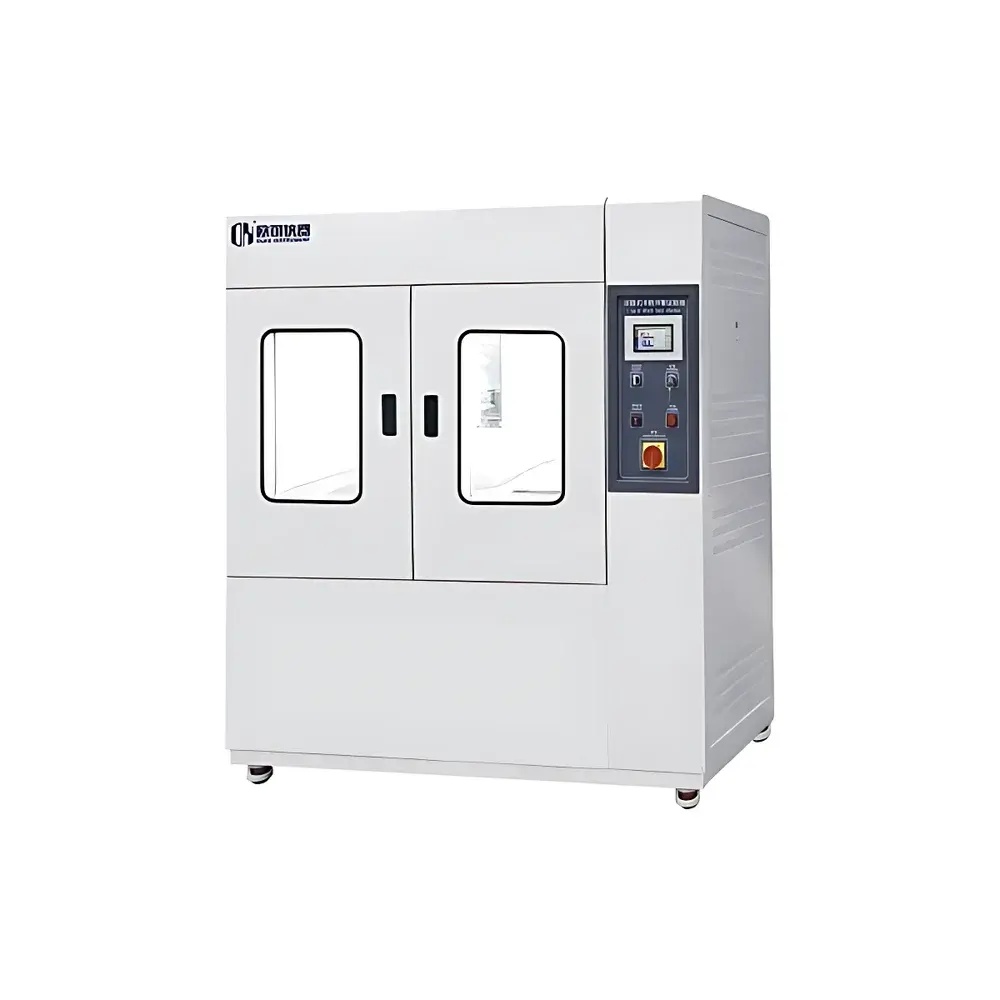
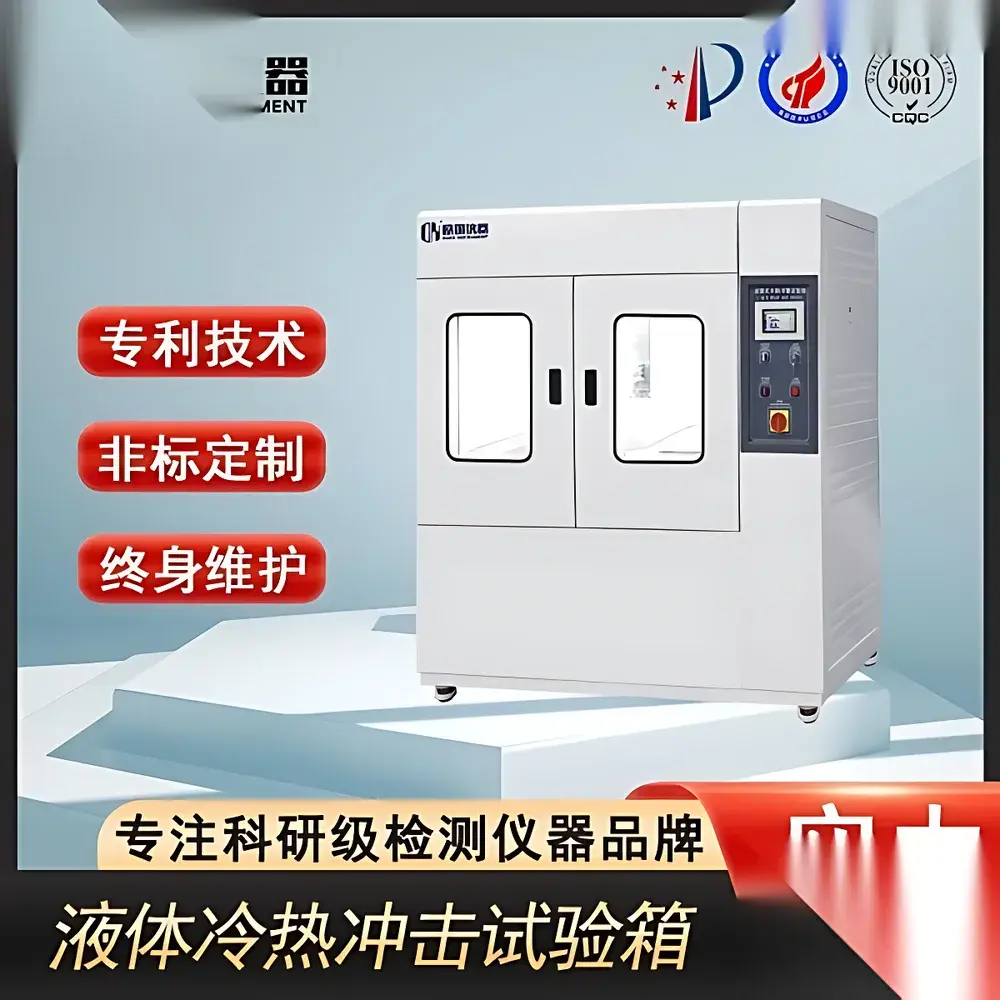
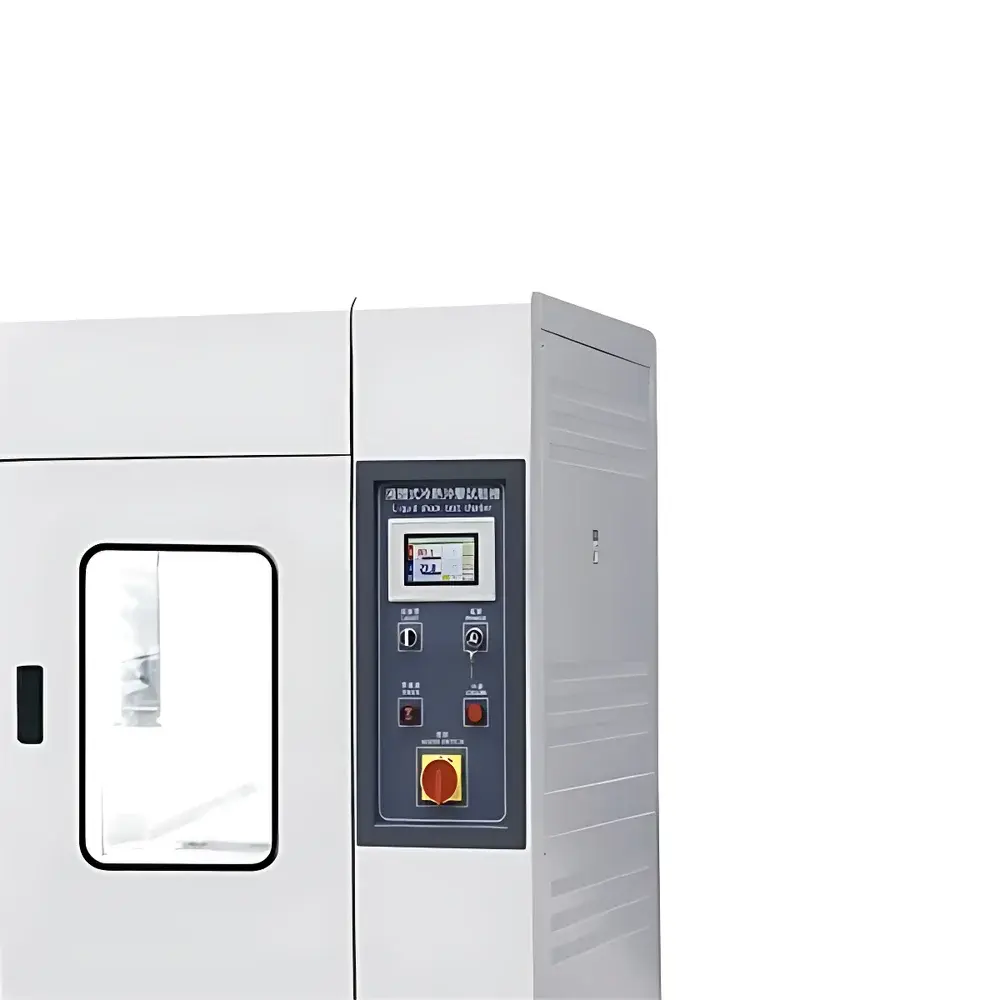
Liquid Impact Test Chamber
No specifications available.
Overview
The Liquid Impact Test Chamber is a specialized thermal shock testing system designed for rapid, high-fidelity evaluation of material integrity under extreme and alternating liquid-phase thermal stress conditions. Unlike conventional air-based thermal shock chambers, this system employs controlled immersion or jet-based liquid media (e.g., chilled glycol-water mixtures or heated silicone oil) to achieve significantly higher heat transfer coefficients—enabling sub-second temperature transition rates across test specimens. It operates on the principle of convective thermal shock, where samples undergo repeated, programmable immersion cycles between independently regulated high-temperature and low-temperature liquid baths. This methodology replicates real-world failure modes induced by abrupt thermal gradients—such as interfacial delamination in multilayer PCBs, microcrack propagation in ceramic coatings, or sealant extrusion loss in hermetic electronic enclosures. The chamber is engineered for precision repeatability in accelerated reliability qualification, particularly for components subjected to operational environments involving coolant surges, cryogenic fluid exposure, or immersion-based manufacturing processes.
Key Features
- Two-chamber or three-chamber architecture: Configurable as dual-bath (hot/cool liquid reservoirs with specimen transfer basket) or tri-bath (separate hot bath, cold bath, and neutral transfer zone) for enhanced thermal isolation and reduced cross-contamination risk.
- High-speed specimen transfer mechanism: Servo-driven lift-and-dip system with position feedback and dwell-time control; transfer time ≤ 5 seconds between baths (adjustable per test profile).
- Liquid temperature range: −65 °C to +180 °C, stabilized within ±0.3 °C over full operating range using PID-controlled immersion heaters and submerged plate-type evaporators.
- Integrated liquid circulation and filtration: Dual-loop recirculation with magnetic-drive pumps, particulate filters (≤5 µm), and inline conductivity/viscosity monitoring ports for long-term bath stability.
- Robust chamber construction: 304 stainless steel inner tank with electropolished finish; double-wall vacuum insulation on external jacket; IP54-rated electrical cabinet with NEMA 4X optional upgrade.
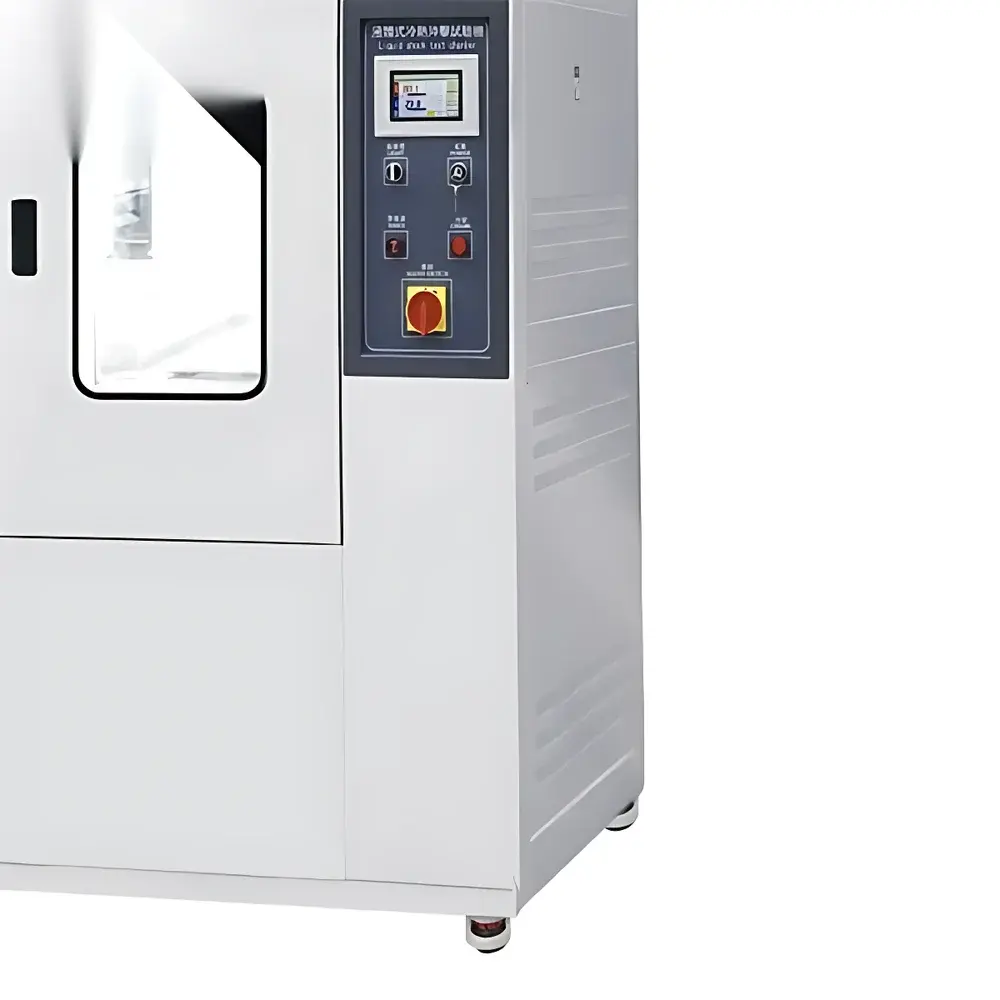
- Compliance-ready safety systems: Redundant overtemperature/overpressure cutouts, liquid-level sensors with auto-refill interlock, and emergency purge ventilation triggered by vapor concentration detection.
Sample Compatibility & Compliance
The chamber accommodates test specimens up to 600 mm × 600 mm × 600 mm (W×D×H) and supports mounting fixtures for printed circuit assemblies, automotive sensor housings, medical device polymer casings, and aerospace composite coupons. It fully satisfies the thermal shock test requirements defined in multiple international and industry-specific standards—including IEC 60068-2-14 (Test Nb: Change of temperature), MIL-STD-810H Method 503.6, ASTM D6988-21 (Thermal Shock Resistance of Plastics), and ISO 11359-2 (Thermomechanical Analysis). For regulated industries, the system supports audit-ready configuration: traceable calibration records per ISO/IEC 17025, hardware-enforced test parameter locking, and optional 21 CFR Part 11–compliant software with electronic signatures and immutable audit trails.
Software & Data Management
Equipped with Windows-based control software featuring real-time multi-channel thermal profiling (up to 16 thermocouple inputs), programmable ramp-soak profiles with conditional branching (e.g., “if surface ΔT > 120 K, hold for 30 s”), and automated report generation in PDF/XLSX formats. All raw data—including bath temperatures, specimen surface thermocouple readings, transfer timing logs, and system fault events—are timestamped with UTC synchronization and stored in SQLite database with configurable retention policies. Optional integration with enterprise LIMS or MES platforms via OPC UA or RESTful API enables centralized test data aggregation and statistical process control (SPC) analysis.
Applications
- Qualification testing of solder joints and underfill materials in advanced packaging (e.g., flip-chip, SiP) per JEDEC JESD22-A106B.
- Evaluation of thermal fatigue resistance in battery module adhesives and thermal interface materials (TIMs) exposed to liquid-cooled EV powertrain cycles.
- Validation of hermeticity and crack initiation thresholds in MEMS pressure sensors undergoing repeated coolant immersion.
- Accelerated aging studies for optical fiber cable jackets and underwater connector housings per IEEE 1242 and DNV-RP-F113.
- Process development support for selective laser melting (SLM) post-processing quenching protocols.
FAQ
What liquid media are compatible with this chamber?
Standard operation uses inhibited ethylene glycol/water (−40 °C to +120 °C) or polyalphaolefin (PAO) oil (−65 °C to +180 °C). Custom media compatibility assessments (e.g., fluorinated fluids, dielectric coolants) are available upon request.
Is external cooling water required?
Yes—dual-circuit chiller integration requires a dedicated closed-loop cooling tower delivering ≥10 m³/h at 32 °C inlet temperature. Water quality must meet ASTM D1384 specifications for corrosion inhibition.
Can the system perform non-immersion thermal shock?
No—this is a liquid-media-specific platform. For air-based thermal shock, refer to our complementary Thermal Shock Test Chambers (Model Series TS-Air).
What is the minimum dwell time between thermal transitions?
Configurable from 10 seconds to 999 minutes per bath; minimum effective dwell is governed by specimen thermal mass and required core temperature equilibration, typically validated via embedded thermistor arrays.
Does the system include calibration certification?
A factory-issued NIST-traceable calibration certificate covering all primary temperature sensors and timing circuits is provided with each unit; annual recalibration services are available under ISO/IEC 17025 accreditation.
Related Products



