
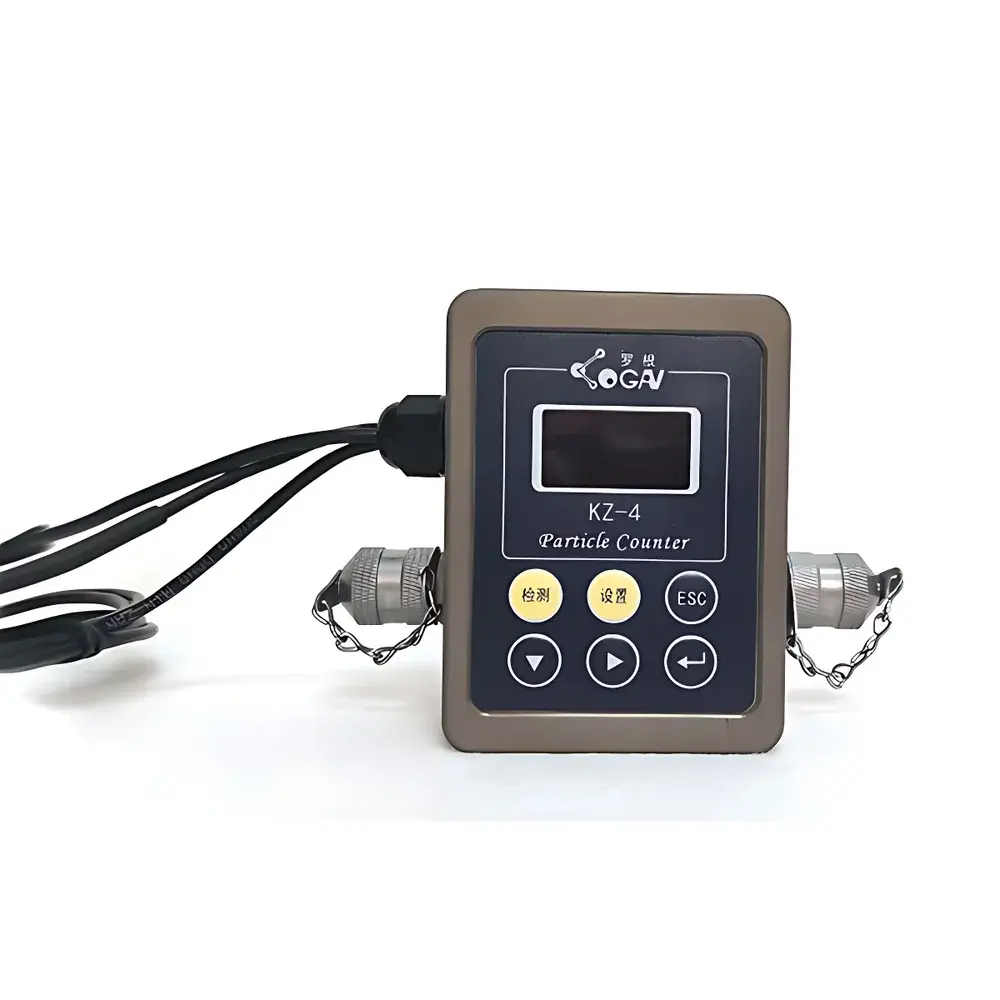
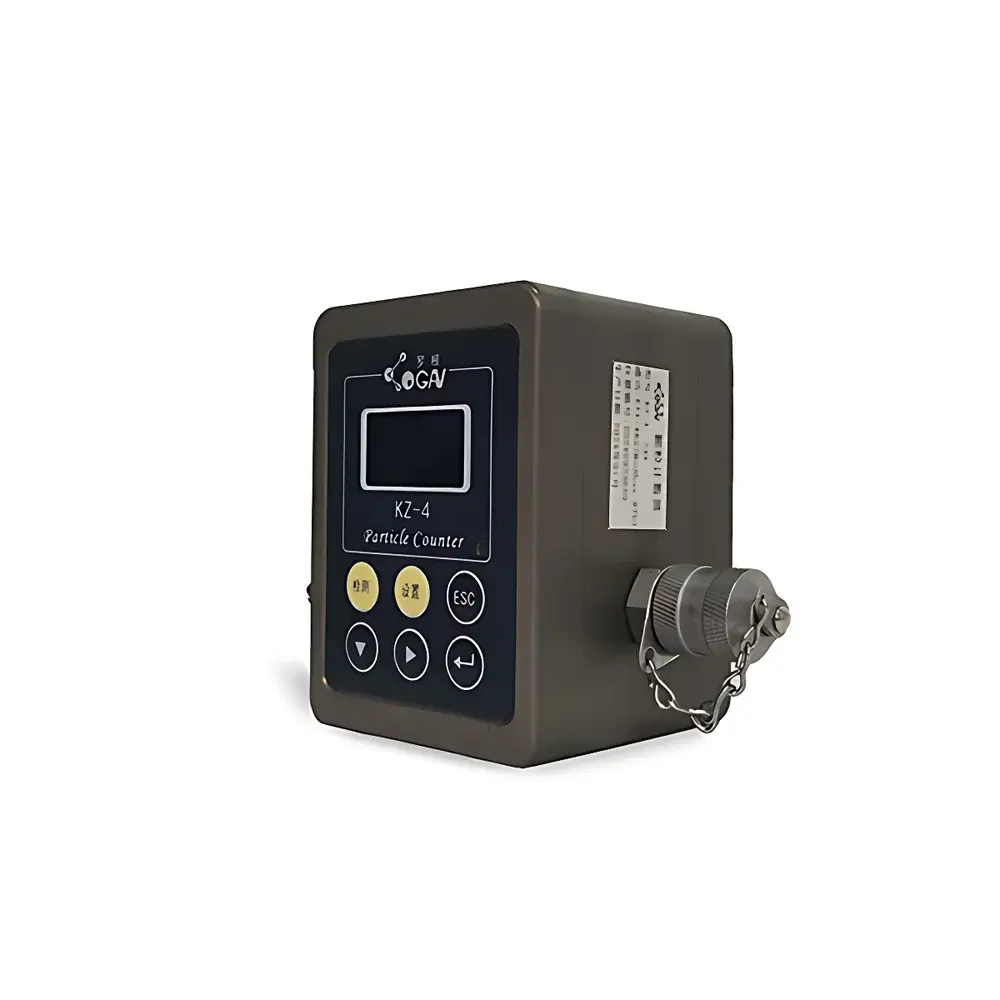
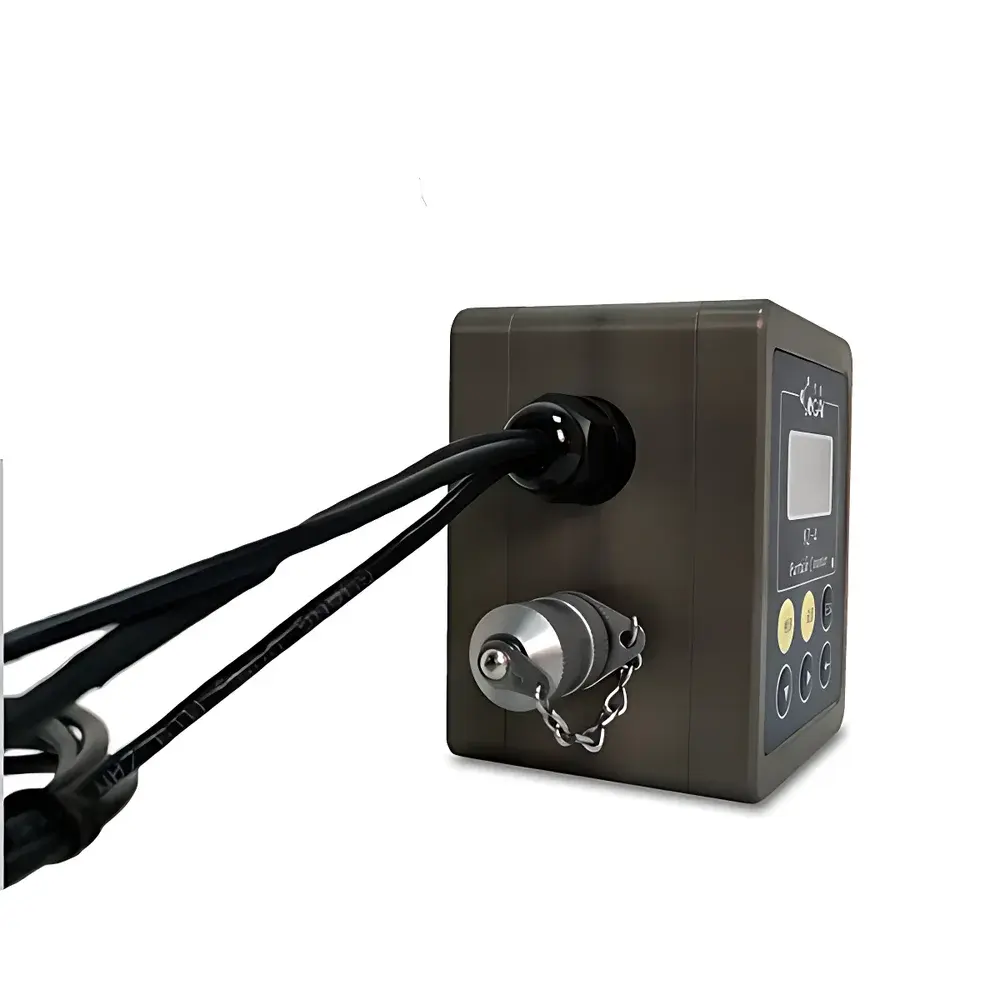
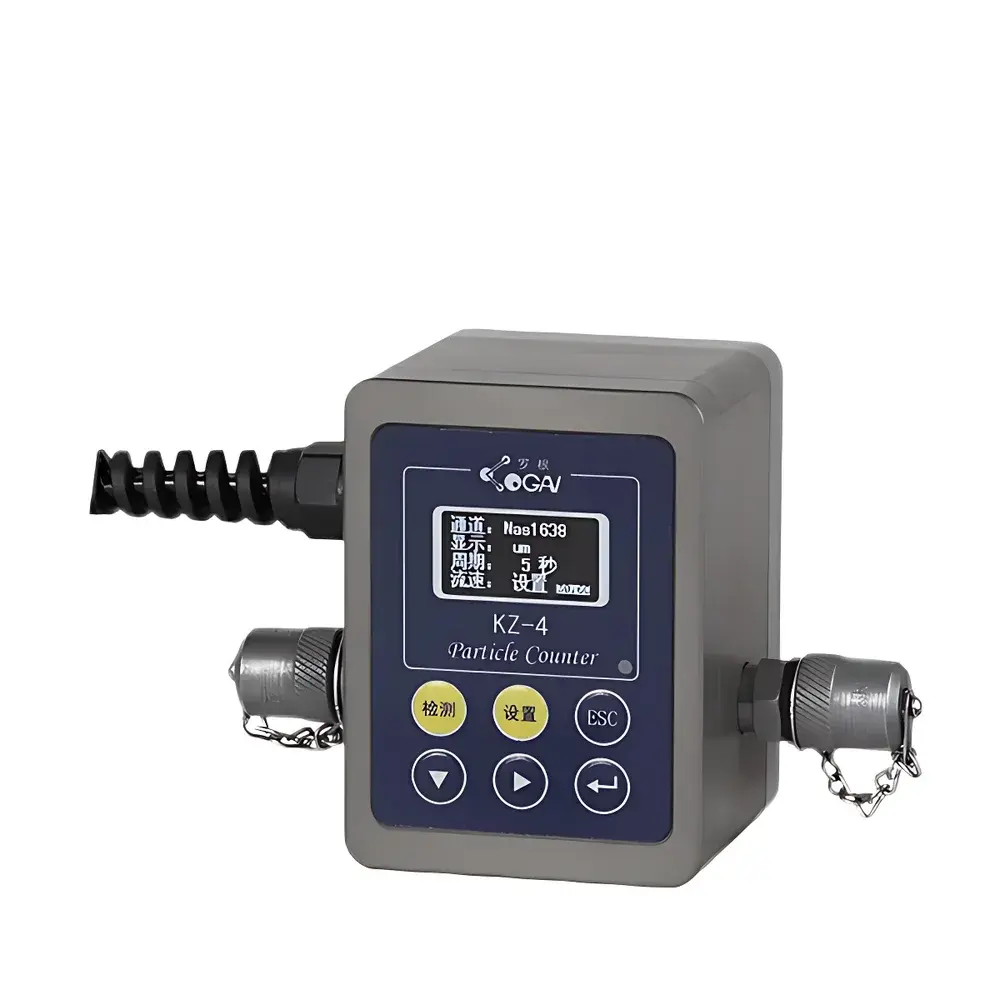
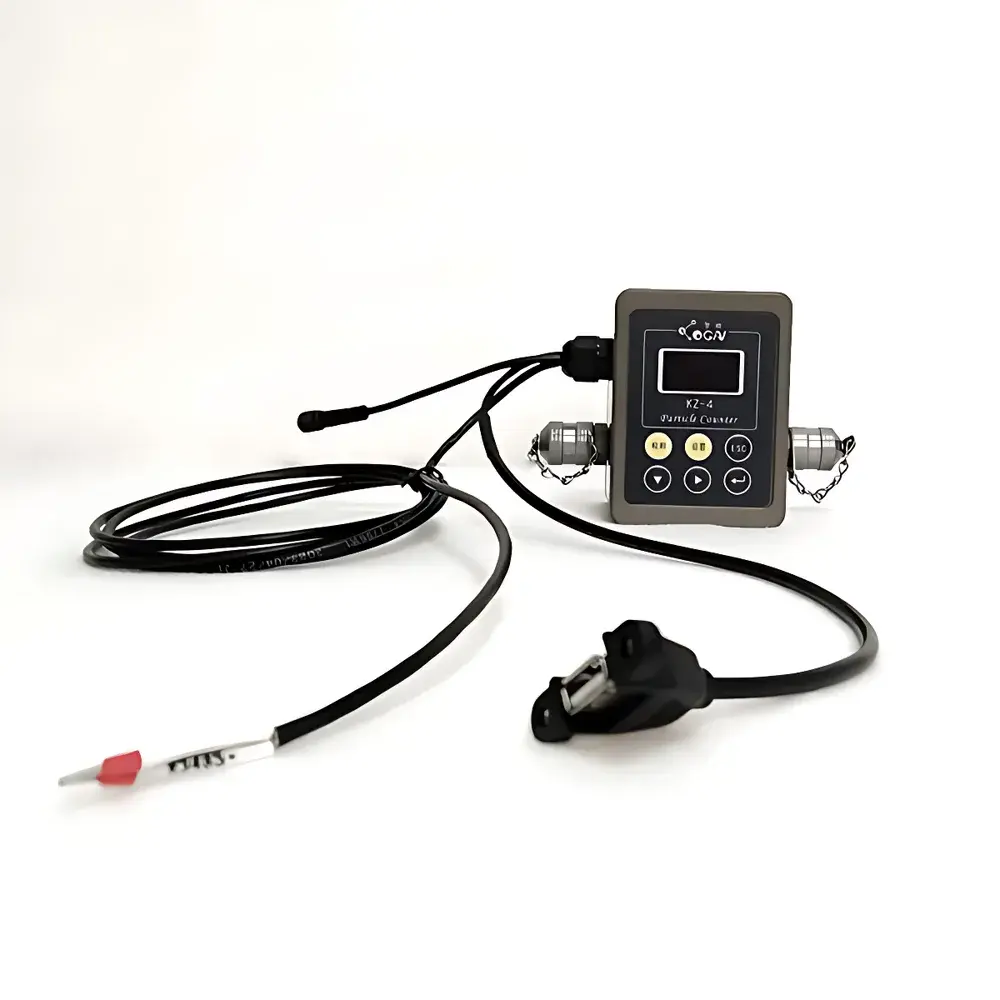
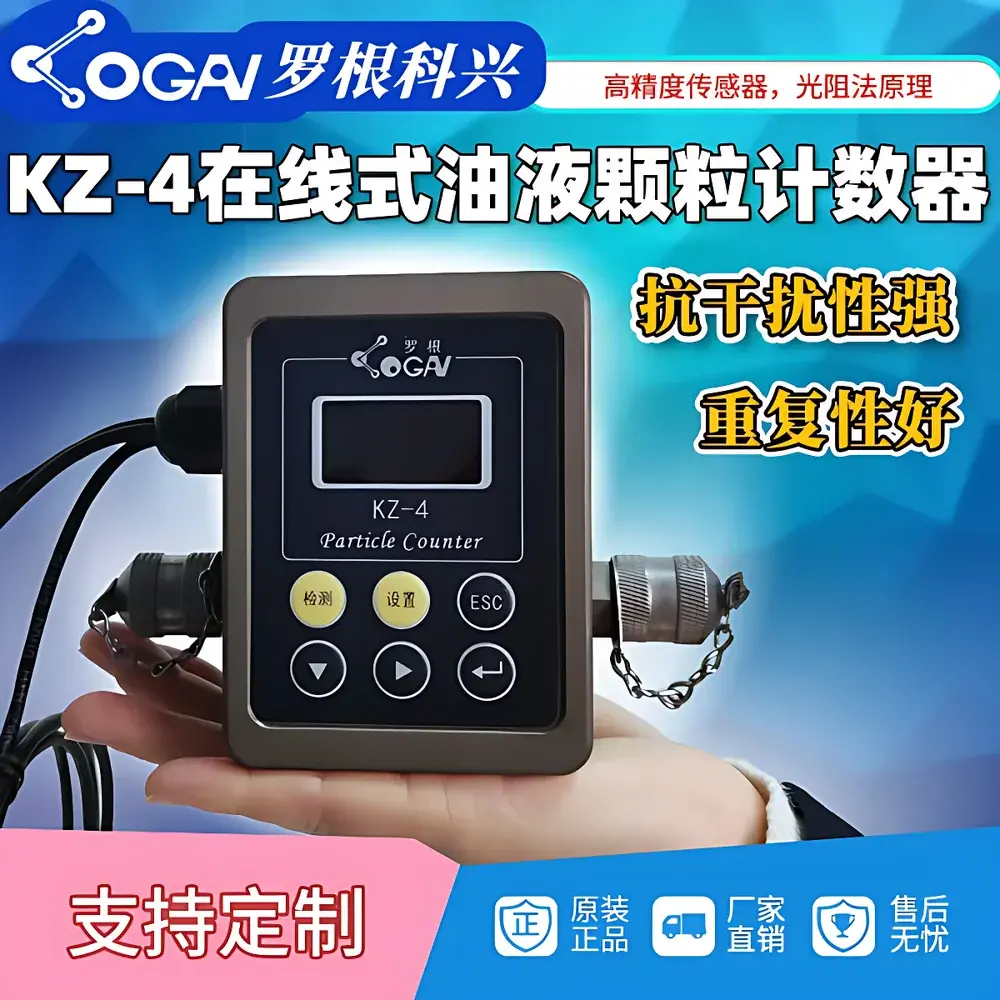
Logan KZ-4 Online Oil Particle Counter
| Brand | Logan |
|---|---|
| Origin | Tianjin, China |
| Model | KZ-4 |
| Instrument Type | Optical Particle Counter (Light Obscuration Principle) |
| Compliance Standards | NAS 1638, ISO 4406:1999, GJB 420B–2006, GJB 420A–1996, ROCT 17216 |
| Calibration Standards | ISO 4402, GB/T 18854–2002 (equivalent to ISO 11171:1999) |
| Detection Channels | 8 fixed-size channels |
| Display | OLED screen with membrane keypad interface |
| Housing Material | High-strength aluminum alloy |
| Environmental Rating | Industrial-grade, high-temperature & high-pressure resistant |
| Communication Interfaces | RS485 (standard), optional RS232 / Modbus RTU / 4–20 mA |
| Data Output Modes | Real-time particle count per channel + contamination grade |
| Optional Sensors | Water activity (a<sub>w</sub>) sensor, oil temperature sensor |
| Flow Monitoring | Integrated real-time flow rate measurement |
| Language Support | English / Chinese UI toggle |
| Explosion-Proof Variant | KZ-4F (Exib II BT3 Gb) |
| Software Features | Built-in calibration wizard, user-defined standard loading, audit-ready data logging |
Overview
The Logan KZ-4 Online Oil Particle Counter is an industrial-grade, in-line optical particle counter engineered for continuous, real-time monitoring of particulate contamination in hydraulic and lubricating oil systems. It operates on the light obscuration (LO) principle—also known as the遮光法 (light blockage method)—where particles suspended in flowing oil pass through a focused laser beam; each particle generates a transient reduction in detected light intensity proportional to its cross-sectional area. This analog signal is digitized and classified into eight preconfigured size channels (e.g., ≥4 µm(c), ≥6 µm(c), ≥14 µm(c), ≥21 µm(c), ≥25 µm(c), ≥38 µm(c), ≥50 µm(c), ≥70 µm(c)), enabling direct correlation with internationally recognized fluid cleanliness standards. Designed for permanent installation in active circulation loops, the KZ-4 delivers quantitative particle counts within 5 seconds per measurement cycle, supporting predictive maintenance, condition-based monitoring, and compliance verification across aerospace, power generation, marine propulsion, and heavy machinery sectors.
Key Features
- Real-time in-line operation with integrated flow cell—no sample extraction or offline preparation required.
- High-reliability aluminum housing rated for continuous exposure to ambient temperatures up to 80 °C and system pressures up to 35 bar.
- OLED graphical interface with intuitive membrane keypad navigation; bilingual (English/Chinese) UI toggle for global deployment.
- Eight-channel simultaneous detection aligned to standardized particle size thresholds per ISO 4406:1999 and NAS 1638 protocols.
- Built-in calibration management compliant with ISO 4402 and GB/T 18854–2002 (equivalent to ISO 11171:1999), including reference latex sphere validation routines.
- Optional integrated sensors: water activity (aw) probe (range: 0–1.0, ±0.02 aw) and PT100-class oil temperature sensor (–20 °C to +120 °C, ±0.5 °C).
- Real-time volumetric flow monitoring ensures accurate normalization of particle concentration (particles/mL) under variable system flow conditions.
- Four configurable communication modes: RS485 (Modbus RTU default), RS232, 4–20 mA analog output, and custom protocol support for SCADA/HMI integration.
Sample Compatibility & Compliance
The KZ-4 is validated for use with mineral oils, synthetic esters, polyalphaolefins (PAOs), and phosphate ester fire-resistant fluids (e.g., Fyrquel, Pyrostop). Its optical path design minimizes bubble interference and accommodates viscosities from 5 to 400 cSt at 40 °C. Regulatory alignment includes full traceability to ISO 4406:1999, NAS 1638, GJB 420B–2006 (China’s military hydraulic fluid standard), and ROCT 17216 (Russian Federation standard). The instrument supports GLP-compliant data integrity via time-stamped, non-erasable internal storage (≥10,000 records) and optional external logging via RS485. While not FDA 21 CFR Part 11 certified out-of-the-box, its audit trail architecture—including operator ID tagging, parameter change logs, and firmware version tracking—enables qualification under GMP environments with documented configuration control.
Software & Data Management
The KZ-4 embeds a deterministic real-time operating system (RTOS) managing all sensor acquisition, classification logic, and communications. Internal memory retains raw channel counts, calculated cleanliness grades, timestamps, flow rates, and environmental sensor readings. Data export is supported via ASCII-formatted serial dumps compatible with MATLAB, LabVIEW, or SQL-based CMMS platforms. A PC-based configuration utility (Windows/Linux/macOS) enables firmware updates, threshold re-mapping, custom standard definition (e.g., user-defined bin boundaries or grade mappings), and calibration certificate import. All configuration changes are logged with UTC timestamps and require password authentication—supporting ISO 9001 clause 7.5.3 and IEC 62443-3-3 requirements for secure device configuration.
Applications
- Continuous monitoring of turbine lube oil in thermal and nuclear power plants to prevent bearing wear and varnish formation.
- In-service testing of aviation hydraulic fluid (MIL-PRF-5606, MIL-PRF-83282) against GJB 420B–2006 limits during ground maintenance cycles.
- Condition monitoring of gear oil in wind turbine gearboxes, where >6 µm(c) particle spikes correlate strongly with micropitting initiation.
- Verification of filter performance in mobile hydraulic systems (e.g., excavators, mining shovels) by comparing upstream/downstream KZ-4 units.
- Baseline cleanliness certification of new oil batches prior to commissioning in semiconductor manufacturing tool hydraulics.
- Integration into naval vessel CMS (Condition Monitoring Systems) per NATO AEP-36 guidelines for fleet-wide oil health analytics.
FAQ
What particle size ranges does the KZ-4 measure?
The instrument measures eight fixed channels aligned to common industry thresholds: ≥4, ≥6, ≥14, ≥21, ≥25, ≥38, ≥50, and ≥70 µm(c), where “(c)” denotes cumulative counting per ISO 4406 conventions.
Can the KZ-4 be used with water-glycol or water-oil emulsions?
No—the light obscuration principle requires stable refractive index contrast between fluid and particles; water-based fluids induce excessive scattering and calibration drift. Use only with homogeneous hydrocarbon or synthetic base oils.
Is the KZ-4 suitable for closed-loop systems with low flow (<1 L/min)?
Yes, provided minimum flow is ≥0.3 L/min and pressure drop across the sensor remains <1.5 bar. An optional flow conditioner kit is available for laminarization in low-flow applications.
How often must the optical sensor be recalibrated?
Annual recalibration is recommended under normal operating conditions; however, field verification using NIST-traceable ISO MTD (Medium Test Dust) suspension is advised before critical measurements or after exposure to extreme contamination events.
Does the KZ-4 support Modbus TCP over Ethernet?
No—Modbus implementation is limited to Modbus RTU over RS485. For Ethernet integration, a protocol gateway (e.g., Moxa EDS-G205) is required to bridge RS485 to TCP/IP.



