
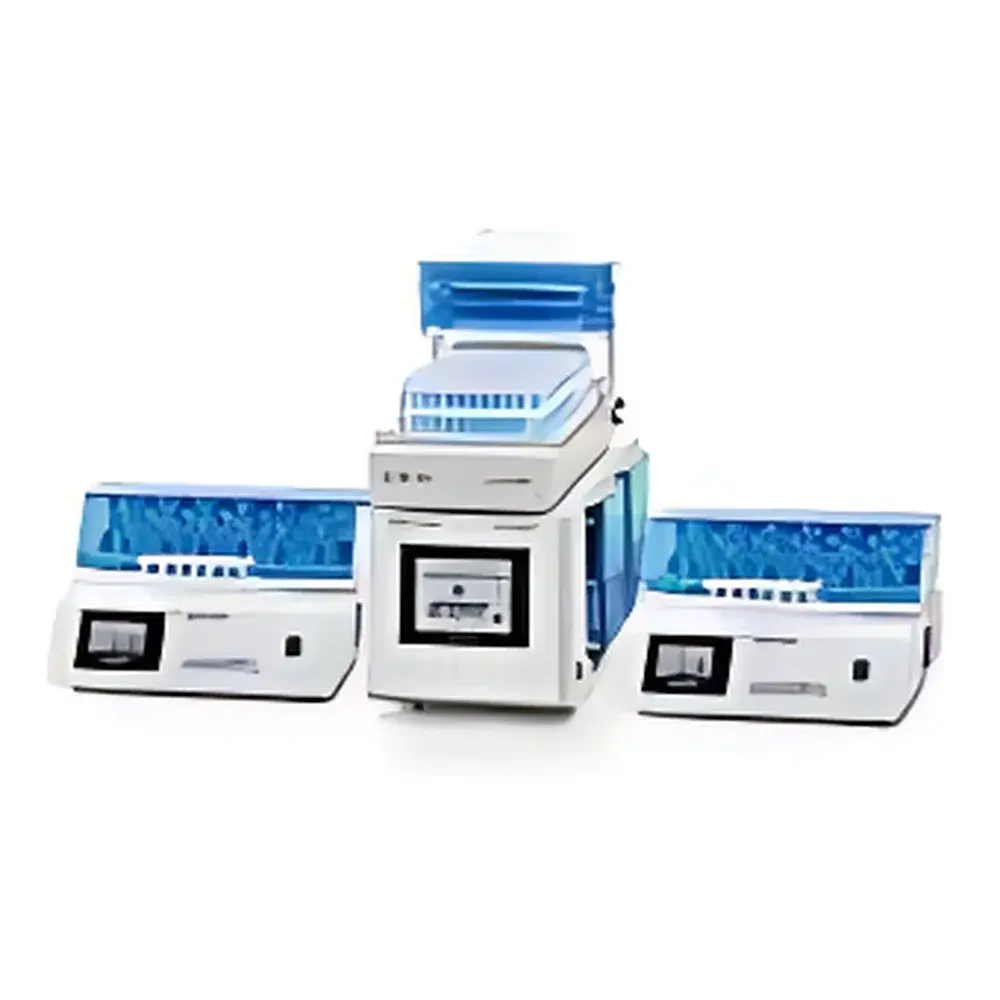
LOGAN SYSTEM 918-12 Automated Dry-Heated Transdermal Diffusion System
| Brand | LOGAN |
|---|---|
| Origin | USA |
| Model | SYSTEM 918-12 |
| Configuration | Dual DHC-6TD dry-heated diffusion stations + SCR-DL sample collector + SYP-12L-10mL precision syringe pump + DSC-800 system controller |
| Sample Capacity | 12 parallel diffusion cells |
| Heating Method | Dry-heated (Peltier-based thermal control) |
| Temperature Monitoring | Real-time acceptor medium temperature sensing |
| Compliance | FDA 21 CFR Part 11 compliant with audit trail and three-tier user access control |
| Optional Accessories | Epidermal surface temperature probe, variable-speed magnetic stirrer modules, in-line solvent degassing unit |
Overview
The LOGAN SYSTEM 918-12 is a fully automated, modular transdermal diffusion testing platform engineered for regulatory-grade permeation and release rate assessment of semi-solid and topical pharmaceutical formulations. Based on the Franz diffusion cell principle—where drug transport across biological or synthetic membranes is quantified under controlled sink conditions—the SYSTEM 918-12 implements dry-heated thermal regulation to eliminate water bath variability and condensation-related experimental artifacts. Its dual-station architecture (two independent DHC-6TD diffusion units) supports simultaneous operation of up to 12 diffusion cells, each equipped with integrated Peltier-driven temperature control, real-time acceptor medium monitoring, and programmable sampling intervals. Designed for reproducible, GLP-compliant workflows, the system adheres to pharmacopeial standards including USP (Drug Release from Topical Dosage Forms) and EP 2.9.17 (Permeation Testing), serving as a core instrument in formulation development, quality control, and regulatory submission support.
Key Features
- Dry-heated thermal control via Peltier elements ensures rapid, stable, and uniform temperature maintenance (typically 32 °C ± 0.5 °C) without water bath evaporation or microbial growth risks.
- Automated bubble elimination protocol prior to sampling prevents air entrapment in donor/acceptor compartments—critical for maintaining membrane integrity and diffusion kinetics fidelity.
- Integrated SYP-12L-10mL high-precision syringe pump enables volumetrically accurate, programmable sampling (e.g., 0.1–1.0 mL aliquots) with minimal dead volume and carryover.
- Modular DHC-6TD diffusion cells feature low-profile, easy-clean geometry with reinforced borosilicate glass and interchangeable silicone gaskets for precise dosing control (e.g., 10–50 mg application).
- SCR-DL sample collector accommodates up to 12 vials per run with position-synchronized indexing, refrigerated storage (4 °C), and barcode-compatible tube labeling.
- DSC-800 central controller provides touch-enabled interface, method scheduling, real-time parameter logging, and full audit trail generation—including user ID, timestamp, parameter changes, and sample event records.
Sample Compatibility & Compliance
The SYSTEM 918-12 supports a broad spectrum of topical dosage forms: ointments, gels, creams, emulsions, lotions, sunscreens, transdermal patches, masks, and liquid washes. It accepts both biological membranes (excised human/porcine skin, dermatomed or full-thickness) and synthetic alternatives (Strat-M®, Epiderm™, CelluSep® H1–H5). All hardware and software components comply with FDA 21 CFR Part 11 requirements for electronic records and signatures—including role-based access control (administrator, analyst, reviewer), encrypted audit logs, and non-erasable data archiving. System validation documentation (IQ/OQ/PQ protocols) and traceable calibration certificates are available to support GMP and ISO/IEC 17025 laboratory accreditation.
Software & Data Management
The embedded DSC-800 firmware supports method creation with multi-step temperature ramping, variable stirring speeds (100–600 rpm, optional), timed sampling sequences, and conditional logic (e.g., pause on temperature deviation >±0.3 °C). Raw data—including time-stamped concentration values, temperature profiles, and pump actuation events—are exported in CSV and PDF formats compatible with LIMS integration. Audit trails are stored locally with SHA-256 hashing and cannot be modified or deleted without administrative override—ensuring full ALCOA+ (Attributable, Legible, Contemporaneous, Original, Accurate, Complete, Consistent, Enduring, Available) compliance. Optional network connectivity enables remote monitoring and centralized data backup.
Applications
This system is routinely deployed in preformulation screening to evaluate excipient effects on permeation kinetics; in stability studies assessing product shelf-life impact on release profiles; in comparative bioavailability assessments between generic and reference listed drugs; and in cosmetic safety evaluation for ingredient penetration depth and systemic exposure estimation. Its modularity allows seamless expansion—multiple SYSTEM 918-12 units can be synchronized via Ethernet to form a high-throughput transdermal testing cluster supporting 24–48-cell parallel studies.
FAQ
Does the SYSTEM 918-12 support USP Apparatus 5 (paddle-over-disk) or Apparatus 6 (rotating cylinder) configurations?
No—it is purpose-built for static Franz-type diffusion cells only. Apparatus 5/6 compatibility requires separate dissolution instrumentation.
Can the system operate with non-aqueous acceptor media such as isopropyl myristate or ethanol/water mixtures?
Yes—provided viscosity and vapor pressure remain within pump and sensor operational limits (≤500 cP, ≤40 kPa vapor pressure at test temperature).
Is membrane mounting assistance (e.g., tensioning tools or alignment fixtures) included?
Standard delivery includes membrane clamping rings and silicone gasket kits; specialized tensioning tools are available as optional accessories.
What is the minimum required sample volume per diffusion cell for reliable quantification?
Minimum donor dose is 10 mg for semi-solids; minimum acceptor volume is 3.0 mL to ensure sink condition maintenance throughout the assay duration.
How frequently must the system undergo performance qualification?
Per ICH Q5C and USP , PQ should be performed after installation, following major maintenance, and at defined intervals (typically every 6 months or per internal SOP).






