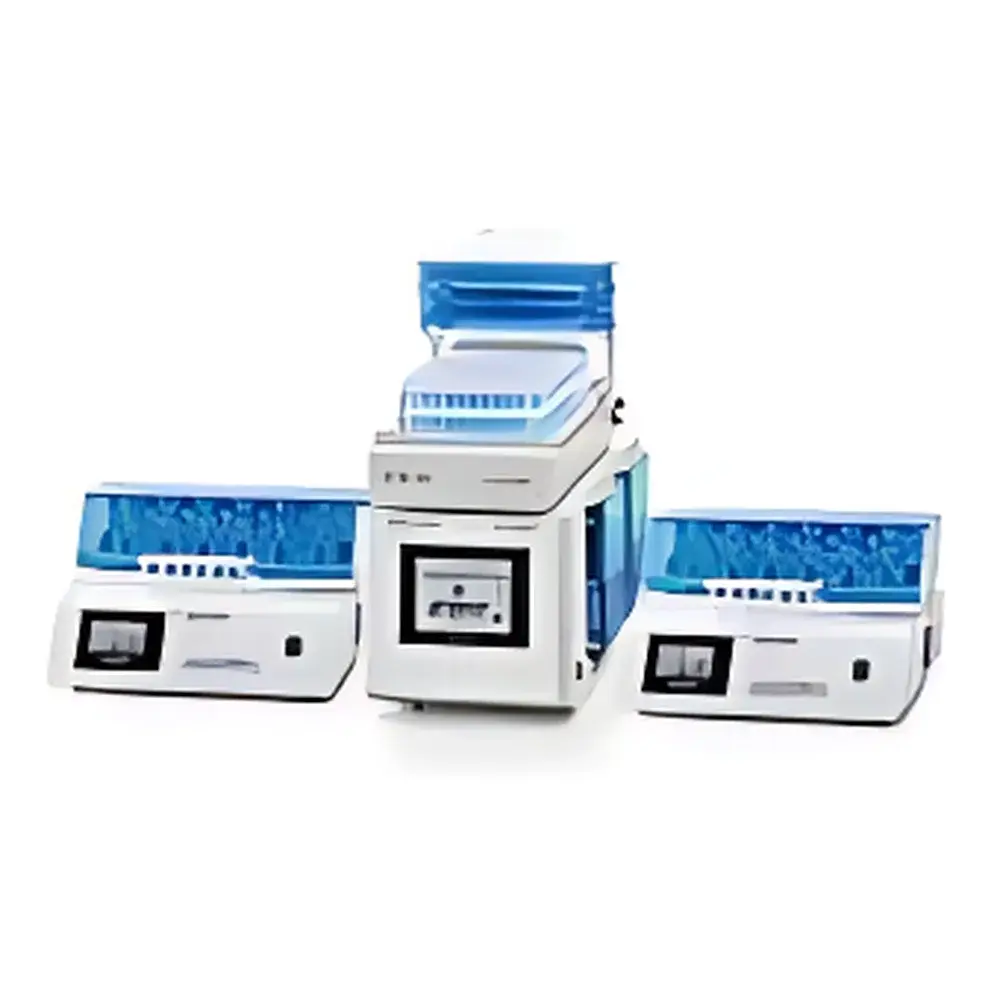
LOGAN SYSTEM 918-12 Automated Dry-Heated Transdermal Diffusion System
| Brand | LOGAN |
|---|---|
| Origin | USA |
| Model | SYSTEM 918-12 |
| Configuration | Dual DHC-6TD dry-heated diffusion stations + SCR-DL sample collector + SYP-12L-10mL precision syringe pump + DSC-800 system controller |
| Compliance | FDA 21 CFR Part 11 (audit trail, 3-tier user permissions) |
| Heating Method | Dry-heated (Peltier or resistive, contactless thermal regulation) |
| Capacity | 12 simultaneous diffusion cells |
| Sample Volume Control | Interchangeable silicone gaskets for precise dosing |
| Temperature Monitoring | Real-time acceptor medium temperature sensing per cell |
| Optional Modules | Epidermal surface temperature probe, variable-speed magnetic stirring, in-line solvent degassing unit |
| Regulatory Alignment | Designed to support GLP-compliant transdermal permeation studies per USP <724>, ASTM E2757, and ICH Q5C guidelines |
Overview
The LOGAN SYSTEM 918-12 is a fully automated, modular transdermal diffusion testing platform engineered for high-throughput, regulatory-compliant evaluation of drug permeation and release kinetics across biological membranes or synthetic barriers. It operates on the principle of Franz-type diffusion cell methodology—employing static or dynamic donor/acceptor compartment geometry under controlled thermal and mechanical conditions. Unlike conventional water-jacketed systems, the SYSTEM 918-12 utilizes dry-heating technology (via thermoelectric or precision-resistive elements), eliminating condensation risks, minimizing thermal lag, and enabling rapid, uniform temperature stabilization across all 12 diffusion cells. This architecture supports rigorous physicochemical characterization of semi-solids—including ointments, gels, creams, patches, lotions, sunscreens, and cosmetic formulations—under conditions that replicate in vivo skin microenvironment parameters such as temperature (typically 32 °C ± 0.5 °C), membrane hydration, and receptor medium composition.
Key Features
- Dual DHC-6TD dry-heated diffusion stations providing independent thermal control for two sets of six diffusion cells, each with real-time acceptor-phase temperature monitoring via embedded Pt100 sensors
- Integrated SYP-12L-10mL high-accuracy syringe pump delivering programmable, pulse-free sampling with volumetric precision ≤±1.5% across 0.1–10 mL ranges
- Automated bubble elimination sequence prior to sampling initiation, preventing air entrapment in sampling lines and ensuring hydrodynamic continuity
- Modular SCR-DL sample collector with refrigerated rack (4 °C) and barcode-scannable vial positioning for unattended, time-point–scheduled collection
- Ergonomic diffusion cell design featuring low-profile clamping, reinforced borosilicate glass housings, and quick-release silicone gasket interfaces—reducing breakage risk and enabling rapid cleaning between runs
- Insulated, light-blocking protective lid maintaining thermal stability and preventing photodegradation of light-sensitive analytes during extended assays
- DSC-800 central controller with embedded Windows OS, touchscreen HMI, and native support for audit-trail-enabled data logging compliant with FDA 21 CFR Part 11 requirements
Sample Compatibility & Compliance
The SYSTEM 918-12 accommodates a broad spectrum of formulation types and membrane substrates—including excised human/porcine skin, Strat-M® synthetic membranes, and dialysis membranes—across viscosity ranges from low-viscosity lotions (50,000 mPa·s). Its modular gasket system allows precise dosing control (0.1–5 g) through interchangeable silicone inserts calibrated for defined surface area exposure (e.g., 0.64 cm², 1.77 cm², 4.91 cm²). All hardware and software components are validated to meet ISO/IEC 17025 documentation standards and support full traceability for GLP and GMP-regulated submissions. The system satisfies method suitability criteria outlined in USP General Chapter “Drug Release” and aligns with ICH Q5C stability guidance for biotechnological products where permeation behavior influences shelf-life assessment.
Software & Data Management
LOGAN’s proprietary DSC-800 Control Suite provides role-based access (Administrator, Supervisor, Analyst) with encrypted login, electronic signatures, and immutable audit trails recording every parameter change, sampling event, calibration action, and user session. Raw data—including time-stamped concentration values, temperature logs, pump actuation signals, and alarm histories—are stored in vendor-neutral CSV and XML formats compatible with LIMS integration. The software supports customizable run protocols (e.g., staggered start times, variable sampling intervals, conditional triggers based on temperature deviation), automated QC flagging, and export-ready reporting templates aligned with regulatory submission structures (e.g., CMC sections of IND/NDAs). All firmware and application updates undergo version-controlled validation per SOP-IT-004.
Applications
This system is routinely deployed in pharmaceutical development labs for comparative bioavailability assessment of generic topical products, Q1/Q2 equivalence studies, and mechanistic investigation of enhancer effects on stratum corneum partitioning. In cosmetics R&D, it quantifies active ingredient penetration depth and retention profiles using fluorescent probes or LC-MS/MS detection. Academic researchers apply it to evaluate nanoparticle-mediated delivery, pH-dependent permeation kinetics, and barrier function modulation under inflammatory or aged-skin mimetic conditions. Its scalability—via daisy-chained DSC-800 controllers—enables synchronized operation of up to four SYSTEM 918-12 units (48-cell capacity), facilitating large-scale formulation screening or multi-center method transfer studies.
FAQ
Does the SYSTEM 918-12 support non-Franz diffusion geometries, such as infinite-dose or finite-dose configurations?
Yes—through configurable donor chamber depth, gasket thickness selection, and programmable pump dispensing profiles, the system accommodates both infinite-dose (excess donor) and finite-dose (fixed mass application) experimental designs per USP Annex 1.
Can receptor medium temperature be independently adjusted per cell group?
No—temperature is controlled per DHC-6TD station (i.e., six cells share one setpoint), but dual stations allow parallel testing at two distinct temperatures (e.g., 32 °C vs. 37 °C) within a single run.
Is validation documentation (IQ/OQ/PQ) provided with the system?
Yes—LOGAN supplies a comprehensive validation toolkit including pre-executed protocol templates, factory-as-tested reports, and instrument-specific calibration certificates traceable to NIST standards.
What third-party analytical instruments can be directly interfaced with the DSC-800 controller?
The system features RS-232, USB, and Ethernet ports supporting direct handshake protocols with HPLC autosamplers, UV-Vis spectrophotometers, and mass spectrometers equipped with TTL or ASCII command sets.
How is membrane integrity verified during long-duration runs (e.g., 48–72 h)?
The controller logs continuous temperature and pressure differentials; optional add-ons include transepidermal water loss (TEWL) sensors and electrical resistance monitors integrated into custom membrane holders.
Related Products