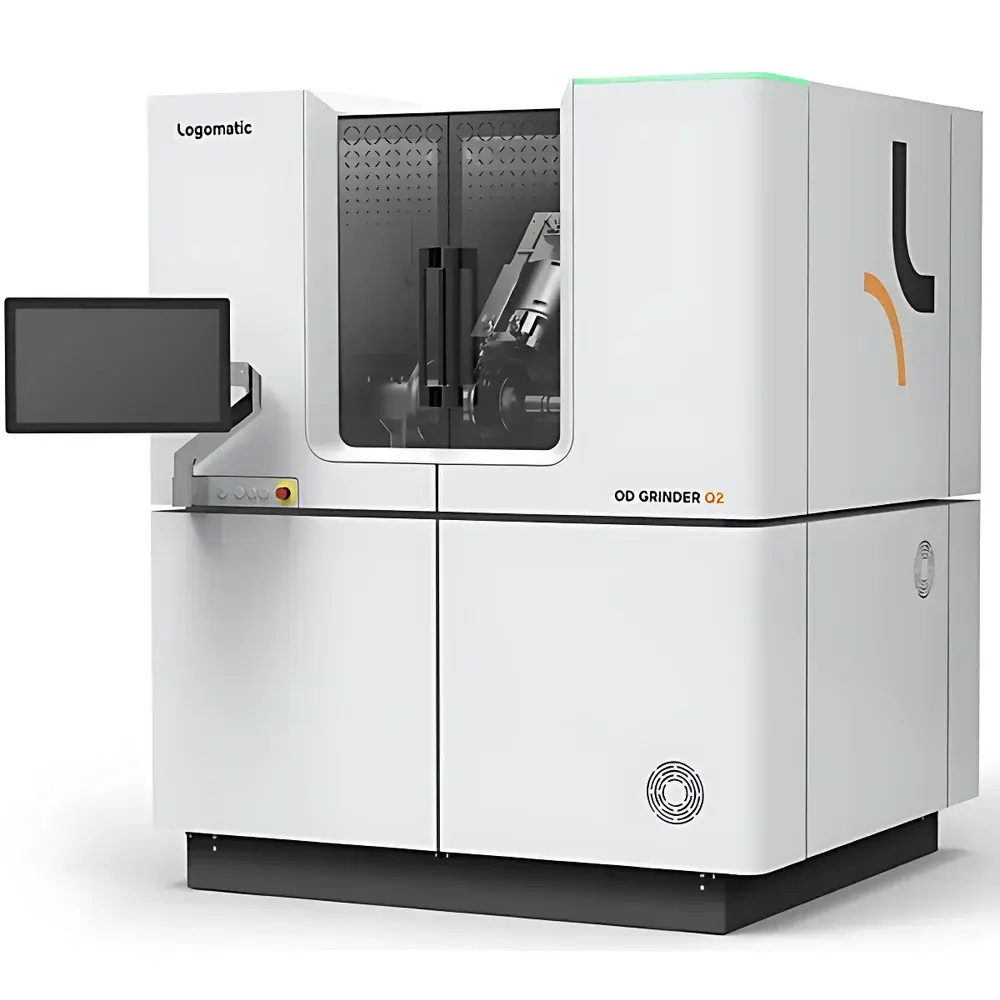
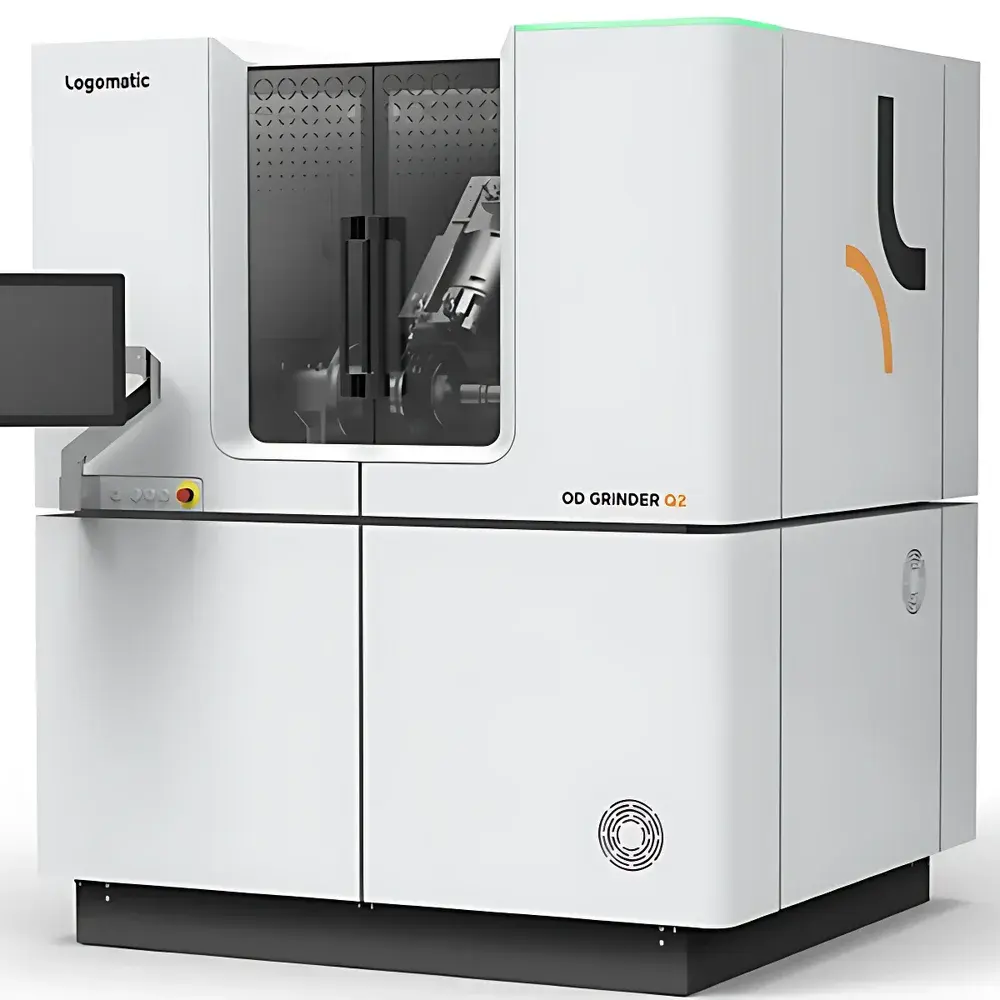
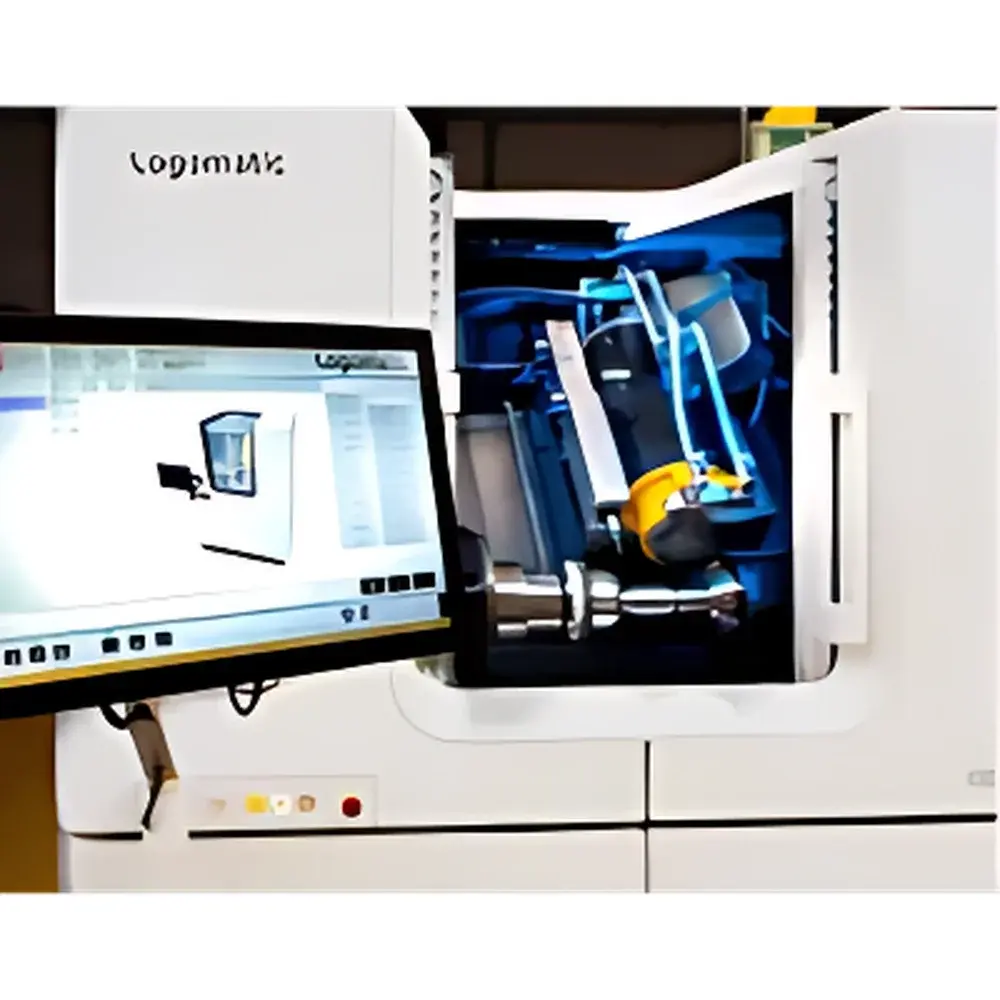
Logomatic Q2/Q2+ SiC Ingot Outer Diameter Roller Lapping Machine
| Brand | Logomatic |
|---|---|
| Origin | Germany |
| Model | Q2/Q2+ |
| Applicable Wafer Sizes | 6" and 8" |
| Max Ingot Length | 60 mm |
| Chuck Center Height | 125 mm |
| Machine Dimensions (L×W×H) | 1.8 m × 1.8 m × 1.9 m |
| Weight | 4.5 ton |
| Power Consumption | 4 kW |
| Spindle Speed | 3500 rpm |
| Integrated X-ray Orientation System | Yes |
| Peel Grinding Technology | Yes |
| Automated Notch & Flat Machining | Yes |
| Optical Notch Profile Inspection | Yes |
| Real-time Acoustic Emission & Force Sensing | Yes |
| Digital Twin Process Simulation | Yes |
| Centrifugal Pure Water Supply System (shared across up to 8 units) | Yes |
Overview
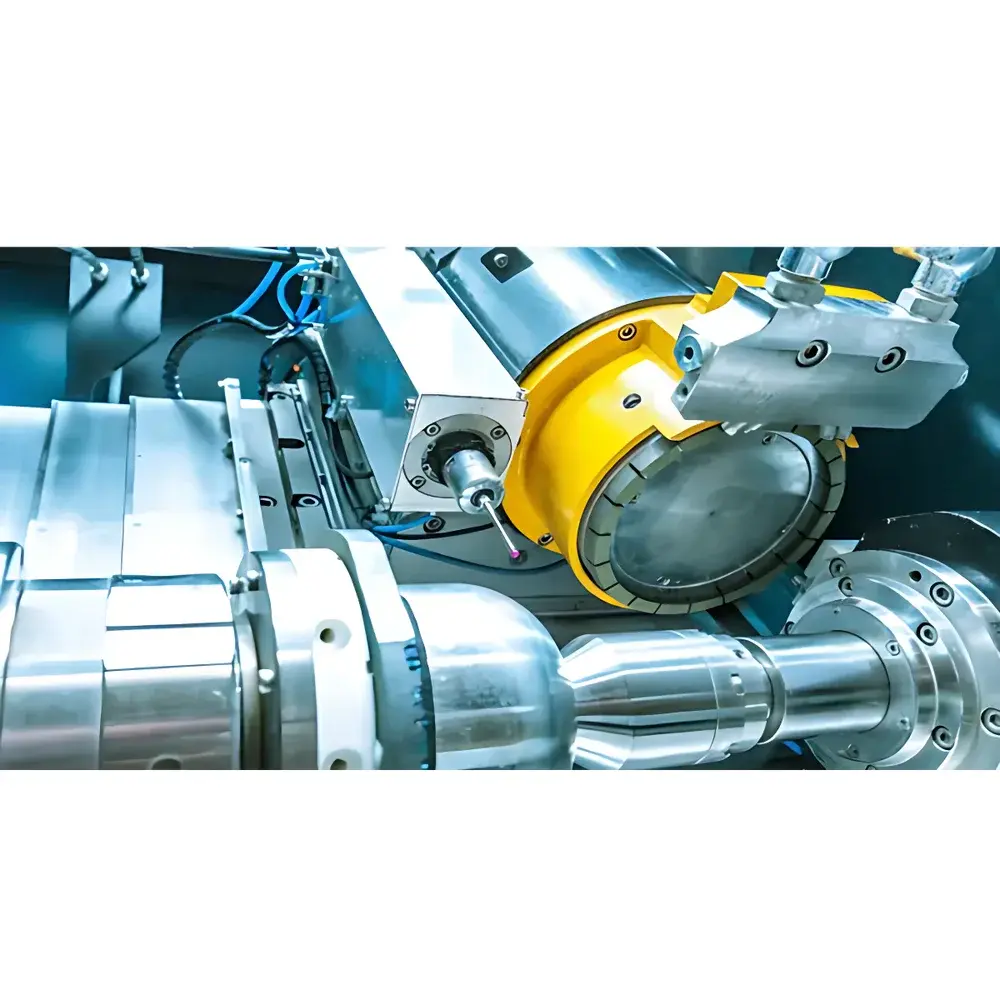
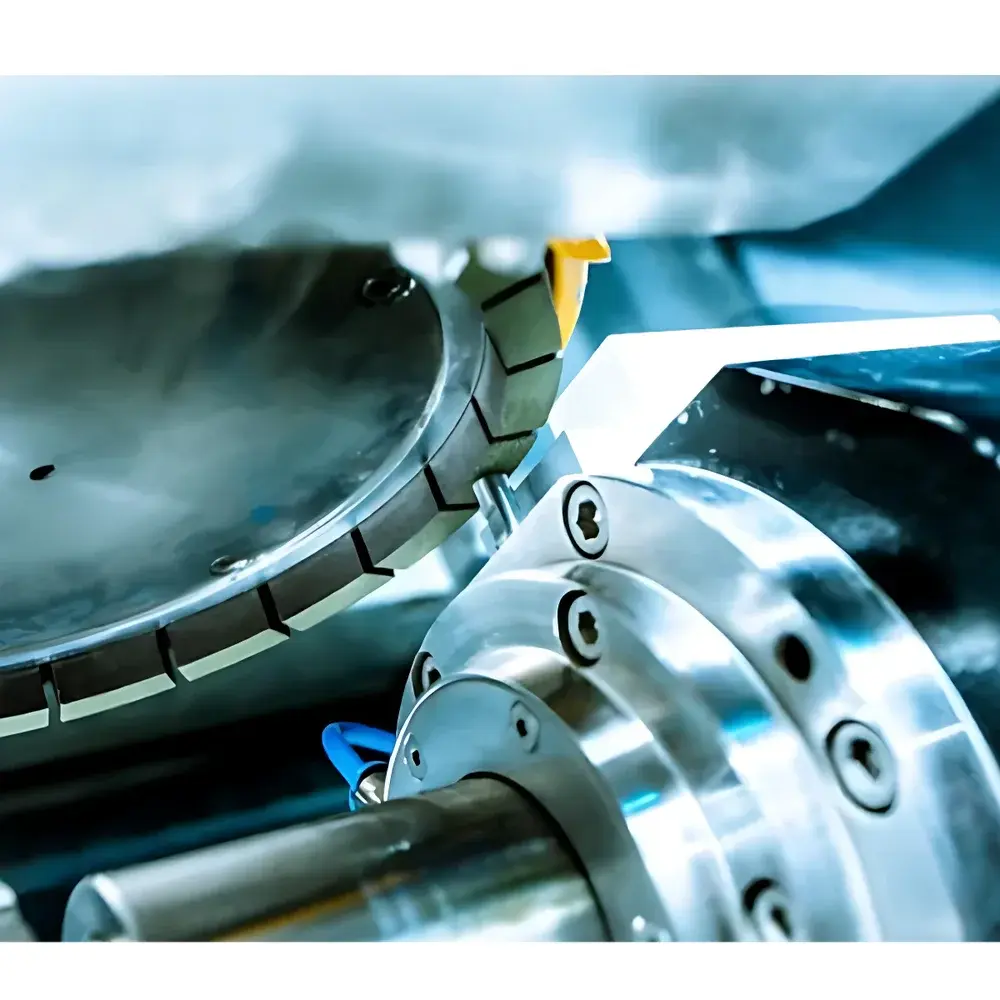
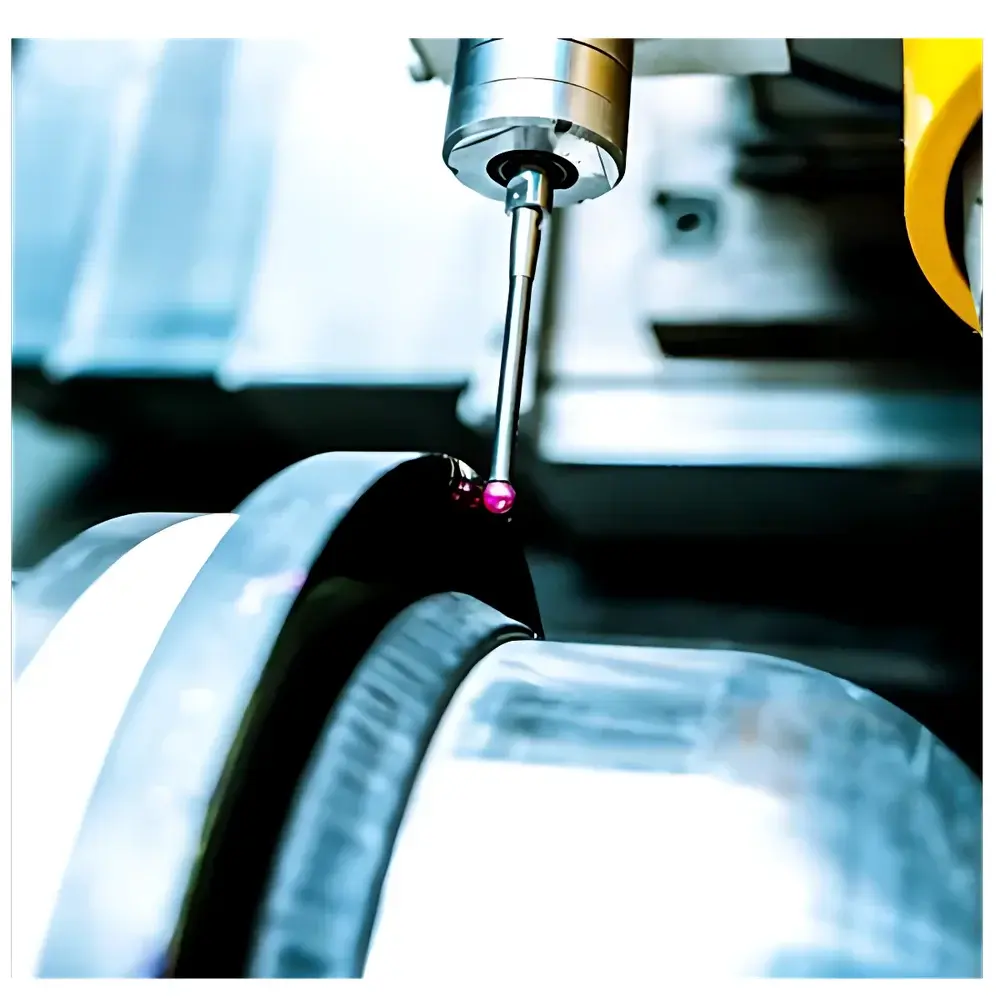
The Logomatic Q2/Q2+ SiC Ingot Outer Diameter Roller Lapping Machine is an integrated, high-precision semiconductor manufacturing platform engineered specifically for the dimensional conditioning and crystallographic alignment of silicon carbide (SiC) single-crystal ingots. Unlike conventional lapping or grinding systems designed for silicon, the Q2/Q2+ implements a proprietary peel grinding methodology—optimized for materials with Vickers hardness exceeding 25 GPa—enabling deterministic material removal while preserving crystal integrity and minimizing subsurface damage. The system combines X-ray diffraction-based crystal orientation measurement, automated OD (outer diameter) cylindrical lapping, notch/flat generation, and optical contour metrology within a single, unified work envelope. This eliminates intermediate handling, re-chucking, and manual intervention—critical for maintaining geometric fidelity and reducing cumulative positioning error in wide-bandgap semiconductor fabrication workflows. Designed for cleanroom-compatible operation (ISO Class 5–7), the Q2/Q2+ supports full traceability and process repeatability required for qualification under IATF 16949 and SEMI S2/S8 standards.
Key Features
- Integrated X-ray orientation module enabling real-time crystallographic axis identification (e.g., <0001>, <11-20>) with angular resolution ≤ ±0.1°, eliminating external pre-alignment steps.
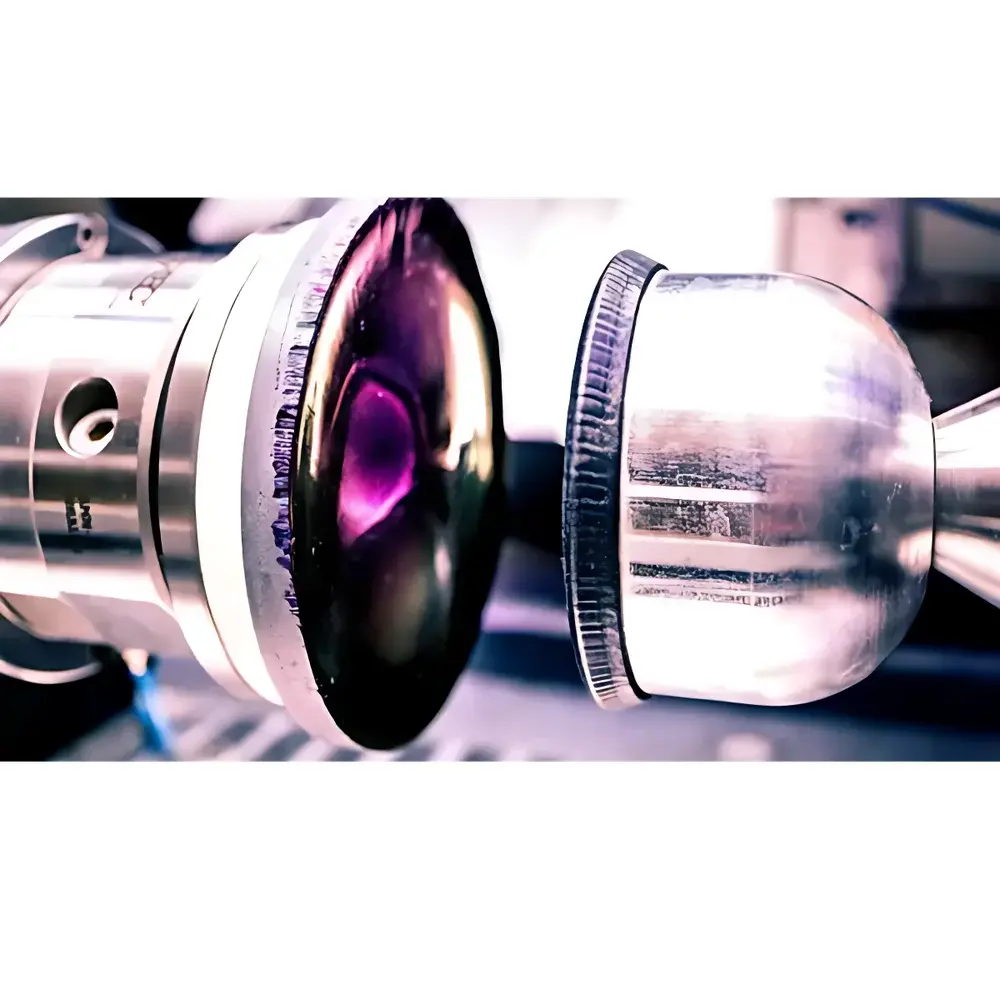
- Peel grinding architecture utilizing high-density diamond-impregnated wheels rotating at 3500 rpm, delivering controlled stock removal rates optimized for SiC’s anisotropic fracture behavior and thermal conductivity.
- Automated multi-stage lapping sequence: coarse OD leveling → fine OD finishing → notch/flat calculation & machining → optical edge profile verification—all executed without operator input or workpiece repositioning.
- Dual-sensor closed-loop control: acoustic emission (AE) sensors monitor grinding zone dynamics (e.g., wheel wear, chatter onset), while piezoelectric force transducers regulate normal grinding pressure within ±0.5 N tolerance.
- Digital twin interface allows offline simulation of lapping trajectories, thermal deformation profiles, and wheel wear compensation—validated against historical run data to optimize first-pass yield.
- Patented dual-center chucking system applies counterbalanced clamping forces to neutralize lateral grinding reaction loads, achieving roundness deviation < 1.5 µm over 6” ingots and < 2.0 µm over 8” ingots (measured per ISO 1101).
- Modular centrifugal pure water delivery system supplies filtered coolant (particle retention < 2 µm) to up to eight Q2 units from one central unit—reducing weekly deionized water consumption by ~100 L per machine and minimizing particulate contamination risk.
Sample Compatibility & Compliance
The Q2/Q2+ accommodates cylindrical SiC ingots with diameters of 150 mm (6″) and 200 mm (8″), and maximum axial lengths of 60 mm. It is compatible with both 4H- and 6H-SiC polytypes and supports post-growth ingot conditioning prior to slicing. All motion axes, sensor outputs, and process logs comply with SEMI E10 (Definition and Measurement of Equipment Reliability and Maintainability) and SEMI E142 (Data Collection and Exchange). The embedded controller meets IEC 61508 SIL2 requirements for functional safety, and audit trails—including parameter changes, calibration events, and sensor fault logs—are timestamped and cryptographically signed to satisfy FDA 21 CFR Part 11 and EU Annex 11 data integrity expectations.
Software & Data Management
The machine runs on Logomatic’s proprietary LMS-OS (Lapping Management System – Operating System), a real-time Linux-based platform with deterministic task scheduling. Process recipes are stored in encrypted SQLite databases with role-based access control (RBAC) and configurable revision history. All sensor streams (AE, force, temperature, positional feedback) are sampled at ≥10 kHz and archived in HDF5 format for post-process statistical analysis (SPC) using built-in Minitab-compatible export modules. Remote diagnostics and firmware updates occur via TLS 1.3-secured OTA channels; no local USB or Ethernet port exposure is permitted in production mode. Calibration certificates (traceable to PTB, Germany) are embedded in firmware and automatically attached to exported reports.
Applications
- Pre-slicing OD conditioning of SiC boules to achieve tight cylindricity (< 3 µm) and surface roughness (Ra < 0.4 µm) required for wire saw alignment.
- Generation of primary flat (180° reference) and secondary V-notch (for crystallographic orientation and wafer handling) meeting SEMI MF1530 specifications.
- Process development for emerging wide-bandgap materials including GaN-on-SiC substrates and AlN crystals, leveraging adjustable wheel feed rates and adaptive pressure profiling.
- Research-grade crystallographic metrology in university and national lab settings, where combined XRD + optical inspection enables correlation between lattice orientation and macroscopic geometry.
- GMP-compliant batch processing in qualified fabs, where full electronic batch records—including environmental chamber logs, coolant purity metrics, and wheel life tracking—are auto-generated per lot.
FAQ
What crystallographic orientations can the integrated X-ray system detect?
The system identifies basal plane normals (<0001>) and prismatic directions (<11-20>, <10-10>) in hexagonal SiC polytypes with angular uncertainty ≤ ±0.1°, calibrated using NIST-traceable SiC reference standards.
Is the peel grinding process compatible with other ultra-hard materials beyond SiC?
Yes—the Q2/Q2+ has been validated for use with sapphire (Al₂O₃), synthetic diamond, and boron carbide (B₄C); process parameters require material-specific wheel selection and feed rate tuning.
How is tool wear compensated during extended operation?
In-process wheel diameter measurement via laser triangulation triggers automatic offset correction in the CNC path planner; wear thresholds are configurable per recipe and logged with full traceability.
Does the system support integration into factory-wide MES/SCADA environments?
Yes—via OPC UA (IEC 62541) server interface with predefined nodes for status, alarms, recipe execution, and sensor data; certified compatibility with Siemens SIMATIC IT, Rockwell FactoryTalk, and Yokogawa CENTUM VP.
What maintenance intervals are recommended for the centrifugal water supply module?
Filter cartridges require replacement every 200 operational hours; pump impeller inspection and bearing lubrication are scheduled at 2,000-hour intervals—both tracked automatically in the LMS-OS maintenance scheduler.