
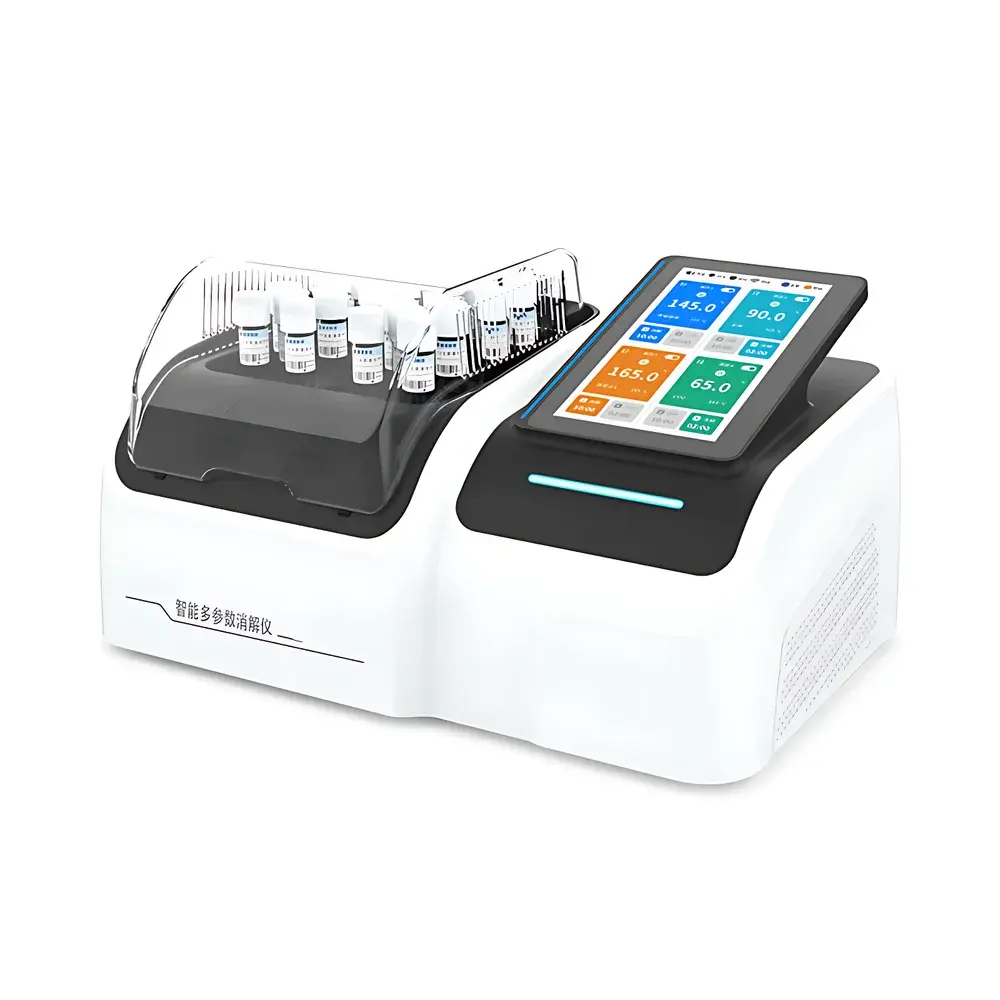
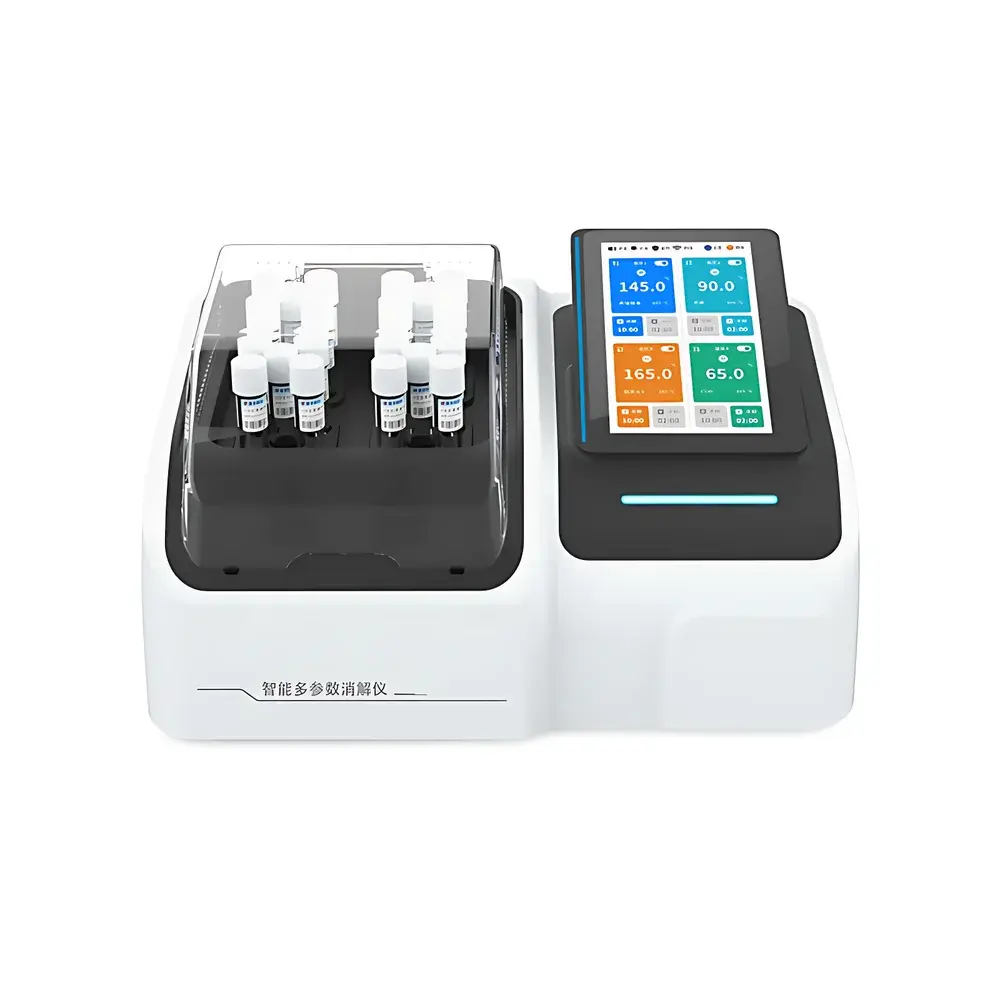
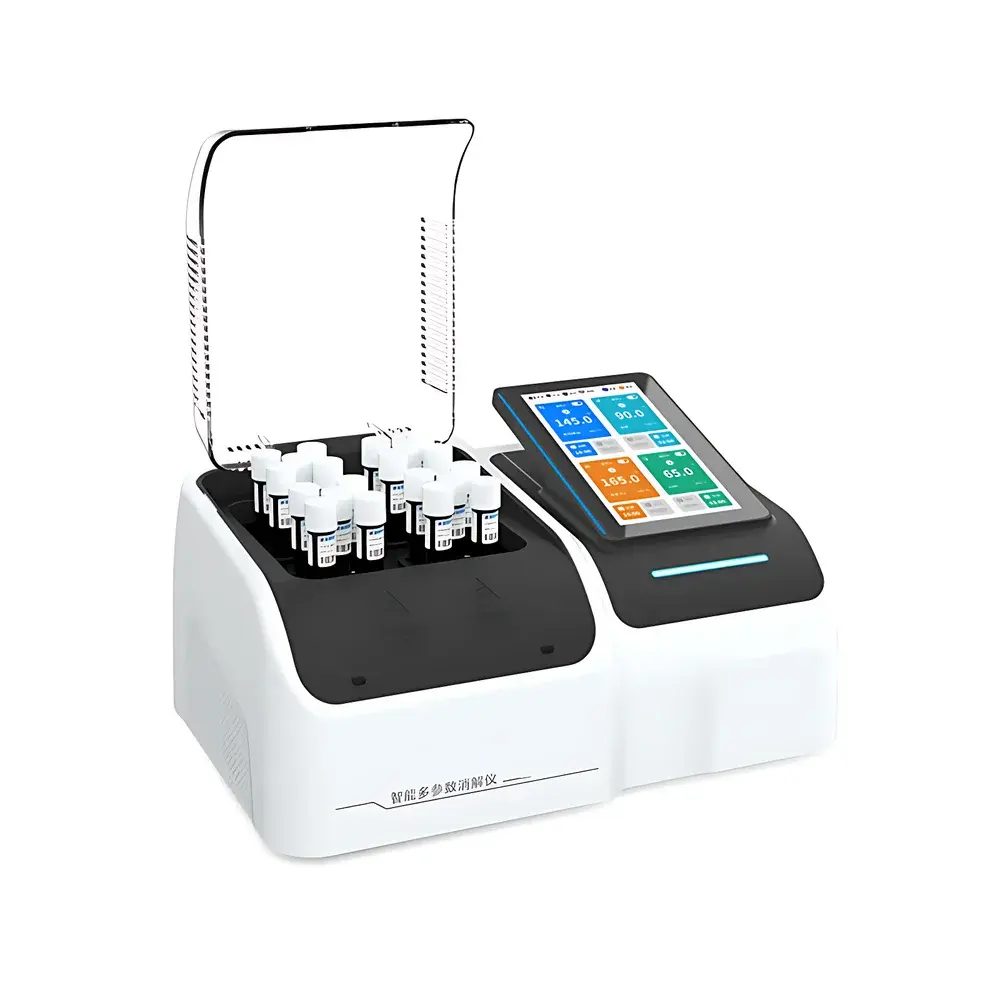
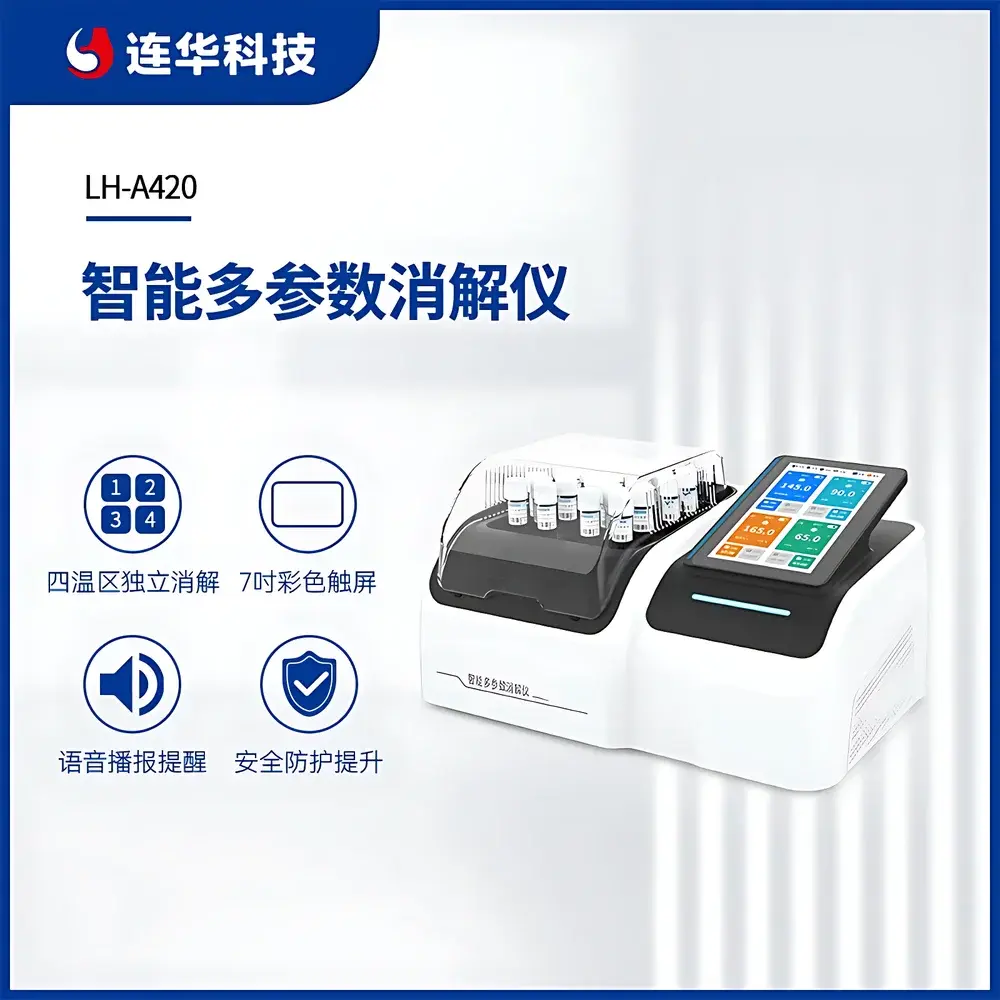
Lohan LH-A420 Smart Multi-Parameter COD Digestion System
| Brand | Lohan |
|---|---|
| Origin | Beijing, China |
| Manufacturer Type | Direct Manufacturer |
| Product Origin | Domestic (China) |
| Model | LH-A420 |
| Digestion Method | Rapid Digestion |
| Heating Module | Integrated Ceramic-Heated Aluminum Block |
| Batch Capacity | 20 samples |
| Temperature Range | Ambient to 190 °C |
| Temperature Accuracy | ≤ ±0.5 °C |
| Sample Volume Capacity | 0–10 mL |
| Timer Drift | ≤ 0.2 s per 60 min |
Overview
The Lohan LH-A420 Smart Multi-Parameter COD Digestion System is an engineered platform for standardized, high-throughput chemical oxygen demand (COD), total phosphorus (TP), total nitrogen (TN), and other redox-sensitive parameter digestions in environmental water analysis. Based on the principle of closed-vessel acid digestion under controlled thermal conditions—typically employing potassium dichromate (K₂Cr₂O₇) or persulfate oxidation—the LH-A420 ensures reproducible matrix decomposition across diverse aqueous matrices including wastewater, surface water, groundwater, and industrial effluents. Designed to comply with core methodology standards—including ISO 6060 (water quality — determination of chemical oxygen demand), HJ 828–2017 (Chinese EPA standard for COD by dichromate method), and ASTM D1252 (test methods for chemical oxygen demand of water)—the system delivers traceable, auditable thermal treatment essential for regulatory reporting and laboratory accreditation (e.g., CNAS, ILAC-MRA).
Key Features
- 7-inch capacitive touchscreen interface with intuitive icon-based navigation and real-time status visualization
- Integrated voice guidance system with adjustable volume slider; supports bilingual (English/Chinese) prompt language selection via software configuration
- Full-height transparent heat-resistant polycarbonate safety shield—mechanically interlocked to halt heating if opened during operation
- Intelligent thermal regulation algorithm: dynamically modulates power output upon reaching setpoint to minimize temperature overshoot and improve inter-run consistency
- User-configurable digestion hold time (protection delay), enabling extended stabilization post-heating for volatile analyte retention
- Aerospace-grade ceramic fiber insulation layer mounted above the aluminum heating block, reducing surface temperature of the module top to <45 °C during 190 °C operation
- Digitally engraved well numbering (01–20) on each digestion port for unambiguous sample tracking and chain-of-custody documentation
- Floating control toolbar accessible from any screen state—enables one-touch toggle of audio alerts, LED status lighting, Wi-Fi connectivity, and protection delay function
Sample Compatibility & Compliance
The LH-A420 accommodates standard 16 mm × 100 mm borosilicate glass digestion tubes (0–10 mL volume range), compatible with both open-reflux and sealed-tube digestion protocols. Its uniform thermal distribution across all 20 wells—validated per IEC 61000-4-3 (EMC immunity) and GB/T 2887–2011 (environmental conditions for electronic equipment)—ensures ≤±0.5 °C inter-well temperature deviation at 165 °C. The system meets GLP-relevant design criteria: audit-trail-capable event logging (start/end time, temperature profile, user ID), password-protected method editing, and non-volatile memory retention of all 22 preloaded digestion programs—including 17 standardized methods aligned with HJ 399–2007 (COD), HJ 670–2013 (TP), and HJ 636–2012 (TN). All firmware and calibration records are exportable as CSV for internal QA review or external audit.
Software & Data Management
Running a hardened, Linux-kernel-derived LHOS (Lohan Hybrid Operating System)—a purpose-built fork of Android Open Source Project (AOSP) v11—the instrument supports secure over-the-air (OTA) firmware updates via WPA2-Enterprise Wi-Fi. Local data storage includes timestamped digestion logs (date, time, method ID, max temp, duration, operator tag), exportable via USB-C or encrypted SFTP. Remote monitoring is enabled through optional Lohan CloudLink™ gateway integration (sold separately), providing TLS 1.2–secured access to real-time instrument status, historical run summaries, and predictive maintenance alerts based on cumulative heating cycles. All system logs conform to ALCOA+ principles (Attributable, Legible, Contemporaneous, Original, Accurate, Complete, Consistent, Enduring, Available) for regulated environments.
Applications
- Routine COD analysis in municipal wastewater treatment plants (WWTPs) and industrial pretreatment labs
- Multi-parameter digestion for simultaneous TP/TN/COD determination in compliance with national discharge permits
- Method development and validation studies requiring precise thermal ramping and dwell control
- Training laboratories requiring guided workflows, contextual help overlays, and fault-diagnostic decision trees
- Field-deployable mobile labs where compact footprint (320 × 280 × 210 mm), low power draw (<800 W), and robust mechanical construction support transport and rapid setup
FAQ
Does the LH-A420 support ASTM D1252 or ISO 6060-compliant digestion protocols?
Yes—preconfigured Method #01 aligns with ISO 6060 Annex A (2-h reflux at 150 °C); Method #03 implements ASTM D1252 Part B (closed-tube digestion at 165 °C for 2 h). Full method parameters are editable and exportable.
Can digestion programs be exported or backed up externally?
Yes—via USB-C drive, users may export/import .lhp (Lohan Protocol) files containing temperature ramps, dwell times, audio prompts, and naming labels. Backup archives include digital signatures for integrity verification.
Is the voice guidance system available in English only?
No—it ships with dual-language capability (English and Simplified Chinese); language selection is configurable under Settings > System > Language without firmware update.
What safety certifications does the LH-A420 carry?
It complies with GB 4793.1–2019 (IEC 61010-1 equivalent for electrical safety), GB/T 18268.1–2010 (EMC for lab equipment), and has passed flame-retardancy testing per UL 94 V-0 for housing materials.
How is calibration traceability maintained?
Temperature sensor calibration is performed using NIST-traceable dry-block calibrators (±0.1 °C uncertainty); calibration certificates and adjustment logs are stored in the instrument’s secure partition and accessible to authorized administrators only.
Related Products







