
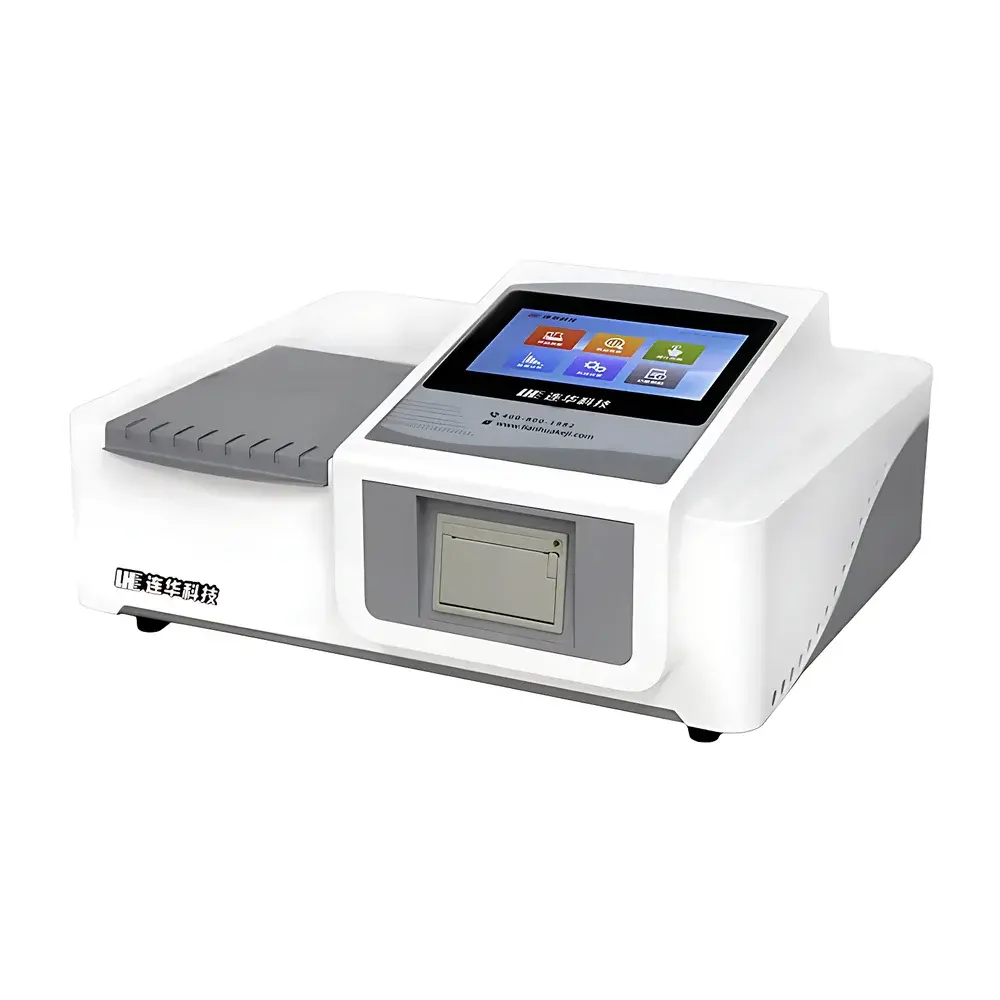
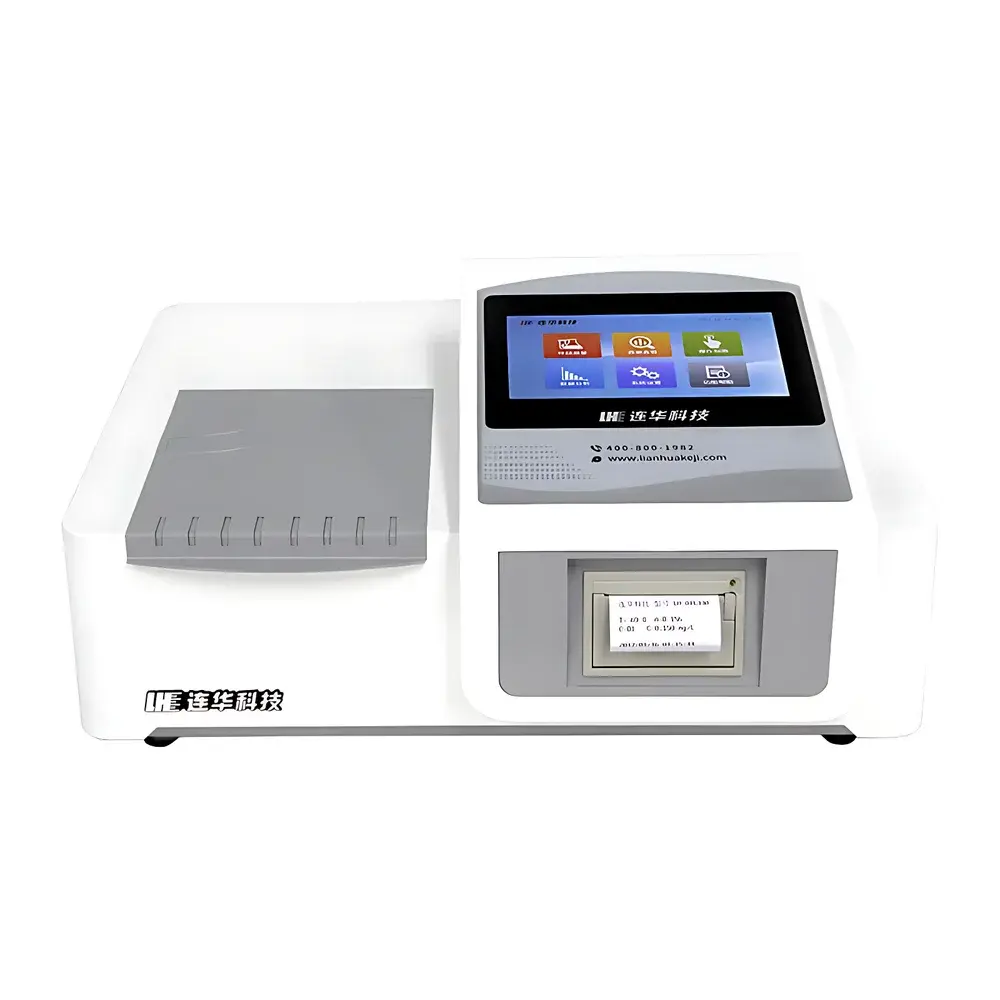
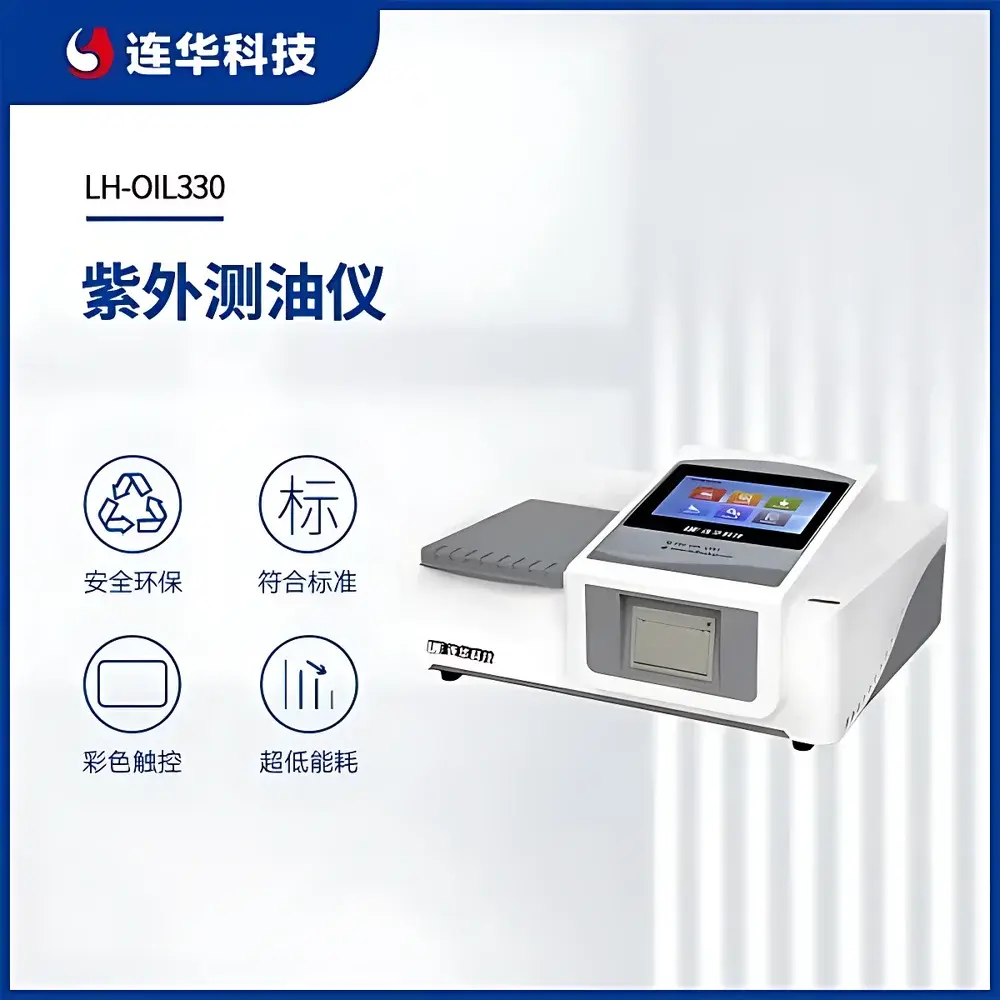
Lohan LH-OIL330 UV Spectrophotometric Oil Content Analyzer
| Brand | Lohan |
|---|---|
| Origin | Beijing, China |
| Manufacturer Type | Direct Manufacturer |
| Regional Category | Domestic (China) |
| Model | LH-OIL330 |
| Instrument Type | Laboratory Benchtop Analyzer |
| Measurement Principle | UV Absorption Spectrophotometry (225 nm) per HJ 970–2018 |
| Measurement Range | 0.04–100 mg/L |
| Detection Limit | 0.01 mg/L |
| Accuracy | ≤10% RSD |
| Resolution | 50,000 ppm (equivalent to 0.002 mg/L at full scale) |
| Analysis Cycle Time | 35 min per sample |
| Compliance | HJ 970–2018, GB/T 16488–1996 (replaced), ISO 9377-2:2000 (referenced for petroleum hydrocarbon quantification) |
| Sample Throughput | Single-sample batch mode with integrated extraction |
Overview
The Lohan LH-OIL330 UV Spectrophotometric Oil Content Analyzer is a dedicated laboratory instrument engineered for the quantitative determination of petroleum hydrocarbons (total petroleum hydrocarbons, TPH) in aqueous matrices using ultraviolet absorption spectrophotometry at 225 nm. It implements the methodology specified in China’s national standard HJ 970–2018, “Determination of Petroleum Hydrocarbons in Water — Ultraviolet Spectrophotometric Method”, and aligns with internationally recognized principles for aromatic hydrocarbon quantification in environmental water samples. Unlike infrared-based methods requiring hazardous chlorinated solvents, the LH-OIL330 employs n-hexane as the primary extraction solvent—offering improved occupational safety, reduced regulatory burden, and compatibility with modern green chemistry protocols. The system integrates optical path stabilization, automatic wavelength calibration at startup, and temperature-compensated photometric detection to ensure long-term baseline stability and inter-laboratory reproducibility.
Key Features
- Full compliance with HJ 970–2018: Validated for method-specific linearity, spike recovery (85–115%), and matrix interference mitigation across freshwater, groundwater, and seawater samples.
- Integrated n-hexane liquid–liquid extraction module: Automated extraction eliminates manual phase separation, reduces analyst exposure, and minimizes emulsion formation and solvent loss.
- High-stability UV photometer: Dual-beam optical architecture with deuterium lamp source and precision grating monochromator; wavelength auto-calibration via holmium oxide reference prior to each analysis sequence.
- 7-inch capacitive touchscreen interface: Fully localized Chinese GUI with intuitive workflow navigation, method recall, and real-time spectral preview—designed for routine QC labs without programming expertise.
- Onboard thermal printer: Generates traceable hardcopy reports including sample ID, date/time stamp, calibration status, measured absorbance, concentration result, and operator ID—supporting GLP documentation requirements.
- Low reagent consumption: Typical n-hexane usage ≤15 mL per analysis; optimized cuvette pathlength and detector sensitivity reduce blank variability and enhance signal-to-noise ratio.
Sample Compatibility & Compliance
The LH-OIL330 is validated for use with raw and filtered surface water, groundwater, industrial effluent, and moderately saline seawater (up to 35 g/L total dissolved solids). Sample pretreatment includes acidification (pH <2), homogenization, and optional silica gel cleanup for complex matrices containing humic substances or surfactants. All operational procedures conform to HJ 970–2018 section 7 (interference control) and reference ASTM D7066–04 for aromatic hydrocarbon specificity assessment. The instrument’s measurement uncertainty budget accounts for extraction efficiency (±6.2%), photometric repeatability (±0.8% RSD), and calibration curve fit (R² ≥0.9995). Full audit trails—including method parameters, raw absorbance values, and calibration history—are retained internally for up to 10,000 records.
Software & Data Management
Data acquisition and reporting are managed through embedded firmware (v3.2.1+) supporting CSV export via USB port. Each measurement session logs timestamped metadata: lamp energy, zero/reference drift, peak absorbance at 225 nm, and interpolated concentration from the stored 5-point calibration curve. While not FDA 21 CFR Part 11–compliant out-of-the-box, the system supports external LIMS integration via RS-232 serial output (ASCII protocol) and includes password-protected user roles (Operator, Supervisor, Administrator) for access control. Audit logs record all parameter modifications, calibration events, and report generation actions—enabling retrospective verification during internal QA reviews or CNAS accreditation audits.
Applications
- Environmental monitoring agencies conducting routine surveillance of petroleum contamination in river basins and coastal zones.
- Wastewater treatment plants performing influent/effluent compliance testing against discharge limits (e.g., DB11/307–2013).
- Third-party testing laboratories accredited to CNAS CL01 (ISO/IEC 17025) requiring documented traceability for petroleum hydrocarbon certification.
- Research institutions studying hydrocarbon biodegradation kinetics, where low-level detection (0.01 mg/L LOD) enables early-stage process monitoring.
- Oilfield service companies evaluating produced water reinjection quality prior to subsurface disposal.
FAQ
Does the LH-OIL330 require annual factory recalibration?
No—routine calibration is performed by the user using certified n-hexane extract standards traceable to NIM (National Institute of Metrology, China); factory recalibration is recommended only after optical component replacement or major firmware updates.
Can the instrument quantify individual hydrocarbon fractions (e.g., aliphatics vs. aromatics)?
No—it measures total petroleum hydrocarbons exhibiting UV absorbance at 225 nm, primarily aromatic compounds and conjugated alkenes; speciation requires GC–FID or GC–MS coupling.
Is seawater matrix correction built into the software?
Yes—the method includes salinity-dependent correction factors derived from HJ 970–2018 Annex B, automatically applied when “Seawater” sample type is selected.
What is the maximum sample volume the integrated extractor can handle?
The automated extractor accepts 500 mL aqueous samples with up to 10% suspended solids; filtration through 0.45 µm membrane is required for turbid or particulate-rich matrices.
How is data integrity ensured during power interruption?
All active measurements are checkpointed every 90 seconds; upon restart, the system resumes extraction or photometry from the last stable state without data loss.
Related Products







