
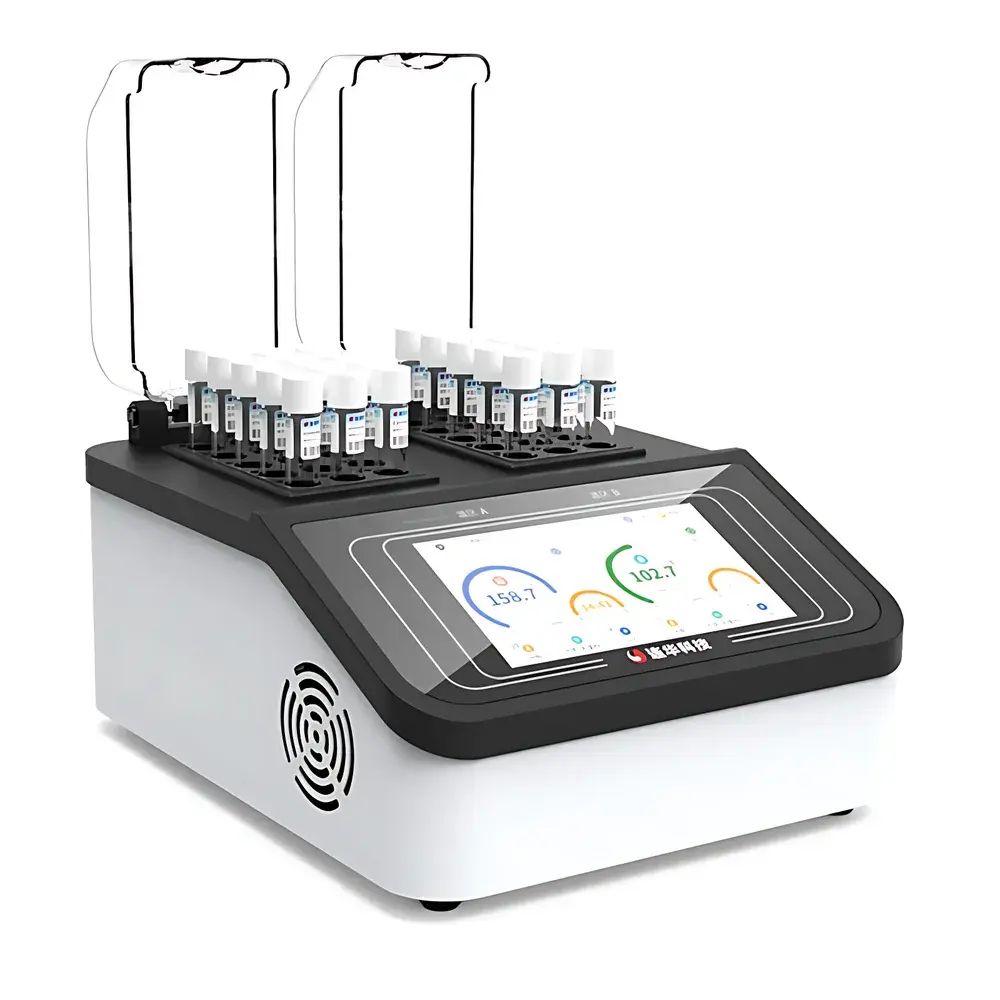
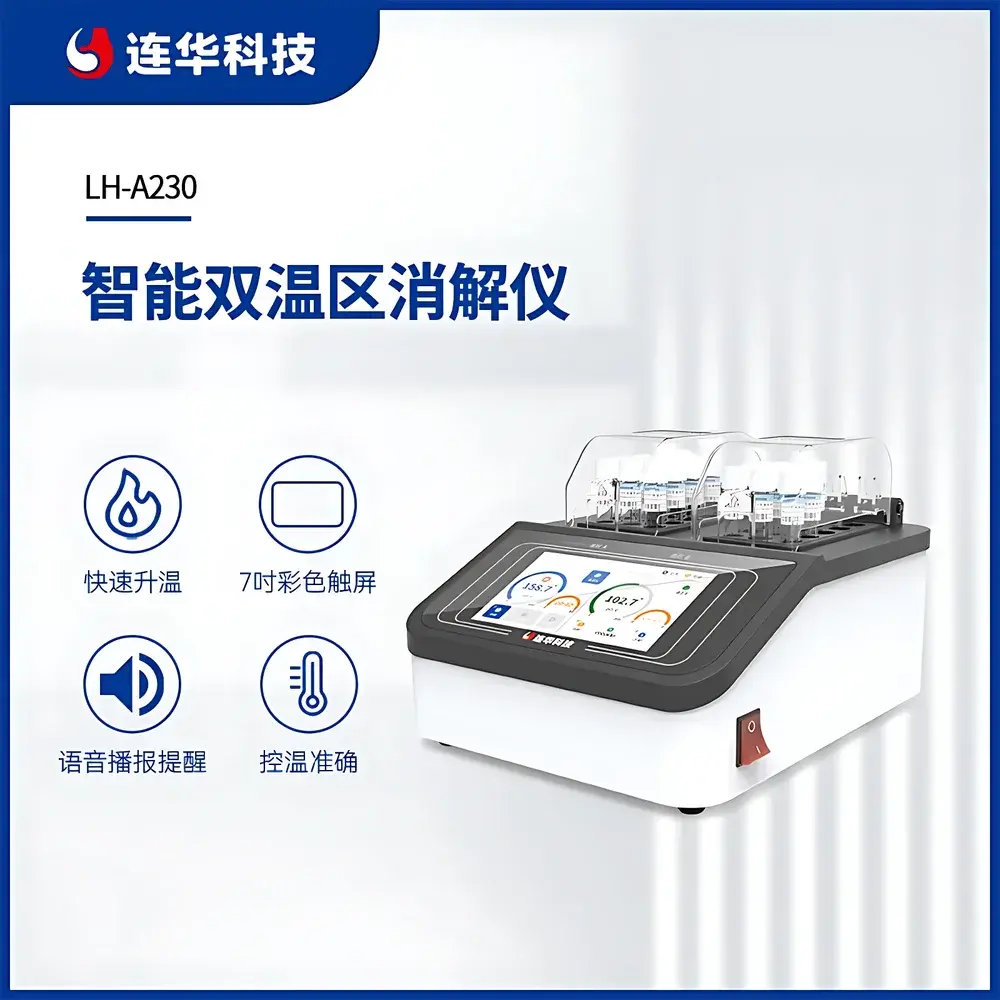
Lohan Tech LH-A230 Intelligent Dual-Zone COD Digestion System
| Brand | Lohan Tech |
|---|---|
| Origin | Beijing, China |
| Manufacturer Type | Direct Manufacturer |
| Product Origin | Domestic (China) |
| Model | LH-A230 |
| Pricing | Upon Request |
| Digestion Method | Rapid Digestion |
| Heating Module | Dual Independent Heating Blocks |
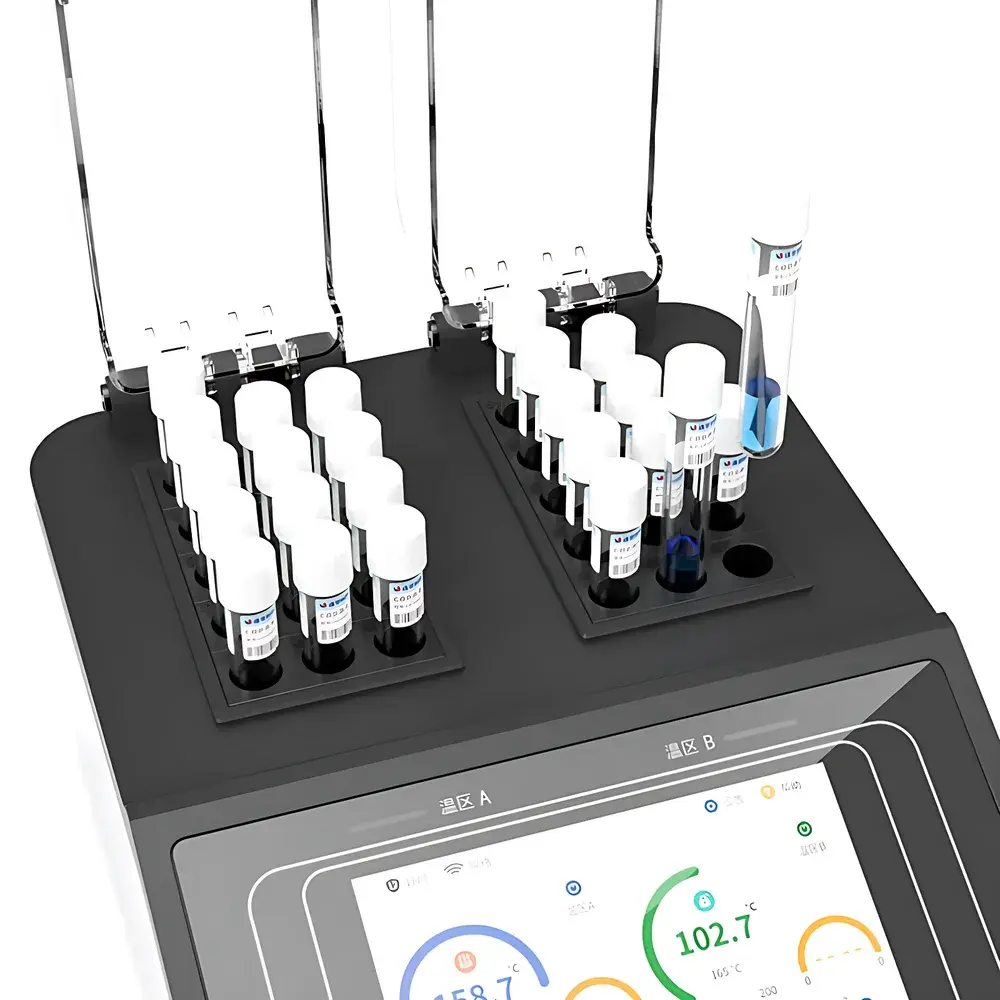
| Batch Capacity | 30 Samples (15 per zone) |
| Temperature Range | 45–190 °C (user-adjustable in 1 °C increments) |
| Temperature Accuracy | ±0.5 °C |
| Sample Vial Capacity | 0–10 mL |
| Timer Drift | ≤0.2 s per 10 min |
Overview
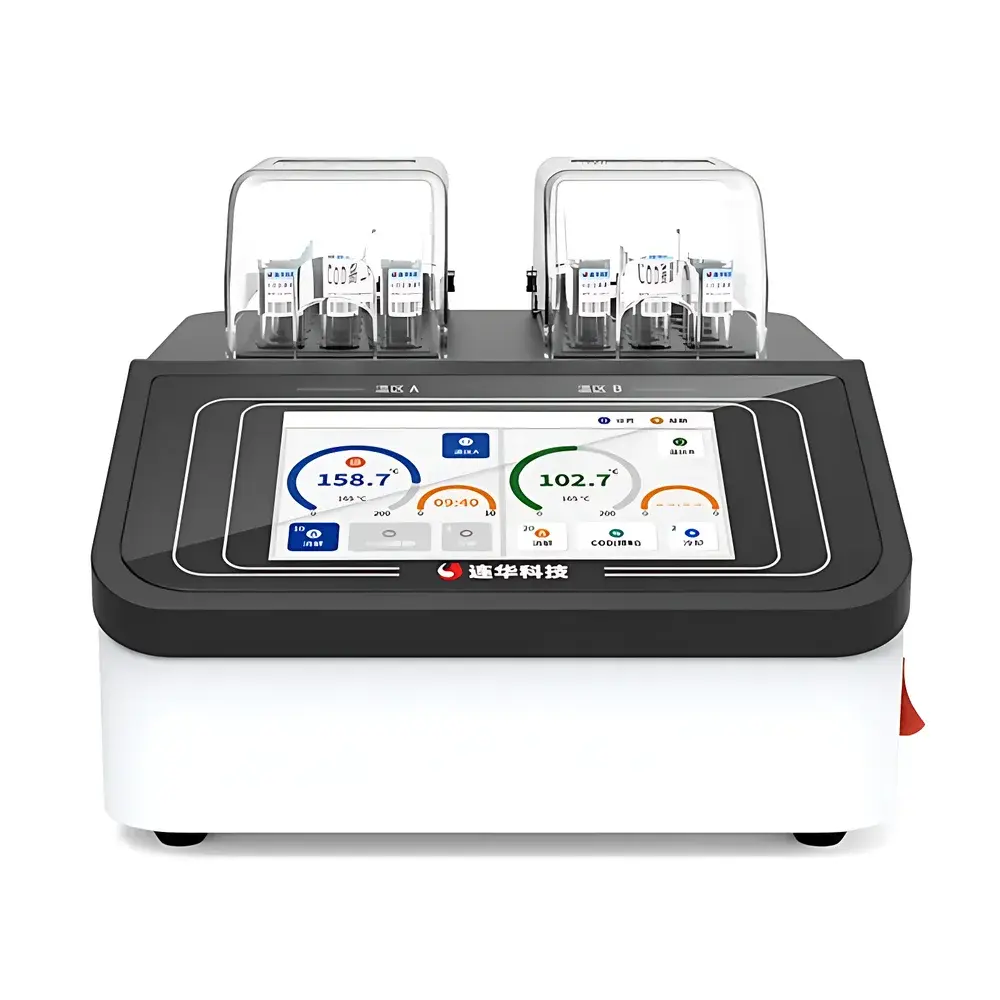
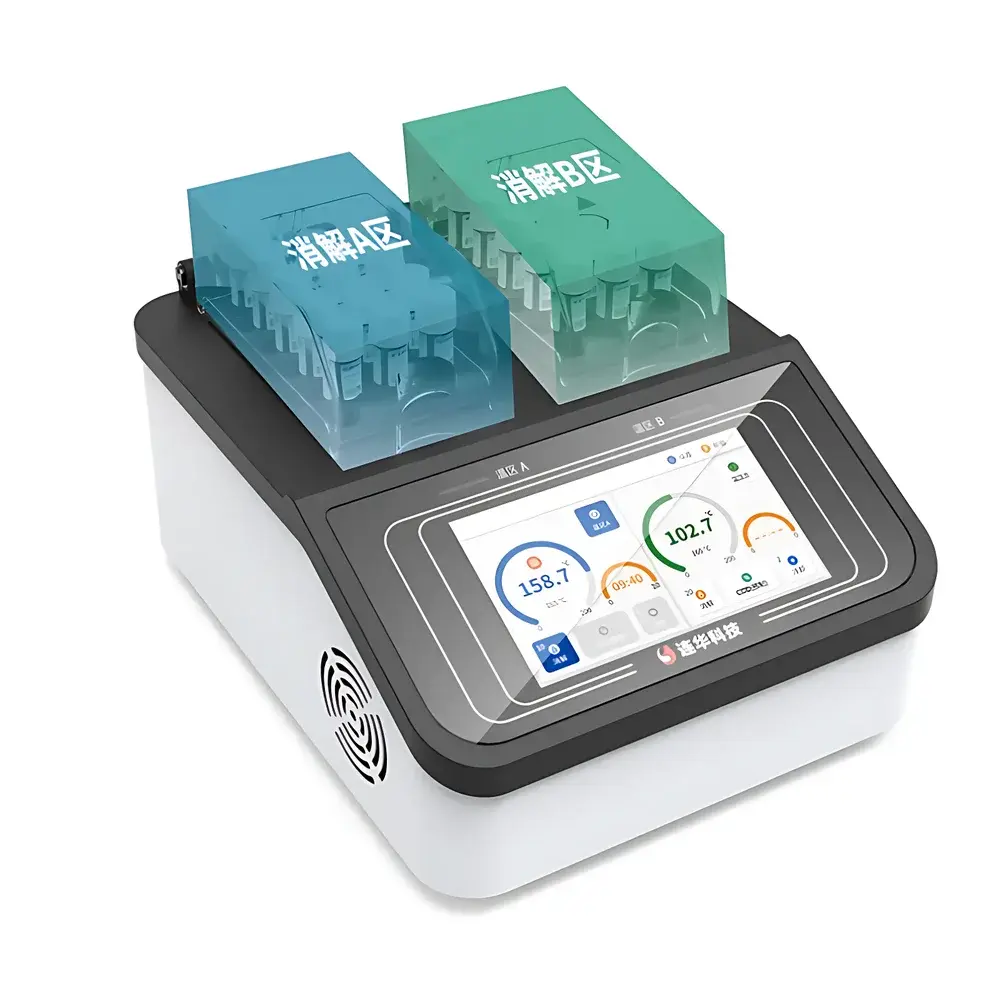
The Lohan Tech LH-A230 Intelligent Dual-Zone COD Digestion System is a precision-engineered laboratory instrument designed for rapid, reproducible chemical oxygen demand (COD), total phosphorus (TP), total nitrogen (TN), and other redox-sensitive parameter digestions in water and wastewater analysis. Based on the standardized closed-vessel hot-acid digestion principle—typically employing potassium dichromate (K₂Cr₂O₇) in concentrated sulfuric acid under controlled thermal conditions—the LH-A230 implements dual independent temperature zones to enable parallel digestion of two distinct sample sets at different thermal profiles within a single operational cycle. This architecture eliminates sequential processing bottlenecks common in single-zone digesters and directly supports multi-parameter compliance workflows aligned with ISO 6060, EPA Method 410.4, and HJ 828–2017 (Chinese Environmental Protection Standard for COD Determination). Each zone comprises 15 precisely spaced borosilicate glass-compatible heating wells with uniform thermal distribution across the block surface, minimizing inter-well temperature variance (<±0.3 °C at steady state).
Key Features
- Dual-zone independent thermal control: Two physically isolated aluminum heating blocks, each with dedicated PID temperature regulation and real-time feedback sensors—enabling simultaneous digestion at, for example, 150 °C (for COD) and 120 °C (for TP) without cross-zone interference.
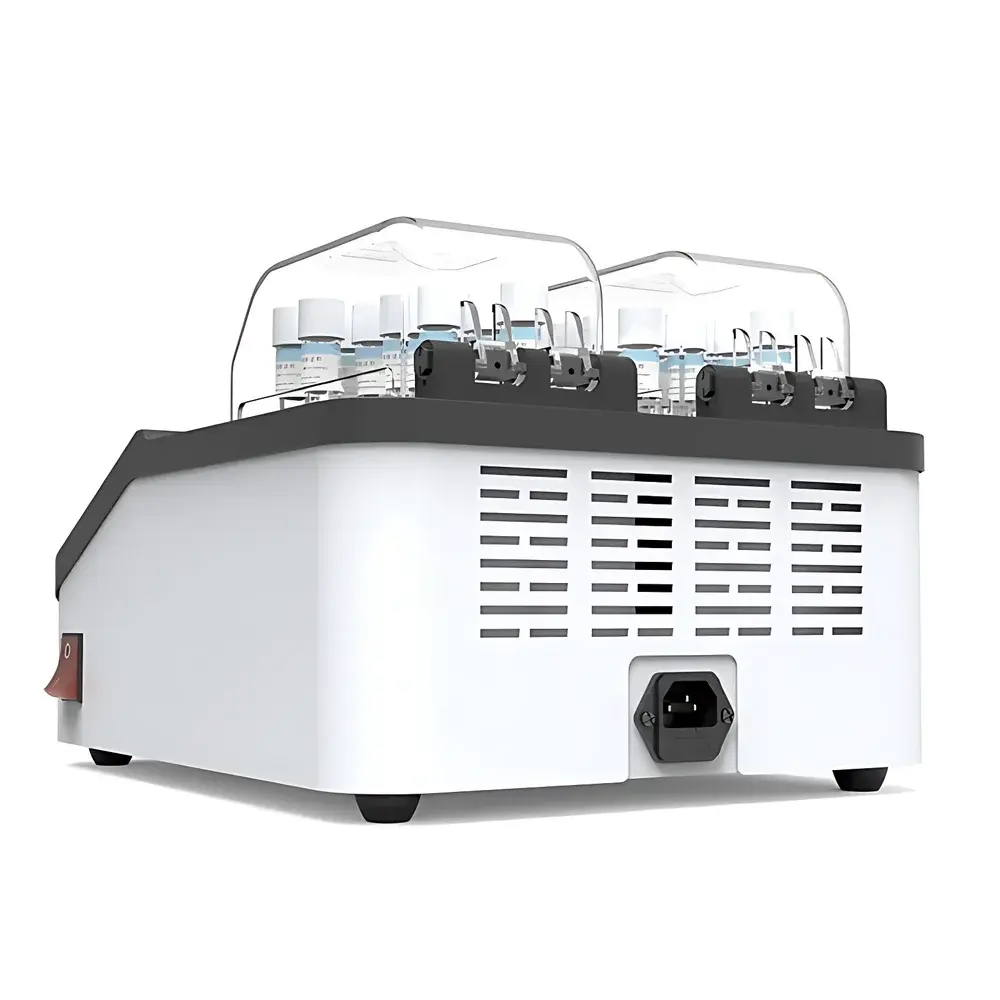
- Enhanced operator safety: Fully transparent, high-temperature resistant quartz-glass protective shield integrated into the instrument frame—providing unobstructed visual monitoring of digestion progress while containing potential aerosol release or minor splashing events.
- Ergonomic sample management: Laser-etched numeric identifiers (1–15 per zone) on each well rim, compatible with standard 16-mm OD digestion vials; recessed well geometry ensures stable vial positioning during heating cycles.
- Energy-efficient thermal management: Programmable auto-shutdown with user-defined duration (1–240 min); adaptive power modulation reduces wattage by up to 35% after target temperature stabilization, verified per IEC 62304 Class B software safety requirements.
- Thermal insulation architecture: Aerospace-grade ceramic fiber layer bonded to the upper surface of each heating module—reducing external surface temperature to <45 °C during full-load operation at 190 °C, meeting EN 61000-3-2 harmonic current emission limits.
- Intuitive human-machine interface: 7-inch capacitive-touch LCD with localized Chinese firmware; rotary-style digital dials for temperature/time entry; context-aware menu navigation with breadcrumb trail and immediate parameter confirmation feedback.
Sample Compatibility & Compliance
The LH-A230 accommodates standard 10-mL and 15-mL digestion vials made of borosilicate glass or PTFE-lined screw-cap tubes. Its 0–10 mL volume range supports both low-volume micro-methods and conventional APHA-compliant protocols. The system complies with GLP documentation requirements through traceable time-stamped event logging (start/end time, setpoint, actual temperature history per zone). All thermal profiles adhere to calibration traceability per ISO/IEC 17025:2017—certified via NIM (National Institute of Metrology, China)–accredited reference thermocouples. The instrument’s electrical design conforms to IEC 61010-1:2010 for laboratory equipment safety, including overtemperature cutoff (200 °C hard limit) and ground-fault interruption.
Software & Data Management
While the LH-A230 operates as a standalone benchtop unit, its embedded controller logs all critical process parameters—including zone-specific temperature curves, timer activation timestamps, and alarm events—to internal non-volatile memory (10,000-cycle retention). Data export is supported via USB 2.0 port in CSV format for integration into LIMS environments or QA/QC review platforms. The system supports FDA 21 CFR Part 11–compliant audit trails when connected to validated third-party laboratory software (e.g., LabWare LIMS or Thermo Fisher SampleManager), provided role-based access control and electronic signature validation are externally implemented. No cloud connectivity or remote firmware updates are enabled by default—ensuring data sovereignty and network isolation per ISO/IEC 27001 Annex A.8.2.3.
Applications
- Routine municipal wastewater COD analysis per ISO 6060 and HJ 828–2017
- Simultaneous determination of TP and TN in surface water using alkaline persulfate and molybdenum antimony colorimetric methods
- Pre-digestion conditioning for ICP-OES/MS metal speciation workflows requiring matrix homogenization
- Environmental monitoring labs performing batch-wise compliance reporting under China’s “Blue Sky & Clear Water” regulatory framework
- Academic research labs conducting kinetic studies of organic pollutant degradation under variable thermal stress profiles
FAQ
Does the LH-A230 support external PC control or RS-232 communication?
No—this model is designed exclusively for local operation via its integrated touchscreen. Optional RS-485 or Ethernet modules are available under OEM agreement but not included in standard configuration.
What calibration documentation is supplied with the instrument?
Each unit ships with a factory calibration certificate referencing NIM-traceable Pt100 sensors, valid for 12 months from date of shipment. Certificate includes as-found/as-left data at three points (100 °C, 150 °C, 190 °C) per zone.
Can custom digestion programs be exported or backed up?
User-defined methods (up to five) are stored internally and persist through power cycles. Export requires physical USB transfer; no wireless or network-based backup is supported.
Is the protective shield autoclavable or chemically resistant to fuming sulfuric acid vapors?
The quartz-glass shield is rated for continuous exposure to H₂SO₄ vapor at ≤200 °C but is not autoclavable due to thermal shock sensitivity. Routine cleaning with 10% NaOH solution is recommended.
What maintenance intervals are recommended for long-term accuracy?
Heating block recalibration is advised every 6 months under heavy use (>20 cycles/week); sensor verification using certified reference thermometers should occur before each analytical batch per ISO/IEC 17025 Clause 7.7.







