
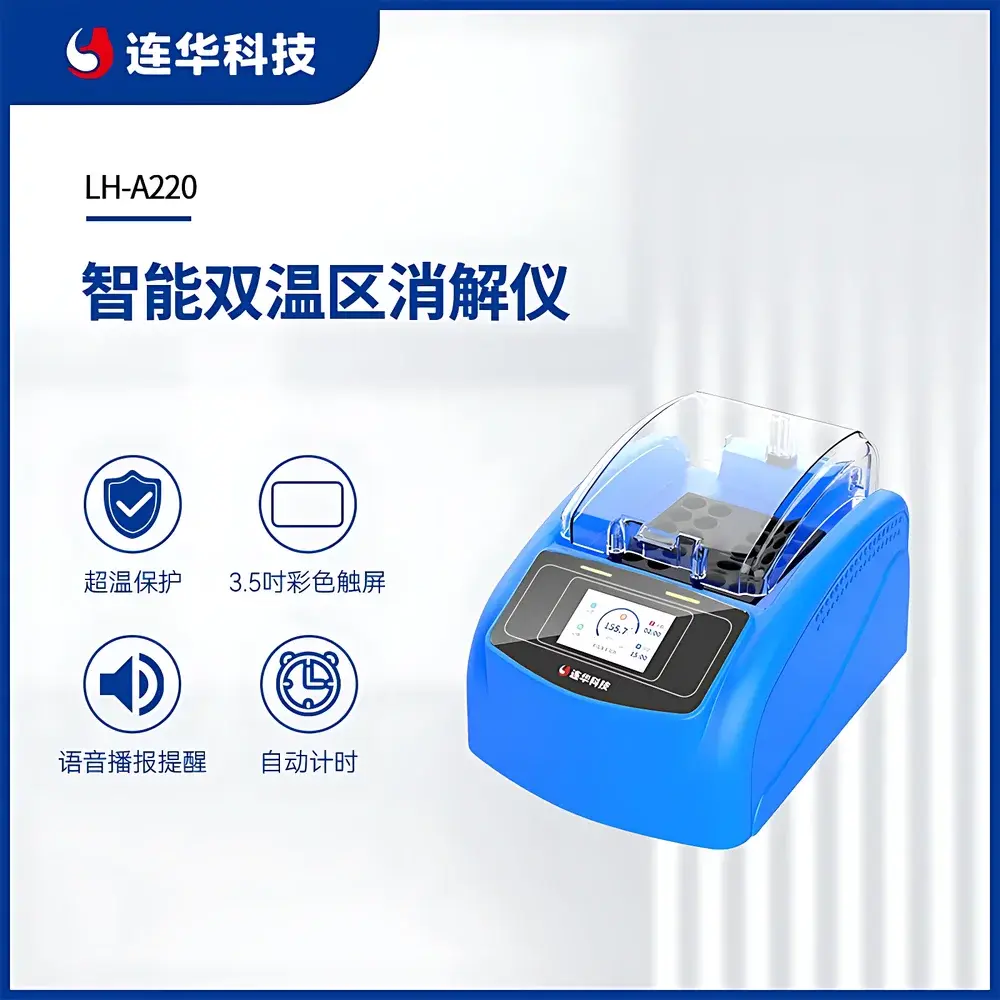
Lohand LH-A220 Intelligent Dual-Zone COD Digestion System
| Brand | Lohand |
|---|---|
| Origin | Beijing, China |
| Manufacturer Type | Direct Manufacturer |
| Product Origin | Domestic (China) |
| Model | LH-A220 |
| Pricing | Upon Request |
| Digestion Method | Rapid Digestion |
| Heating Module | Dual Independent Heating Blocks |
| Batch Capacity | 20 Samples |
| Temperature Accuracy | ±0.5 °C |
| Sample Volume Range | 0–10 mL |
| Timer Drift | ≤0.2 s/hour |
Overview
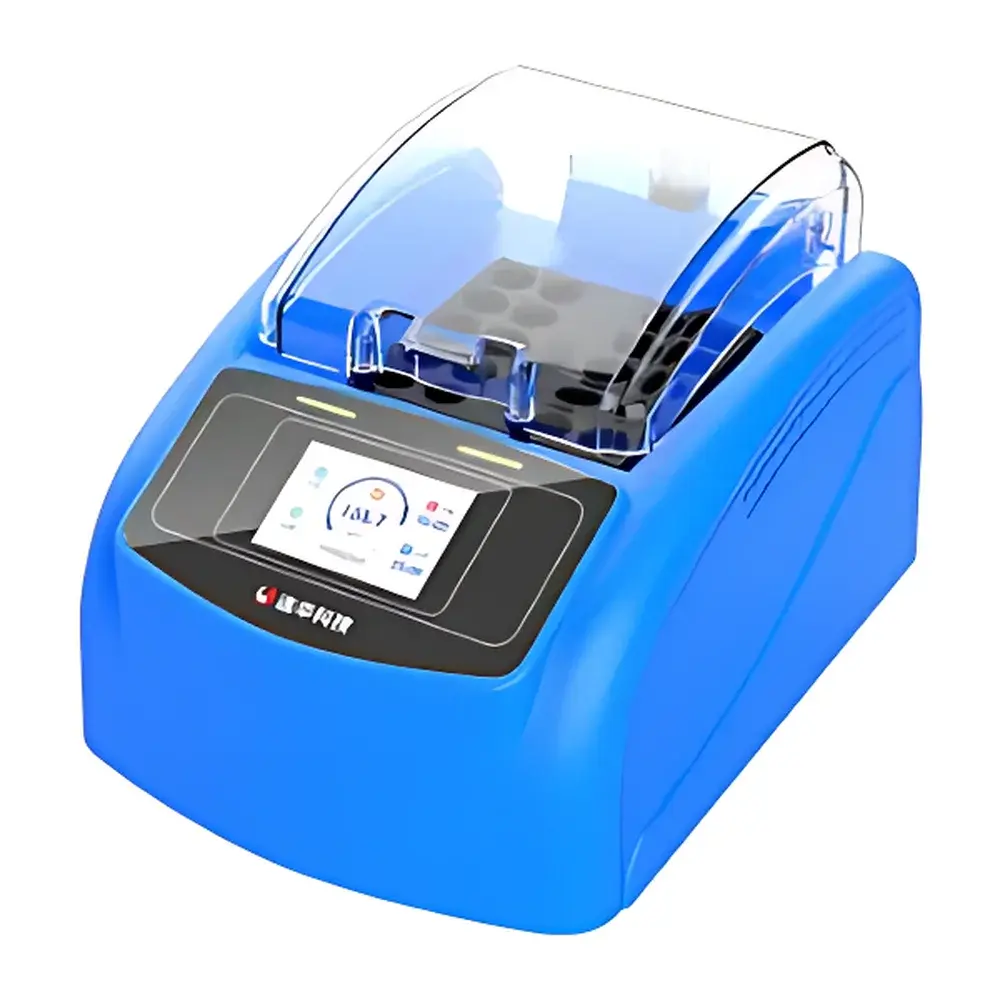
The Lohand LH-A220 Intelligent Dual-Zone COD Digestion System is a precision-engineered benchtop instrument designed for rapid, reproducible chemical oxygen demand (COD) and other oxidizable parameter digestion in accordance with standard environmental analytical protocols—including ISO 6060, EPA Method 410.4, and HJ 828–2017 (China’s national standard for COD determination). It implements a dual-zone resistive heating architecture with independently controlled thermal blocks, enabling simultaneous digestion of two distinct sample sets under different temperature/time profiles—such as one block at 150 °C for standard COD digestion and the other at 100 °C for chloride interference correction or total phosphorus digestion. This architecture eliminates sequential processing bottlenecks while maintaining strict thermal uniformity across all 20 digestion positions per zone. The system operates on the principle of controlled thermal oxidation in acidic potassium dichromate medium, where precise temperature stability (±0.5 °C) and minimal timer drift (<0.2 s/hour) ensure compliance with method-defined incubation tolerances critical for inter-laboratory comparability.
Key Features
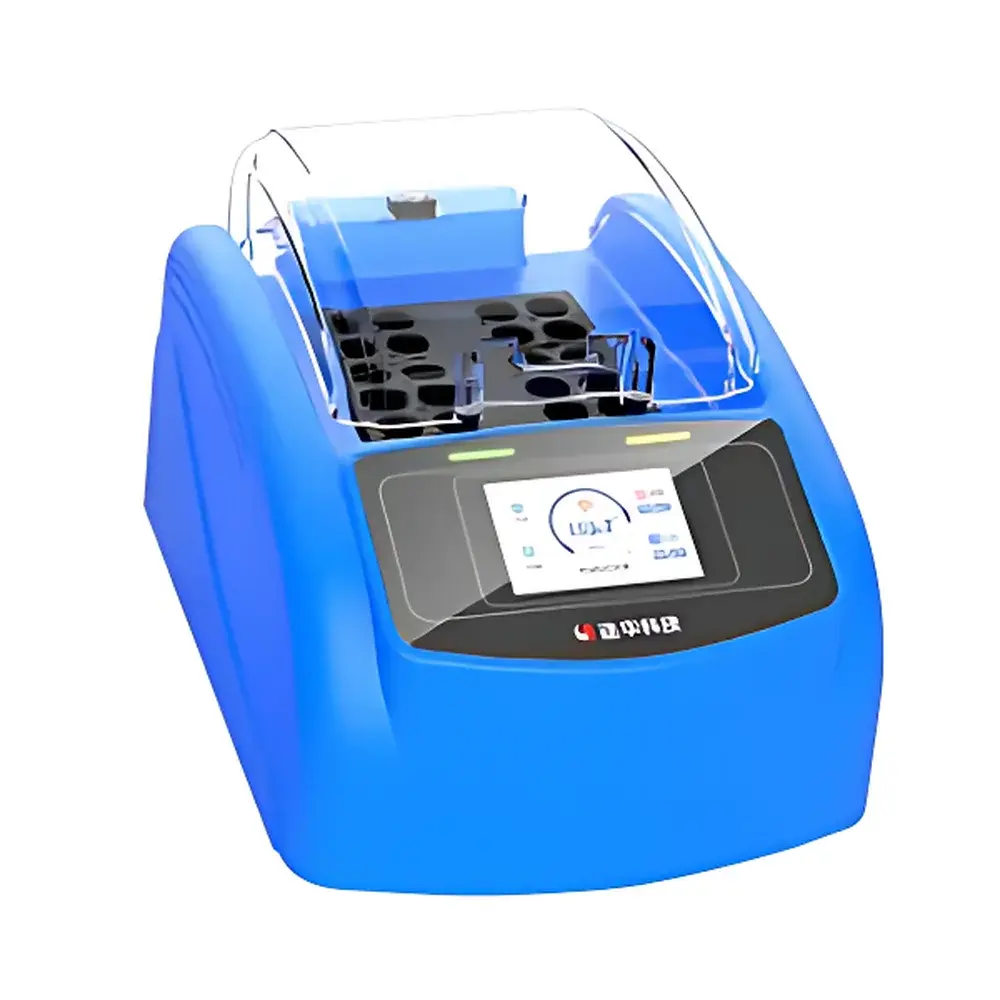
- Dual independent heating zones with real-time PID temperature regulation and visual status indicators (green/amber/red LED) for immediate operational awareness—even from across the lab.
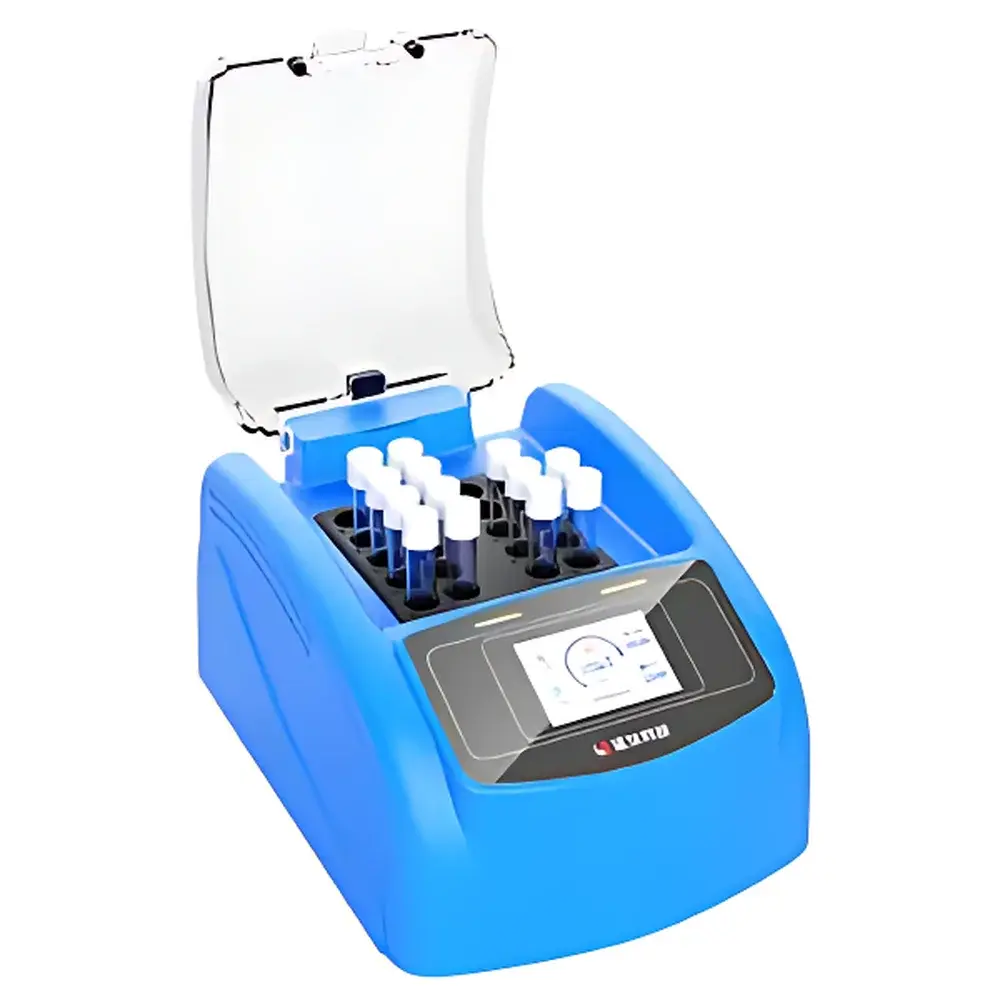
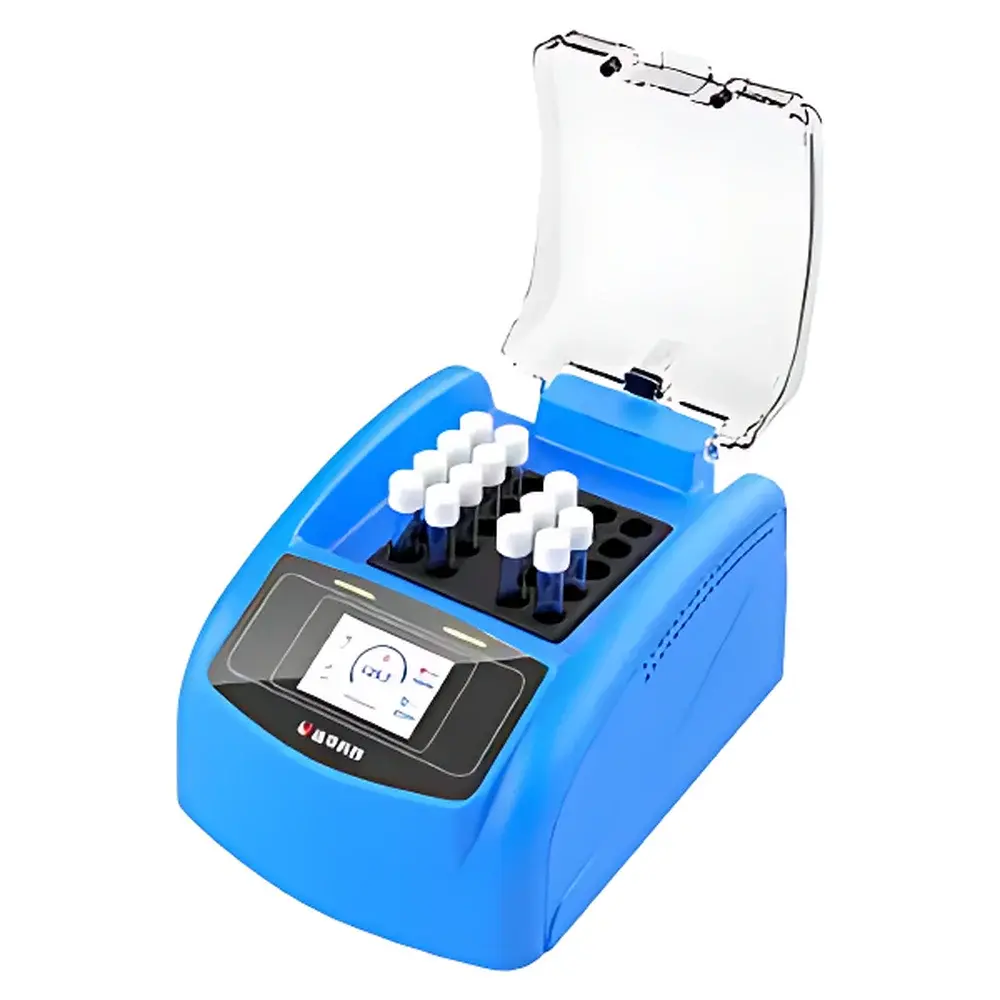
- 20-position digestion capacity per zone, with engraved numeric labeling on each well to prevent sample misidentification during high-throughput workflows.
- Aerospace-grade thermal insulation layer integrated above the heating blocks, reducing surface temperature exposure and minimizing operator burn risk during extended operation.
- Full-height transparent borosilicate glass safety shield—mechanically robust, chemically inert, and rated for continuous use up to 200 °C—enabling unobstructed visual monitoring without compromising containment integrity.
- 10.1-inch capacitive touch interface with native Chinese language support, intuitive icon-driven navigation, and context-sensitive soft keys for parameter entry and program selection.
- Preloaded with 21 validated digestion protocols: 16 factory-calibrated methods aligned with common water matrixes (e.g., municipal wastewater, surface water, industrial effluent), plus 5 fully configurable user-defined programs supporting custom ramp-hold-cool sequences.
- Voice feedback system delivering spoken alerts for completion, temperature deviation, lid-open events, and timer expiration—enhancing situational awareness in noisy or multi-instrument environments.
Sample Compatibility & Compliance
The LH-A220 accommodates standard 16 mm OD digestion tubes with volumes ranging from 0 to 10 mL, compatible with both sealed and vented tube configurations used in open-reflux and micro-method COD analysis. Its thermal performance meets the repeatability and accuracy requirements specified in ISO/IEC 17025-accredited environmental testing laboratories. While not certified to IEC 61000-6-3 or UL 61010-1 out-of-the-box, the unit incorporates reinforced grounding, overtemperature cutoff (≥220 °C), and current-limiting circuitry compliant with GB 4793.1–2019 (Chinese equivalent of IEC 61010-1). Documentation packages include traceable calibration certificates for temperature and timer subsystems, supporting GLP audit readiness.
Software & Data Management
The embedded firmware supports non-volatile storage of all run logs—including start time, setpoint, actual temperature history (recorded every 10 s), completion timestamp, and operator ID (if enabled via optional network integration). Audit trails are immutable and time-stamped to system clock, satisfying basic data integrity expectations under China’s CNAS-CL01:2018 and general GMP-aligned recordkeeping practices. USB export functionality allows CSV-formatted log retrieval for external validation or LIMS ingestion. No cloud connectivity or remote control capability is provided; data sovereignty remains fully on-site.
Applications
- Routine COD analysis in municipal wastewater treatment plants and environmental monitoring stations.
- Multi-parameter digestion workflows requiring parallel processing—e.g., simultaneous COD and total nitrogen (TN) or total phosphorus (TP) digestion under differing thermal profiles.
- Method development and validation studies where thermal profile flexibility and inter-zone isolation are essential.
- Teaching laboratories requiring safety-conscious, visually transparent digestion platforms with tactile and auditory feedback for student training.
- Field-deployable lab setups where compact footprint (W×D×H: 320 × 360 × 280 mm), low power draw (<1200 W), and stable performance across ambient temperatures (10–30 °C) are operational priorities.
FAQ
Does the LH-A220 support ASTM D1252 or ISO 6060-compliant digestion cycles?
Yes—the preloaded “Standard COD” program replicates the 150 °C / 2-hour reflux condition required by both standards, and temperature uniformity across all wells has been verified per ISO/IEC 17025 internal validation protocols.
Can the two zones operate at significantly different temperatures simultaneously?
Yes—each zone is independently controlled with full range from ambient +5 °C to 200 °C, with no thermal crosstalk observed below 180 °C differential.
Is the timer traceable to national time standards?
The internal RTC is factory-synchronized and retains accuracy within ±0.2 s/hour; for metrological traceability, users may perform periodic manual synchronization against NTP or GPS-referenced clocks.
What tube types are recommended for optimal thermal transfer and safety?
We recommend borosilicate glass digestion tubes (16 mm OD, wall thickness ≥1.2 mm) meeting DIN EN ISO 1042 specifications; polycarbonate or acrylic tubes are prohibited due to thermal degradation risk.
Is firmware update capability available?
Firmware updates are delivered via encrypted USB stick and require authenticated access credentials—no OTA or internet-based update mechanism is implemented for security and regulatory consistency.







