
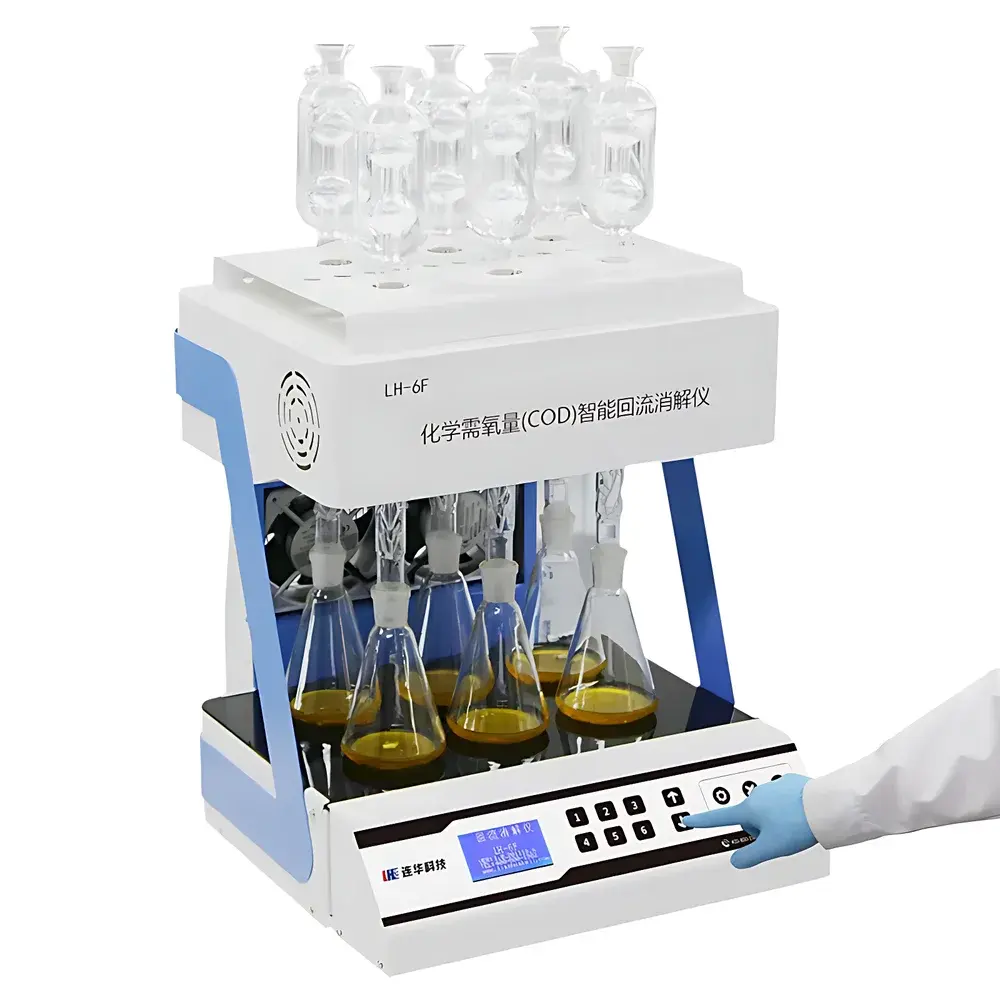
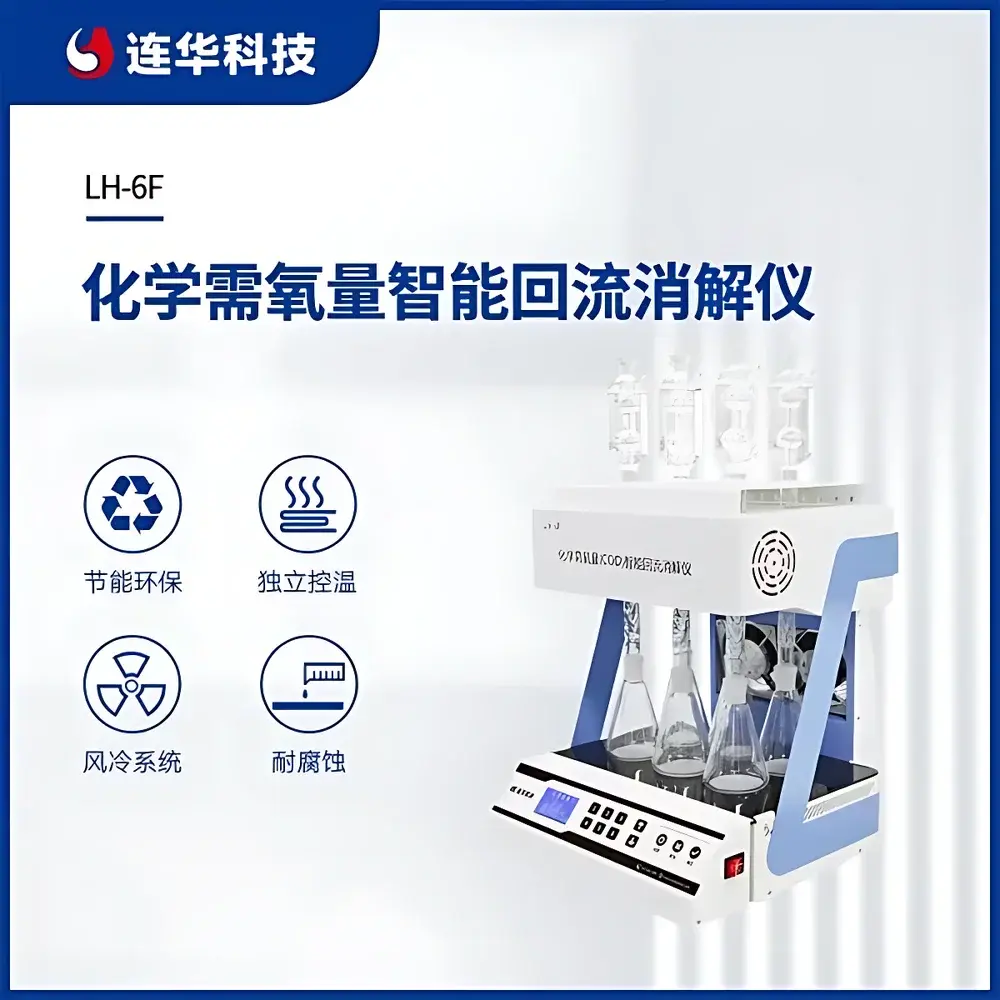
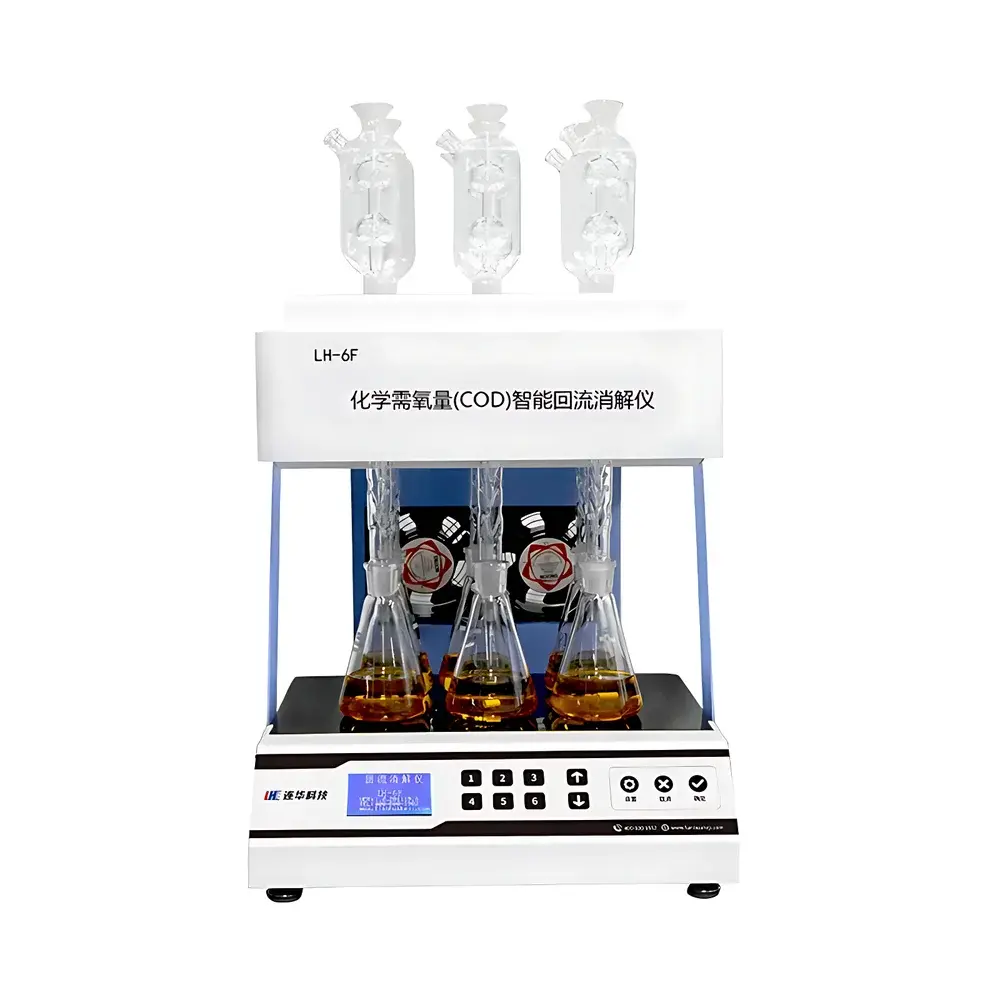
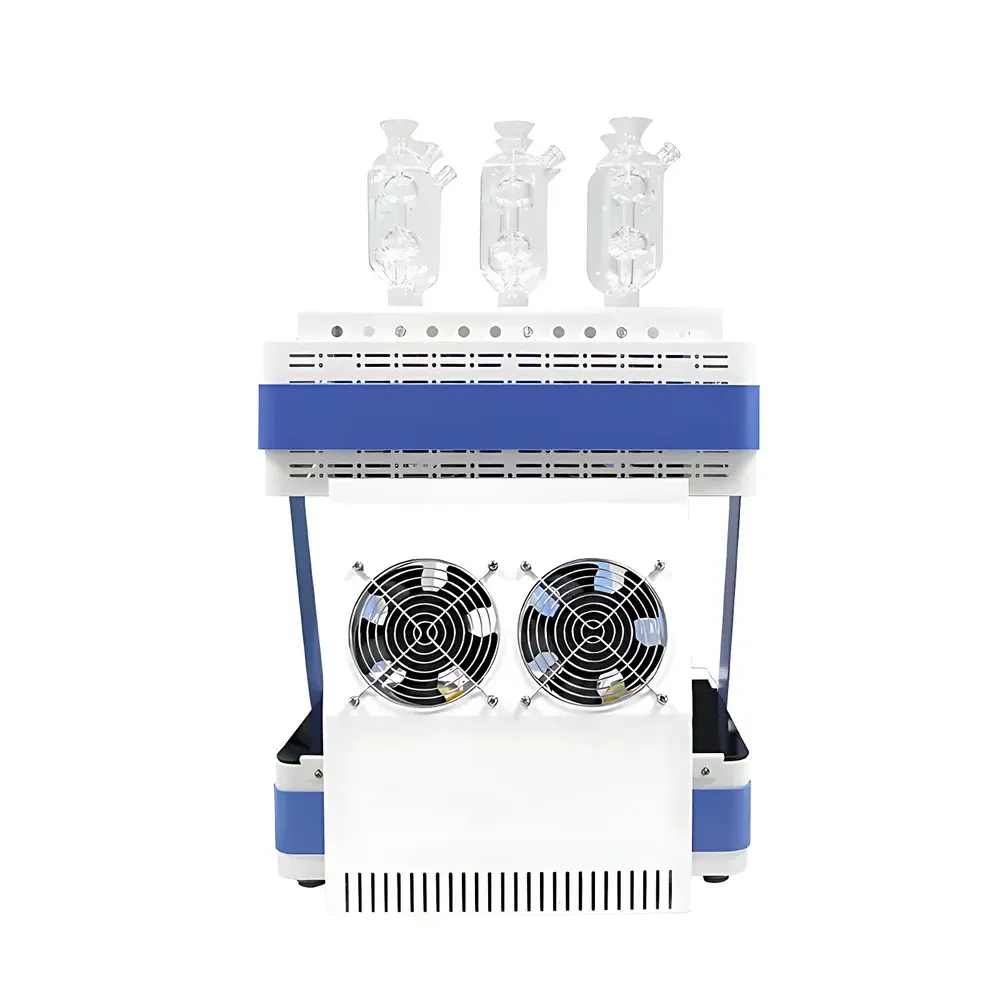
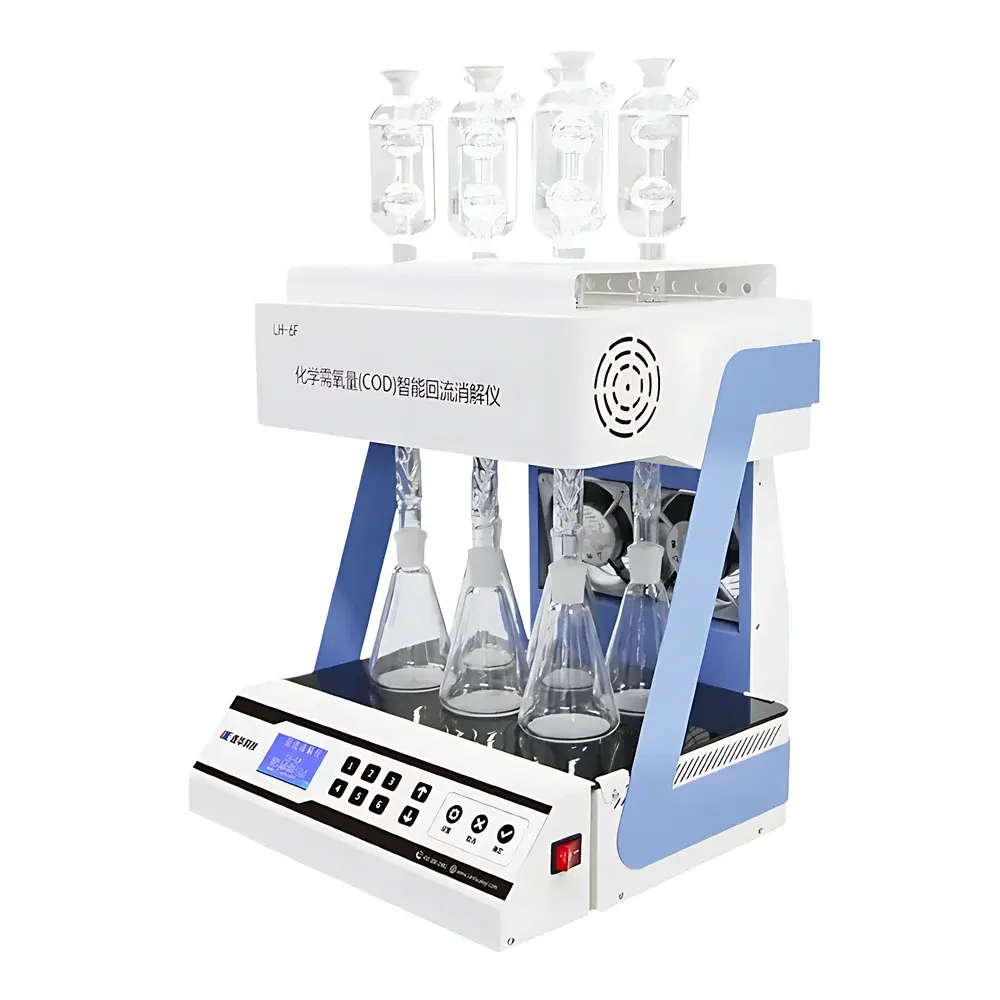
LoHua LH-6F Smart Reflux COD Digestion System
| Brand | LoHua |
|---|---|
| Origin | Beijing, China |
| Manufacturer Type | Direct Manufacturer |
| Country of Origin | China |
| Model | LH-6F |
| Pricing | Upon Request |
| Digestion Method | Reflux Digestion |
| Heating Module | Black Crystal Heated Panel (Independent Zone Control) |
| Batch Capacity | 6 Samples |
| Temperature Range | Ambient to 400 °C |
| Temperature Accuracy | ±2 °C |
| Sample Vial Capacity | 0–10 mL |
| Timer Drift | ≤0.2 s/hour |
Overview
The LoHua LH-6F Smart Reflux COD Digestion System is a precision-engineered laboratory instrument designed exclusively for chemical oxygen demand (COD) determination in aqueous environmental samples according to the official Chinese environmental standard HJ 828–2017, “Water Quality — Determination of Chemical Oxygen Demand — Dichromate Method”. This method mandates controlled reflux digestion under acidic, high-temperature conditions using potassium dichromate as the oxidant, followed by titrimetric or spectrophotometric quantification. The LH-6F replicates the core thermal and kinetic conditions required by HJ 828–2017—including sustained boiling, precise temperature maintenance, and consistent condensation—while eliminating manual variability associated with traditional glassware-based reflux setups. Its architecture integrates thermally isolated black crystal heating elements, each independently regulated to ensure uniform thermal distribution across all six digestion positions. Unlike generic hot plates or block digesters, the LH-6F maintains stable reflux dynamics through coordinated thermal management and dual-mode cooling, directly supporting method reproducibility and inter-laboratory comparability.
Key Features
- Standard-Compliant Reflux Architecture: Engineered to meet all physical and procedural requirements of HJ 828–2017, including minimum reflux duration, condensation efficiency, and temperature stability during digestion.
- Independent Zone Temperature Control: Six discrete heating zones allow simultaneous processing of heterogeneous sample matrices—e.g., low- and high-COD wastewater—with optimized power delivery per vial to maintain consistent boiling without overshoot.
- Black Crystal Heating Panels: Chemically inert, scratch-resistant ceramic-glass surfaces rated for continuous operation up to 400 °C; resistant to acid splashes, thermal shock, and corrosion from Cr(VI)/H2SO4 mixtures.
- Hybrid Cooling System: Integrated air-assisted water condensation during reflux, supplemented by post-digestion forced-air cooling to reduce vial surface temperature from >150 °C to <60 °C within ≤90 seconds—enabling safe, rapid handling prior to titration or dilution.
- Intelligent Workflow Automation: Pre-programmed digestion cycles (e.g., 2 h reflux + 30 min cooling) initiated via single-button activation; real-time temperature logging and timer synchronization ensure audit-ready process traceability.
- Modular Integration Ready: Designed for seamless interoperability with LoHua’s ecosystem of complementary instruments—including semi-automatic titrators (e.g., LH-T8), magnetic stirrers, recirculating chillers, and volumetric dispensers—to support end-to-end COD analysis workflows compliant with ISO/IEC 17025 quality management systems.
Sample Compatibility & Compliance
The LH-6F accommodates standard 16 × 150 mm or 24 × 150 mm borosilicate digestion vials (0–10 mL capacity), compatible with both open-reflux and sealed-vessel configurations used in HJ 828–2017 and legacy GB 11914–1989 protocols. It supports diverse sample types including municipal wastewater, industrial effluents, surface water, and leachates—provided total suspended solids (TSS) content remains below 100 mg/L to prevent localized overheating or bumping. All thermal control algorithms and timer functions are validated per JJG 874–2007 (Chinese metrological verification regulation for digestion apparatus). While not certified to IEC 61000-4 electromagnetic compatibility standards, its grounded chassis and shielded power circuitry ensure stable operation in shared analytical laboratories adhering to GLP principles.
Software & Data Management
The LH-6F operates via embedded firmware with no external PC dependency. All cycle parameters—including setpoint temperature, ramp rate, reflux duration, and cooldown profile—are stored in non-volatile memory with write-protection. Timestamped operational logs (start time, peak temperature, actual duration, deviation alerts) are retained for ≥1,000 runs and exportable via USB interface in CSV format. Optional RS-232 or Modbus RTU connectivity enables integration into LIMS environments requiring 21 CFR Part 11–compliant electronic records; audit trails include user ID, parameter changes, and system error codes—supporting FDA-regulated environmental testing labs operating under cGMP or EPA Contract Lab Program (CLP) requirements.
Applications
- Routine COD monitoring in wastewater treatment plants (WWTPs) for process control and discharge compliance reporting.
- Regulatory testing of industrial effluents subject to local environmental permits (e.g., provincial emission standards).
- Research-scale oxidation kinetics studies requiring repeatable, temperature-controlled reflux conditions.
- Method validation and inter-laboratory comparison exercises aligned with ISO 5815-1:2019 (water quality — determination of biochemical oxygen demand after dilution — part 1).
- Educational use in university environmental engineering laboratories for hands-on training in standardized wet chemistry techniques.
FAQ
Does the LH-6F comply with international standards such as ISO 6060 or ASTM D1252?
The LH-6F is engineered to fulfill the procedural and thermal specifications of HJ 828–2017, which is technically equivalent to ISO 6060:1989 and ASTM D1252–12 (Method B). While it does not carry formal ISO/ASTM certification, its performance validation data—including temperature uniformity (±1.5 °C across zones at 150 °C) and timer accuracy—demonstrate conformance with the measurement uncertainty requirements of those standards.
Can the instrument be used for chloride interference correction protocols?
Yes. The independent zone control allows differential heating of paired vials—one with Ag₂SO₄ addition for chloride masking, one without—enabling simultaneous digestion for blank correction per HJ 828–2017 Annex A.
Is calibration traceable to national metrological standards?
Temperature sensors are factory-calibrated against NIM (National Institute of Metrology, China) reference standards; users may perform field verification using certified PT100 probes per JJG 229–2010.
What safety protections are built into the system?
Over-temperature cutoff (420 °C hardware limit), dry-run detection, automatic power-down after cycle completion, and grounded chassis with IP20 enclosure rating per GB 4793.1–2007.
How often does the heating module require maintenance?
Under normal use (≤8 hrs/day, 5 days/week), black crystal panels require only periodic wipe-down with diluted nitric acid; no scheduled replacement is specified—service life exceeds 10,000 operational hours.
Related Products







