
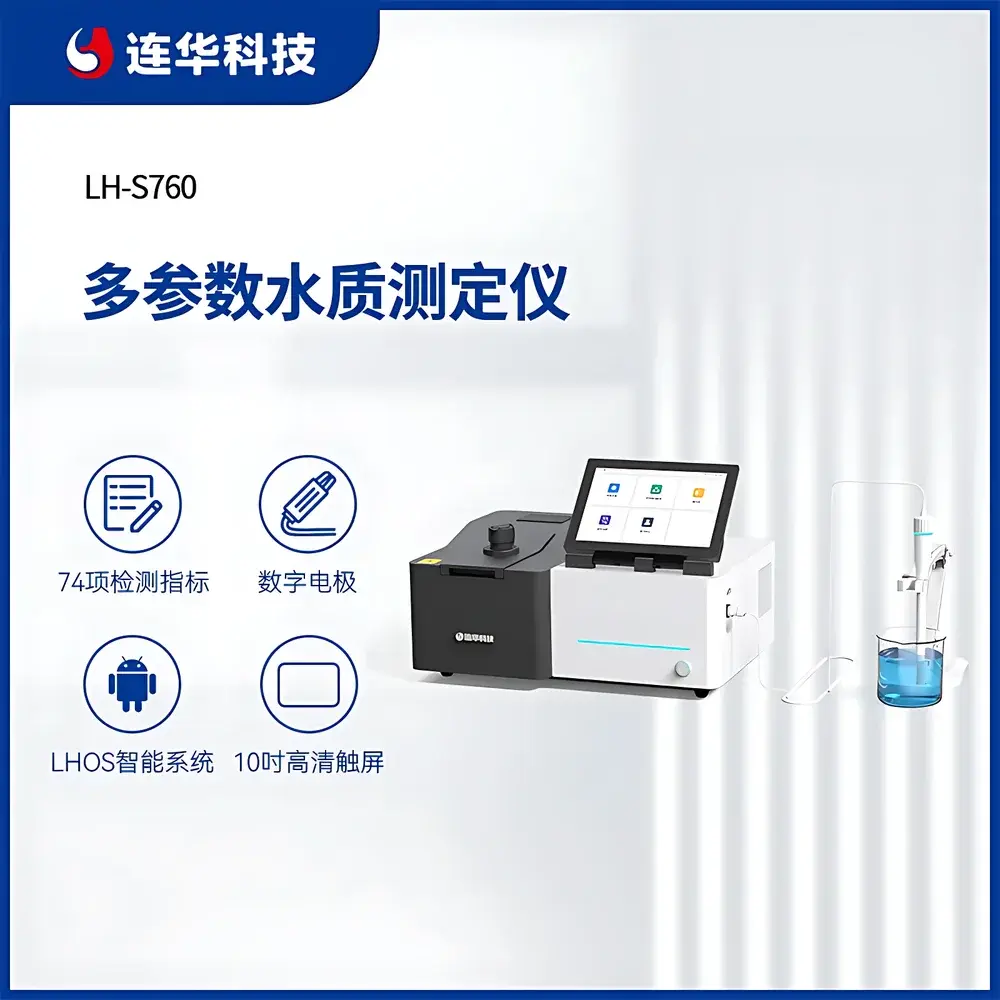
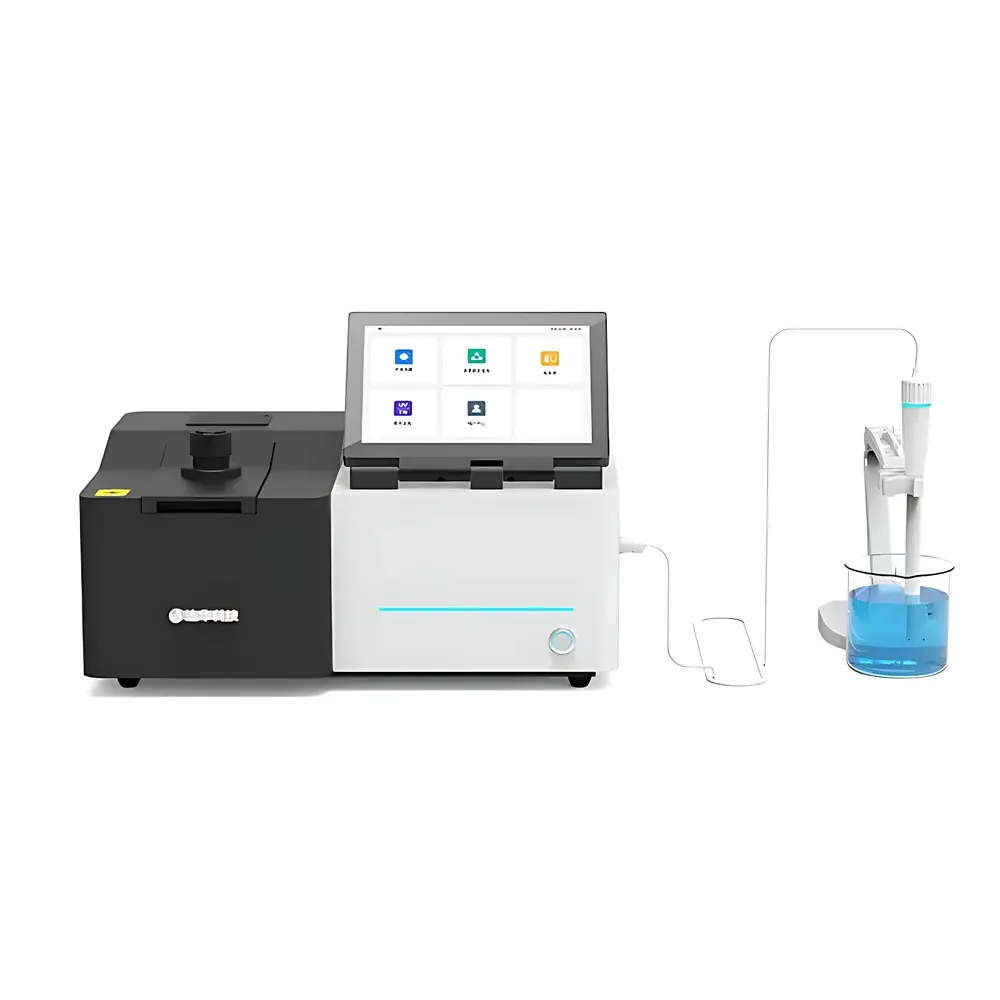
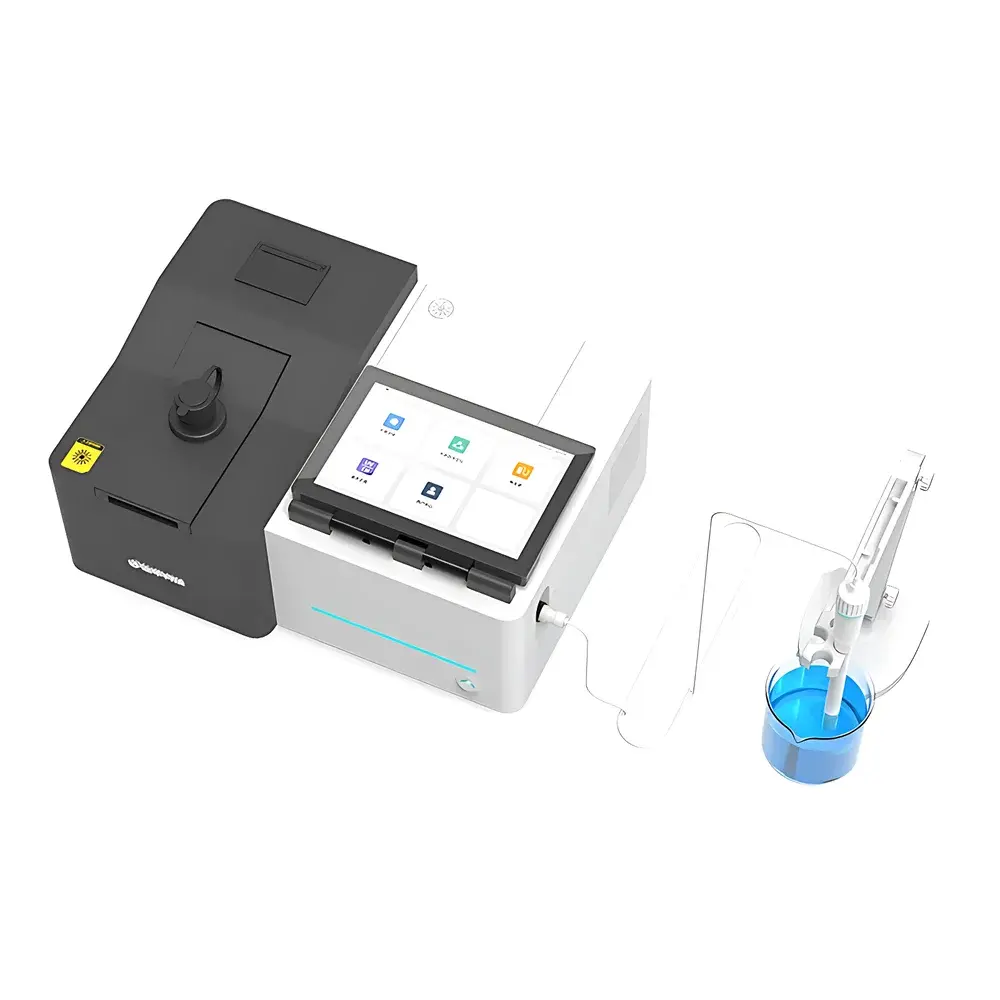
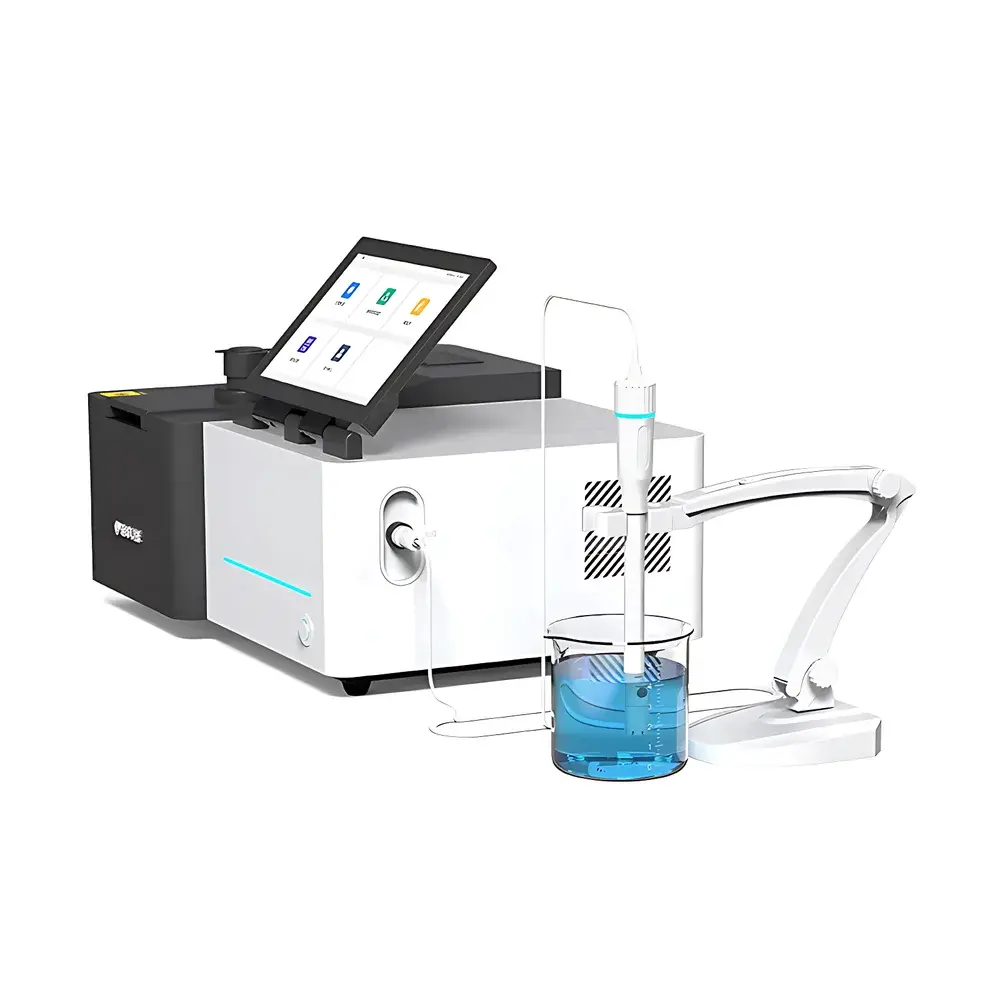
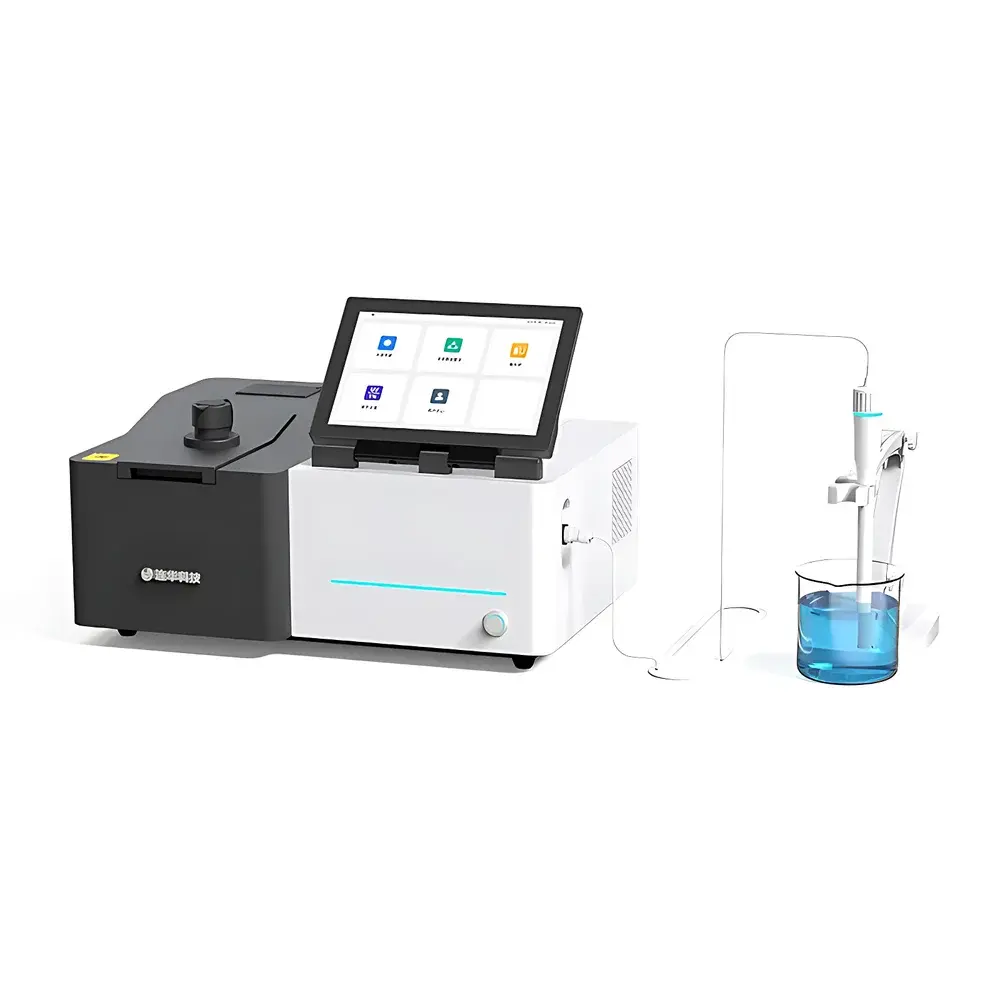
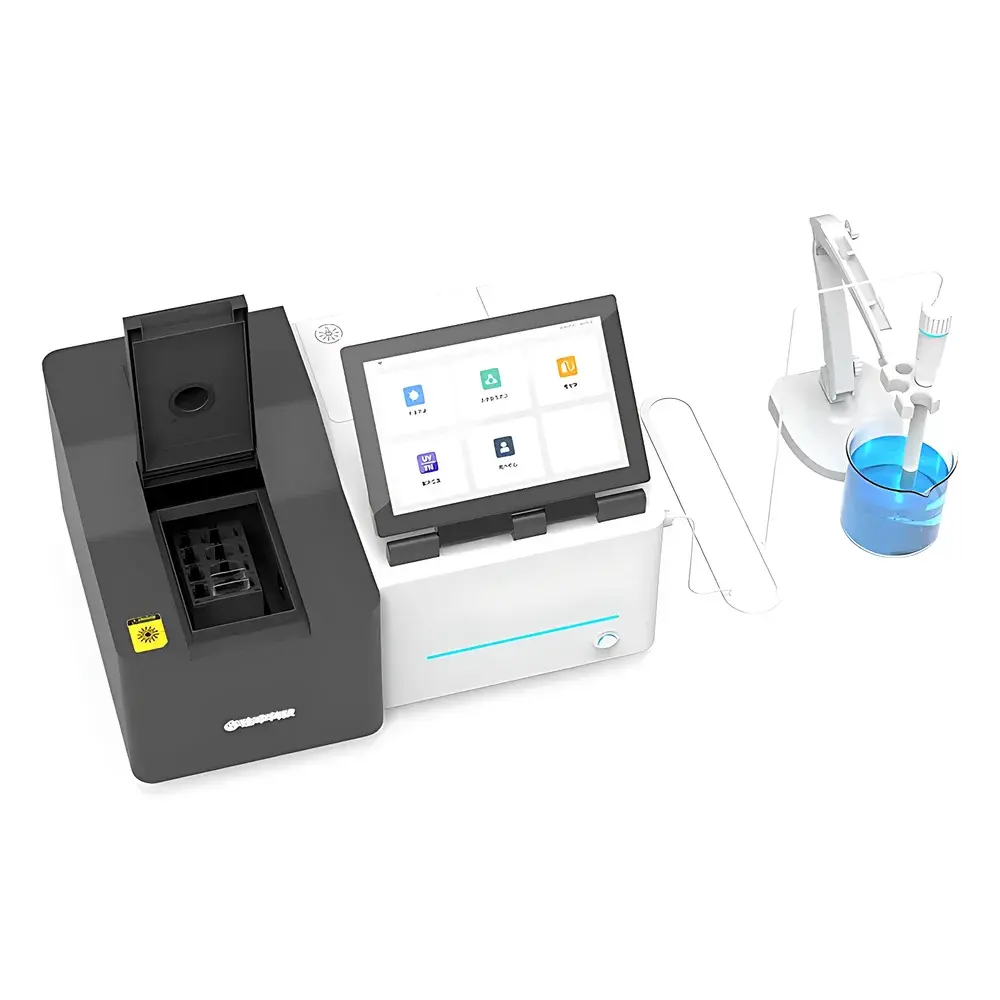
LoHua LH-S760 Multi-Parameter Water Quality Analyzer
| Brand | LoHua |
|---|---|
| Origin | Beijing, China |
| Manufacturer Type | Manufacturer |
| Product Category | Domestic |
| Model | LH-S760 |
| Instrument Type | Laboratory Water Quality Analyzer |
| Detection Methods | Photometry (Visible & UV), Electrochemical Analysis |
| Wavelength Range | 190–1100 nm |
| Electrode Support | 14 parameters |
| Photometric Parameters | >60 |
| Display | 10-inch HD capacitive touchscreen |
| Data Storage | ≥100,000 records (16 GB internal memory) |
| Input/Output | HDMI output, Wi-Fi, USB, optional printer support |
| Operating System | LHOS (Android-based) |
| Compliance | Designed for ISO 7027, ISO 8466-1, ASTM D1253, EPA 365.3, USP <643>, and GLP/GMP-aligned data integrity workflows |
Overview
The LoHua LH-S760 Multi-Parameter Water Quality Analyzer is an integrated laboratory-grade instrument engineered for precise, traceable, and reproducible analysis of physical, chemical, and optical water quality parameters. It combines three complementary analytical modalities—visible and ultraviolet spectrophotometry (190–1100 nm), electrochemical potentiometric/ion-selective electrode (ISE) measurement, and total nitrogen quantification via UV digestion followed by absorbance detection—at a single platform. The system operates on a deterministic optical path architecture with dual-lamp source control (tungsten and deuterium lamps), enabling stable baseline performance across both UV and visible regions without manual recalibration. Its design adheres to fundamental metrological principles for photometric accuracy, including dark-current compensation, automatic wavelength verification, and zero-point referencing—all executed in real time during assay setup. As a self-contained benchtop analyzer, it eliminates dependency on external PCs or proprietary software stacks, delivering regulatory-compliant results directly from the instrument interface.
Key Features
- Triple-mode detection capability: simultaneous support for photometric (absorbance, transmittance), UV-digestion-based total nitrogen, and electrochemical (pH, conductivity, dissolved oxygen, ammonia, nitrate, fluoride, cyanide, etc.) measurements.
- Full-spectrum optical engine: 190–1100 nm spectral range with ≤1.8 nm optical resolution; compatible with 10–30 mm pathlength cuvettes (glass, quartz) and 16 mm diameter test tubes.
- Digital ISE interface: IP68-rated smart electrodes with built-in temperature sensors, independent calibration per parameter, and noise-immune digital signal transmission—eliminating analog drift and cable-length limitations.
- 10-inch industrial-grade capacitive touchscreen running LHOS—an Android-based embedded OS optimized for lab environments—with multi-tasking, Chinese/English UI switching, and offline operation.
- Onboard data management: 16 GB internal storage retaining ≥100,000 test records with timestamped metadata, audit-trail-enabled edits, and export to Excel (.xlsx) or PDF with embedded spectra and calibration logs.
- Hardware-level system monitoring: real-time CPU temperature, voltage, memory usage, and sensor health tracking; automatic recovery from transient faults and secure factory reset with firmware rollback capability.
- Modular light source design: independently switchable tungsten (325–1100 nm) and deuterium (190–400 nm) lamps with tool-free hot-swap capability—no optical alignment required after replacement.
Sample Compatibility & Compliance
The LH-S760 accommodates aqueous samples from raw surface water, treated effluents, process streams, and ultrapure water systems. Its photometric module complies with ISO 7027 (turbidity), ISO 8466-1 (calibration curve linearity), and EPA Method 365.3 (phosphate). Electrode-based measurements meet ASTM D1253 (residual chlorine), ASTM D3223 (fluoride), and ISO 5814 (dissolved oxygen). For total nitrogen analysis, the UV digestion protocol aligns with ISO 11905-1 and USP . All data handling supports ALCOA+ principles: attributable, legible, contemporaneous, original, accurate, complete, consistent, enduring, and available. Audit trails, electronic signatures (via optional LDAP integration), and 21 CFR Part 11–ready configuration options are available through firmware update.
Software & Data Management
LHOS provides native support for method-driven workflows—including preloaded EPA, ISO, and Chinese HJ standard methods—with customizable test templates and user-defined calculation formulas. Data filtering supports date range, parameter name, operator ID, and result status (pass/fail). Batch export includes raw absorbance spectra, calibration curves, electrode response logs, and QC check reports. Cloud connectivity enables secure TLS 1.2–encrypted synchronization with LoHua Cloud or customer-hosted SQL databases via MQTT or REST API. Local network deployment supports centralized fleet monitoring, remote diagnostics, and over-the-air (OTA) firmware updates—fully auditable within system logs.
Applications
The LH-S760 serves as a primary analytical platform in environmental regulatory laboratories (e.g., municipal water authorities, provincial EPBs), academic research (aquatic ecology, biogeochemistry), pharmaceutical manufacturing (WFI and PW testing per USP ), food & beverage QA (brewing water hardness, COD in wastewater), petrochemical process water monitoring, and aquaculture facility management. Its versatility extends to teaching labs requiring hands-on instruction in spectrophotometric kinetics, redox titrations, and multivariate water quality index (WQI) computation.
FAQ
Does the LH-S760 support GLP-compliant data integrity?
Yes—the system enforces electronic signature capture, immutable audit trails, and role-based access control. All modifications to calibration or sample data are logged with timestamp, operator ID, and reason code.
Can electrode calibration be performed independently for each parameter?
Yes—each supported electrochemical parameter has dedicated calibration routines with up to five-point non-linear fitting and slope/offset validation.
Is UV digestion for total nitrogen fully automated?
Yes—the integrated UV reactor performs timed, temperature-stabilized digestion (120 °C, 30 min) prior to photometric quantification at 220/275 nm, following ISO 11905-1.
What file formats can be exported directly from the instrument?
Excel (.xlsx) with raw and processed data, PDF reports with embedded spectra and calibration certificates, and CSV for LIMS ingestion.
Is remote firmware update supported over Wi-Fi?
Yes—signed OTA updates preserve cryptographic integrity and roll back automatically if verification fails.
Related Products







