
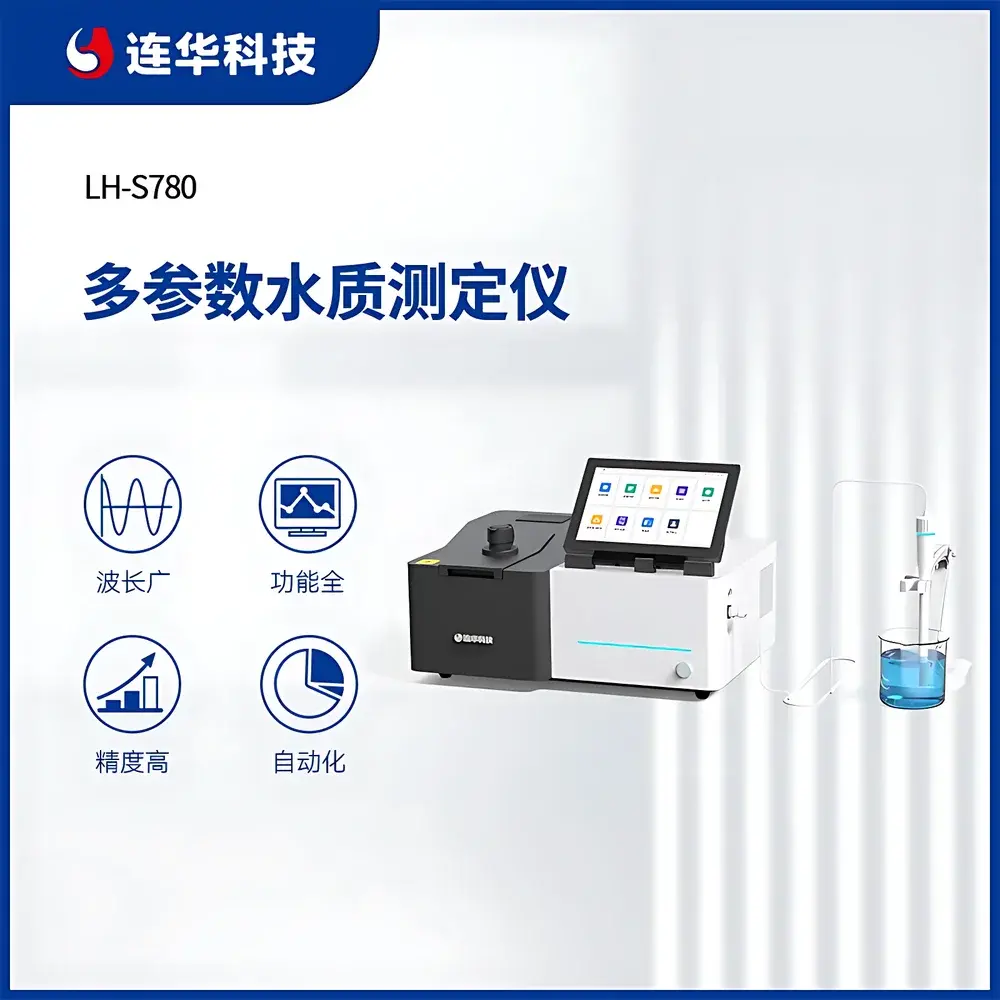
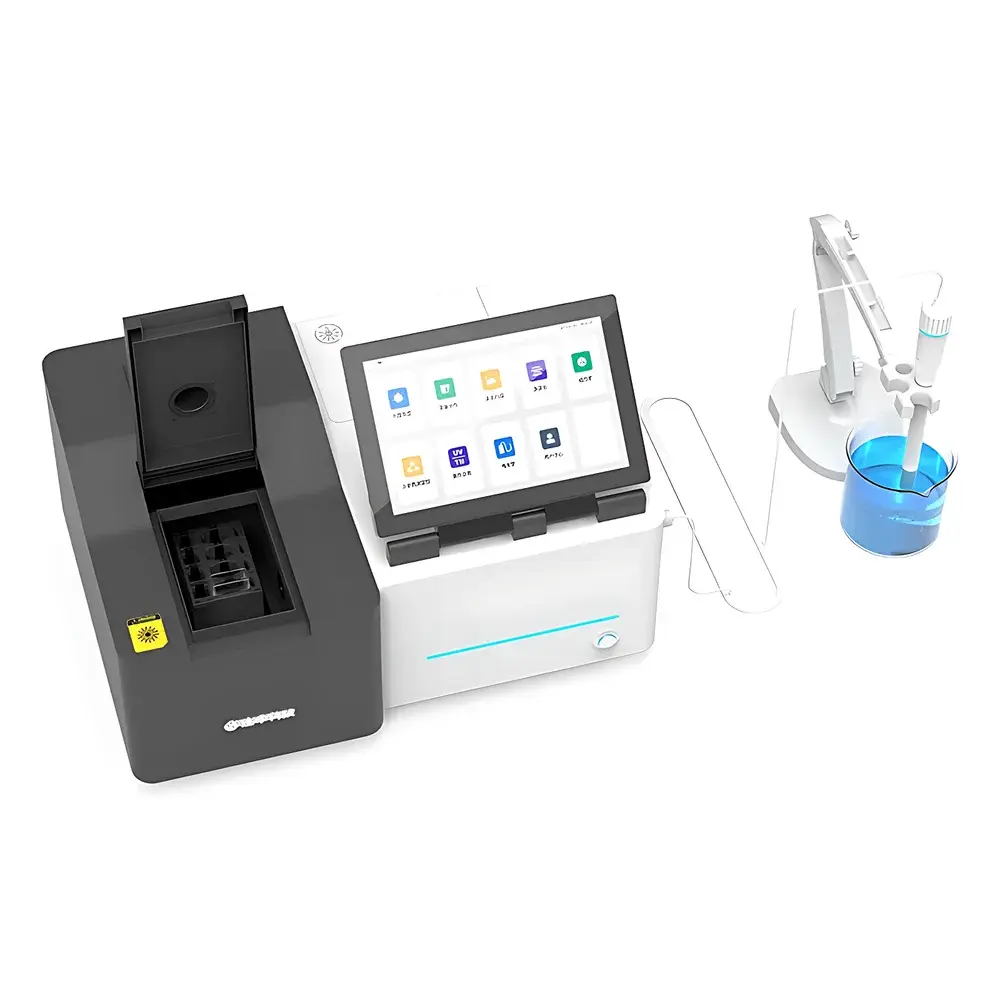
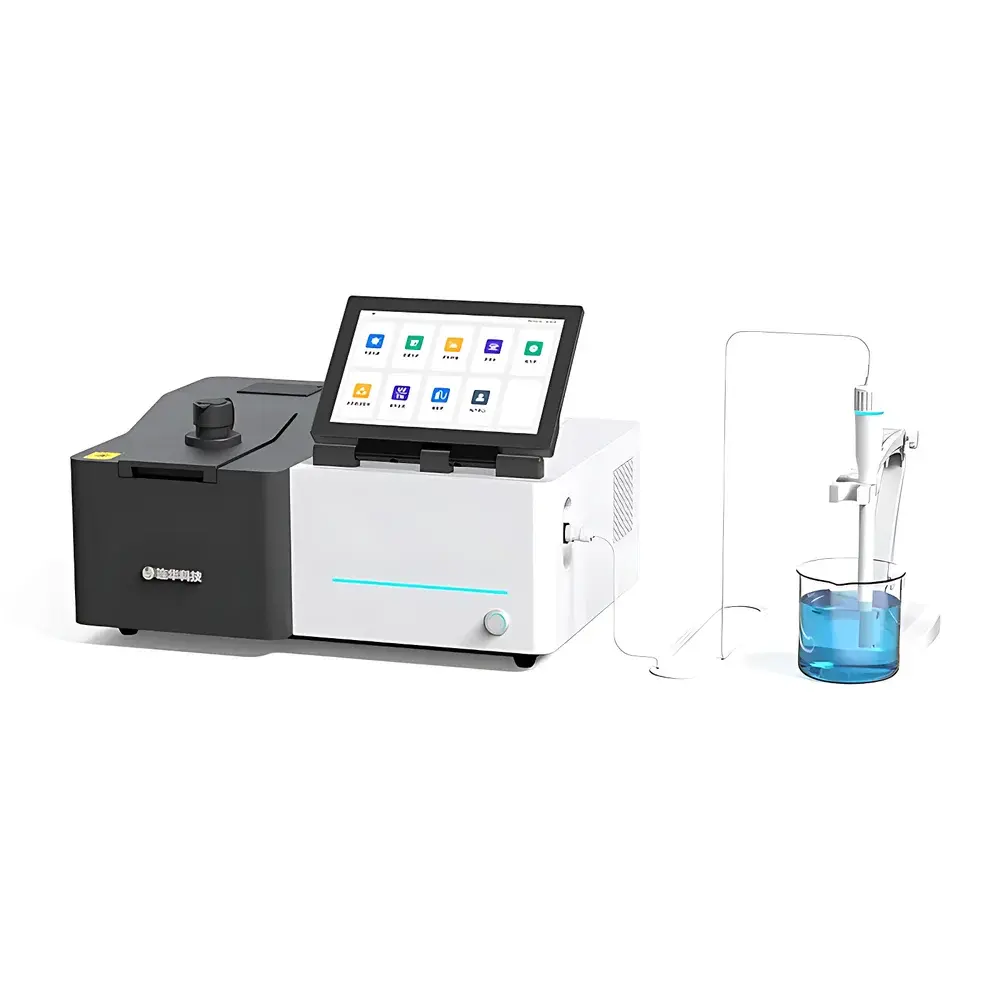
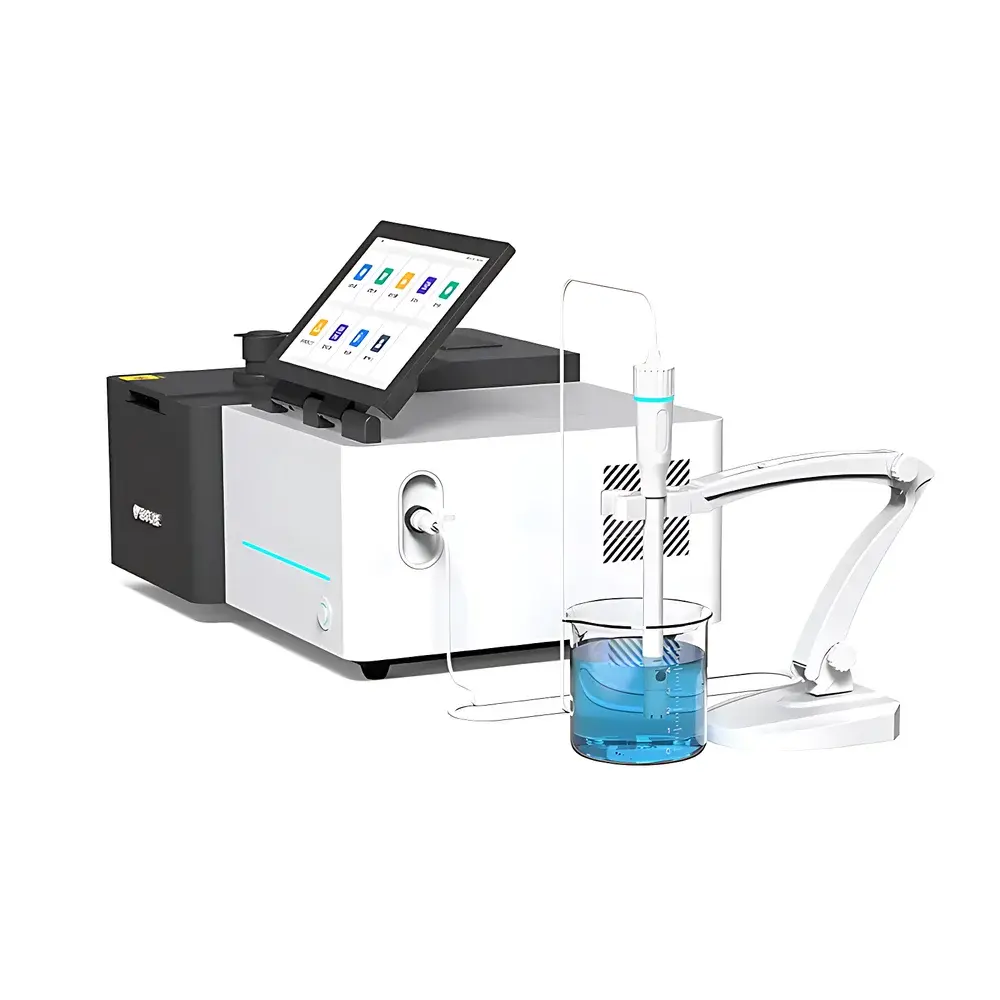
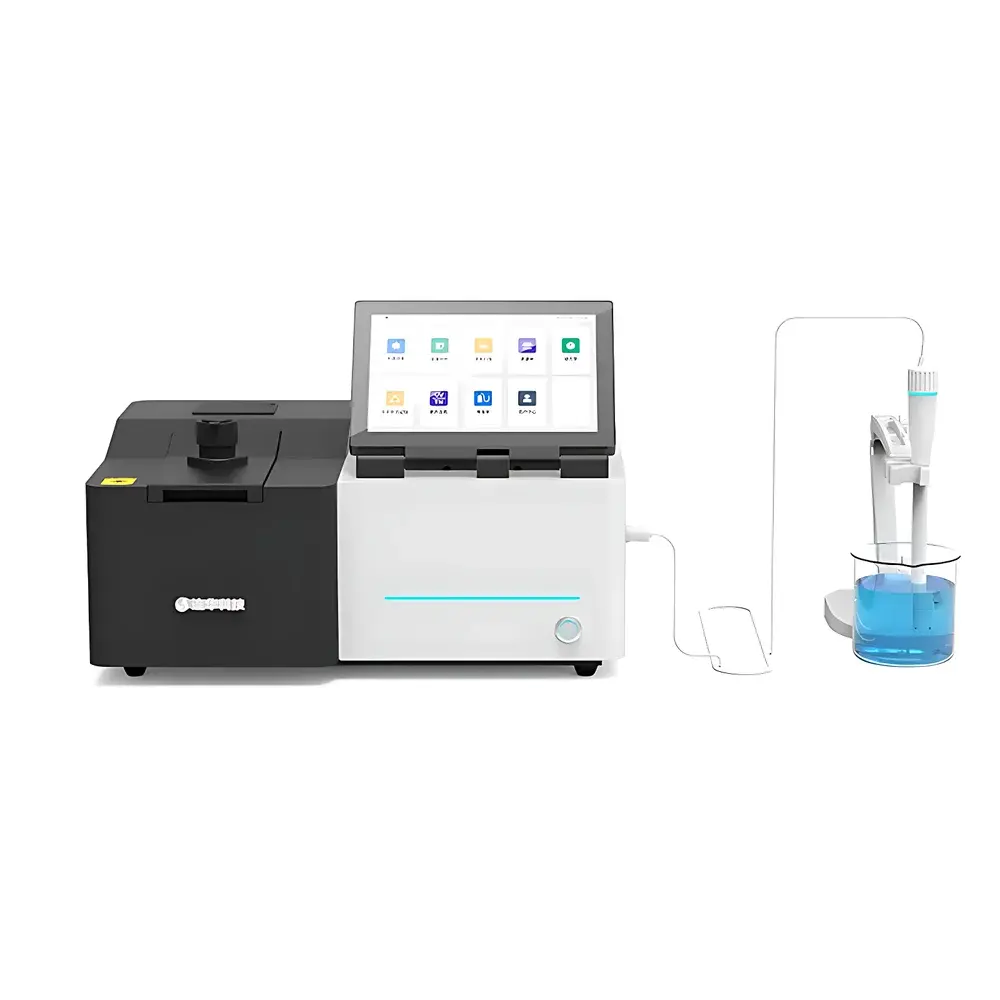
LoHua LH-S780 Multi-Parameter Water Quality Analyzer
| Brand | LoHua |
|---|---|
| Origin | Beijing, China |
| Manufacturer Type | Manufacturer |
| Product Category | Domestic |
| Model | LH-S780 |
| Instrument Type | Laboratory Water Quality Analyzer |
| Detection Parameters | COD, Ammonia Nitrogen, Total Phosphorus, Total Nitrogen, Conductivity, Photometric Measurement, Quantitative Analysis, Kinetic Analysis, Wavelength Scanning, Multi-Wavelength Analysis, UV-Based Total Nitrogen, Electrochemical Measurement |
| Optical Range | 190–1100 nm |
| Display | 10-inch HD capacitive touchscreen (Android-based LHOS) |
| Data Storage | 16 GB internal memory (≥100,000 records) |
| Connectivity | Wi-Fi, IoT-enabled, HDMI output |
| Compliance | JJG-178–2007 Class II spectrophotometer specification |
| Electrode Interface | Digital IP68-rated electrodes with temperature compensation and independent calibration |
| Cuvette Compatibility | 1–4-position automated cuvette holder (1–5 cm pathlength), φ16 mm tube measurement |
| Light Sources | Replaceable tungsten and deuterium lamps (socket-mounted, no optical realignment required) |
Overview
The LoHua LH-S780 Multi-Parameter Water Quality Analyzer is a laboratory-grade, dual-mode analytical platform engineered for high-reproducibility quantification of critical water quality parameters in compliance with national metrological standards. It integrates UV-Vis-NIR spectrophotometry (190–1100 nm) with digital electrochemical sensing—enabling simultaneous photometric and electrode-based analysis within a single instrument architecture. Unlike conventional benchtop analyzers limited to fixed-wavelength or single-method operation, the LH-S780 implements a unified hardware-software framework supporting discrete parameter testing (e.g., COD via dichromate digestion, ammonia nitrogen via Nesslerization), multi-point kinetic monitoring, spectral scanning, and custom curve modeling—all without external PC dependency. Its design adheres to JJG-178–2007 Class II verification requirements for spectrophotometers, ensuring traceable photometric accuracy across regulatory, academic, and industrial testing environments.
Key Features
- Full-spectrum scanning capability (190–1100 nm) with programmable scan speed, step interval, and repeat count—enabling precise identification of absorption maxima, spectral area integration, and peak/valley annotation.
- Dual light source system with independently switchable tungsten and deuterium lamps; socket-mounted design permits lamp replacement without optical recalibration—reducing downtime and maintenance overhead.
- IP68-rated digital electrodes for conductivity, pH, ORP, dissolved oxygen, and other electrochemical parameters—eliminating analog signal degradation, enabling unlimited cable length, and supporting automatic temperature compensation and per-electrode calibration.
- Modular optical chamber accommodating 1–5 cm rectangular cuvettes (1–4 positions auto-indexed) and φ16 mm round tubes—validated for standard EPA, ISO, and HJ methods requiring specific pathlengths or vessel geometries.
- 10-inch Android-powered LHOS operating system with capacitive touchscreen, adjustable viewing angle (0–90°), brightness control, and screen saver—optimized for glove-compatible operation in lab and field-deployed settings.
- Onboard data management with 16 GB internal storage: supports Excel and PDF export, hierarchical filtering by date/method/sample ID, and audit-ready record retention—including timestamps, operator IDs, calibration logs, and raw spectral files.
- Self-diagnostic firmware with hardware-level system health monitoring, automatic error logging, graceful recovery protocols, and over-the-air firmware updates via Wi-Fi or Ethernet.
Sample Compatibility & Compliance
The LH-S780 is validated for use with aqueous matrices across municipal wastewater, surface water, industrial effluents, drinking water pre-treatment streams, and process liquors from biopharma, food & beverage, and electroplating facilities. Its photometric module conforms to JJG-178–2007 Class II performance criteria for spectral bandwidth, stray light, photometric linearity, and wavelength accuracy—providing metrological confidence for method validation under GLP and ISO/IEC 17025 frameworks. Electrode-based measurements meet ASTM D1129 (conductivity), ISO 7888 (electrical conductivity), and USP (water conductivity) specifications when paired with certified reference standards. The instrument supports user-defined method storage compliant with FDA 21 CFR Part 11 requirements through optional electronic signature modules and audit trail configuration.
Software & Data Management
The LHOS operating system provides native support for multi-tasking, contextual help (embedded manuals, video tutorials, quick-start guides), and real-time data visualization—including dynamic spectral overlays, kinetic trend plots, and multi-curve regression charts. Quantitative analysis includes linear, polynomial (2nd/3rd order), exponential, and logarithmic curve fitting with residual diagnostics and R² reporting. Multi-wavelength analysis allows up to eight user-defined wavelengths per test method, each configurable with unique calibration coefficients (K-values), absorbance-to-concentration formulas, and unit conversions. IoT integration enables secure TLS-encrypted data transmission to private LIMS databases or LoHua Cloud—supporting remote instrument status monitoring, scheduled calibration alerts, and centralized fleet management for multi-site laboratories.
Applications
The LH-S780 serves as a primary analytical tool in environmental regulatory labs conducting routine compliance monitoring per China’s HJ series standards (e.g., HJ 828–2017 for COD, HJ 535–2009 for ammonia nitrogen). In research institutions, it facilitates kinetic studies of pollutant degradation, enzyme-catalyzed reactions in aquatic toxicology, and spectral characterization of humic substances. Industrial users deploy it for batch release testing in pharmaceutical water systems (Purified Water, WFI), fermentation broth monitoring in biomanufacturing, nutrient profiling in aquaculture, and corrosion inhibitor efficacy assessment in cooling water circuits. Its modularity also supports method development for emerging contaminants—including UV-absorbing micropollutants and nitrate/nitrite speciation—without hardware modification.
FAQ
Does the LH-S780 comply with international metrological standards beyond JJG-178–2007?
Yes—the photometric subsystem meets ISO 6734 (spectrophotometer performance) and EN 1484 (total organic carbon analyzer interface compatibility) benchmarks when operated with certified reference materials and validated procedures.
Can raw spectral data be exported for third-party processing?
Yes—absorbance vs. wavelength datasets are exportable in CSV format, preserving full resolution (1 nm step) and metadata (date, lamp status, slit width, detector gain).
Is GLP-compliant audit trail functionality available out-of-the-box?
Basic audit logging (user actions, calibration events, method changes) is enabled by default; full 21 CFR Part 11 compliance requires optional license activation and network authentication server integration.
What electrode types are supported natively?
The system interfaces with LoHua’s digital conductivity, pH, ORP, DO, and ion-selective electrodes—all featuring embedded temperature sensors and non-volatile calibration memory.
How is wavelength accuracy maintained over time?
The instrument supports automated holmium oxide and didymium glass filter-based wavelength verification, plus user-initiated dark current and zero-adjust routines—documented in the calibration history log.







