
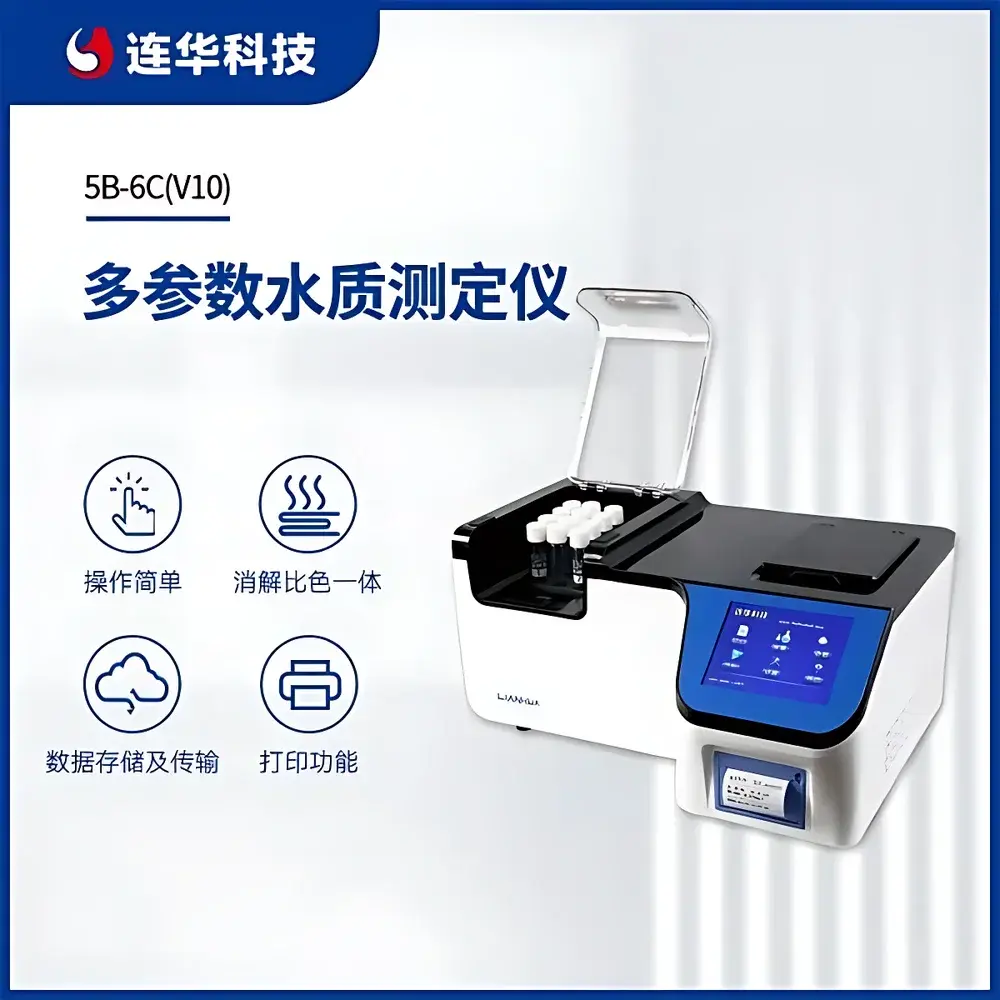
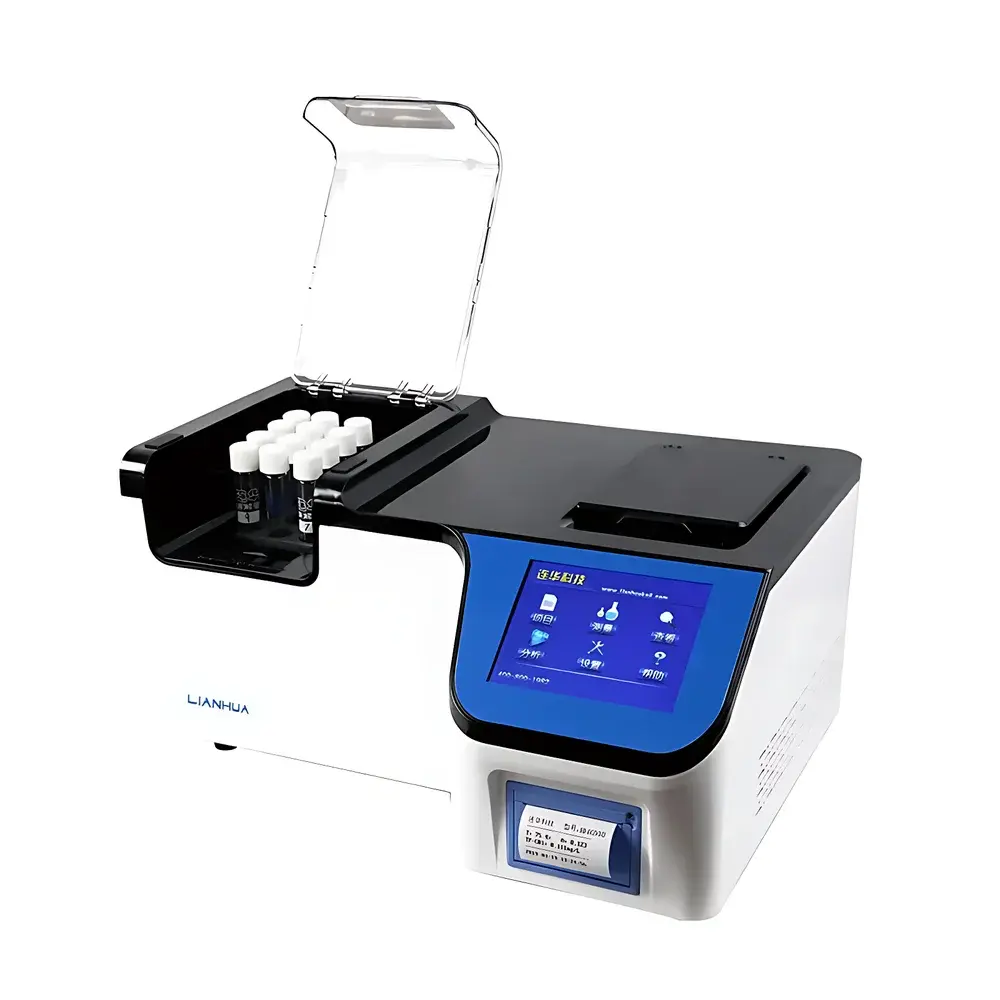
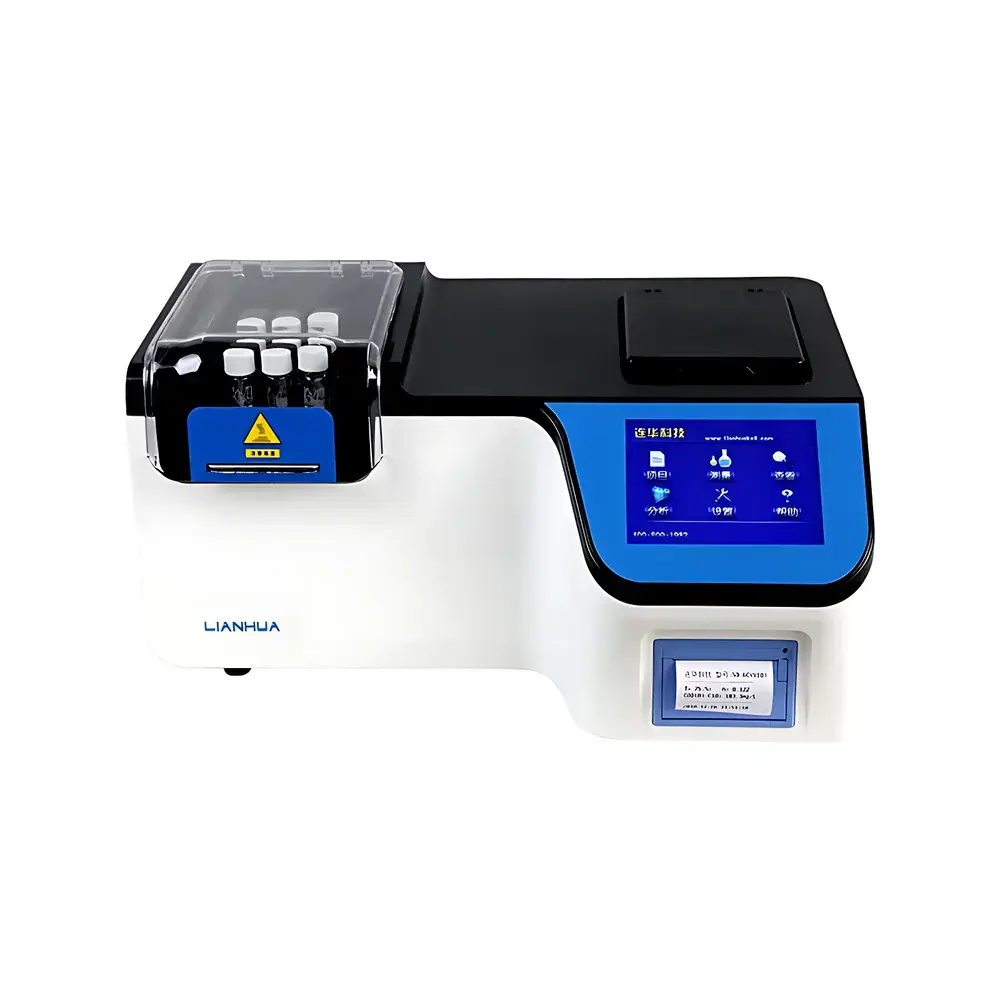
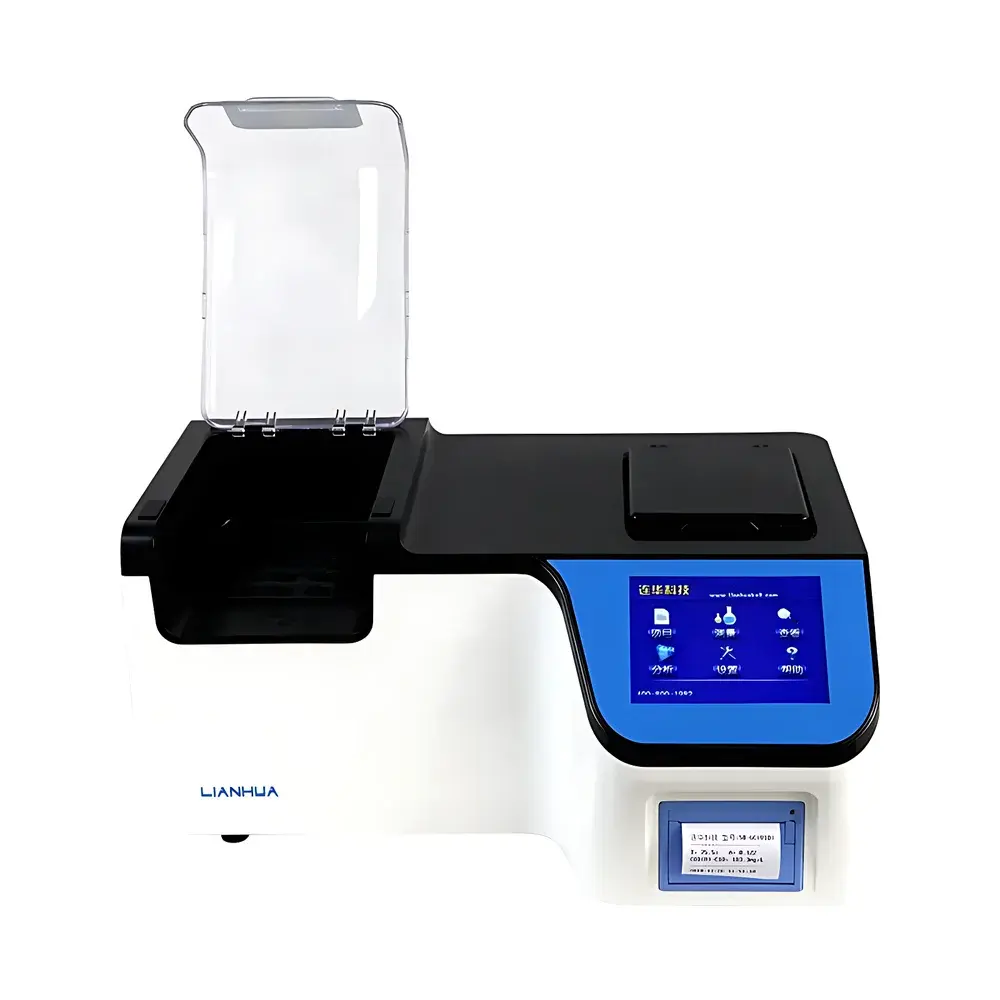
LoHua Tech 5B-6C(V10) Multi-Parameter Water Quality Analyzer
| Brand | LoHua Tech |
|---|---|
| Origin | Beijing, China |
| Manufacturer Type | Direct Manufacturer |
| Product Origin | Domestic (China) |
| Model | 5B-6C(V10) |
| Instrument Type | Benchtop Laboratory Water Quality Analyzer |
| Measured Parameters | COD, Ammonia Nitrogen (NH₃-N), Total Phosphorus (TP), Turbidity |
| Data Storage Capacity | 16,000 measurement records |
| Integrated Digestion Unit | Yes, with intelligent heating control, programmable timer, and thermal delay protection |
| Calibration Method | Built-in curve generation and storage using standard reference solutions |
| Output Interface | USB port + infrared data transmission |
| Printing Capability | Integrated thermal printer |
| Optical System | Multi-channel interference-free optical path supporting both cuvette and tube colorimetry |
| Housing | Patented injection-molded enclosure |
Overview
The LoHua Tech 5B-6C(V10) Multi-Parameter Water Quality Analyzer is a benchtop laboratory instrument engineered for standardized, high-reproducibility quantification of four critical water quality parameters: Chemical Oxygen Demand (COD), Ammonia Nitrogen (NH₃-N), Total Phosphorus (TP), and Turbidity. It operates on the principle of spectrophotometric colorimetry—utilizing wavelength-specific absorption measurements following chemical reactions that generate chromophores proportional to analyte concentration. For COD and TP, digestion under controlled thermal conditions (via integrated heating modules) converts refractory organic phosphates and oxidizable organics into measurable forms. Ammonia nitrogen is determined via the Nesslerization or salicylate method, while turbidity is assessed using 850 nm near-infrared light scattering in accordance with ISO 7027 and EPA Method 180.1 principles. Designed for routine environmental testing laboratories, municipal water treatment facilities, and academic research groups, the 5B-6C(V10) complies with Chinese national standards HJ/T 399–2007 (COD), HJ 535–2009 (NH₃-N), GB/T 11893–1989 (TP), and GB/T 13200–1991 (turbidity), enabling traceable, audit-ready reporting in GLP-aligned workflows.
Key Features
- Integrated dual-function digestion module with PID-controlled heating, user-programmable temperature profiles (up to 165 °C), and automatic thermal cutoff to prevent overheating or sample degradation.
- Multi-channel optical architecture featuring independent LED light sources and matched photodetectors per parameter—eliminating spectral crosstalk between COD (610 nm), NH₃-N (420 nm), TP (700 nm), and turbidity (850 nm) measurement channels.
- Flexible sample handling: supports both 10 mm square cuvettes (for NH₃-N and TP) and 16 mm round digestion tubes (for COD), with auto-detection of vessel type to load appropriate calibration curves.
- Onboard calibration engine: automatically calculates and stores up to 20 multi-point calibration curves using certified reference standards; supports slope-intercept and polynomial regression models.
- Thermal line printer with timestamped output: generates hard copies of real-time readings, batch summaries, and full historical datasets—including operator ID, sample ID, date/time stamp, and method version.
- Robust data management: 16,000-record internal memory with time-stamped metadata; export via USB mass storage mode or infrared protocol compliant with IrDA 1.1 for secure transfer to LIMS or QA/QC databases.
Sample Compatibility & Compliance
The 5B-6C(V10) accepts aqueous samples from surface water, wastewater effluents, drinking water pre-treatment streams, and industrial process discharges. Sample volume requirements range from 2.5 mL (NH₃-N, TP) to 5.0 mL (COD), with turbidity measurements valid for samples within 0–1000 NTU (nephelometric turbidity units). All analytical protocols align with regulatory frameworks applicable to environmental monitoring in China (e.g., MEP Order No. 39, Technical Guidelines for Environmental Monitoring), and support cross-referencing to international equivalents including ISO 6060 (COD), ISO 7150-1 (NH₃-N), ISO 6878 (TP), and ISO 7027 (turbidity). The system’s firmware includes built-in QC checks—blank subtraction, duplicate analysis flagging, and drift monitoring—to satisfy internal QA requirements and prepare laboratories for third-party accreditation audits (e.g., CNAS-CL01).
Software & Data Management
No external PC software is required for operation; all functions are managed through the embedded 5.0-inch capacitive touchscreen interface with multilingual support (English, Chinese). Measurement data are stored with immutable timestamps, operator logins (via alphanumeric ID), and method revision tracking. USB exports generate CSV files compatible with Microsoft Excel, MATLAB, and common LIMS platforms. Infrared transmission enables wireless data retrieval without physical cable connection—ideal for cleanroom or glovebox environments where contamination risk must be minimized. Audit trail functionality logs all calibration events, parameter modifications, and firmware updates, meeting documentation rigor expected under GLP and basic GMP-aligned environmental testing practices.
Applications
- Routine compliance monitoring for municipal wastewater treatment plants verifying discharge limits per DB11/307–2013.
- Source water assessment in reservoirs and rivers to track eutrophication indicators (TP, NH₃-N) and organic loading (COD).
- Process control in food & beverage manufacturing, where rapid TP and turbidity checks inform filtration and coagulation efficiency.
- Educational laboratories conducting AP Environmental Science or undergraduate water chemistry experiments with standardized, repeatable protocols.
- Field-deployable lab support: compact footprint (280 × 220 × 180 mm) and integrated digestion enable use in mobile environmental labs or regional monitoring stations without external ovens or spectrophotometers.
FAQ
Does the 5B-6C(V10) require external digestion equipment?
No—the instrument includes a fully integrated digestion block with programmable temperature and time settings, eliminating the need for standalone digesters.
Can calibration curves be imported from external sources?
Calibration curves must be generated in situ using certified reference standards; external curve import is not supported to ensure metrological traceability.
Is the turbidity measurement compliant with ISO 7027?
Yes—turbidity detection uses an 850 nm infrared LED and 90° scatter geometry conforming to ISO 7027:2016 requirements for formazin-based equivalence.
What is the maximum storage duration for reagent kits?
Unopened LoHua-certified reagent kits retain stability for 18 months when stored at 2–8 °C; shelf-life is printed on each vial and enforced via barcode-scanned lot validation during test initiation.
Does the device support remote firmware updates?
Firmware updates are performed locally via USB drive only; no network connectivity or cloud-based update mechanism is implemented to maintain air-gapped security for regulated environments.
Related Products







