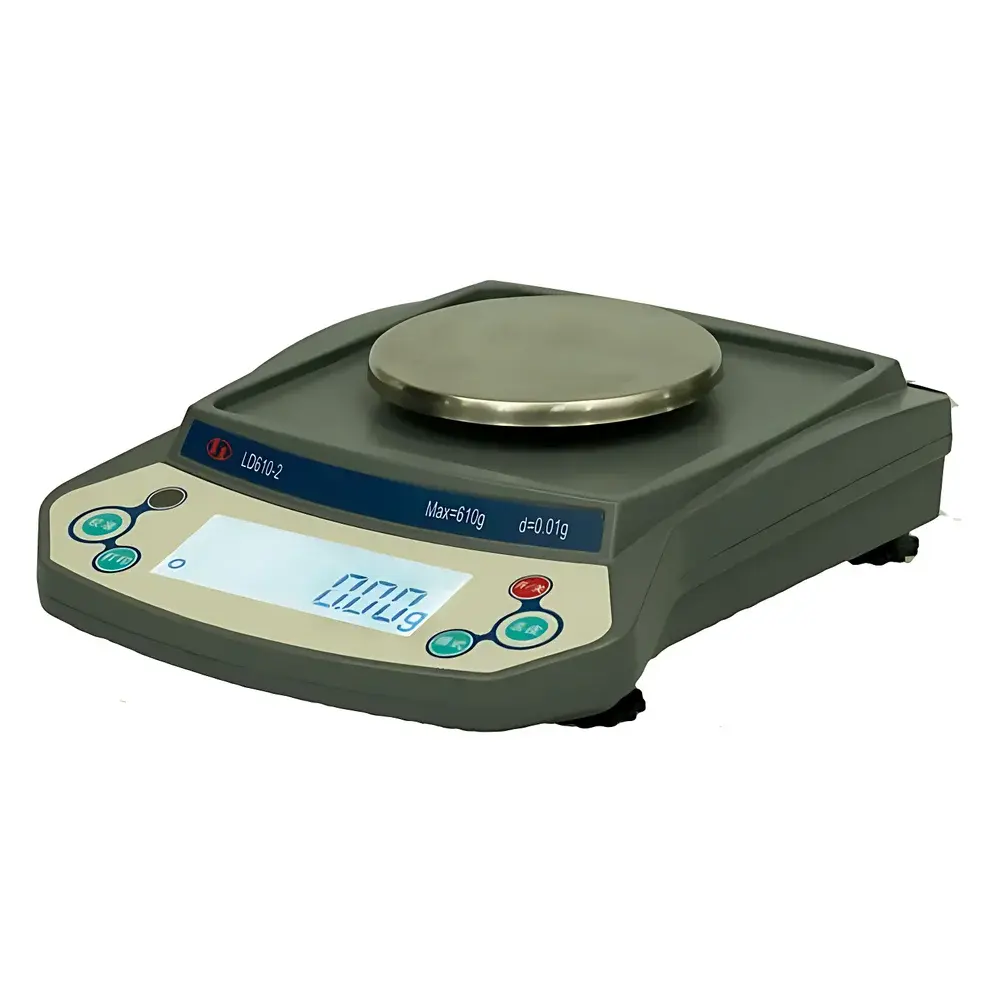
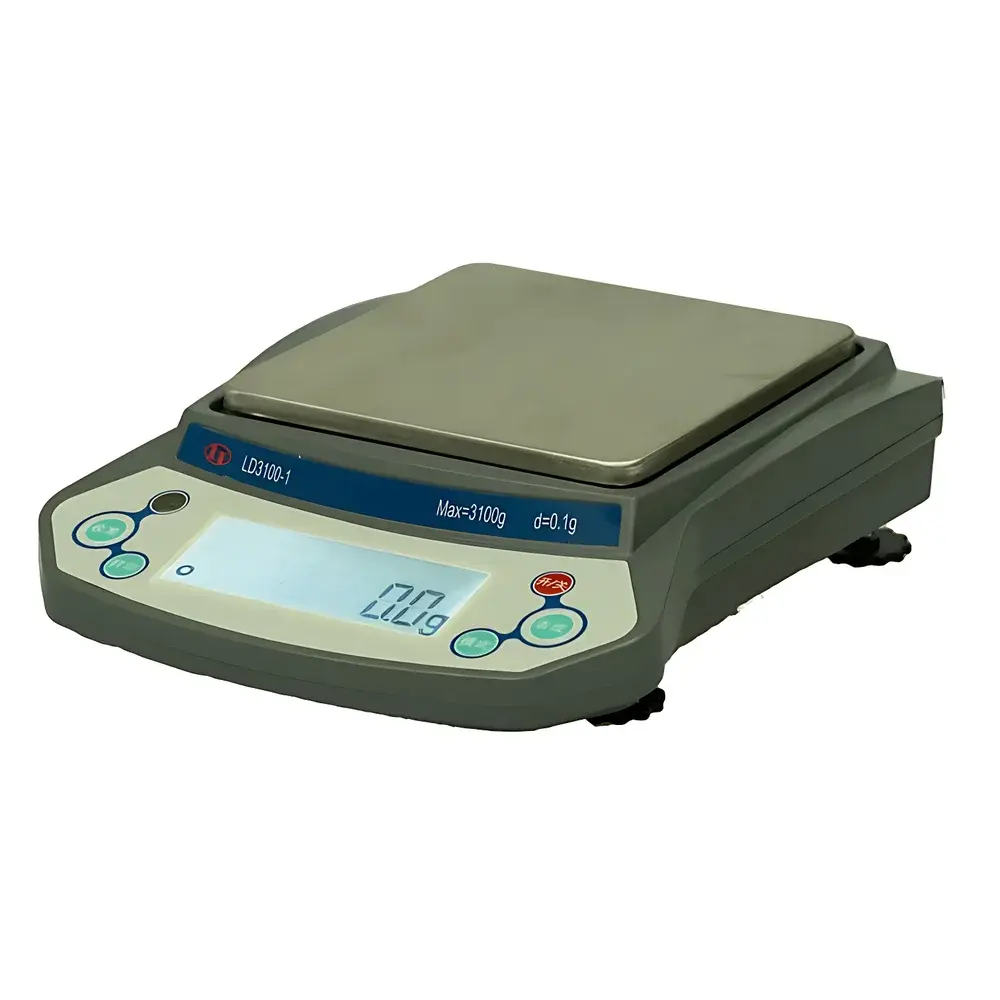
Longteng LD Series Strain-Gauge Electronic Balances
| Brand | Longteng |
|---|---|
| Origin | Liaoning, China |
| Manufacturer Type | Authorized Distributor |
| Country of Origin | China |
| Model Series | LD |
| Instrument Type | General-Purpose Laboratory Balances |
| Maximum Capacity | 210 g to 6100 g |
| Readability | 0.01 g (LD210–LD610 models) / 0.1 g (LD510–LD6100 models) |
| Repeatability | ±0.01 g |
| Calibration Method | Manual Internal/External Calibration |
| Pan Size | Φ120 mm (LD210–LD610) |
| External Dimensions | 335×205×160 mm (LD210–LD610) |
Overview
The Longteng LD Series Strain-Gauge Electronic Balances are entry-level precision weighing instruments engineered for routine laboratory, industrial, and educational applications requiring reliable mass measurement under non-regulated or semi-quantitative conditions. These balances operate on the principle of resistive strain-gauge load cell technology: mechanical deformation of a calibrated metal beam—induced by sample weight—is converted into proportional electrical resistance changes, which are digitized and processed by integrated microelectronic circuitry. Designed for stability, speed, and ease of operation, the LD Series delivers consistent performance across ambient temperature ranges (10–30 °C) and moderate humidity environments (≤80% RH, non-condensing). While not certified for GLP/GMP-critical workflows or ISO/IEC 17025-accredited calibration, they serve as cost-effective alternatives to mechanical double-pan balances and provide foundational metrological functionality for QC screening, formulation pre-weighing, teaching labs, and light-duty production line tasks.
Key Features
- Strain-gauge load cell architecture ensures mechanical robustness and long-term zero stability with minimal drift over time.
- Integrated tare, cumulative weighing, piece counting, and auto-zero tracking functions support multi-step procedural workflows.
- Backlit LCD display with clear digit height (≥12 mm) enables legible reading in variable lighting conditions.
- Manual calibration capability using external standard weights (e.g., Class M2 or better) allows user-initiated verification per internal SOPs.
- Compact footprint and lightweight chassis (LD210–LD610: ≤1.8 kg; LD510–LD6100: ≤3.2 kg) facilitate benchtop mobility and space-constrained installations.
- RS-232 serial interface enables basic data export to PCs or printers for recordkeeping—compatible with generic terminal emulation software (no proprietary driver required).
Sample Compatibility & Compliance
The LD Series accommodates dry, non-corrosive, non-magnetic solid samples within defined capacity limits. The stainless-steel weighing pan (Φ120 mm for sub-1 kg models; 160×160 mm for higher-capacity variants) resists minor abrasion and facilitates cleaning. Units are CE-marked for EMC Directive 2014/30/EU and Low Voltage Directive 2014/35/EU compliance. They meet general requirements of OIML R76-1 (2006) for non-automatic weighing instruments at accuracy class III, though formal type evaluation is not performed. Not suitable for hazardous area use (ATEX/IECEx), high-precision gravimetric analysis (e.g., USP ), or applications demanding traceable calibration certificates per ISO/IEC 17025. Intended for use in controlled indoor environments only.
Software & Data Management
No embedded operating system or proprietary firmware is included. Data transmission occurs via ASCII-based RS-232 protocol at 9600 baud, 8N1 configuration. Output format includes weight value, unit symbol (g), and status flags (e.g., “TARE”, “OVER”); timestamps must be added externally. Raw output is compatible with Microsoft Excel, LabChart, or custom Python/Node-RED scripts using pySerial or similar libraries. Audit trail, electronic signature, or 21 CFR Part 11 compliance features are not implemented—users requiring such capabilities must integrate the balance into validated third-party LIMS or ELN platforms with appropriate interface qualification.
Applications
- Preparation of reagents and buffers in teaching laboratories and pilot-scale R&D settings.
- Raw material receipt inspection and batch release checks in food processing and dietary supplement manufacturing.
- Weighing excipients and active pharmaceutical ingredients during non-sterile tablet formulation (non-GMP).
- Inventory management and component counting in electronics assembly and hardware distribution centers.
- Calibration verification of pipettes and volumetric glassware using water displacement method (per ASTM E542).
- Student experiments in physics and chemistry courses involving mass–volume relationships and stoichiometric calculations.
FAQ
What calibration standards are recommended for manual calibration?
Class M2 or better stainless-steel weights traceable to national metrology institutes (e.g., NIST, PTB) are advised. Calibration should be performed at least daily before first use and after environmental shifts.
Can this balance be used in a fume hood?
Yes—if placed on a stable, vibration-isolated surface and shielded from airflow turbulence; however, draft-induced errors may exceed ±0.02 g without draft shields.
Is the RS-232 interface compatible with modern Windows/macOS systems?
Yes—via USB-to-RS232 adapters compliant with FTDI or CP2102 chipsets; native COM port mapping is required in OS device manager.
Does the LD Series support automatic internal calibration?
No—calibration is strictly manual, requiring user intervention with external reference masses.
What is the warm-up time required for optimal repeatability?
Minimum 30 minutes after power-on under stable ambient conditions; extended stabilization (60+ min) improves consistency near maximum capacity.