
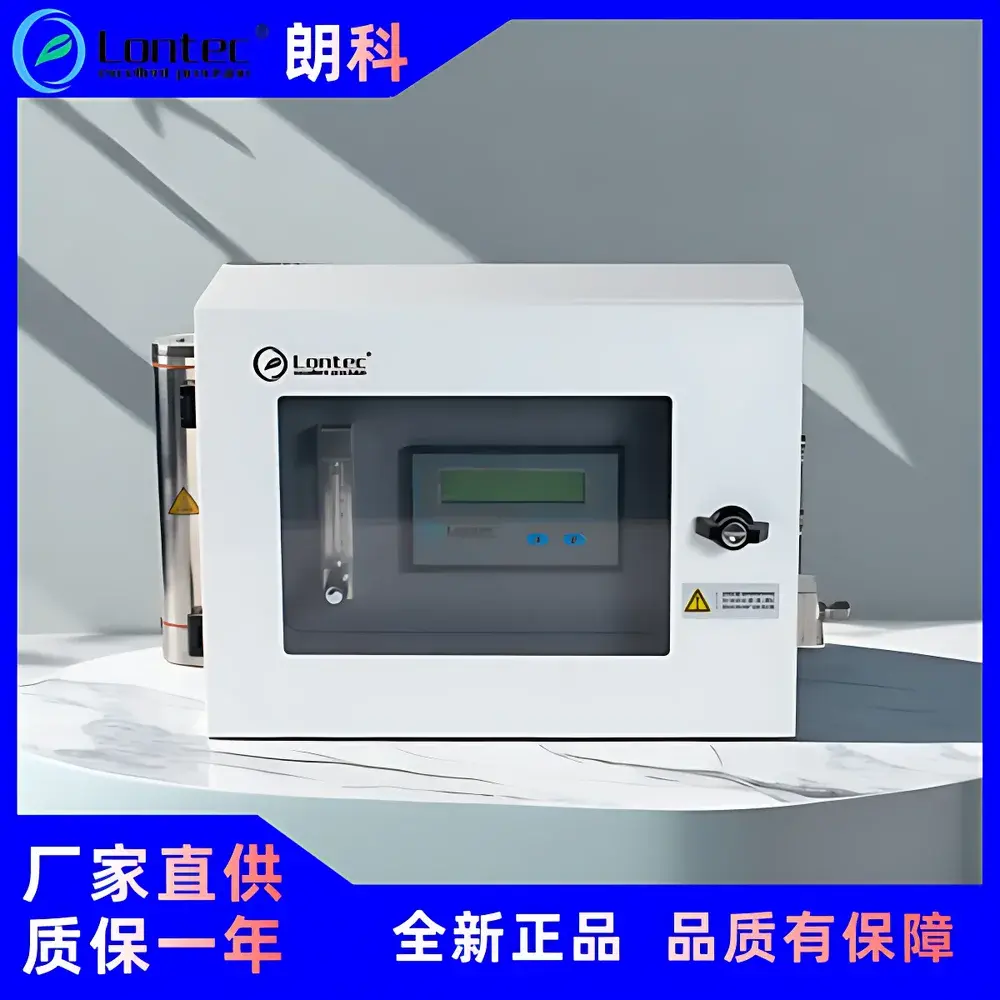
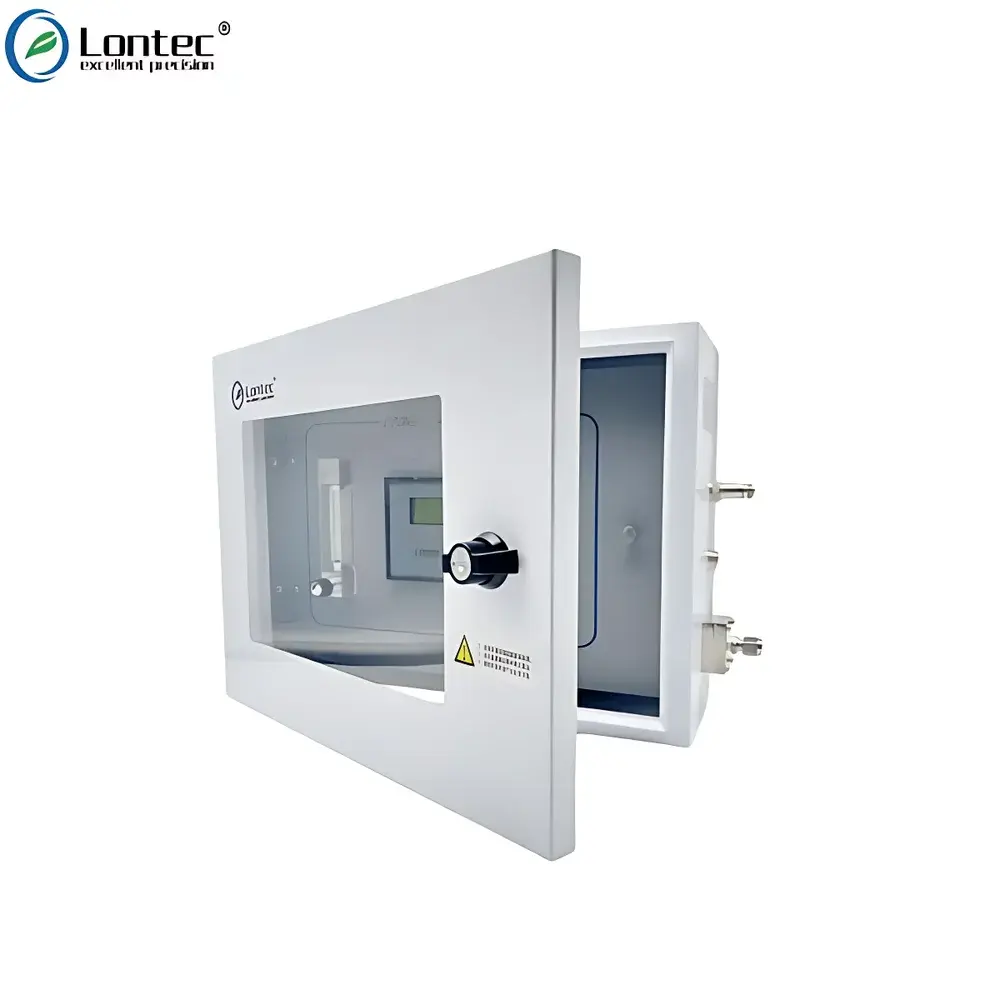
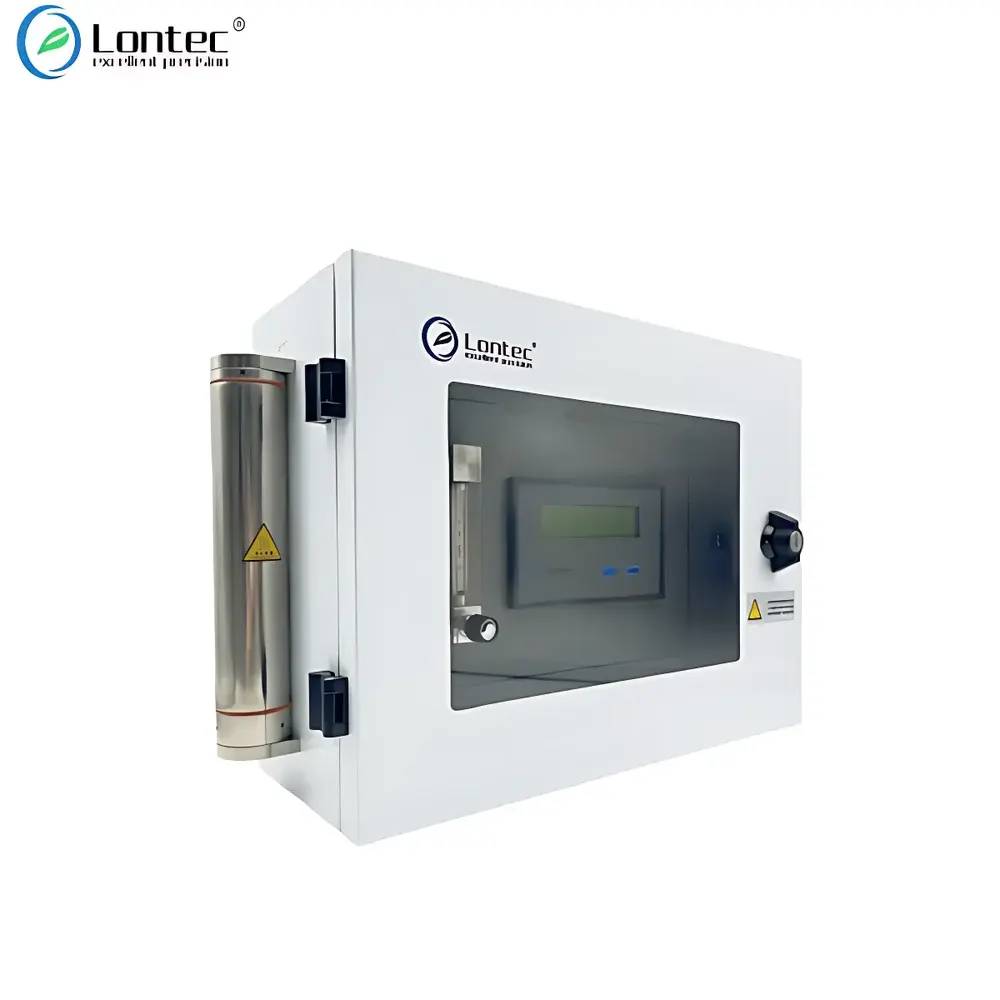
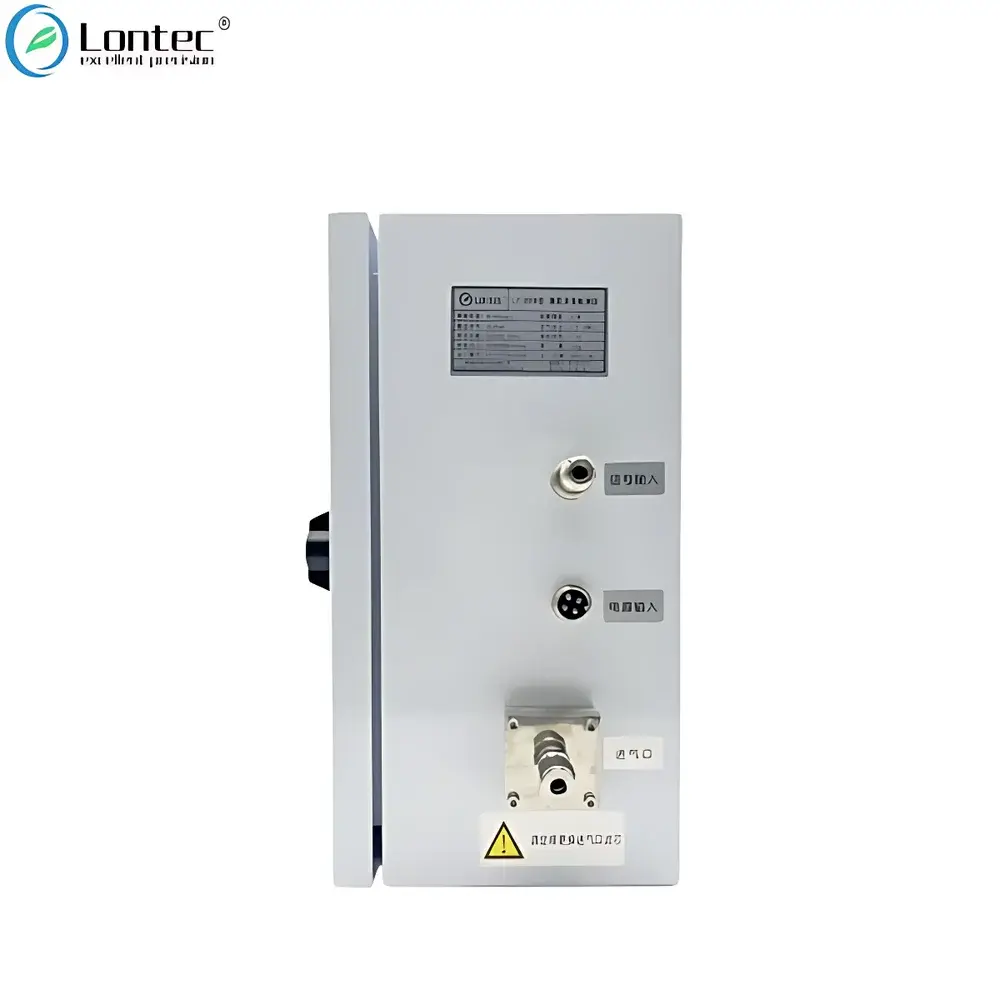
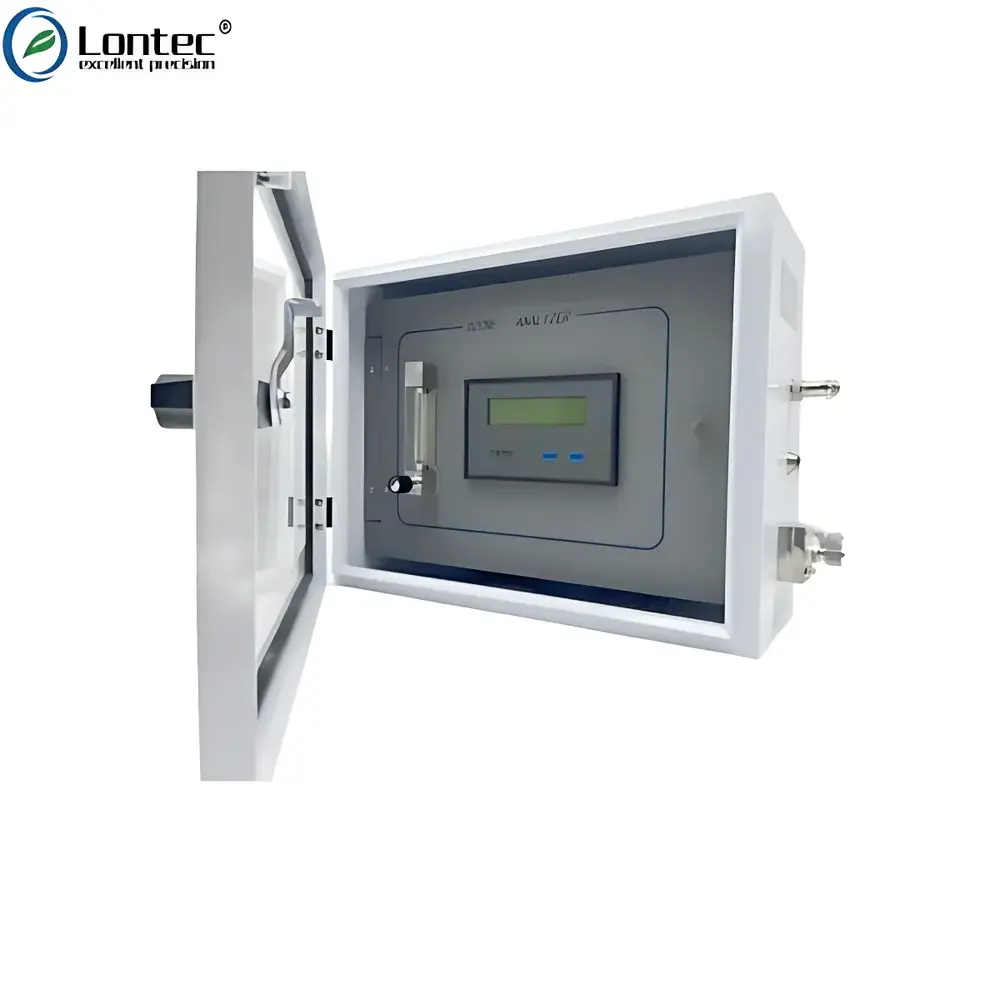
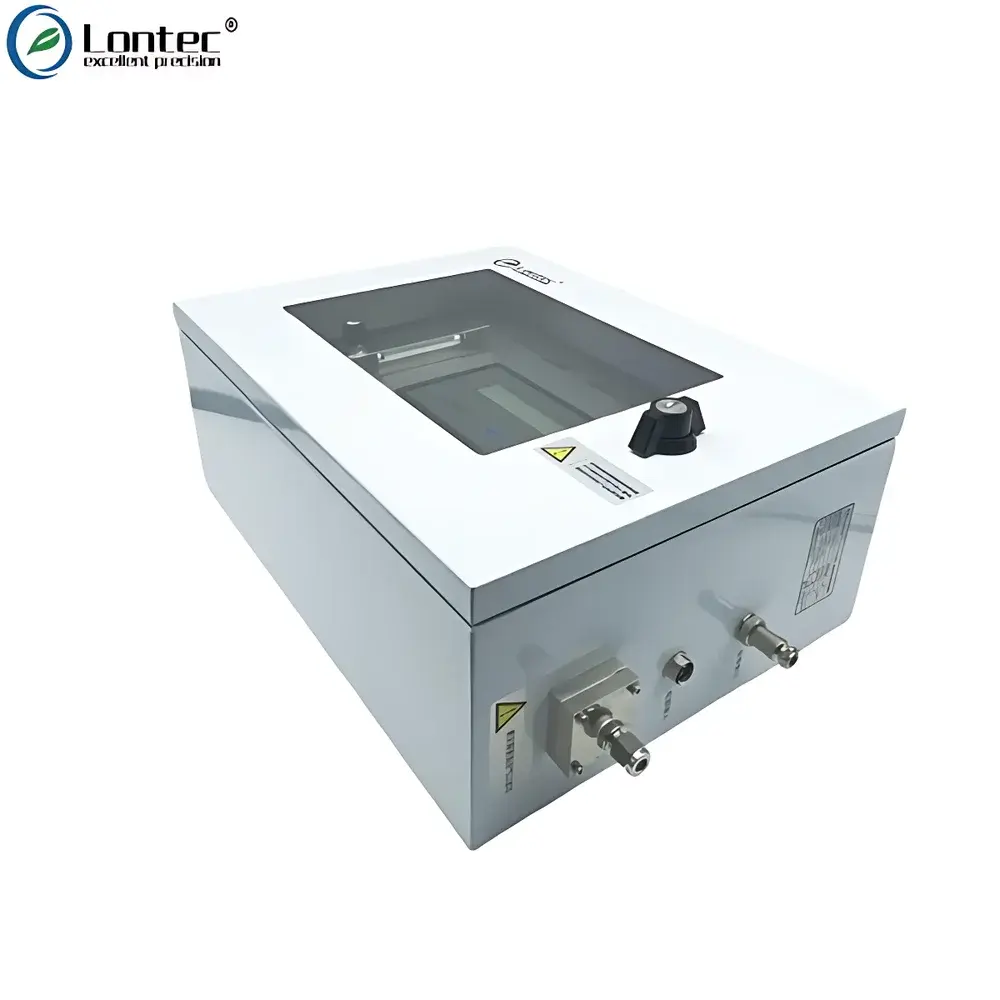
Lontec LT-200B UV Absorption Ozone Analyzer
| Brand | Lontec |
|---|---|
| Model | LT-200B |
| Measurement Principle | Dual-beam UV absorption at 254 nm (Lambert-Beer Law) |
| Measurement Range | 0–50 / 0–200 / 0–300 mg/L (customizable) |
| Response Time | <5 s |
| Zero Drift | <±0.5% F.S. |
| Resolution | 0.1 mg/L |
| Accuracy | ±2% of reading |
| Temperature Compensation | Yes |
| Pressure Compensation | Yes |
| Light Source Compensation | Yes |
| Output Signals | Isolated 0–10 V and/or 4–20 mA (selectable) |
| Display | LCD screen |
| Sample Inlet Pressure | <0.15 MPa |
| Operating Ambient Temperature | –20 to +50 °C |
| Dimensions | 400 × 300 × 155 mm |
| Power Supply | 220 VAC, 50 Hz |
| Weight | 11 kg |
| Lamp Lifetime | ~2 years (imported low-pressure Hg lamp, 254 nm) |
| Sampling Method | Positive-pressure sampling |
| Compliance | Designed for continuous industrial process monitoring per ISO 14644, EPA Method O3-UV, and aligned with GLP data integrity expectations |
Overview
The Lontec LT-200B UV Absorption Ozone Analyzer is a precision-engineered, dual-beam spectrophotometric instrument designed for continuous, real-time quantification of ozone (O₃) concentration in gas streams. It operates on the fundamental photometric principle described by the Lambert-Beer Law: ozone exhibits strong, characteristic absorbance at 254 nm in the ultraviolet spectrum, enabling highly selective and interference-resistant measurement. Unlike electrochemical or semiconductor-based sensors, this analyzer eliminates cross-sensitivity to humidity, NO₂, VOCs, or chlorine—critical for stable operation in complex industrial effluent streams. The system integrates a high-stability, imported low-pressure mercury vapor lamp emitting at precisely 254 nm, coupled with military-grade optical components—including fused silica optics and temperature-stabilized photodetectors—to ensure long-term photometric fidelity. Its robust architecture supports uninterrupted online deployment at ozone generator outlets, oxidation reactors, and disinfection process lines across water treatment, pharmaceutical manufacturing, and fine chemical synthesis facilities.
Key Features
- Dual-beam optical design with real-time reference path correction, minimizing drift from lamp aging or window fouling
- Integrated temperature, pressure, and source intensity compensation algorithms—calculated in real time using onboard high-speed processing ICs
- Positive-pressure sampling configuration compatible with standard ozone generator discharge lines (≤0.15 MPa inlet pressure)
- Modular signal output: factory-configurable isolated 4–20 mA and/or 0–10 V analog outputs, compliant with PLC/DCS integration standards (IEC 61000-6-2/4)
- Front-panel LCD interface with intuitive menu navigation; no external PC required for basic calibration or status monitoring
- Onboard gas filtration and catalytic ozone destruct unit—ensures safe exhaust handling and protects downstream instrumentation
- Extended-source lifetime: imported 254 nm UV lamp rated for ≥17,500 operating hours (≈2 years under typical 24/7 use)
Sample Compatibility & Compliance
The LT-200B is validated for direct analysis of dry or humidified ozone-in-air and ozone-in-oxygen streams, with no requirement for sample drying or dilution in most applications. It meets functional performance criteria referenced in EPA Method O3-UV for ambient and process ozone monitoring and aligns with ISO 14644-1 cleanroom air quality verification protocols where ozone residual control is specified. While not certified as a Class I medical device, its measurement traceability, audit-ready calibration logs, and deterministic compensation logic support compliance with GLP and GMP documentation requirements—including full electronic record retention when interfaced with validated SCADA systems. The analyzer’s mechanical housing conforms to IP54 ingress protection, enabling reliable operation in non-explosive industrial environments per IEC 60529.
Software & Data Management
The LT-200B operates autonomously without embedded firmware requiring external software—but supports optional RS-485 Modbus RTU communication (via accessory module) for integration into centralized data acquisition platforms. All calibration events, zero/span checks, lamp usage hours, and diagnostic flags are timestamped and stored in non-volatile memory. When connected to a validated historian or LIMS, raw analog outputs can be correlated with process metadata for FDA 21 CFR Part 11–compliant audit trails. Firmware updates are performed via secure USB interface with cryptographic signature verification—ensuring integrity during field maintenance.
Applications
- Real-time feedback control of ozone generators in municipal drinking water treatment plants (per NSF/ANSI 61 requirements)
- Process validation and routine monitoring in pharmaceutical clean utilities (ozone sanitization of PW/CW loops)
- Off-gas concentration verification in advanced oxidation processes (AOPs) for industrial wastewater remediation
- Quality assurance during ozonation steps in fragrance synthesis and organic peroxide manufacturing
- Continuous safety monitoring in swimming pool and spa disinfection systems (EN 16713-1 compliance support)
- Research-grade ozone kinetics studies requiring sub-second response and high repeatability (RSD <1.2% over 72 h)
FAQ
What ozone concentration units does the LT-200B report?
The analyzer outputs concentration exclusively in mg/L (milligrams per liter), equivalent to g/m³ at standard temperature and pressure—consistent with ISO 15714 and common engineering practice for gas-phase ozone reporting.
Can the LT-200B measure ozone in oxygen carrier gas?
Yes. The instrument is calibrated and validated for use with both air and oxygen matrices; no recalibration is needed when switching between carrier gases, provided pressure and temperature remain within specified operating ranges.
Is periodic zero calibration required?
While the dual-beam design minimizes zero drift (<±0.5% F.S. over 30 days), daily automated zero checks using internal nitrogen purge (optional accessory) or manual zero via zero-air cylinder are recommended for critical GMP applications.
Does the analyzer include data logging capability?
Internal event logging (calibrations, faults, lamp hours) is standard; continuous waveform logging requires external DAQ integration via analog outputs or optional Modbus interface.
What maintenance intervals are recommended?
UV lamp replacement every ~2 years; quartz optical windows cleaned quarterly; gas filter elements replaced every 6 months under continuous operation—maintenance schedule documented in EN 61000-6-2–aligned service manual.







